☀️ Vitamin D

The vitamin your skin makes from sunlight, which the body then turns into a hormone. It keeps calcium where your bones need it, and it reaches well beyond bone: the receptor it works through sits in many tissues and helps switch genes on and off. This page covers what it does, what running low costs and what low levels only travel with, who tends to run low, how to get enough safely and when a blood test is worth having.

Last updated:

From Sunlight to Bone

Vitamin D from sunlight, food or a supplement does nothing until the body activates it, first in the liver and then mainly in the kidneys. The active form is a hormone, and its best-established job is calcium: it helps the gut absorb calcium and keeps the calcium and phosphate in your blood at the levels bones need to stay hard1.
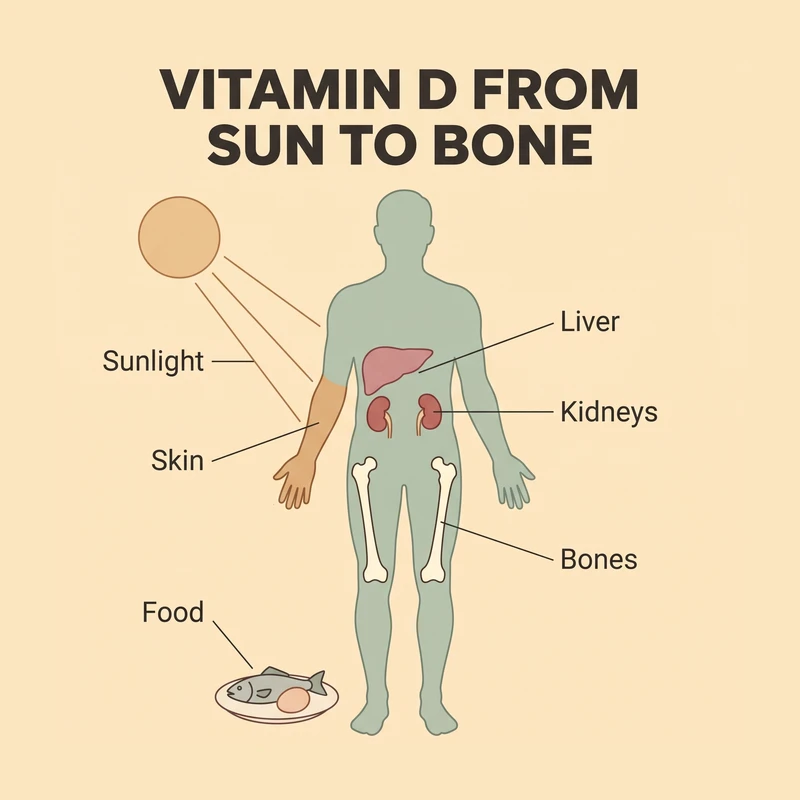
Vitamin D from sun to bone. A standing figure with sunlight falling on the skin of one arm, a plate of fish and an egg for food, and the liver, kidneys and bones marked: the organs that activate vitamin D and the bones it serves.

🦴 Bones

Without enough vitamin D, bones can become thin, brittle or misshapen. A real deficiency causes rickets in children and osteomalacia, a softening of the bones, in adults1.

💪 Muscles

Muscle fibers need vitamin D to develop and grow, and too little can bring muscle weakness and pain. Muscles and nerves also run on calcium, so a severe shortfall can cause cramps and spasms1.

🛡️ Immune system

Many tissues carry the vitamin D receptor (immune cells among them), and some can activate vitamin D themselves1. Whether taking more prevents infections is a separate question, and the answer is weaker than the claims, as the next sections show.

🧬 Cells and genes

It also takes part in cell growth, glucose metabolism and the control of inflammation, largely by changing which genes are active1. The next section explains how, and how many genes are involved.

💡 The honest limit. When the National Academies set the intake numbers, its panel found the evidence strong enough to act on only for bone health; for everything else it was inadequate or too contradictory to draw a conclusion, and a federal review of nearly 250 studies reached the same place1. The large trials since then have mostly agreed, as the sections below show.

How Vitamin D Reaches Your Genes

Active vitamin D works through a receptor inside the cell, the vitamin D receptor. Together they attach to DNA and turn the activity of nearby genes up or down, which is how one vitamin can matter to bone, muscle, immune cells and cell growth at once2.

In cells grown in the lab

In immune cells given active vitamin D, the receptor attached to DNA at 2,776 places, and 229 genes changed their activity3. Across many kinds of cells, the receptor binds thousands of sites in the genome, and in any one kind of cell a few hundred genes respond2.

In people

In a small pilot trial, eight adults took vitamin D3 for two months, and 291 genes changed their activity in their white blood cells4. It had no placebo group and measured gene activity, not health, and its authors called it exploratory because of its size.

Across the whole genome

A widely cited review estimates that about 3% of the genome is under vitamin D's influence, directly or indirectly5. That is an estimate, not a count of genes.

What these numbers do not mean

A place where the receptor binds is not a gene, and a gene changing its activity is not a health benefit. Much of this work gives cells far more of the active hormone than the body makes, and researchers in the field caution that it does not reflect what happens in the body2.

💡 What about 2,000 or 2,300 genes? Both figures are repeated widely. The estimate of up to 2,000 genes comes from review articles rather than from a count, and we found no study that counted 2,300; the nearest measured number, 2,340, counts places where the receptor binds DNA in one line of leukemia cells, not genes6.

Every day, vitamin D takes part in

What Low Vitamin D Does, and What It Only Travels With

A real deficiency softens bones and upsets the calcium balance that muscles rely on. Beyond that, low vitamin D turns up alongside many problems, but turning up alongside is not the same as causing: in large trials, giving vitamin D to people who were not selected for a deficiency has mostly not prevented them. That difference decides whether a supplement will help you, so each area below says which kind of evidence it rests on.

😴 Sleep

People with low vitamin D report more sleep problems. Pooling nine studies of 9,397 people, researchers found that those with the lowest levels had higher odds of a sleep disorder (an odds ratio of 1.50), poor sleep quality (1.59), short sleep (1.74) and daytime sleepiness (1.36)7. Most of those studies measured sleep and vitamin D at the same time, so they cannot show which came first.

The trials are thinner. Three small trials pooled together found better sleep-quality scores with vitamin D, but they were short, used high doses and were in particular groups: people on methadone treatment, people with fibromyalgia and adults who already slept poorly. The longest and largest trials found no improvement8. So if you sleep badly and a test shows you are low, correcting it is sensible, but it is unlikely to fix sleep on its own. The habits on our Sleep page do more, and loud snoring or pauses in breathing point to sleep apnea, which needs its own assessment.

AreaWhat the evidence shows
Bones and fracturesA real deficiency softens bones: rickets in children, osteomalacia in adults1. But in more than 25,000 US adults not selected for a deficiency, 2,000 IU (50 mcg) a day for about five years did not reduce fractures9, and a 2026 review of the trials found vitamin D alone had little to no effect on fractures10. Correcting a real deficiency is a different matter from topping up a normal level.
Muscles and fallsToo little vitamin D can weaken muscles1. For preventing falls in people who are not deficient, the US Preventive Services Task Force advised against vitamin D in 2018, and its December 2024 draft does the same, after trials in more than 36,000 people found no fewer people falling11.
Heart and cancerIn the same trial of more than 25,000 US adults, 2,000 IU (50 mcg) a day for about five years did not lower cancer, heart attacks, strokes or deaths from any cause. Deaths from cancer were slightly lower, but not by a margin the trial could confirm12.
InfectionsA 2021 pooled analysis of the trials found a small drop in respiratory infections; its 2025 update, with 40 trials and more than 61,000 people, found the effect was no longer clear13.
Autoimmune diseaseIn that same trial, autoimmune disease was diagnosed at a 22% lower rate on vitamin D over about five years14. Once more cases were confirmed, and people were followed for two years after they stopped, the effect was weaker and did not last15. Our multiple sclerosis guide covers the genetic evidence that low vitamin D raises the risk of developing it.
MoodIn more than 18,000 adults aged 50 and older, 2,000 IU (50 mcg) a day for about five years did not prevent depression or change mood scores16. It was a prevention trial, not a trial of treating depression.
Blood sugarIn adults with prediabetes, pooled data from three trials found vitamin D lowered the risk of developing type 2 diabetes by 15%, an absolute 3.3% over three years17, and the Endocrine Society suggests it for adults with high-risk prediabetes, alongside lifestyle change18. No trial has shown it reverses diabetes.
💡 What this means for you. A deficiency found on a test is worth correcting, for bone above all. Taking more than you need in the hope of preventing the problems above is not what the trials support.

Who Tends to Run Low

Most people in the US get enough: in national data, about 5% were at risk of deficiency and 18% at risk of having too little for good bone health1. Getting enough from food alone is hard, so most people rely on fortified foods and some sun. These groups are the most likely to fall short1.

Breastfed babies

Breast milk alone does not usually supply enough, and babies under six months are meant to be kept out of direct sun, so the American Academy of Pediatrics advises 400 IU a day for breastfed babies from shortly after birth1.

Older adults

The skin makes less vitamin D with age, and older adults often spend more of the day indoors1.

Little time in the sun

People who are housebound, who cover most of their skin or who work indoors make little from sunlight, and sun through a window makes none1.

Darker skin

More melanin means the skin makes less vitamin D from the same sun, and Black Americans typically have lower blood levels. Whether those lower levels harm health is not clear: Black Americans have lower rates of fracture and osteoporosis1.

Trouble absorbing fat

Vitamin D is absorbed along with fat, so conditions that impair fat absorption raise the risk, including some liver diseases, cystic fibrosis, celiac disease, Crohn's disease and ulcerative colitis1.

Obesity and weight-loss surgery

Body fat holds on to vitamin D, so people with obesity may need more to reach the same blood level, and gastric bypass skips part of the gut where it is absorbed1.

No dairy, or a vegan diet

Diets low in vitamin D are more common with a milk allergy, lactose intolerance, or a vegan or ovo-vegetarian diet, since fortified milk is a main source1. Our vegan guide covers the plant sources.

Kidney disease and some medicines

Deficiency is more likely when the kidneys cannot make the active form1. Steroid tablets impair vitamin D's work, and the weight-loss medicine orlistat reduces its absorption1; our epilepsy guide explains which seizure medicines lower it.

Sun, Food and Supplements

There are three sources, and each comes with a catch.

☀️ Sunlight

Your skin makes vitamin D from the sun's UVB rays. How much depends on the season, the time of day, cloud, smog, your skin color, your age and sunscreen, and window glass blocks it completely1. Because UV light is also the most preventable cause of skin cancer, health agencies advise protecting your skin rather than seeking out the sun for vitamin D, and most people still make some with sunscreen as they usually apply it1.

🐟 Food

FoodServingVitamin D
Wild sockeye salmon, cooked3 ounces (85 g)570 IU
White mushrooms exposed to UV light, raw, slicedHalf a cup366 IU
Sardines, canned in oil, drained2 sardines46 IU
Egg, large (the vitamin D is in the yolk)1 egg44 IU
Beef liver, braised3 ounces (85 g)42 IU
Natural cheese1.5 ounces (43 g)17 IU

Amounts are from the NIH Office of Dietary Supplements, whose cheese figure is for a hard natural cheese1. Apart from mushrooms exposed to UV light, fruit, vegetables, grains, beans, nuts and seeds have essentially none, and fortified foods supply most of the vitamin D in American diets1.

How much you need

The recommended amount is 600 IU (15 mcg) a day from age 1 to 70, including in pregnancy and while breastfeeding, and 800 IU (20 mcg) a day after 70; babies under a year need 400 IU (10 mcg)1. These amounts assume very little sun1.

The upper limit

For everyone aged 9 and older, the upper limit is 4,000 IU (100 mcg) a day. It is lower for young children, from 1,000 IU for babies up to six months to 3,000 IU at ages 4 to 8 1. The panel that set it noted that even intakes below the limit might have adverse effects over time1.

If you take a supplement

Vitamin D3 raises blood levels more, and keeps them up longer, than vitamin D2. A meal with some fat helps absorption, though some is absorbed without it, and an animal-free D3 made from lichen exists1. For healthy adults under 75, the Endocrine Society does not suggest a supplement beyond the recommended amount; it does suggest one for children and teenagers, in pregnancy, for adults 75 and older, and for adults with high-risk prediabetes18.

When a test shows a deficiency

A deficiency found on a test is corrected differently from everyday topping up. When it is causing symptoms, or needs correcting quickly, clinicians often prescribe a short course at a higher dose, taken daily or weekly over several weeks, and then a lower daily dose to keep the level up1920. Children with rickets are treated the same way, for at least three months, at doses set by age21.

Three things keep it safe. The dose is set by the clinician who ordered the test, because it depends on how low the level is and on your health and medicines. It is split into regular doses, never one very large one: a single high dose once a year raised falls and fractures in older women22. And blood calcium is usually checked a month after the course20. For adults 50 and older, the Endocrine Society prefers a daily dose to a larger one taken weeks apart18.

🥬 Do you need vitamin K2 with it?

Vitamin K activates proteins involved in bone metabolism and, it is thought, in keeping calcium out of artery walls, and supplements often pair it with vitamin D23. European regulators accept that vitamin K in the diet helps maintain normal bone, while the FDA has not authorized that claim; it is unclear whether a vitamin K supplement lowers the risk of osteoporosis, and the evidence that it keeps calcium out of arteries comes mainly from observational studies23. In a two-year trial in 365 men with calcium building up on a heart valve, vitamin K2 taken with vitamin D slowed neither that nor the calcium in their heart arteries24.

Vitamin K has no set upper limit, since no harm from food or supplements has been reported23, so K2 is not a risk for most people. But the evidence does not make it a requirement for taking vitamin D, and it is no substitute for staying within the limits above. Leafy greens supply most of the vitamin K people eat, and K2 comes in modest amounts from cheese, eggs and meat and in large amounts from natto, a fermented soybean dish23. If you take warfarin or a similar blood thinner, do not start, stop or change a vitamin K supplement without your prescriber: vitamin K works against these medicines, so your intake needs to stay steady23.

⚠️ More is not better. Too much vitamin D, almost always from supplements, raises blood calcium: nausea, vomiting, muscle weakness, changes in mood or thinking, pain, loss of appetite, dehydration, great thirst, passing a lot of urine and kidney stones, and in extreme cases kidney failure and an irregular heartbeat1. In one large trial, calcium supplements taken with vitamin D raised the rate of kidney stones in postmenopausal women1. Sun exposure does not cause toxicity, though frequent tanning bed use can push levels very high1.

When a Blood Test Is Worth Having

The test measures 25-⁠hydroxyvitamin D, the form that circulates in the blood and reflects what you get from sun, food and supplements together1.

Blood levelWhat it means
Below 12 ng/mL (30 nmol/L)At risk of deficiency, which can cause rickets in children and osteomalacia in adults
12 to 20 ng/mL (30 to 50 nmol/L)Generally too low for bone and overall health
20 ng/mL (50 nmol/L) or moreEnough for most people
Above 50 ng/mL (125 nmol/L)Linked to possible harm, especially above 60 ng/mL (150 nmol/L)

These are the bands used by the National Academies panel that set the US intake recommendations1. No level has been shown to bring extra health benefits, and the panel advised against pushing levels above about 50 to 60 ng/mL1.

Not a routine test

Screening healthy adults is not recommended. The US Preventive Services Task Force found too little evidence to recommend for or against screening adults without symptoms25, and the Endocrine Society suggests against routine testing in healthy adults, including adults with darker skin18.

When it makes sense

A test is worth asking about when there is a reason: signs of deficiency; low blood calcium; bone disease; a condition that affects absorption, the kidneys or the liver; weight-loss surgery; or long-term use of a medicine that lowers vitamin D1. That is a decision for your clinician, and so is the dose that follows.

💡 Compare like with like. Results vary between laboratories and test methods, so a change between two labs may not be a real change, and levels move slowly, because the circulating form has a half-life of about 15 days in the blood1.

Where Vitamin D Comes Up in Our Condition Guides

Vitamin D comes up across dozens of our condition guides. Here is what each one says about it, grouped by the strength of the link. Each line is the guide's own conclusion, and its evidence and sources are on the guide.

Low vitamin D is a cause, or a known risk

  • Multiple Sclerosis: Genetic evidence suggests low levels raise the risk of MS; treatment trials are mixed.
  • Osteoporosis: Deficiency is a treatable cause; more is not better, and large yearly doses harmed.
  • Sarcopenia: Deficiency is listed among treatable causes; relevant to muscle function, falls and bone.

Low levels are common, so a test is worth asking about

  • Achalasia: Can run low when eating has been poor; ask your clinician which nutrients are worth checking.
  • Autoimmune Myositis: Often low, especially on steroids; the guide says it matters mainly for bone.
  • Celiac Disease: Poor absorption of it causes bone loss, even in young people; test and replace.
  • Chronic Kidney Disease: Low levels are common in kidney disease; the guide calls correcting a deficiency reasonable.
  • Cirrhosis: Deficiency is common in cirrhosis; repletion supports bone health, after a baseline test.
  • Crohn's Disease: Deficiency is common and linked to disease activity; repletion supports bone health.
  • Epilepsy: Several seizure medicines lower it, so the guide advises testing and watching bone health.
  • Esophageal Cancer: Deficiency is common after surgery and checked; a trial found no significant relapse benefit.
  • Gout: Deficiency is common with gout, linked to obesity and kidney disease; not a treatment.
  • Liver Cancer: Deficient in most people with cirrhosis and linked with worse liver cancer outcomes.
  • Low Back & Neck Pain: Deficiency is linked with back pain; the guide suggests a blood test only where deficiency is suspected.
  • Menopause: Deficiency is common after menopause; in unselected adults, a trial found no fracture reduction.
  • Metabolic Syndrome: Deficiency rises with body weight; glucose and heart benefits unproven, except in prediabetes.
  • Obesity: Deficiency rises with body weight; trials have not shown meaningful weight loss.
  • Osteoarthritis: Deficiency is common in older adults; trials have not shown it eases arthritis pain.
  • Pancreatic Cancer: Patients are commonly deficient; the guide says vitamin D status possibly affects prognosis.
  • Pancreatitis: Often deficient when the pancreas makes too few digestive enzymes; replace by blood levels.
  • Perimenopause: Perimenopausal women are commonly deficient; set the dose with your clinician.
  • Schizophrenia: Often low and worth correcting; a trial found no effect on psychotic symptoms.
  • Sciatica: Deficiency is common in chronic pain; set the dose with your clinician.
  • Sleep Apnea: Deficiency is common with apnea, but correcting it will not open the airway.
  • Stomach Cancer: Absorption falls after stomach removal; the guide advises testing and replacement.
  • Tuberculosis: Deficiency is common in TB; trials have not shown vitamin D changes its course.
  • Ulcerative Colitis: Deficiency is common in ulcerative colitis; correct it with your clinician.
  • Viral Hepatitis: Deficiency is common in chronic liver disease; correct it with your clinician.
  • Vulvodynia: Deficiency is common in chronic pain; set the dose with your clinician.

Studied, with a small or unconfirmed benefit

  • COPD: Fewer flares only in people with very low levels; little or no difference overall.
  • Diabetes: In prediabetes, pooled trials found vitamin D modestly lowered the risk of diabetes.
  • Eczema: Trials suggest at most a modest benefit alongside treatment; correct a genuine deficiency.
  • Fibromyalgia: Small trials found no pain benefit, though an overall symptom score improved.
  • NAFLD: In trials, supplements lowered liver enzymes, blood sugar and insulin resistance, not body fat.
  • Parkinson's Disease: In a trial, stage held steadier only in certain gene variants; this needs confirming.
  • Polycystic Ovary Syndrome (PCOS): Often low in PCOS; limited evidence that correcting it aids cycle regularity and insulin resistance.
  • Thyroid Disorders: Small trials saw thyroid antibodies fall at six months; lasting effects are not established.
  • Uterine Fibroids: Small trials in deficient women found slight, inconsistent shrinkage; not a proven treatment.

Linked with low levels, or with no benefit in trials so far

  • Alzheimer's & Dementias: Deficiency linked with higher dementia risk; in a trial, supplements did not slow decline.
  • Asthma: Trials found supplements did not reduce attacks; correct a deficiency for general health.
  • Breast Cancer: Low levels linked to higher risk; a large trial showed no breast cancer reduction.
  • C. difficile: Low levels linked with more severe infection, not recurrence, in observational studies.
  • Colon Cancer: Low levels linked with higher risk, but trials have not shown fewer cancers.
  • Coronary Artery Disease: In a large trial, supplements did not lower heart attacks or major cardiovascular events.
  • Depression: Large trials found it did not prevent depression or improve mood scores.
  • Diverticular Disease: Higher levels linked with lower diverticulitis risk; supplement benefit has not been shown.
  • Endometriosis: In a trial, vitamin D reduced endometriosis pain no more than placebo.
  • Insomnia: Low levels associated with poorer sleep quality, slower sleep onset and lower efficiency.
  • Lung Cancer: Low levels linked with worse outcomes; after surgery, a trial found no survival benefit.
  • Ovarian Cancer: Low levels linked with poorer outcomes; a trial found no drop in cancer rates.
  • Pelvic Organ Prolapse: Deficiency linked with pelvic floor disorders in observational studies; set the dose with your clinician.
  • Pneumonia & Bronchitis: Trials once suggested fewer respiratory infections; a 2025 update found no clear effect.
  • Preeclampsia: Deficiency is associated with higher risk; confirm the dose with your obstetric provider.
  • Prostate Cancer: Low levels linked with worse outcomes; no significant prostate cancer effect in a trial.
  • Stroke: In a large trial, supplements did not lower stroke or major cardiovascular events.

Also mentioned, usually in a test list, a supplement table or a caution

  • Appendicitis: Listed in the supplement table for immune function and recovery; most adults need no blood test first.
  • Bipolar Disorder: Whether low levels affect bipolar disorder is not established; correct a confirmed deficiency.
  • Bowel Obstruction: Listed in the supplement table for recovery and immune function; most adults need no blood test first.
  • Cervical Cancer: Correct a documented deficiency; supplements have not been shown to clear HPV.
  • Ectopic Pregnancy: Listed for repletion before trying to conceive again; most adults need no blood test first.
  • Eosinophilic Esophagitis: Commonly reduced when dairy is removed; set any amount with your clinician.
  • Gastroenteritis: Not a treatment; continue any usual supplement.
  • Gestational Diabetes: Listed as a pregnancy supplement to confirm with your obstetric provider; routine blood tests are not advised in pregnancy.
  • Heart Failure: For correcting a documented deficiency only; not a heart failure treatment.
  • High Cholesterol: Mentioned only as one of the molecules the body builds from cholesterol.
  • Hyperemesis Gravidarum: Pregnancy support, often low; confirm the dose with your obstetric provider.
  • IBS & IBD: Correct a measured deficiency; benefits for IBS symptoms or IBD course are not established.
  • Kidney Stones: Vitamin D raises calcium absorption, so discuss it first if you form calcium stones.
  • Leaky Gut: Vitamin D acts on gut lining cells in lab work; benefit in people is not established.
  • Migraine: Only listed among lab tests, alongside magnesium and a thyroid panel.
  • Ovarian Cysts: Low levels are linked with endometriosis and PCOS; not shown to prevent cysts.
  • Pelvic Inflammatory Disease (PID): Listed for use where intake or blood levels are low; set the dose with your clinician.
  • Placenta Previa: Supports calcium handling and bone, with the dose confirmed by your obstetric provider.
  • Premenstrual Dysphoric Disorder (PMDD): Corrects a deficiency; not shown to treat PMDD.
  • Primary Ovarian Insufficiency (POI): Needed for bone; guidance advises it when levels or calcium intake are inadequate.
  • Psoriasis: Prescribed vitamin D creams treat the skin; swallowed vitamin D just corrects a deficiency.
  • Rheumatoid Arthritis: For bone protection, which matters with steroid use and reduced mobility.
  • SIBO: Only listed among blood markers to ask your doctor about.
  • Turner Syndrome: Called critical given high osteoporosis risk; calcium and vitamin D advised daily.
  • Uterine / Endometrial Cancer: A large trial found no drop in cancer rates; listed for bone health.
  • Vaginal / Vulvar Cancer: Correct a low level; a large trial found no drop in cancer rates.

Signs Worth Taking to Your Doctor

Vitamin D is a real treatment for a real deficiency. These are the signs that one might be present, the signs that you are taking too much and the situations where a supplement needs a conversation first.

Signs of a deficiency

Bone pain, muscle weakness and aching, and spasms; in children, bones that bend or grow misshapen, and poor growth1. Each of these has other causes too, which is why a blood test, not a guess, should decide.

Signs of too much

Nausea, vomiting, weakness, confusion, great thirst and passing a lot of urine while taking a supplement point to high calcium1. Stop the supplement and see a doctor promptly.

⚠️ Talk to your clinician before taking vitamin D if you have kidney disease or have had kidney stones, or have high blood calcium or a parathyroid problem1; if you have sarcoidosis or another granulomatous disease, such as tuberculosis1920; or if you take a thiazide water pill, a steroid tablet or a statin1. In pregnancy, set any dose with your obstetric team.

Set the Dose With Your Clinician

If you are in one of the groups that tends to run low, ask your clinician whether a test makes sense, and let the result set the dose. Everyone else usually gets enough from food and ordinary time outdoors.

References & Evidence Notes

Each numbered entry below is either a source you can follow or a note setting out what the evidence does and does not support. Both are numbered together so the markers in the text line up.

Last reviewed October 20, 2026. This page is nutrition education, not medical advice, and it does not replace your doctor. Vitamin D treats a vitamin D deficiency, and for most other problems the large trials say it is not the answer. Any dose above the everyday amounts, and any course to correct a deficiency, belongs with the clinician who ordered your test, and anyone with kidney disease, high blood calcium or a granulomatous disease such as sarcoidosis should ask before taking any vitamin D at all.

  1. Office of Dietary Supplements, National Institutes of Health. Vitamin D: Fact Sheet for Health Professionals. Updated June 27, 2025. ods.od.nih.gov. The US government's reference summary, built on the National Academies' intake report. This is the source for the page's account of what vitamin D does, the recommended amounts and upper limits, the food amounts, the groups that run low, the blood-level bands, the signs of deficiency and of too much, and the medicines that interact. ↩
  2. Carlberg C. Vitamin D and Its Target Genes. Nutrients. 2022. PubMed 35405966. A review of how the vitamin D receptor finds its genes. With the hormone present, the receptor binds thousands of sites in the genome, but in any one kind of cell a few hundred genes respond, and the review cautions that experiments designed for the largest possible effect do not reflect what happens in the body. ↩
  3. Ramagopalan SV, et al. A ChIP-seq defined genome-wide map of vitamin D receptor binding: associations with disease and evolution. Genome Res. 2010. PubMed 20736230. Immune cell lines grown in the lab and given active vitamin D: 2,776 places where the receptor bound DNA, and 229 genes whose activity changed. ↩
  4. Hossein-nezhad A, et al. Influence of vitamin D status and vitamin D3 supplementation on genome wide expression of white blood cells: a randomized double-blind clinical trial. PLoS One. 2013. PubMed 23527013. Eight healthy adults took one of two everyday doses of vitamin D3 for two months in winter, with no placebo group; 291 genes changed their activity in white blood cells. The authors call the study exploratory because of its size. ↩
  5. Bouillon R, et al. Vitamin D and human health: lessons from vitamin D receptor null mice. Endocr Rev. 2008. PubMed 18694980. A review estimating that about 3% of the mouse or human genome is regulated, directly or indirectly, by vitamin D. It is an estimate, not a count of genes. ↩
  6. On the figures of 2,000 and 2,300 genes. The figure of up to 2,000 genes appears in review articles as an estimate, not a count (for example Holick MF, Dermatoendocrinol, 2012, PubMed 22928075; and Wacker M, Holick MF, Nutrients, 2013, PubMed 23306192), and later papers repeat it by citing those reviews. We found no peer-reviewed study that counted about 2,300 genes. The nearest measured figure, 2,340, is the number of places the receptor bound DNA in one line of leukemia cells, in a study that found 638 target genes (Heikkinen S, et al., Nucleic Acids Res, 2011, PubMed 21846776). Measured counts above 2,000 genes come only from cells in a dish given the active hormone. ↩
  7. Gao Q, et al. The Association between Vitamin D Deficiency and Sleep Disorders: A Systematic Review and Meta-Analysis. Nutrients. 2018. PubMed 30275418. Nine observational studies in 9,397 people, six of them cross-sectional, comparing the lowest vitamin D levels with the highest. Studies of this kind cannot show which came first. ↩
  8. Abboud M. Vitamin D Supplementation and Sleep: A Systematic Review and Meta-Analysis of Intervention Studies. Nutrients. 2022. PubMed 35268051. The pooled result, a sleep-quality score better by 2.33 points, comes from three trials of 8 to 12 weeks, all in one country, in people on methadone treatment, adults who slept poorly and people with fibromyalgia, at high doses. Results for sleep length, sleep disorders and sleepiness were inconsistent, and the review reports that a 12-⁠month trial in 218 postmenopausal women, and the 18,353-⁠person VITAL depression trial, found no improvement in sleep. ↩
  9. LeBoff MS, et al. Supplemental Vitamin D and Incident Fractures in Midlife and Older Adults. N Engl J Med. 2022. PubMed 35939577. The VITAL trial's fracture results: 769 of 12,927 people on 2,000 IU a day and 782 of 12,944 on placebo had a fracture over a median 5.3 years (hazard ratio 0.98), with no difference for hip fractures and none by starting vitamin D level. Participants were not selected for deficiency, low bone mass or osteoporosis. ↩
  10. Massรฉ O, et al. Calcium, vitamin D, or combined supplementation to prevent fractures and falls: systematic review and meta-analysis. BMJ. 2026. PubMed 42161415. Sixty-nine trials in 153,902 people. For vitamin D alone and any fracture, 36 trials in 92,045 people gave a risk ratio of 1.00 (0.95 to 1.06), rated high certainty. ↩
  11. US Preventive Services Task Force. Interventions to Prevent Falls in Community-Dwelling Older Adults. JAMA. 2024. PubMed 38833246. The Task Force recommended against vitamin D to prevent falls in adults 65 and older in 2018. Its 2024 statement on falls does not address vitamin D, which moved to a separate recommendation that is still a draft, posted December 17, 2024 (uspreventiveservicestaskforce.org): it again advises against vitamin D to prevent falls, and against vitamin D with or without calcium to prevent fractures, in community-dwelling postmenopausal women and men 60 and older, after pooled trials in 36,744 people found no fewer people falling (risk ratio 0.99). The review left out people with a vitamin D deficiency or osteoporosis. ↩
  12. Manson JE, et al. Vitamin D Supplements and Prevention of Cancer and Cardiovascular Disease. N Engl J Med. 2019. PubMed 30415629. The VITAL trial: 25,871 US adults, men 50 and older and women 55 and older, took 2,000 IU a day or a placebo for a median 5.3 years. Invasive cancer (hazard ratio 0.96) and major cardiovascular events (0.97) did not fall, nor did heart attacks, strokes or deaths from any cause. Deaths from cancer were lower (0.83), but the confidence interval, 0.67 to 1.02, includes no effect. ↩
  13. Jolliffe DA, et al. Vitamin D supplementation to prevent acute respiratory infections: systematic review and meta-analysis of stratified aggregate data. Lancet Diabetes Endocrinol. 2025. PubMed 39993397. Forty trials in 61,589 people gave an odds ratio of 0.94 (0.88 to 1.00, p = 0.057) for one or more respiratory infections, no longer statistically significant, where the 2021 version of the same analysis had found a small reduction. The effect did not depend on age, starting vitamin D level, dose or how often it was taken. ↩
  14. Hahn J, et al. Vitamin D and marine omega 3 fatty acid supplementation and incident autoimmune disease: VITAL randomized controlled trial. BMJ. 2022. PubMed 35082139. There were 123 confirmed autoimmune diagnoses on vitamin D against 155 on placebo over a median 5.3 years, a hazard ratio of 0.78 (0.61 to 0.99), which the authors describe as a 22% reduction. ↩
  15. Costenbader KH, et al. Vitamin D and Marine n-⁠3 Fatty Acids for Autoimmune Disease Prevention: Outcomes Two Years After Completion of a Double-Blind, Placebo-Controlled Trial. Arthritis Rheumatol. 2024. PubMed 38272846. With 65 more cases confirmed from the trial years, the in-trial result became a hazard ratio of 0.85 (0.70 to 1.04), no longer significant; two years after people stopped taking it there was no difference (0.98). ↩
  16. Okereke OI, et al. Effect of Long-term Vitamin D3 Supplementation vs Placebo on Risk of Depression or Clinically Relevant Depressive Symptoms and on Change in Mood Scores: A Randomized Clinical Trial. JAMA. 2020. PubMed 32749491. In 18,353 adults aged 50 and older, 2,000 IU a day or placebo for a median 5.3 years: depression or clinically relevant symptoms, hazard ratio 0.97 (0.87 to 1.09), and no difference in mood scores. A trial of prevention, not of treating depression. ↩
  17. Pittas AG, et al. Vitamin D and Risk for Type 2 Diabetes in People With Prediabetes: A Systematic Review and Meta-analysis of Individual Participant Data From 3 Randomized Clinical Trials. Ann Intern Med. 2023. PubMed 36745886. A hazard ratio of 0.85 (0.75 to 0.96), an absolute reduction of 3.3% over three years. No trial was significant on its own, and one of the three used a prescription form of vitamin D rather than a supplement. A larger reduction among people who reached higher blood levels was not a randomized comparison, and those levels are above the range the National Academies advise. ↩
  18. Demay MB, et al. Vitamin D for the Prevention of Disease: An Endocrine Society Clinical Practice Guideline. J Clin Endocrinol Metab. 2024. PubMed 38828931. It replaces the Society's 2011 guideline and covers people without an established reason for vitamin D treatment or testing. It suggests supplementation for children and teenagers aged 1 to 18, in pregnancy, for adults 75 and older, and for adults with high-risk prediabetes alongside lifestyle change; it suggests against routine testing in healthy adults, including adults with dark complexion; and for adults 50 and older who need vitamin D, it suggests a daily lower dose rather than a larger dose taken less often. ↩
  19. Camacho PM, et al. American Association of Clinical Endocrinologists/​American College of Endocrinology Clinical Practice Guidelines for the Diagnosis and Treatment of Postmenopausal Osteoporosis, 2020 Update. Endocr Pract. 2020. PubMed 32427503. The one current US guideline we found that sets out a course: for a blood level below 30 ng/mL, a higher daily dose of vitamin D3 for 8 to 12 weeks, then a lower daily maintenance dose, with very large doses kept for uncommon situations and caution in active granulomatous disease. It is written for postmenopausal osteoporosis. This page gives the approach and not the doses, which are a prescriber's. ↩
  20. On the course in UK practice. The Royal Osteoporosis Society's guideline, Vitamin D and Bone Health (version 2, December 2018, reviewed February 2020), advised a loading course only when a deficiency needs correcting quickly, such as when it causes symptoms or before some osteoporosis treatments: daily or weekly doses over 6 to 10 weeks, never one very large dose, then a daily maintenance dose, with blood calcium checked a month after the course, a repeat vitamin D test, if one is needed, no sooner than three months, and specialist advice first in a granulomatous disease such as sarcoidosis or tuberculosis. The Society has since taken the guideline off its website, saying it removes guidance it has not recently reviewed; we read the February 2020 version in an archived copy (web.archive.org). The UK's NICE summary on the same topic cannot be read from outside the UK, and the Endocrine Society's 2011 guideline, which gave a similar course, was retired in 2024 (PubMed 38838193). ↩
  21. Munns CF, et al. Global Consensus Recommendations on Prevention and Management of Nutritional Rickets. J Clin Endocrinol Metab. 2016. PubMed 26745253. Treatment for at least 12 weeks, at doses set by age with daily dosing preferred, with calcium alongside, then an everyday maintenance amount. ↩
  22. Sanders KM, et al. Annual high-dose oral vitamin D and falls and fractures in older women: a randomized controlled trial. JAMA. 2010. PubMed 20460620. In 2,256 women aged 70 and older, a single very large dose taken once a year for three to five years led to more falls (rate ratio 1.15, 1.02 to 1.30) and more fractures (1.26, 1.00 to 1.59) than placebo, with the excess in falls greatest in the three months after each dose. ↩
  23. Office of Dietary Supplements, National Institutes of Health. Vitamin K: Fact Sheet for Health Professionals. Updated March 29, 2021. ods.od.nih.gov. What vitamin K does and where it comes from; that it is unclear whether any form of vitamin K supplement lowers the risk of osteoporosis; that its role in artery calcification rests mainly on observational studies and is unclear; that no upper limit was set because no harm from food or supplements has been reported; that European regulators accept a claim that vitamin K in the diet helps maintain normal bone and the FDA has not authorized one; and its serious interaction with warfarin and similar blood thinners. ↩
  24. Diederichsen ACP, et al. Vitamin K2 and D in Patients With Aortic Valve Calcification: A Randomized Double-Blinded Clinical Trial. Circulation. 2022. PubMed 35465686. In 365 men aged about 71 with calcium on the aortic valve, vitamin K2 (MK-⁠7) with vitamin D every day for two years, against placebo, left the rise in valve calcium much the same in both groups, and the calcium in the aorta and the heart arteries did not progress differently either. ↩
  25. US Preventive Services Task Force. Screening for Vitamin D Deficiency in Adults. JAMA. 2021. PubMed 33847711. The Task Force found the evidence insufficient to weigh the benefits and harms of screening adults without symptoms, which is not advice against testing when there is a reason to test. ↩