Parkinson's Disease

A progressive movement disorder from loss of dopaminergic neurons in the substantia nigra. Increasingly understood as a gut-origin disease, alpha-synuclein aggregates may begin in the gut and travel via the vagus nerve. Microbiome health, mitochondrial support, and anti-inflammatory diet are core interventions.

Neurological Evidence-Based Root-Cause Focus

Last updated:

What Is Parkinson's Disease?

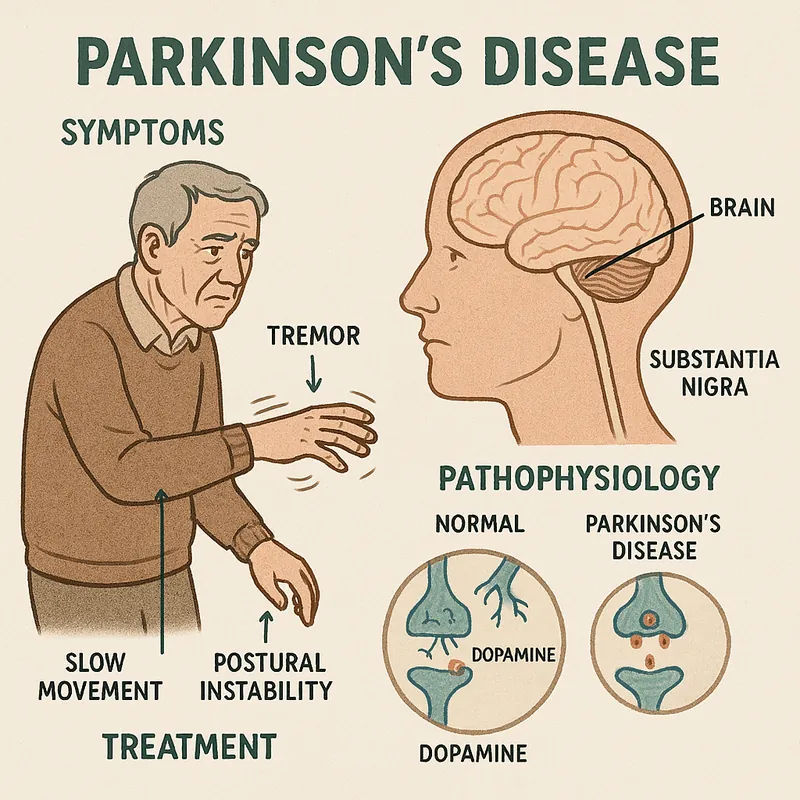
Parkinson's disease is a progressive neurodegenerative disorder caused by the loss of dopamine-producing neurons in the substantia nigra of the brain. The classic motor symptoms, tremor, rigidity, bradykinesia (slow movement), postural instability, emerge after ~50-70% of these neurons have been lost.

Pathologically defined by accumulation of misfolded alpha-synuclein protein into "Lewy bodies." Increasingly understood as a multi-system disease that begins decades before motor symptoms, often in the gut and olfactory bulb. The "gut origin" hypothesis (Braak staging) proposes alpha-synuclein may travel via the vagus nerve from gut to brain.

Beyond movement, Parkinson's affects mood, cognition, autonomic function, sleep, and GI motility. Premotor symptoms (constipation, loss of smell, REM sleep behavior disorder) may precede tremor by 10-20 years, a critical window for prevention research.

๐Ÿ’ก Key Insight: Constipation, loss of smell (anosmia), and acting out dreams (REM sleep behavior disorder) may precede tremor by a decade or more. If you have these symptoms, aggressive lifestyle intervention NOW, Mediterranean diet, exercise, microbiome support, may delay or prevent progression.
Parkinson's Disease illustration

Stages of Parkinson's (Hoehn & Yahr)

๐ŸŒฑ Early (Stage 1-2)

Unilateral or bilateral mild motor symptoms. No balance impairment. Independent. "Honeymoon" period, medications work well. Aggressive intervention here matters most.

๐ŸŒ— Mid (Stage 3)

Mild-moderate disease with postural instability and falls. Independent but limited. Motor fluctuations and dyskinesias emerge. Medication adjustments needed.

๐ŸŒ‘ Advanced (Stage 4-5)

Severe disability, needs help with ADLs, eventually wheelchair/bed-bound. Cognitive decline common. Hallucinations may emerge. End-of-life planning important.

~1M
Americans living with Parkinson's
~90K
Annual US new diagnoses
~60
Average age at diagnosis
50-70%
Dopaminergic neurons lost before symptoms

Symptoms of Parkinson's Disease

Motor symptoms are classic but non-motor symptoms often precede them by years. Recognize both.

๐Ÿƒ Motor Symptoms

๐Ÿ‘‹

Resting Tremor

"Pill-rolling" tremor at rest, usually starts in one hand. Disappears with action. Often the first noticed symptom. Asymmetric onset is characteristic.

๐Ÿข

Bradykinesia (Slowness)

Slowness of movement initiation and execution. Smaller handwriting (micrographia), reduced facial expression (hypomimia), softer voice (hypophonia).

๐Ÿ’ช

Rigidity

Increased muscle tone; "cogwheel" rigidity on exam. Stiffness in limbs, neck. Often associated with discomfort or pain.

๐Ÿšถ

Postural Instability & Gait Changes

Shuffling steps, reduced arm swing, freezing of gait, falls. Later in disease. Falls are a major cause of morbidity.

๐Ÿง  Non-Motor (Often Earlier)

๐ŸŒ€

Constipation

May precede motor symptoms by 10-20 years. Slow gut transit. Critical to address, affects medication absorption and quality of life.

๐Ÿ‘ƒ

Loss of Smell (Anosmia)

Reduced or absent sense of smell. May precede motor symptoms by 5-10 years. Olfactory bulb is one of first structures affected.

๐Ÿ˜ด

REM Sleep Behavior Disorder

Acting out dreams, kicking, punching, falling out of bed. Very strong predictor, ~80% develop Parkinson's or related synucleinopathy within 10-15 years.

๐Ÿ˜”

Depression, Anxiety, Cognitive Changes

Depression in ~50%. Anxiety, apathy, cognitive slowing common. Dementia in ~30-40% of advanced disease (Lewy body dementia).

How Parkinson's Is Diagnosed

๐Ÿฉบ Clinical Diagnosis

๐Ÿ“‹ Clinical Examination

Diagnosis is primarily clinical, neurologist examines for cardinal features: bradykinesia + tremor or rigidity. Asymmetric onset supports diagnosis. MDS criteria.

๐Ÿ’Š Response to Levodopa

Dramatic improvement with levodopa supports diagnosis (and is often used therapeutically as a diagnostic test). Poor response suggests atypical parkinsonism.

๐Ÿ“ก DaTscan (Dopamine Transporter Imaging)

SPECT imaging of dopamine transporters in striatum. Distinguishes Parkinson's from essential tremor and drug-induced parkinsonism. Used when diagnosis unclear.

๐Ÿ†• Alpha-Synuclein Seed Amplification Assay

NEW: Detects misfolded alpha-synuclein in spinal fluid or skin biopsy. ~90% sensitive/specific. May enable earlier diagnosis and clinical trial enrollment.

๐Ÿ” Workup to Exclude Other Causes

๐Ÿ“ก Brain MRI

Rules out other causes, strokes, normal pressure hydrocephalus, tumors. Parkinson's MRI typically normal early; atrophy patterns may suggest atypical parkinsonisms.

๐Ÿฉธ Wilson's Disease Workup

In young-onset cases (<50): ceruloplasmin, urinary copper, slit lamp for Kayser-Fleischer rings. Wilson's is treatable cause of parkinsonism.

๐Ÿฉธ Heavy Metal Testing

Especially manganese (welders, miners), mercury. Pesticide exposure history (paraquat, rotenone associated with Parkinson's). Modifiable in some cases.

๐Ÿงฌ Genetic Testing (Selected)

For young-onset, strong family history. LRRK2, GBA, SNCA, PRKN, PINK1. Implications for treatment trials and family counseling.

Holistic vs. Conventional Treatment

๐ŸŒฟ HOLISTIC
๐Ÿ’Š CONVENTIONAL
๐ŸŒฟ

Holistic / Functional Approach

COMPLEMENTS medications. Exercise is the single most powerful intervention, possibly disease-modifying.

Exercise
Single most evidence-based intervention. May slow progression. 150 min/week vigorous + boxing/dance/tai chi.
Gut Health
Address constipation, dysbiosis. May slow alpha-synuclein progression from gut to brain.
Mitochondrial Support
CoQ10, creatine, B vitamins support mitochondrial function in vulnerable neurons
Med Adjuncts
Improve levodopa absorption with proper timing; minimize side effects; preserve function
Comprehensive Lifestyle Strategy
  • Exercise, non-negotiable: 150+ min/week vigorous aerobic + boxing/tai chi/dance/cycling. SPARX trial: vigorous treadmill walking slowed motor decline. Possibly disease-modifying.
  • Mediterranean / MIND diet, reduces risk and may slow progression. Olive oil, fish, greens, nuts, berries.
  • Address constipation aggressively, fiber 30-40g/day, fluids, magnesium, ground flax. Untreated constipation reduces levodopa absorption.
  • Protein-redistribution diet, for those on levodopa: take meds 30-60 min before meals, redistribute protein later in day to maximize medication absorption
  • Coffee 2-3 cups/day, strongly associated with reduced Parkinson's risk; caffeine may slow progression
  • Green tea, neuroprotective polyphenols
  • Microbiome support, diverse fiber, fermented foods. Avoid unnecessary antibiotics. Treat H. pylori if present (impairs levodopa absorption).
  • Sleep hygiene, critical for brain health. Address REM sleep behavior disorder.
  • Avoid pesticides & environmental toxins, paraquat, rotenone strongly associated
  • Speech therapy (LSVT LOUD), voice and swallowing preservation
  • Physical therapy (LSVT BIG), large amplitude movements counter bradykinesia
  • Music therapy and rhythm cues, improve gait, reduce freezing
  • Tai chi, yoga, dance, improve balance, reduce falls, support brain plasticity
  • Address depression/anxiety, affects most patients; treat aggressively
  • Social engagement, fight isolation and apathy
โœ… Exercise Is Medicine: No drug yet matches the neuroprotective effect of consistent vigorous exercise in Parkinson's. Boxing (Rock Steady), tandem cycling, dance, tai chi, and high-intensity treadmill walking ALL show benefits. The earlier and more consistently exercise begins, the better the outcomes.

Diet for Parkinson's Disease

Mediterranean/MIND diet + protein-redistribution + aggressive constipation management + coffee. Address gut-brain axis as core therapy.

โœ… Prioritize:

โ˜• Coffee (2-3 cups/day)

Strong inverse association with Parkinson's risk. Caffeine may slow progression. Black or with minimal additions.

๐ŸŒพ High Fiber (30-40g/day)

Combat constipation, support microbiome. Ground flax (1-2 tbsp/day), prunes, beans, vegetables, whole grains. Critical for medication absorption.

๐ŸŸ Fatty Fish (2-3x/week)

Omega-3 anti-inflammatory, neuroprotective. Wild salmon, sardines, mackerel.

๐Ÿต Green Tea

EGCG neuroprotective; modulates alpha-synuclein aggregation in lab studies. 2-3 cups/day.

๐Ÿฅฌ Mediterranean / MIND Diet

Vegetables, fruits, olive oil, nuts, fish, legumes. Strong inverse association with Parkinson's progression.

โŒ Limit / Time Carefully:

๐Ÿฅฉ Protein Timing (Not Avoidance)

Don't restrict protein, but TIME it. Take levodopa 30-60 min BEFORE meals. Consider protein-redistribution, most protein at evening meal.

๐Ÿฅ› Excessive Dairy

High dairy intake (especially low-fat dairy) associated with increased Parkinson's risk in epidemiologic studies. Moderate consumption fine.

๐Ÿž Refined Carbs & Sugar

Pro-inflammatory; worsen brain insulin resistance. Drive constipation. Eliminate sodas, sweets, white bread.

๐Ÿ” Processed Foods & Pesticides

Pesticide exposure (paraquat, rotenone, organochlorines) associated with Parkinson's. Choose organic when possible, especially for "dirty dozen" produce.

๐Ÿท Heavy Alcohol

Worsens falls risk, sleep, cognition. Interacts with PD medications. Light moderate use may be neutral but limit.

Evidence-Based Supplements

Best evidence: CoQ10, creatine, B vitamins, vitamin D, omega-3. Always coordinate with neurologist, interactions exist.

SupplementMechanism & EvidenceSuggested DoseTimingNotes
Coenzyme Q10 (Ubiquinol)Mitochondrial support; deficient in PD brains. Some studies show modest motor symptom slowing.300-600mg/dayWith fat mealUbiquinol form (especially over 50) more bioavailable.
Vitamin D3Deficiency near-universal; correlates with worse motor symptoms. Supports neurons and bone health.2,000-5,000 IU/day (titrate to 50-80 ng/mL)With fat mealPair with K2 200mcg.
Omega-3 (EPA/DHA)Anti-inflammatory, supports neuronal membranes, may improve depression in PD.2,000-3,000mg EPA+DHA/dayWith fat mealTest omega-3 index.
CreatineMitochondrial energy support. Mixed evidence, large trial negative but may help in subgroups.5g/dayWith mealsWell-tolerated. May enhance exercise benefits.
B-Complex (B12, Folate)Deficiency common in PD (levodopa increases homocysteine). Critical for neuronal function.B12 1,000mcg + Folate 800mcg/dayMorningMethylated forms preferred.
CurcuminAnti-inflammatory, anti-amyloid in lab. Modulates alpha-synuclein aggregation.500-1,500mg/day (bioavailable form)With fat mealDiscuss with neurologist before starting.
Probiotics (Specific Strains)Improve constipation; modulate gut-brain axis. L. acidophilus + B. infantis show benefit.10-30 billion CFU/day, multi-strainWith or without foodConsistent daily use needed for benefit.
Mucuna Pruriens (Velvet Bean)Natural source of L-dopa. Used in Ayurveda. May have advantages over synthetic levodopa (additional compounds).Variable, start with 200mg standardized to 15% L-dopaDiscuss with neurologistCAUTION: Cannot be combined safely with synthetic levodopa without medical supervision. Discuss seriously with neurologist.

Exercise + Nutrition + Medication

Parkinson's responds to a comprehensive approach. Don't view exercise as optional, it may be your most powerful disease-modifying intervention. Address gut health, optimize medication timing, and partner with a movement disorder specialist. The earlier the integrated approach, the better the long-term outcomes.