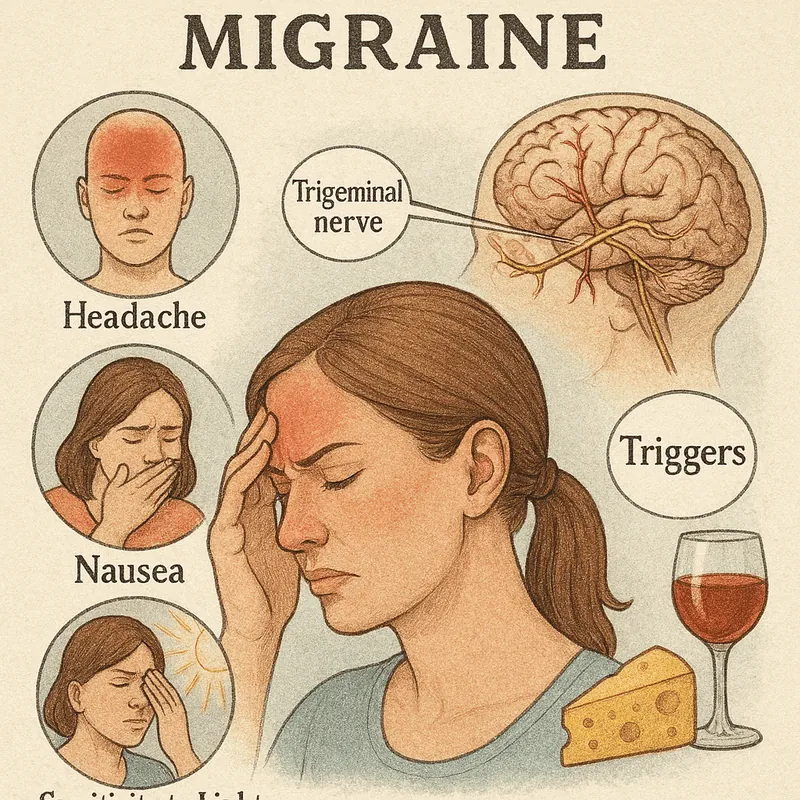
Migraine

Migraine is not just a bad headache, it is a complex neurological condition affecting 1 billion people worldwide, characterized by recurrent, disabling attacks involving neuroinflammation, cortical spreading depression, and profound gut-brain axis dysregulation. The nutritional and gut-health roots of migraine are dramatically underappreciated.

1 Billion Affected Worldwide Gut-Brain Connection Nutritionally Addressable

Last updated:

What Is Migraine?

Migraine is a neurological disorder characterized by recurrent episodes of moderate-to-severe headache, typically unilateral, pulsating, aggravated by physical activity, and accompanied by nausea, vomiting, and sensitivity to light and sound. Episodes last 4โ€“72 hours and can be completely disabling.

The pathophysiology involves cortical spreading depression (CSD), a wave of abnormal electrical activity across the brain cortex, followed by activation of the trigeminal pain pathway and release of CGRP (calcitonin gene-related peptide), the primary neuroinflammatory molecule responsible for migraine pain.

The gut-brain connection is central to migraine biology: 90% of serotonin is produced in the gut, and gut dysbiosis directly alters serotonin availability and neuroinflammatory signaling in the brain. Patients with migraine have significantly higher rates of SIBO, Candida, IBS, leaky gut, and altered gut microbiome composition compared to non-migraineurs.

โš ๏ธ Medication Overuse Headache2 (MOH), "rebound headache", affects up to 1 in 50 adults. Taking acute migraine medication more than 10โ€“15 days/month causes chronic daily headache. Breaking this cycle requires supervised withdrawal and replacement with preventive strategies.
Migraine, neurological head pain and triggers

Types of Migraine

๐ŸŒ€ Migraine Without Aura (Common)

The most prevalent type (75% of cases). Recurrent unilateral, throbbing headache with nausea and light/sound sensitivity. No preceding neurological warning symptoms. Often worse with physical movement, bright light, or noise. Requires quiet, dark rest for recovery.

โšก Migraine With Aura (Classic)

25% of migraineurs experience aura, transient neurological symptoms lasting 5โ€“60 minutes before or during headache onset. Visual aura (scintillating scotoma, zig-zag lines, blurred vision) is most common. Motor, sensory, and speech auras also occur. Migraine with aura carries a small but real increased stroke risk7, particularly in women on estrogen-containing contraceptives who smoke.

๐Ÿ“… Chronic Migraine

Defined as โ‰ฅ15 headache days/month for 3+ months, with โ‰ฅ8 meeting migraine criteria. Often develops from episodic migraine through neuroplastic changes and medication overuse. More disabling and more likely driven by gut dysbiosis, hormonal dysregulation, nutritional deficiencies (magnesium, B2, CoQ10), and unaddressed triggers than episodic migraine.

1B
People worldwide affected by migraine
3ร—
More common in women (hormonal trigger)
90%
Of patients have identifiable dietary triggers
60%
Reduction in attacks with Mg + B2 + CoQ10 protocol

Migraine Phases, Symptoms & Key Triggers

Understanding the four phases of a migraine attack, and identifying personal triggers, is the cornerstone of effective management.

๐Ÿง  The Four Phases of Migraine

๐ŸŒค๏ธ

Prodrome (1โ€“2 Days Before)

Early warning signs: food cravings (especially for carbohydrates), yawning, neck stiffness, mood changes (depression or euphoria), increased thirst and urination, fatigue, cognitive slowing. Recognizing prodrome allows early intervention before the headache phase begins.

โšก

Aura (20โ€“60 Minutes)

Transient focal neurological symptoms, visual (scintillating scotoma, fortification spectra, visual loss), sensory (tingling or numbness spreading from fingertips to face), speech (dysphasia), or motor (weakness). Each symptom typically spreads gradually, distinguishing aura from TIA which strikes suddenly.

๐Ÿ’ข

Headache Phase (4โ€“72 Hours)

Severe, throbbing, often unilateral headache (though bilateral in 40%). Accompanied by nausea/vomiting (80%), photophobia (90%), phonophobia (80%), and osmophobia (smell sensitivity). Worsened by physical activity, bending forward, coughing. Requires rest in a dark, quiet environment.

๐Ÿ˜ด

Postdrome ("Migraine Hangover")

After the headache resolves, profound fatigue, cognitive impairment ("brain fog"), emotional lability, weakness, and difficulty concentrating lasting 24โ€“48 hours. Often as disabling as the headache itself, yet rarely recognized or addressed in conventional treatment.

๐Ÿšจ Common Migraine Triggers

๐Ÿท

Dietary Triggers (Most Common)

Red wine and alcohol (histamine, tyramine, sulfites), aged cheeses (tyramine), processed meats (nitrates, tyramine), MSG, artificial sweeteners (aspartame), chocolate (phenylethylamine), caffeine (both excess and withdrawal), skipped meals (hypoglycemia), and dehydration are the most consistently reported dietary triggers.

๐ŸŒ™

Sleep & Circadian Disruption

Both too little AND too much sleep trigger migraines. Irregular sleep schedules, shift work, jet lag, and lying in on weekends ("weekend migraine") all disrupt the circadian rhythm of melatonin and serotonin synthesis, directly lowering the migraine threshold.

๐ŸŒธ

Hormonal Fluctuations

Estrogen withdrawal (premenstrual drop) is the most powerful trigger in women, explaining the 3:1 female predominance and the clustering of migraines in the perimenstrual window. Perimenopause, oral contraceptives, and HRT can all exacerbate or trigger migraine in susceptible women.

๐Ÿ’ก

Environmental & Sensory Triggers

Bright or flickering lights (photosensitivity is intrinsic to migraine, not just a symptom), strong smells (perfumes, chemical fumes), weather changes (barometric pressure drops), loud noise, and screen time. Migraine brains have persistent interictal hypersensitivity to sensory input.

The Gut-Brain Connection in Migraine

The gut is the missing piece in most migraine treatment plans. The evidence for gut dysbiosis as a driver of migraine is compelling and growing.

๐Ÿงฌ Serotonin Deficit

95% of serotonin is produced in the gut by enterochromaffin cells, regulated by the gut microbiome. Migraine patients have lower serotonin levels interictally, with surges before attacks and crashes during them. Gut dysbiosis disrupts serotonin synthesis and metabolism, lowering the migraine threshold chronically. Healing the gut microbiome restores serotonin availability without drug dependency.

๐Ÿ”ฅ Gut Inflammation & Leaky Gut

Intestinal permeability allows bacterial lipopolysaccharides (LPS) and inflammatory cytokines (TNF-ฮฑ, IL-1ฮฒ, IL-6) to enter systemic circulation, cross the blood-brain barrier, and directly activate trigeminal neurons, the pain pathway of migraine. Studies show migraine patients have significantly higher intestinal permeability and circulating LPS than healthy controls.

๐Ÿฆ  Histamine Intolerance & SIBO

Many migraineurs have histamine intolerance, an inability to adequately break down dietary and endogenous histamine due to low diamine oxidase (DAO) enzyme activity, often caused by SIBO. Histamine directly dilates cerebral blood vessels and activates the trigeminal pathway. Treating SIBO and supporting DAO enzyme function can dramatically reduce histamine-triggered migraine attacks.

Investigating Migraine & Its Root Causes

๐Ÿ  Tracking & Self-Assessment

๐Ÿ“” Headache Diary

The most important diagnostic tool for identifying personal triggers. Log: date, time, duration, severity (1โ€“10), phase symptoms, foods/drinks consumed 24h before, sleep hours, menstrual cycle day, medications taken, stress level, weather, and activity. After 2โ€“3 months, patterns reveal dominant triggers with precision impossible from memory alone.

๐Ÿฝ๏ธ Elimination Diet (Low-Tyramine / Low-Histamine)

A structured 4โ€“6 week elimination of the most common dietary triggers (aged cheeses, red wine, processed meats, MSG, chocolate, caffeine, artificial sweeteners, citrus) followed by systematic reintroduction, one food per 3 days, while tracking headache frequency. Identifies personal food triggers with high precision.

๐Ÿ”ฌ Clinical Tests

๐Ÿงฒ MRI Brain (Rule Out Structural Causes)

MRI is recommended for: new onset headache over age 50, progressively worsening headache, "thunderclap1" headache (sudden onset of worst headache of life), headache with neurological signs, or headache awakening from sleep. Normal in migraine, but essential to rule out intracranial pathology before accepting a primary headache diagnosis.

๐Ÿงฌ Nutritional & Functional Lab Panel

RBC magnesium3 (better than serum, serum is normal even when cells are depleted), Vitamin D 25(OH)D, B2 (riboflavin4) status, CoQ10 plasma level, plasma homocysteine (elevated in MTHFR mutation, drives migraine), DAO enzyme activity (histamine intolerance marker), thyroid panel, cortisol rhythm (diurnal cortisol pattern by saliva).

๐Ÿฆ  SIBO Breath Test & Stool Analysis

Given the strong gut-migraine connection, SIBO testing (lactulose breath test) and comprehensive gut microbiome analysis (stool DNA test) are valuable, especially for migraineurs with concurrent digestive symptoms, histamine intolerance, or poor response to conventional treatments.

Holistic vs. Conventional Treatment for Migraine

๐ŸŒฟ HOLISTIC
๐Ÿ’Š CONVENTIONAL
๐ŸŒฟ

Holistic / Functional Approach

Magnesium, Riboflavin (B2), CoQ10, Butterbur, trigger elimination, gut healing, sleep optimization

Migraine Reduction
Mg + B2 + CoQ10 combination reduces attack frequency by 50โ€“70% in controlled trials
Key Supplements
Magnesium glycinate, Riboflavin, CoQ10, Butterbur (Petasites), Feverfew, Melatonin
Timeline
Supplement benefits build over 3 months; trigger elimination effects visible within 6โ€“8 weeks
Advantage
Addresses nutritional deficiencies, neuroinflammation, and gut dysfunction, the actual drivers of migraine biology

Full Holistic Prevention Protocol

  • Magnesium glycinate (400โ€“600mg/day), among the better-evidenced supplements for migraine prevention. The upper intake level for supplemental magnesium is 350 mg/day; above that the usual effect is loose stools rather than harm, but it is worth knowing.; corrects near-universal magnesium deficiency in migraineurs
  • Riboflavin (Vitamin B2, 400mg/day), improves mitochondrial energy efficiency in neurons; reduces attack frequency by 50% in 3 months in trials
  • CoQ10 (300mg/day, ubiquinol), reduces neuronal energy deficits; multiple trials show 47โ€“55% reduction in migraine frequency
  • Butterbur (Petasites hybridus, 75mg 2x/day), reduces CGRP release and neurogenic inflammation; shown to reduce migraine frequency by 58% (Level A evidence from American Academy of Neurology)
  • Feverfew (100โ€“150mg dried leaf extract/day), parthenolide inhibits serotonin release from platelets and prostaglandin synthesis; reduces severity and frequency
  • Melatonin (3โ€“5mg before bed), regulates serotonin-melatonin axis and circadian rhythm; reduces migraine frequency comparably to amitriptyline without weight gain
  • Elimination diet and gut healing, remove dietary triggers, treat SIBO if present, support DAO enzyme for histamine intolerance
  • Consistent sleep schedule (same bedtime/wake time 7 days a week), the single most important lifestyle variable for migraine frequency
  • Hydration protocol (2.5L+/day), dehydration is the #1 most commonly reported acute migraine trigger
โœ… Butterbur note: Only use PA-free certified Butterbur extracts (Petadolex brand or equivalent), pyrrolizidine alkaloids (PAs) in non-certified butterbur are hepatotoxic. PA-free extracts are safe and highly effective.

Migraine Diet: Eliminate Triggers, Heal the Gut

Diet plays a dual role in migraine management, eliminating direct neurochemical triggers while healing the gut-brain axis that lowers the migraine threshold.

โœ… Brain-Protective & Anti-Inflammatory:

๐Ÿฅฌ Anti-Inflammatory Whole Foods

Dark leafy greens (magnesium), fatty fish (omega-3s for neuroinflammation), colorful vegetables (antioxidants), berries (flavonoids), ginger and turmeric (anti-inflammatory). Reducing systemic inflammation through diet lowers the frequency and severity of neuroinflammatory migraine attacks.

๐Ÿ’ง Consistent Hydration

Dehydration is the single most commonly reported acute migraine trigger, even mild dehydration (1โ€“2% body weight) can precipitate an attack. Drink 2.5โ€“3L of water daily, more in heat or exercise. Electrolyte supplementation prevents dehydration-driven migraine more effectively than water alone.

๐ŸŒพ Regular Meal Timing

Skipping meals and prolonged fasting trigger migraines through hypoglycemia and cortisol elevation. Eat at consistent times, include protein and fat at every meal to stabilize blood glucose, and never skip breakfast. The migraine brain is extremely sensitive to metabolic stress.

โŒ Common Dietary Triggers:

๐Ÿท Tyramine-Rich Foods

Aged cheeses (parmesan, cheddar, blue), red wine, beer, fermented foods, smoked/cured meats, soy sauce, miso, MSG. Tyramine triggers migraine by causing norepinephrine release from nerve terminals, producing vasodilation and neuroinflammation in susceptible individuals.

๐Ÿฅฉ Histamine Sources

Histamine content is highest in: red wine, fermented foods (kimchi, sauerkraut), aged cheeses, processed meats, leftover fish, and spinach. In patients with low DAO enzyme activity (often caused by SIBO or gut damage), even small amounts of dietary histamine can precipitate a migraine attack within hours.

โ˜• Caffeine (Both Excess & Withdrawal)

The relationship with caffeine is paradoxical: acute caffeine can abort a migraine (hence its inclusion in Excedrin), but chronic use leads to withdrawal-triggered migraines when caffeine is missed. Limit to 1 cup of coffee/day maximum, always at the same time, consistency prevents the withdrawal trigger.

๐Ÿฌ Artificial Sweeteners

Aspartame (converted to phenylalanine and methanol) and sucralose have been consistently reported as migraine triggers in clinical surveys and case series. Eliminate all artificial sweeteners during a diagnostic elimination period, they are present in diet sodas, sugar-free gum, protein powders, and "light" products.

Evidence-Based Supplements for Migraine Prevention

The following supplements have Level Aโ€“B evidence from the American Academy of Neurology or multiple RCTs for migraine prevention. They address the core neurobiological mechanisms, mitochondrial dysfunction, magnesium depletion, neuroinflammation, and gut-brain axis dysregulation.

SupplementMechanism & EvidenceSuggested DoseTimingNotes
Magnesium GlycinateMagnesium deficiency is present in 50% of migraineurs during attacks and 30% interictally. Magnesium regulates NMDA glutamate receptor activity (excitatory, excess glutamate lowers migraine threshold), prevents cortical spreading depression, and reduces CGRP release. IV magnesium aborts acute attacks in many patients. Oral supplementation reduces frequency by 41โ€“45% in prevention trials. Level B evidence from AAN.400โ€“600mg elemental magnesium/day (as glycinate)With dinner; or split morning and eveningRBC magnesium (not serum) accurately reflects total body status. Glycinate form: best absorbed, no laxative effect. Avoid citrate form if loose stools are present. The upper intake level for supplemental magnesium is 350 mg/day; above that the usual effect is loose stools rather than harm, but it is worth knowing.
Riboflavin (Vitamin B2)Riboflavin is the rate-limiting cofactor for Complex I and II of the mitochondrial electron transport chain. Migraine patients have documented mitochondrial dysfunction, reduced phosphorylation potential in neural tissue. High-dose B2 (400mg/day) restores mitochondrial energy production, reducing attack frequency by 50% within 3 months. A 2004 RCT showed equivalence to propranolol (a first-line preventive drug) with zero side effects.400mg/dayWith breakfast (fat-soluble vitamins aid absorption)High doses cause bright yellow/orange urine, normal and harmless. Takes 3 months to reach full benefit. Available OTC; extremely safe; no drug interactions.
CoQ10 (Ubiquinol)CoQ10 is the electron carrier between mitochondrial Complex Iโ€“II and III, essential for neuronal ATP production. Plasma CoQ10 deficiency is present in 33% of chronic migraine patients. A 2005 RCT (Sandor et al.) showed 300mg/day reduced migraine frequency by 48% over 3 months. The combination of Mg + B2 + CoQ10 produces greater-than-additive effects on migraine prevention.300mg/day (ubiquinol form)With a fat-containing meal, essential for absorptionUbiquinol is the pre-reduced, active form, 3โ€“4x more bioavailable than ubiquinone, especially important for age-related CoQ10 decline. Combine with B2 and Mg for synergistic mitochondrial support.
Butterbur (Petasites hybridus)PA-free butterbur extract contains petasin and isopetasin, sesquiterpene compounds that inhibit leukotriene synthesis and block CGRP release from trigeminal neurons. A 2004 RCT (Diener et al.) in Neurology showed 75mg 2x/day reduced migraine frequency by 58% over 4 months, the strongest effect size of any herbal supplement. The American Academy of Neurology awarded it Level A evidence for migraine prevention.75mg 2x/day (PA-free certified extract)With mealsMUST be PA-free (pyrrolizidine alkaloid-free), look for "Petadolex" brand or certifications. PAs in non-certified butterbur cause serious liver damage. PA-free extracts are completely safe and highly effective.
Feverfew (Tanacetum parthenium)Parthenolide, the active compound, inhibits platelet serotonin release, blocks prostaglandin synthesis, and reduces NF-ฮบB-mediated neuroinflammation in trigeminal neurons. A Cochrane review of 6 trials found feverfew modestly but consistently reduces migraine frequency and severity. Most effective for prevention when taken continuously, not for acute treatment.50โ€“150mg/day (standardized to 0.2โ€“0.6% parthenolide)With foodDo NOT stop abruptly after prolonged use, can cause "post-feverfew syndrome" (rebound headaches, nervousness, insomnia). Taper gradually. Avoid in pregnancy.
MelatoninMigraine is associated with disrupted melatonin secretion, migraineurs have lower nocturnal melatonin peaks and altered circadian rhythms. Melatonin has direct antinociceptive (pain-reducing) properties, reduces serotonin synthesis in the pineal gland (regulating serotonin-melatonin axis), and restores sleep architecture. A 2016 randomized trial found melatonin effective for migraine prevention, without weight gain or sedation, though comparative data against prescription therapy is limited.3โ€“5mg at bedtime30โ€“60 minutes before sleep, in dim lightTake in dim or red light, bright light exposure immediately before bed blocks endogenous melatonin production, negating the supplement benefit. Use consistently at the same time each night for circadian entrainment. Melatonin is commonly sold at doses well above what is needed, and more is not better. Start at the lowest available dose. Discuss it with your prescriber if you take sedatives, anticoagulants, or immunosuppressants.
5-HTP (5-Hydroxytryptophan)The direct precursor to serotonin, bypassing the rate-limiting tryptophan hydroxylase step. Raises serotonin levels in both the gut and brain, addressing the serotoninergic deficit underlying migraine pathophysiology. Studies show 400โ€“600mg/day reduces attack frequency comparably to methysergide (a prescription prophylactic). Also improves sleep quality and mood, both of which influence migraine threshold.100โ€“200mg/day (starting low)Before bed (serotonin โ†’ melatonin pathway supports sleep)Do NOT combine with SSRIs, SNRIs, triptans, or MAOIs, risk of serotonin syndrome. Must be used alone or under physician supervision if on serotonergic medications.
Alpha-Lipoic Acid (ALA)A lipophilic and hydrophilic antioxidant that crosses the blood-brain barrier and directly reduces neuroinflammation and oxidative stress in trigeminal pathways. A 2019 RCT found 600mg/day ALA reduced migraine frequency by 49% over 3 months. Particularly effective when combined with the Mg + B2 + CoQ10 mitochondrial protocol for synergistic neuroprotective effects.600mg/day (R-ALA preferred)30 minutes before a mealR-ALA form is significantly more bioavailable. Stabilized sodium R-ALA (Na-RALA) prevents thermal degradation. Synergistic with CoQ10 for mitochondrial antioxidant defense.

Ready to Break the Migraine Cycle?

Migraine frequency can often be meaningfully reduced through a comprehensive nutritional approach: correcting deficiencies, identifying triggers, supporting the gut-brain axis, and optimizing sleep. Specific supplements such as magnesium, riboflavin and CoQ10 have shown 50โ€“70% reductions in controlled trials.

References & Evidence Notes

Each numbered entry below is either a source you can follow or a note setting out what the evidence does and does not support. Both are numbered together so the markers in the text line up.

Last reviewed 27 August 2026. Supplement entries are cross-checked against the NIH National Center for Complementary and Integrative Health and the Linus Pauling Institute Micronutrient Information Center.8 Two safety points before the nutrition. A sudden, severe headache that peaks within seconds to a minute, the worst of your life, is not a migraine until proven otherwise, and needs emergency assessment for subarachnoid haemorrhage. So does a headache with fever and neck stiffness, new neurological signs, a headache starting after 50, or one that wakes you from sleep or worsens progressively. Second, and much commoner: the treatment can become the cause. Taking acute migraine medication on more than about 10 to 15 days a month, depending on the drug, produces medication overuse headache, and the way out is withdrawal with support rather than more medication. Migraine with aura also carries a small increased stroke risk, which matters if you smoke or use estrogen-containing contraception.

  1. On red flags. Thunderclap onset, headache with fever and neck stiffness, new focal neurological deficit, headache after head injury, new headache over the age of 50, headache worsening with posture or Valsalva, headache in pregnancy or postpartum, and new headache in someone immunosuppressed or with cancer all warrant urgent assessment rather than migraine treatment.
  2. On medication overuse headache. Regular use of acute treatments beyond roughly 10 days a month for triptans, ergots, opioids and combination analgesics, or 15 days for simple analgesics, can transform episodic migraine into a chronic daily headache. Those are the thresholds used to define acute medication overuse in recent migraine trials, PubMed 38924724. It is common, frequently unrecognised, and improves with withdrawal of the offending agent, generally alongside preventive treatment. Recognising it changes the whole management plan.
  3. On magnesium: magnesium is among the better-evidenced supplements for migraine prevention, with Level B evidence in American Academy of Neurology guidance, typically at 400 to 600 mg of elemental magnesium daily. That is above the 350 mg upper intake level for supplemental magnesium, and the practical consequence of exceeding it is usually loose stools rather than harm; glycinate is better tolerated than citrate or oxide. Better-evidenced is relative, though. A meta-analysis of randomized trials found oral magnesium reduced attack frequency and intensity, PubMed 26752497, while a later systematic review concluded the evidence is insufficient to say whether it works at all, PubMed 30764890. The trials are small, and the honest summary is that this is a reasonable thing to try rather than a reliable one.
  4. On riboflavin and coenzyme Q10: riboflavin at 400 mg daily has supportive randomized evidence. A pooled analysis of trials at 400 mg daily for three months found significant effects on migraine days, duration, frequency and pain score, PubMed 33779525. Coenzyme Q10 at around 300 mg daily is less settled. One meta-analysis found it reduced attack duration and frequency, PubMed 33402403, and another found no significant reduction in frequency and judged the evidence insufficient, PubMed 30764890. Effects, where they appear, take two to three months rather than working immediately. Both are low-risk. Riboflavin turns urine bright yellow, which is harmless and expected.
  5. On preventive medication and newer options: beta blockers, candesartan, amitriptyline, topiramate and sodium valproate are established preventives, with valproate avoided in women of childbearing potential, since in a population cohort of prenatal anti-seizure drug exposure it was among the drugs associated with neurodevelopmental disorders in the child while several alternatives were not, PubMed 41813017. CGRP monoclonal antibodies and gepants are newer, well-tolerated and effective for people who have failed older preventives. If migraine is disabling and supplements have not helped, this is worth pursuing rather than persisting.
  6. On triggers, honestly: the evidence for specific dietary triggers is weaker than the folklore suggests, and premonitory-phase food cravings are frequently mistaken for triggers, meaning the attack had already started. Skipped meals, dehydration, disrupted sleep and alcohol have better support than chocolate or cheese. A headache diary distinguishes real personal triggers from coincidence better than an elimination diet does.
  7. On aura and vascular risk: migraine with aura is associated with a modest increase in ischaemic stroke risk, amplified by smoking and by combined hormonal contraception: a BMJ meta-analysis found the raised risk concentrated in migraine with aura, absent without it, and further increased by smoking and oral contraceptive use, PubMed 19861375. Guidance generally advises against estrogen-containing contraceptives in women with migraine with aura, which is a conversation worth having explicitly.
  8. National Center for Complementary and Integrative Health (NIH), nccih.nih.gov, and the Linus Pauling Institute Micronutrient Information Center, lpi.oregonstate.edu/mic.