A chronic, estrogen-fueled inflammatory disease where tissue resembling the uterine lining grows outside the uterus, affecting roughly 1 in 10 women of reproductive age, with an average diagnostic delay of 7 to 10 years.
Last updated:
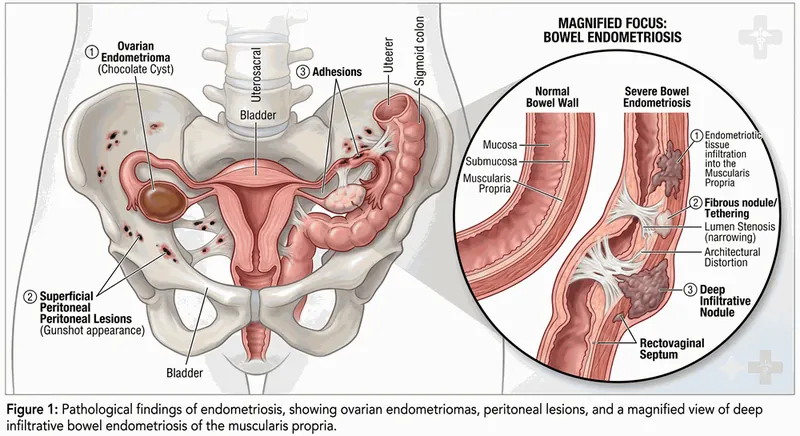
Endometriosis is a systemic, chronic inflammatory disease in which endometrial-like tissue, glands and stroma resembling the uterine lining, implants and grows outside the uterus, most commonly on the ovaries, fallopian tubes, pelvic peritoneum, bladder, and bowel.
Unlike normal uterine lining, these lesions have no exit route. Each cycle they respond to estrogen by proliferating, bleeding internally, and triggering a cascade of inflammation, scar tissue, and adhesions that fuse pelvic organs together. The disease is now understood as inflammatory and immune-driven, not merely "misplaced tissue", local estrogen synthesis by the lesions themselves keeps them growing even when systemic estrogen is normal.
The ASRM/AAGL staging system divides endometriosis into 4 stages based on lesion location, depth, and adhesion burden. Stage does not predict pain, a Stage I patient may have severe pain while a Stage IV may have minimal pain, but it does predict fertility impact and surgical complexity:
"Endometriosis is a chronic, estrogen-dependent, inflammatory disease affecting approximately 10 percent of reproductive-aged women, with diagnostic delays averaging 7 to 10 years from symptom onset."
โ Zondervan et al., 2020 New England Journal of MedicineA few superficial peritoneal implants, less than 5 mm deep, with no or minimal adhesions. Often dismissed on laparoscopy as "unremarkable," yet pain and inflammation can be severe. Highest rate of misdiagnosis as IBS, ovarian cysts, or "normal period pain".
Multiple deep implants plus one or more ovarian endometriomas (chocolate cysts), with denser adhesions in the pelvis. Fertility starts to become measurably impacted. Bowel, bladder, and chronic fatigue symptoms are commonly present.
Deep infiltrating endometriosis (DIE) with large endometriomas, dense adhesions, and often a "frozen pelvis" where bowel, bladder, ureters, and reproductive organs fuse together. Significant fertility impact and often debilitating chronic pain.
Endometriosis is famously a "great mimic". It can wear the costume of IBS, interstitial cystitis, chronic fatigue, fibromyalgia, or depression. The unifying thread is almost always a cyclical pattern that worsens in the days surrounding menstruation.
Pain that prevents work, school, or daily activity, requires bed rest, or fails to respond fully to standard NSAIDs. Often begins in adolescence and is wrongly normalized for years. This is the single most common and most under-recognized hallmark of endometriosis.
Sharp, deep pain with penetration or specific positions, often persisting for hours or days after sex. Caused by direct contact with lesions in the cul-de-sac, uterosacral ligaments, or rectovaginal septum. Frequently destroys intimacy long before diagnosis.
Soaking a pad or tampon every 1 to 2 hours, large clots, periods lasting more than 7 days, and bleeding through to bedding or clothing. Often paired with iron deficiency, fatigue, and dizziness.
Sharp pain at ovulation that lasts hours to days, plus diffuse pelvic ache between periods. Many women describe never having a fully pain-free day. Indicates active inflammation beyond just the period window.
Endometriosis is present in 30 to 50 percent of women presenting with infertility. Mechanisms include adhesions distorting tubes and ovaries, inflammation impairing egg quality, and altered uterine receptivity to implantation.
Cyclical low back ache, deep hip pain, and shooting leg pain (especially with bowel movements during menses) suggests lesions on the uterosacral ligaments or sciatic nerve. Often misdiagnosed for years as orthopedic or musculoskeletal in origin.
Painful bowel movements during menses, alternating constipation and diarrhea synchronized with the cycle, rectal bleeding during periods, and bloating so severe many call it "endo belly". Frequently misdiagnosed as IBS for years.
Sudden, dramatic abdominal distention, often visibly several months pregnant in appearance, that worsens premenstrually and resolves after menses. Driven by pelvic inflammation, mast cell activation, and altered gut motility.
Burning with urination during menses, increased frequency, urgency, suprapubic pressure, and (rarely) cyclical hematuria. Bladder endometriosis or interstitial-cystitis overlap is common and often undiagnosed for years.
Deep, immovable fatigue out of proportion to sleep, plus difficulty concentrating, word-finding problems, and poor memory. Driven by chronic systemic inflammation, blood loss, and the metabolic cost of an immune system fighting ectopic tissue every cycle.
Years of dismissed pain, gaslighting, and missed work or school carve deep mental health grooves. Anxiety, depression, and PTSD are 2 to 3x more common in endometriosis. Central sensitization can amplify pain signals long after lesions are addressed.
Severe nausea, vomiting, diarrhea, sweating, and even fainting at the height of menstrual pain. Driven by excess prostaglandin release from lesion sites and intense vagal stimulation. Pain like this is not normal and is itself a diagnostic clue.
Definitive diagnosis still requires laparoscopy with biopsy, but careful clinical evaluation, expert imaging, and supportive labs can build a strong working diagnosis well before surgery. Symptoms alone, in a typical pattern, are reason to begin treatment.
These are not diagnostic on their own, but strong patterns warrant a referral to an endometriosis-literate provider:
Track at least 3 cycles, logging pain location, intensity (0 to 10), bowel and bladder symptoms, dyspareunia, fatigue, and bleeding. A clear premenstrual and menstrual flare across multiple systems is the most diagnostic single screening tool. Apps like Phendo and Clue are useful, but a simple notebook works.
Score 1 point for each: dysmenorrhea unresponsive to NSAIDs, missed school or work due to pain, painful intercourse, painful bowel movements during menses, cyclical bloating ("endo belly"), heavy bleeding, infertility or subfertility, fatigue out of proportion, low back or sciatic pain with menses, family history of endo. Score 4 or more warrants formal evaluation.
Note whether ibuprofen taken at full dose (400 to 600 mg) prior to pain onset gives meaningful relief. Inadequate NSAID response is a strong endometriosis flag. Also track flares triggered by dairy, gluten, alcohol, or stress, useful baseline before starting elimination work.
Toggle between the two approaches to compare treatments, outcomes, and what each looks like in practice.
Lower estrogen burden, reduce systemic inflammation, support the immune system, and (when warranted) pair with expert excision surgery
Endometriosis is multifactorial. The dominant model has evolved from "retrograde menstruation" alone to a complex interplay of estrogen excess, immune dysfunction, inflammation, gut health, environmental exposures, and genetics.
| Root Cause | How It Contributes to Endometriosis | Holistic Solution |
|---|---|---|
| Estrogen Dominance / Local Estrogen Synthesis | Endometriotic lesions express aromatase and produce their own estrogen, fueling growth even when systemic levels are normal. Excess estrogen relative to progesterone drives lesion proliferation and pain. | Cruciferous vegetables daily, ground flax, DIM, calcium-D-glucarate, support liver phase 1/2 detox, address constipation |
| Immune Dysfunction / Impaired Clearance | The immune system normally clears ectopic endometrial cells. In endometriosis, NK-cell function is reduced and macrophage clearance is impaired, allowing lesions to implant and persist. | Vitamin D3, zinc, selenium, omega-3, mushroom blends (reishi, turkey tail), sleep optimization, stress reduction |
| Chronic Inflammation & Elevated Prostaglandins | Lesions and the peritoneal fluid surrounding them are saturated with inflammatory cytokines and PGE2, driving pain, adhesions, and continued lesion growth. | Anti-inflammatory diet, omega-3 EPA (2 to 3 g/day), curcumin with piperine, ginger, boswellia, eliminate seed oils |
| Gut Dysbiosis & Estrobolome Imbalance | Gut bacteria with the gene cluster "estrobolome" deconjugate estrogen excreted in bile, recirculating it back to the body. Dysbiosis raises circulating estrogen and inflammation. | Fermented foods, soluble fiber, targeted probiotics, address SIBO/candida, L-glutamine, 30+ plant species per week |
| Endocrine-Disrupting Chemicals (EDCs) | Dioxins, BPA, phthalates, PFAS, and pesticides mimic estrogen and have been directly linked to endometriosis risk and severity in human and primate studies. | Glass/stainless instead of plastic, fragrance-free personal care, EWG-rated products, filter water, organic when possible |
| Retrograde Menstruation & Coelomic Metaplasia | The original Sampson theory (menstrual blood flowing back through the tubes) remains a piece of the puzzle, combined with coelomic metaplasia, where peritoneal cells transform into endometrial-like tissue. | Cannot be eliminated, but inflammation and immune support determine whether stray cells implant and survive |
| Vitamin D Deficiency | Vitamin D modulates the immune response and inflammatory cytokines. Low vitamin D is associated with higher endometriosis prevalence and severity. | Sunlight, vitamin D3 2000 to 5000 IU/day with K2, retest 25-OH-D after 3 months (target 50 to 80 ng/mL) |
| Chronic Stress / HPA-Axis Dysfunction | Sustained cortisol suppresses progesterone, worsens estrogen dominance, dampens immune surveillance, and amplifies central pain processing. | Breathwork, vagal-tone exercises, daily walks, magnesium, adaptogens (ashwagandha, rhodiola), boundaries, therapy |
| Genetic Predisposition | Heritability is approximately 50 percent. First-degree relatives of women with endometriosis have a 6 to 7x higher risk. Variants in immune and inflammation genes are implicated. | Genetics load the gun, lifestyle pulls the trigger. The same anti-inflammatory levers work even with strong family history. |
| Mast Cell Activation & Histamine Excess | Endometriotic lesions are densely populated with mast cells. Histamine release drives pain, bladder symptoms, "endo belly," and food-trigger sensitivities. | Low-histamine trial (60 to 90 days), DAO enzyme support, quercetin, vitamin C, address gut and stress drivers |
Food is the single highest-leverage intervention for endometriosis pain and progression. Multiple studies show meaningful reductions in pain scores within 3 to 6 months of an anti-inflammatory, estrogen-clearing diet.
Endometriosis is fueled by two factors that food can directly influence: inflammation and estrogen load. The eating pattern that does this best is whole-food, fiber-rich, low in inflammatory triggers, and built around foods that support liver detox and gut clearance of estrogen.
This is not a "deprivation" diet, it is a strategic one. The framework: anchor with clean protein and omega-3 rich fats, fill the plate with cruciferous and colorful vegetables, eliminate the top inflammatory triggers (gluten, dairy, alcohol, seed oils) for 90 days, and reintroduce one at a time to identify personal triggers.
Supplements are accelerators, not replacements for diet, sleep, and stress work. The list below combines the most evidence-backed endometriosis interventions with foundational nutrients commonly depleted by chronic inflammation and heavy bleeding.
| Supplement | Role in Endometriosis Recovery | Suggested Dose | Timing | Notes |
|---|---|---|---|---|
| Omega-3 EPA/DHA (Fish Oil) | The most-studied anti-inflammatory supplement for endometriosis. Directly competes with arachidonic acid to lower prostaglandin E2 and pelvic pain. Multiple trials show meaningful pain reduction at 2 to 3 g/day. | 2 to 3 g combined EPA+DHA per day | With meals, split AM and PM | Choose IFOS-certified, third-party-tested for purity. EPA-dominant formulas best for pain. |
| Curcumin (Turmeric Extract) | Inhibits NF-kB inflammation, reduces estradiol production by lesion cells in vitro, and lowers pain scores in clinical trials. Synergistic with omega-3. | 500 to 1000 mg curcumin per day | With a fat-containing meal | Must include piperine (black pepper) or use liposomal/Meriva form for absorption. |
| N-Acetylcysteine (NAC) | RCT data (Porpora et al., 2013) showed 24% reduction in endometrioma size and significant pain reduction after 3 months. Replenishes glutathione, supports liver detox of estrogens. | 1200 to 1800 mg per day | Empty stomach, split twice daily | One of the few supplements with direct RCT evidence for endometrioma reduction. |
| Vitamin D3 (with K2) | Modulates immune function and reduces inflammatory cytokines. Low D is associated with higher endometriosis prevalence and pain severity. | 2000 to 5000 IU D3 + 100 to 200 mcg MK-7 K2 per day | With a fat-containing meal, morning preferred | Test 25-OH-D first; target 50 to 80 ng/mL. Retest at 3 months. |
| DIM (Diindolylmethane) | Concentrated cruciferous extract that shifts estrogen metabolism toward protective 2-OH pathway and away from inflammatory 4-OH and 16-OH pathways. | 100 to 200 mg per day | With food, morning preferred | Start low and titrate up. May cause headache initially as estrogen detox accelerates. |
| Magnesium Glycinate | Smooth muscle relaxant that directly reduces uterine cramping. Required for progesterone production, GABA synthesis, and sleep. | 300 to 600 mg elemental magnesium per day | Evening, 30 to 60 min before bed; add an extra 100 to 200 mg during menses | Glycinate is calming and well-absorbed. Citrate also works but can loosen stools. |
| Zinc | Modulates inflammation, supports immune surveillance, and aids tissue repair. Often low in women with endometriosis. | 15 to 30 mg per day | With meals (food prevents nausea) | If using long-term at higher doses, add 1 to 2 mg copper to prevent imbalance. |
| Resveratrol | Polyphenol that downregulates aromatase (the enzyme lesions use to make their own estrogen) and reduces inflammation. Promising trial data in endometriosis. | 400 to 800 mg per day (trans-resveratrol) | Morning, with food | Best paired with quercetin and curcumin for synergistic effect. |
| Calcium-D-Glucarate | Inhibits beta-glucuronidase, the gut enzyme that "unbinds" estrogen and recycles it back into circulation. Supports clean estrogen excretion. | 500 to 1500 mg per day | With meals, split AM and PM | Especially useful if constipation, dysbiosis, or estrogen-dominance signs are present. |
| Quercetin | Natural antihistamine and mast-cell stabilizer. Helps the bloating, bladder symptoms, and food-trigger sensitivities that come from mast-cell-rich lesions. | 500 to 1000 mg per day | Between meals, empty stomach preferred | Pair with bromelain or vitamin C for absorption. |
| Methylated B-Complex (with L-methylfolate) | Critical for estrogen methylation, homocysteine metabolism, and energy. Endometriosis depletes B vitamins through chronic inflammation and bleeding. | 1 capsule per day per product label | Morning with food | If trying to conceive, ensure at least 400 to 800 mcg L-methylfolate. |
| Iron (if deficient) | Heavy menstrual bleeding routinely depletes iron and worsens fatigue, brain fog, and pain tolerance. Replete aggressively when ferritin is low. | Per labs, often 25 to 65 mg elemental iron 3x/week | Empty stomach with vitamin C, or per provider | Bisglycinate (gentle iron) is best tolerated. Retest ferritin every 8 to 12 weeks. |
| Coenzyme Q10 (Ubiquinol) | Mitochondrial fuel for the energy demands of healing and ovulation. Supports egg quality, especially important when trying to conceive with endometriosis. | 100 to 300 mg ubiquinol per day | With a fat-containing meal, morning preferred | Especially helpful for endometriosis-related fertility support. |
| Ginger Root Extract | Trial data shows ginger 250 mg 4x/day is non-inferior to ibuprofen for menstrual pain. Powerful natural anti-prostaglandin. | 250 mg 3 to 4x per day during menses | Start 2 days before expected menses, continue through day 3 | Capsules, tea, or fresh root all work. Can stack with magnesium during flares. |
| Multi-Strain Probiotic | Improves the estrobolome (gut bacteria that metabolize estrogen), reduces systemic inflammation, and supports gut barrier integrity. | 25 to 50 billion CFU per day, multi-strain | Empty stomach or with light meal | Rotate brands every 2 to 3 months. Stop if bloating worsens (rule out SIBO first). |
| Pycnogenol (Pine Bark Extract) | RCT (Kohama et al.) showed 33% reduction in endometriosis pain after 48 weeks of pycnogenol. Anti-inflammatory and antioxidant. | 30 to 60 mg 2x per day | With meals | Slower-acting than NSAIDs but addresses inflammation at the root. |
| Bromelain | Pineapple-derived enzyme with anti-inflammatory and fibrinolytic effects. May help reduce adhesions and improve circulation in pelvic tissue. | 500 to 1000 mg (high GDU/MCU) per day | Empty stomach, between meals | Useful pre- and post-surgical phases for adhesion prevention. |
| L-Glutamine | Supports gut barrier integrity in the gut-estrobolome connection. Reduces leaky-gut driven inflammation that worsens systemic disease. | 5 g per day, 1 to 2x per day | Empty stomach, mixed in water | Useful in the first 8 to 12 weeks of gut healing protocol. |
Understanding what to expect from each approach helps set realistic expectations and make informed choices.
Begin elimination of gluten, dairy, alcohol, and seed oils. Start foundational supplements (omega-3, magnesium, vitamin D). Expect a brief detox flare.
First cycle on protocol shows reduced cramping and bloating. Sleep and energy improve. Add NAC, curcumin, DIM. Begin pelvic floor PT.
Pain scores drop 40 to 70% in many. Endo belly and GI symptoms calm. Mood and brain fog clear. NAC studies show endometrioma size reduction at this point.
Sustained pain reduction. Cycles regularize. Fertility window opens for many. Quality of life dramatically improved. Reintroduction trials can begin.
Sustained remission when lifestyle is maintained; markedly lower recurrence post-surgery
Hormonal suppression begins. Bleeding lightens or stops. Hot flashes (GnRH) or breakthrough bleeding (progestin) common.
Pain often reduces while on medication. Mood changes, libido loss, and weight changes may appear. Underlying inflammation unaddressed.
Continued suppression. GnRH agonists typically capped at 6 to 12 months due to bone density loss. Surgery may be offered for breakthrough symptoms.
Symptoms typically return within 3 to 6 months. Lesions persist. 62% recurrence within 5 years after ablation surgery alone.
High recurrence; cumulative side effects; underlying inflammatory and immune drivers progress untreated
"Endometriosis is an inflammatory disease that responds to inflammation. Lower the fire and you change the disease, not just the symptom."
Explore related conditions below or revisit the Symptom Checker to map your full symptom picture across the library.