Vaginal / Vulvar Cancer, Squamous, Adenocarcinoma, Melanoma & Sarcoma

Two rare but related gynecologic cancers of the lower genital tract, with the same major pathways: HPV-driven in younger women and chronic skin disease in older women. Standard oncology care is the primary treatment; holistic nutrition and lifestyle work alongside to support healing, mitigate treatment side effects, and reduce recurrence.

4 Histologic Subtypes ~12,000 Cases / Year (Combined) FIGO Stage Iโ€“IV HPV-Related & Non-HPV

Last updated:

What Is Vaginal / Vulvar Cancer?

Vaginal and vulvar cancers are malignancies of the lower female genital tract. Vaginal cancer arises in the vaginal canal; vulvar cancer arises in the external genitalia (labia majora, labia minora, clitoris, perineum). They are closely related biologically, share most risk factors, and are grouped together for clinical and survivorship purposes.

Both are rare, with approximately 6,000 new vulvar and 6,000 new vaginal cancer cases per year in the United States combined. Squamous cell carcinoma accounts for about 85 percent of both. The other histologic subtypes are adenocarcinoma, melanoma, and sarcoma. Importantly, two distinct biological pathways produce these cancers: an HPV-related pathway in younger women (high-risk HPV types 16 and 18 driving precancer to cancer), and a non-HPV pathway in older women, usually arising from chronic vulvar skin diseases such as lichen sclerosus.

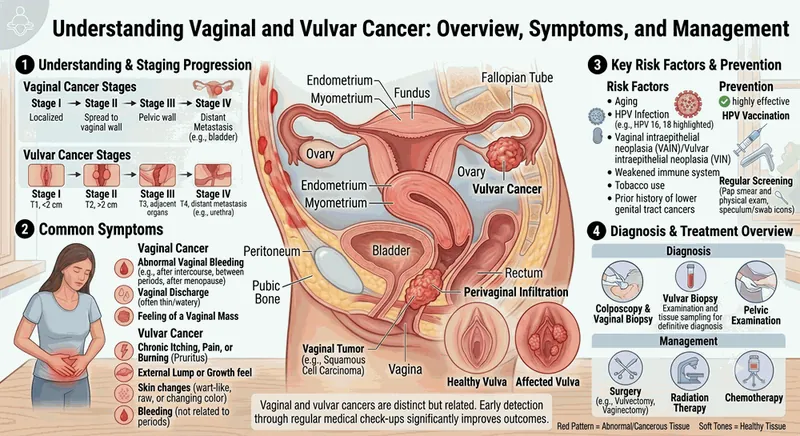
Staging follows the FIGO system (I to IV). Most patients present with a visible or palpable lesion, persistent itching, or bleeding/discharge. Because these are visible on self-exam and pelvic exam, earlier-stage detection is possible with regular checks, the four major subtypes are described below:

Vaginal and vulvar cancer, anatomy of the lower genital tract

"Vulvar and vaginal cancers are rare but increasingly recognized as part of the HPV-related cancer spectrum, with a second important pathway from chronic vulvar dermatoses in older women. Earlier diagnosis, prompted by self-exam and dermatologic surveillance, is one of the few clearly modifiable factors."

โ€” National Comprehensive Cancer Network, Vulvar Cancer Guidelines, 2024

๐Ÿ…ฐ๏ธ Squamous Cell Carcinoma (~85% of both)

The dominant histology in both vulvar and vaginal cancer. Two major pathways: HPV-related (younger women, arises from VIN/VaIN precancer) and non-HPV (older women, arises from lichen sclerosus or chronic vulvar dermatosis). HPV-related disease tends to have a slightly better prognosis stage for stage.

  • โ†’Hallmarks: Visible or palpable lesion, persistent itching, bleeding, ulcer, or pigmented patch
  • โ†’Standard care: Wide local excision/vulvectomy + sentinel-node biopsy + risk-adjusted radiation/chemo
  • โ†’Markers: HPV status (p16 IHC), MMR/MSI, PD-L1 for advanced disease
  • โ†’Holistic role: Tissue-repair nutrition, immune support, HPV-clearance lifestyle, lichen sclerosus skin care

๐Ÿ…ฑ๏ธ Adenocarcinoma (~5%)

Arises from glandular tissue (Bartholin's glands in the vulva, vaginal adenosis in the vagina). Includes the historically important clear-cell adenocarcinoma of the vagina linked to in-utero DES exposure in older women. Generally less HPV-related, behavior depends on subtype.

  • โ†’Hallmarks: Deep-seated lump (vulvar Bartholin), abnormal discharge, sometimes pain on intercourse
  • โ†’Standard care: Surgical resection with lymph-node staging; adjuvant radiation/chemo based on stage
  • โ†’Markers: Molecular profiling per subtype; consider Lynch syndrome workup for selected adenocarcinomas
  • โ†’Holistic role: Recovery nutrition, lymphatic support if lymph-node dissection performed

๐Ÿ…ฒ Melanoma (~5%)

Aggressive pigmented lesion arising from melanocytes in the vulvar or vaginal mucosa. Vulvar/vaginal melanoma carries a worse prognosis than cutaneous melanoma due to mucosal location and frequent delayed diagnosis. Not HPV-related, and not strongly linked to sun exposure.

  • โ†’Hallmarks: Pigmented lesion (brown, black, blue), often irregular borders, may bleed or itch
  • โ†’Standard care: Wide local excision + sentinel-node biopsy; immunotherapy (checkpoint inhibitors) for advanced disease
  • โ†’Markers: BRAF, NRAS, KIT mutational testing; PD-L1; tumor mutational burden
  • โ†’Holistic role: Immune-supportive nutrition for immunotherapy, vitamin D optimization, gut microbiome care

๐Ÿ…ณ Sarcoma (~3 to 5%)

Rare cancers of mesenchymal origin (muscle, connective tissue). Includes leiomyosarcoma and rhabdomyosarcoma. Rhabdomyosarcoma (especially sarcoma botryoides) is the most common malignant vaginal tumor in children. Generally treated by multimodal pediatric or adult sarcoma protocols.

  • โ†’Hallmarks: Vaginal mass that may protrude, grape-like clusters in pediatric botryoides type, rapid growth
  • โ†’Standard care: Multimodal sarcoma protocols (surgery + chemo + radiation), often via specialized centers
  • โ†’Markers: Sarcoma-specific molecular profiling (e.g., PAX-FOXO1 fusions in rhabdomyosarcoma)
  • โ†’Holistic role: Nutritional support through aggressive multimodal therapy, recovery, fertility planning

Vaginal / Vulvar Cancer Statistics & Research

~6,000
new US vulvar cancer cases per year (American Cancer Society, 2024)
~6,000
new US vaginal cancer cases per year (combined with VAIN/in situ)
~85%
of cases are squamous cell carcinoma
~50%
of vulvar SCC are HPV-related (younger women); ~50% non-HPV (older, from lichen sclerosus)
75%
5-year survival for stage I vulvar SCC; falls to ~20% at stage IV
5%
lifetime malignant transformation risk in untreated vulvar lichen sclerosus

How Vaginal / Vulvar Cancer Presents

Because these cancers arise from visible mucosa and skin, the most common warnings are visible or palpable changes on self-exam plus persistent itching or bleeding. Many women dismiss these symptoms as "just yeast" or "just dryness" for months or years before evaluation, which is the single biggest cause of delayed diagnosis.

๐Ÿ‘๏ธ Vulvar & Visible Symptoms

๐Ÿ˜–

Persistent Vulvar Itching (Pruritus)

Chronic vulvar itching, especially when it does not respond to typical yeast or eczema treatments, is one of the most common presenting symptoms of vulvar cancer and its precursor lichen sclerosus. Any itching lasting more than 4 to 6 weeks despite treatment warrants gynecologic and dermatologic examination.

๐Ÿ”ด

Visible Lump, Bump, or Thickened Patch

A new growth on the vulva, often described as a "skin tag," wart, ulcer, or thickened patch that does not go away. Color can be skin-tone, red, white, or pigmented. Any lesion present greater than 4 weeks warrants biopsy, regardless of how innocuous it appears.

โšช

White or Red Skin Changes

White, parchment-like, or wrinkled vulvar skin (suggestive of lichen sclerosus) or red, raw, eczema-like patches (suggestive of vulvar intraepithelial neoplasia, VIN). Both are premalignant and require ongoing dermatologic care to reduce cancer risk.

๐Ÿฉธ

Vulvar Bleeding or Ulcer

A non-healing sore or open ulcer on the vulva that bleeds with minor contact or persistently weeps fluid is a strong red flag. Often initially attributed to chafing, infections, or eczema, but persistence beyond 3 to 4 weeks must trigger biopsy.

๐ŸŸซ

New Pigmented Lesion

A new dark, brown, or black spot on the vulva or vaginal mucosa is concerning for melanoma. Look for ABCDE features: Asymmetry, irregular Borders, variable Color, Diameter greater than 6 mm, Evolution. Any of these warrants biopsy by a gynecologist or dermatologist.

๐Ÿ”†

Burning or Tenderness on the Vulva

Persistent localized burning, raw sensation, or tenderness in a specific area of the vulva, often worse with urination, touching, or sitting. Can also reflect VIN or early invasive disease. Differentiate from generalized vulvodynia by location-specific persistence and any visible change.

๐Ÿฉธ Vaginal & Functional Symptoms

๐Ÿฉธ

Abnormal Vaginal Bleeding

Bleeding between periods, after intercourse, after menopause, or any unexplained bleeding pattern can indicate vaginal cancer (or another gynecologic malignancy). Postcoital bleeding in particular has high diagnostic yield in finding lower genital tract disease.

๐Ÿ’ง

Abnormal Vaginal Discharge

Persistent watery, bloody, or foul-smelling discharge that does not resolve with treatment for typical infections. Any postmenopausal discharge with blood is particularly concerning for vaginal or endometrial cancer and warrants prompt evaluation.

๐Ÿ’”

Pain with Intercourse (Dyspareunia)

New, deep, or localized pain with intercourse, often with bleeding or burning afterward. Can reflect a vaginal mass, lichen sclerosus-related skin fragility, or vulvar lesion. Persistent dyspareunia warrants examination, not avoidance.

๐Ÿ˜ฃ

Pelvic Pain or Pressure

Persistent pelvic pain or a sensation of pressure, sometimes with the feeling of a mass in the vaginal canal. More common in advanced disease where the tumor invades surrounding tissues or compresses adjacent structures.

๐Ÿšฝ

Painful or Difficult Urination

Burning with urination from urine contacting a vulvar lesion, or urinary frequency/urgency from a vaginal mass pressing on the bladder. Often misdiagnosed as recurrent UTI when cultures are negative.

๐Ÿฆต

Inguinal Lymph Node Enlargement

Painless or tender lump in the groin can indicate spread of vulvar or vaginal cancer to the inguinal lymph nodes. Any persistent inguinal node greater than 1 cm that is firm and fixed warrants imaging and biopsy.

โš ๏ธ The 4-Week Rule: Any new vulvar lesion, persistent itching, abnormal bleeding, or visible skin change in the lower genital tract that does not resolve within 4 weeks of basic treatment warrants a gynecologic exam with biopsy. The diagnosis is rare, but the workup is simple and the outcome is dramatically better when caught early.

How to Test for Vaginal / Vulvar Cancer

Diagnosis is built from inspection (the eye is the most powerful first tool here) plus biopsy plus imaging for staging. Because the lower genital tract is visible, vigilant self-exam and prompt evaluation of any persistent change is the single biggest lever in early diagnosis.

๐Ÿ  At-Home Screening & Surveillance

These tools do not replace medical exam, but they catch most early lesions and prompt women to seek timely evaluation:

๐Ÿชž Monthly Vulvar Self-Exam (with mirror)

Once a month, in good light with a hand mirror, examine the labia majora, labia minora, clitoral area, vaginal opening, and perineum. Look for new lumps, white/red/pigmented patches, ulcers, or asymmetry. Many women never look, and the lesion that has been there for 6 months is found at year 1. This is the single most powerful early-detection tool.

๐Ÿ“… Symptom Diary (4-Week Rule)

Track any vulvar or vaginal symptom (itching, burning, discharge, bleeding, new lesion) by date and treatment tried. Any symptom that has not resolved within 4 weeks despite reasonable treatment is the threshold to escalate to gynecologic exam. Photographs of visible lesions help dermatologists and gynecologists track change over time.

๐Ÿ“‹ Risk Factor Inventory

Tally personal risk factors: HPV history (genital warts, abnormal Pap, VIN/VAIN), lichen sclerosus, smoking, immunosuppression (HIV, transplant, biologics), DES exposure in utero (for women born to mothers who took DES), history of cervical cancer or CIN3. Each factor lowers the threshold for surveillance and prompt evaluation of new symptoms.

๐Ÿ”ฌ Clinical & Lab Workup

๐Ÿ‘๏ธ Clinical Inspection & Vulvoscopy

The most important diagnostic tool. A focused vulvar exam, sometimes with magnification (vulvoscopy) and application of acetic acid or toluidine blue to highlight suspicious areas. Annual exam by a gynecologist familiar with vulvar disease is standard for women with lichen sclerosus or prior VIN.

๐Ÿ”ฌ Punch Biopsy (Definitive Test)

Any suspicious vulvar or vaginal lesion is biopsied in the office under local anesthesia using a small (3 to 4 mm) skin punch or cervical biopsy forceps. This is the only way to confirm or exclude cancer or precancer. Multiple biopsies should be taken for multifocal disease.

๐Ÿงฌ HPV & p16 Testing

On the biopsy specimen, p16 IHC and HPV testing identify HPV-related disease, which carries different prognosis and may inform immunotherapy decisions in advanced disease. High-risk HPV typing (16, 18, others) on cytology and biopsy is increasingly standard.

๐Ÿ“ท Pelvic MRI & CT/PET Imaging

Pelvic MRI defines the size, depth, and relationship of the tumor to urethra, anus, and pelvic structures, critical for surgical planning. CT chest/abdomen/pelvis evaluates lymph nodes and distant disease. PET-CT is used for high-risk disease and restaging.

๐Ÿ” Colposcopy & Cystoscopy/Proctoscopy

For vaginal cancer, colposcopy of the entire vaginal mucosa identifies multifocal disease (common). Cystoscopy and proctoscopy are added for larger tumors near the urethra/bladder or anus/rectum to assess invasion.

๐Ÿงซ Baseline Nutrient & Inflammation Status

25-OH vitamin D, ferritin, albumin, hs-CRP, B12, magnesium, HIV testing (immunosuppression is a major risk factor), HbA1c. Important before surgery and any radiation; repeat midway through treatment.

Holistic vs. Conventional Treatment for Vaginal / Vulvar Cancer

For vaginal and vulvar cancer, standard oncology is the primary and curative treatment. The holistic approach described here is complementary, designed to be used alongside surgery, radiation, chemotherapy, and immunotherapy under oncology supervision, not in place of them.

๐ŸŒฟ HOLISTIC (COMPLEMENTARY)
๐Ÿ’Š CONVENTIONAL ONCOLOGY
๐ŸŒฟ

Holistic / Supportive Approach (Alongside Oncology)

Tissue repair, immune support for HPV clearance, lichen sclerosus skin care, side-effect mitigation, recovery, and recurrence prevention

Primary Role
Supportive nutrition, immune support for HPV clearance, lichen sclerosus skin care, surgical recovery, radiation-side-effect mitigation
Duration
Continuous, from diagnosis through active treatment and into survivorship
Effect on Disease
Improves tolerance, recovery, and may reduce recurrence by addressing modifiable drivers (smoking, immunity, skin disease)
Goal
Strong recovery, lower toxicity, durable HPV clearance and skin health
Protocol Includes (alongside oncology, with oncology approval)
  • Pre-treatment nutritional optimization, protein 1.2 to 1.5 g/kg, correct vitamin D and ferritin, anti-inflammatory diet
  • Smoking cessation, the single most powerful modifiable lever; smoking impairs HPV clearance, wound healing, and radiation outcomes
  • Immune support for HPV clearance, vitamin D optimization, AHCC (active hexose correlated compound) under supervision, zinc, vitamin A, sleep optimization
  • Lichen sclerosus skin care, dermatologist-prescribed topical steroids/calcineurin inhibitors, gentle barrier creams, avoid irritants
  • Surgical recovery, protein-anchored meals, scar massage, pelvic floor PT, vaginal moisturizers post-radiation
  • Radiation side-effect support, vaginal dilator program, vaginal moisturizers, careful skin care of the radiation field
  • Sleep, stress, and mind-body work, breathwork, meditation, counseling for diagnosis-related sexual and intimacy distress
  • Survivorship, ongoing dermatologic care for lichen sclerosus, HPV vaccination if not previously given (in selected cases), risk reduction work
โœ… Note on supplements during treatment: Several supplements (high-dose antioxidants, St John's Wort, grapefruit, some herbal extracts) interfere with chemotherapy and radiation. Always disclose every supplement to your oncology team and pharmacist.

Root Causes of Vaginal / Vulvar Cancer

Two major biological pathways drive these cancers: an HPV-related pathway in younger women and a chronic skin disease pathway in older women, with smoking, immunosuppression, and microbiome dysbiosis as recurring contributors across both.

Root Cause How It Contributes to Vaginal / Vulvar Cancer Holistic Solution (Complementary)
Persistent High-Risk HPV Infection (16, 18, others)HPV 16 and 18 drive the majority of HPV-related VIN, VAIN, and resulting squamous cell carcinomas. Persistence (failure to clear) over years is what drives progression.HPV vaccination (in selected cases for unvaccinated adults under 45); smoking cessation; immune-supportive lifestyle (sleep, vitamin D, mushroom polysaccharides under supervision); regular Pap and HPV testing
Lichen Sclerosus (Vulvar)Chronic inflammatory dermatosis with ~5 percent lifetime risk of malignant transformation. The non-HPV pathway in older postmenopausal women is dominant.Long-term dermatologic care with topical ultrapotent corticosteroids; consistent gentle skin care; avoid irritants and fragrance; oncology surveillance; magnesium and vitamin D optimization
SmokingSingle largest modifiable risk factor for both HPV-related and non-HPV vulvar/vaginal cancer. Impairs HPV clearance, damages local immunity, and worsens treatment outcomes including radiation healing.Smoking cessation is the single highest-impact intervention; nicotine replacement, varenicline, or behavioral programs; support with magnesium, B-vitamins, and stress management
Immunosuppression (HIV, Transplant, Biologics)Impaired cell-mediated immunity allows HPV persistence and accelerates progression from VIN/VAIN to cancer. HIV-positive women have markedly higher rates of HPV-related anogenital cancer.Optimal antiretroviral therapy if HIV; immune-supportive nutrition; regular gynecologic surveillance (every 6 to 12 months); vitamin D and zinc optimization
Prior Cervical Cancer or High-Grade CINThe same HPV that drove cervical disease can drive multifocal lower-tract disease. Women with a history of cervical cancer or CIN3 have 4 to 5x higher risk of vaginal/vulvar cancer.Lifelong gynecologic surveillance of the entire lower tract; smoking cessation; consider HPV vaccination if not previously given; immune-supportive lifestyle
Chronic Vaginal Microbiome DysbiosisLoss of protective Lactobacillus-dominant flora correlates with HPV persistence and progression. Bacterial vaginosis, recurrent yeast, and high-pH environments favor HPV persistence.Vaginal microbiome restoration with oral and (in selected cases) vaginal probiotics; reduce sugar; address recurrent BV; avoid douching and harsh soaps
In Utero DES Exposure (Historical)Daughters of women who took diethylstilbestrol (DES) during pregnancy (1940s to 1971) have markedly increased risk of clear-cell vaginal adenocarcinoma, typically in adolescence to young adulthood.If DES exposed, lifelong specialty gynecologic surveillance; symptom education; promptly evaluate any abnormal bleeding or discharge
Chronic Vulvar Irritation & Fragrance ExposureChronic exposure to fragranced products, harsh soaps, douches, and tight synthetic underwear can drive low-grade chronic inflammation that worsens lichen sclerosus and theoretically increases cancer risk.Fragrance-free, dye-free personal care; cotton breathable underwear; avoid douching; gentle moisturizers; address chronic yeast or BV promptly
Vitamin D Deficiency & Nutritional InadequacyLow vitamin D impairs immune surveillance against HPV. Folate and B12 inadequacy compromise DNA repair and methylation. Common in older women and immunosuppressed populations.Test 25-OH-D, target 50 to 80 ng/mL; methylated B-complex; balanced whole-food diet with adequate protein and micronutrients
Chronic Stress & Sleep DeprivationSustained cortisol impairs T-cell function and NK-cell cancer surveillance, allowing HPV persistence and tumor-promoting inflammation.Sleep hygiene (7 to 9 hours), mind-body practices (meditation, breathwork, yoga), social support, counseling for diagnosis-related stress, nature exposure

Vaginal / Vulvar Cancer Diet Guide

For vaginal and vulvar cancer, the dietary priorities are immune support (especially for HPV clearance), tissue repair (especially after surgery and radiation), and anti-inflammatory eating for skin and mucosal health.

๐Ÿฅ—

The Immune-Supportive, Tissue-Building Eating Pattern

Whether the underlying driver is HPV or chronic vulvar skin disease, the eating pattern that supports treatment, healing, and recurrence prevention is the same: nutrient-dense, anti-inflammatory, protein-adequate, and rich in the micronutrients that the immune system and skin need (vitamins A, C, D, zinc, selenium, folate, B12, omega-3).

During active treatment, prioritize protein (1.2 to 1.5 g/kg/day) and calorie adequacy. In survivorship, shift to a Mediterranean-style anti-inflammatory pattern with emphasis on micronutrient density and microbiome support.

During Active Treatment:

  • 1Protein priority, 1.2 to 1.5 g/kg per day, supports wound healing
  • 2Calorie adequacy, do not under-eat through radiation
  • 3Frequent small meals, especially if radiation affects pelvic GI tract
  • 4Hydration, 2 to 3 liters daily for bladder/bowel comfort during radiation

Survivorship & Recurrence Prevention:

  • ๐ŸŒˆColorful plants daily, A, C, E, and polyphenols for skin and mucosa
  • ๐ŸณZinc and vitamin A foods, eggs, liver, pumpkin seeds, sweet potato
  • ๐Ÿฅฌ30+ plants per week, microbiome and immune diversity
  • ๐ŸšญSmoking cessation, highest-impact lifestyle change for both HPV and skin pathways
๐Ÿ’ก For women with lichen sclerosus, nutrition supports skin health but cannot replace topical steroid management. Both work together.
โš ๏ธ These foods impair immunity, drive inflammation, and worsen wound healing and tissue repair.
  • โœ—Refined sugar & sugar-sweetened beverages: Impair immune function, drive inflammation, and feed Candida that worsens vaginal flora.
  • โœ—Refined flour: White bread, white pasta, pastries; act metabolically like sugar.
  • โœ—Industrial seed oils: Soybean, canola, corn, cottonseed, sunflower, safflower. Pro-inflammatory and worsen skin health.
  • โœ—Alcohol: Impairs immunity, mucosal healing, and HPV clearance. Limit during survivorship; abstain during active treatment.
  • โœ—Processed & cured meats: Bacon, deli meats, hot dogs. Group 1 carcinogen, pro-inflammatory.
  • โœ—Trans fats & deep-fried foods: Pro-inflammatory and worsen tissue repair.
  • โœ—Artificial sweeteners (regularly): Disrupt gut microbiome, which influences immune and vaginal flora.
  • โœ—Excess caffeine: Can worsen bladder irritation during pelvic radiation. Reduce during treatment.
  • โœ—Raw/undercooked foods during neutropenia: Raw sushi, soft cheeses, sprouts, rare meat. Infection risk during chemo or radiation.
๐Ÿ’ก These foods support immune function (HPV clearance), skin and mucosa repair, and the microbiome.
  • โœ“Quality proteins: Wild salmon and sardines, pastured eggs, organic poultry, grass-fed beef in moderation, lentils, organic tofu. Supports collagen and tissue repair.
  • โœ“Vitamin A foods: Liver, pastured eggs, sweet potato, carrots, butternut squash, leafy greens. Critical for epithelial health and immunity.
  • โœ“Zinc-rich foods: Oysters, pumpkin seeds, grass-fed beef, lentils, chickpeas. Zinc is essential for immune function and skin healing.
  • โœ“Vitamin C foods: Citrus, kiwi, bell peppers, broccoli, strawberries. Supports collagen synthesis and immune function.
  • โœ“Folate-rich foods: Leafy greens, lentils, asparagus, avocado. Supports DNA repair, especially important in HPV clearance.
  • โœ“Healthy fats: Extra-virgin olive oil, avocado, walnuts, flax and chia seeds; supports skin barrier and reduces inflammation.
  • โœ“Fermented foods: Kimchi, sauerkraut, plain kefir if tolerated, miso. Support gut and vaginal microbiome. Avoid during severe neutropenia.
  • โœ“Slow carbs & fiber: Sweet potato, butternut squash, lentils, chickpeas, quinoa, oats. Microbiome support and steady energy.
  • โœ“Spices: Turmeric (anti-inflammatory), garlic (immune), ginger (anti-nausea, anti-inflammatory).

Key Supplements for Vaginal / Vulvar Cancer Recovery

Supportive supplements during and after cancer treatment must be coordinated with the oncology team, especially given the immune-related and HPV-driven nature of these cancers. The list below highlights the most evidence-based supportive options; always confirm with your oncologist before adding any.

Supplement Role in Vaginal / Vulvar Cancer Recovery Suggested Dose Timing Notes
Vitamin D3 (with K2)Critical for immune function and HPV clearance; observational data link low 25-OH-D to higher HPV persistence and worse cancer outcomes. Also supports bone health after surgical menopause.2000 to 5000 IU D3 + 100 to 200 mcg MK-7 K2 per dayWith a fat-containing meal, morningTest 25-OH-D first, target 50 to 80 ng/mL. Discuss with oncologist before/during treatment.
AHCC (Active Hexose Correlated Compound)Mushroom-derived polysaccharide with clinical trial data supporting HPV clearance in cervical/lower-genital disease; useful in survivorship for HPV-positive women.3 g per day (survivorship phase)Empty stomach, morningDiscuss with oncologist; avoid during immunotherapy without supervision. Six-month course is the typical regimen studied.
ZincEssential for immune function, T-cell activity, skin and mucosal repair, and wound healing post-surgery. Frequently low in vegetarians and the elderly.15 to 30 mg per dayWith meals (food prevents nausea)If using long-term at higher doses, add 1 to 2 mg copper to prevent imbalance.
Vitamin A (Mixed Carotenoids or Modest Retinol)Critical for epithelial and mucosal integrity, immune function, and HPV-cell-mediated immunity. Topical retinoids also used for VIN/VAIN management.Mixed carotenoids 10,000 to 25,000 IU per day; or food sourcesWith a fat-containing mealAvoid high-dose retinol in pregnancy and in liver disease. Food sources (sweet potato, liver, eggs) always first choice.
Vitamin CSupports collagen synthesis (critical post-surgery and post-radiation), immune function, and HPV clearance. Oral intake supportive; high-dose IV is a separate, oncology-supervised intervention.500 to 1000 mg per day (oral)Divided doses with mealsAvoid high-dose oral antioxidants during specific chemo cycles without oncology guidance.
Omega-3 EPA/DHAReduces systemic inflammation, supports skin barrier and mucosal health, supports lean body mass during treatment.2 to 4 g combined EPA+DHA per dayWith mealsIFOS-certified for purity. Hold before surgery per surgical team protocol.
Methylated Folate & B12Folate and B12 are critical for DNA repair and methylation, both compromised in chronic HPV infection. Methylated forms preferred, especially with MTHFR variants.400 to 800 mcg L-methylfolate + 500 to 1000 mcg methylcobalamin per dayMorning with foodDiscuss high-dose folate with oncologist during active chemotherapy; usually fine in survivorship.
Curcumin (Turmeric Extract)Anti-inflammatory; some preclinical evidence of activity against HPV-associated cell lines. Helpful for radiation-induced inflammation in survivorship.500 to 1000 mg curcumin per dayWith a fat-containing mealDiscuss with oncologist before/during treatment; some formulations may interfere with specific chemo agents.
Probiotic (Multi-Strain, with Lactobacillus crispatus / rhamnosus)Supports gut and vaginal microbiome recovery, particularly important after antibiotics and chemoradiation. Restoring Lactobacillus dominance correlates with HPV clearance.25 to 50 billion CFU per day, multi-strainEmpty stomach or with light mealAvoid during severe neutropenia without oncology approval. Vaginal probiotic suppositories under gynecologic guidance.
SeleniumTrace mineral important for thyroid function and glutathione peroxidase; supports chemo tolerance and immune function at modest doses.100 to 200 mcg per dayWith food, morningDo not exceed 400 mcg/day. Brazil nuts are a natural source.
Coenzyme Q10 (Ubiquinol)Mitochondrial cofactor; may support energy and reduce treatment-related fatigue.100 to 300 mg ubiquinol per dayWith a fat-containing meal, morningDiscuss with oncologist; if on warfarin, may interact.
MelatoninStrong circadian regulator. Clinical trials in advanced cancer suggest improved sleep and possibly survival benefit.3 to 20 mg at bedtime (oncology-supervised for higher doses)30 to 60 min before sleepStart low (3 mg) and titrate. Discuss higher doses with integrative oncology.
L-GlutamineSupports intestinal lining repair and may reduce pelvic radiation-related diarrhea and mucositis.5 to 10 g 2 to 3 times dailyBetween meals, mixed in waterDiscuss with oncologist. Particularly useful during pelvic radiation.
Magnesium GlycinateSupports muscle relaxation, sleep, and helps mitigate radiation-related muscle and pelvic-floor tension.300 to 400 mg elemental magnesium per dayEvening, 30 to 60 min before bedGlycinate is best tolerated. Adjust if loose stools occur.
Iron (only if documented deficiency)Anemia is common from bleeding lesions and chemotherapy. Supplement only when iron studies confirm true deficiency.25 to 65 mg elemental iron per day if deficientEmpty stomach with vitamin C; or oral every other dayConfirm with ferritin and iron studies. Discuss with oncologist.
Topical Calendula / Aloe (Radiation Dermatitis Support)Topical, not oral. Calendula cream and pure aloe vera gel are supported in clinical studies for reducing radiation dermatitis when used between (not during) treatment days.Apply 2 to 3 times daily to radiation field (not within 2 hours of treatment)Throughout radiation courseConfirm with radiation oncology team; some preparations include compounds that interfere with radiation delivery.
Ginger Capsules / TeaRCT-supported for chemo-induced nausea, particularly delayed nausea. Well-tolerated; complements anti-emetic medications.500 to 1500 mg per day in divided dosesBefore and during chemo days; with mealsStop 1 week before surgery (mild antiplatelet effect).

Healing Timeline: Conventional vs. Holistic

Standard oncology delivers the tumor-directed treatment. Holistic supportive care runs in parallel from diagnosis through survivorship to optimize tolerance, recovery, sexual function, and long-term skin and immune health.

๐ŸŒฟ Holistic Supportive Care
Pre-Treatment (Weeks 0โ€“4)

Nutritional optimization, correct vitamin D and ferritin, anti-inflammatory diet, smoking cessation, immune support, address vaginal microbiome and lichen sclerosus skin care.

Surgery & Early Recovery (Weeks 1โ€“8)

Protein-anchored meals, zinc and vitamin C for wound healing, gentle scar care, pelvic-floor PT, careful local hygiene, address sexual function changes.

During Radiation (Weeks 5โ€“10)

Topical calendula/aloe between treatments, hydration, low-residue diet for GI symptoms, vaginal moisturizers and (later) dilator program, sleep and stress care.

Recovery (Months 3โ€“12)

Vaginal dilator program for stenosis prevention, pelvic-floor PT, sexual function rehabilitation, microbiome restoration, ongoing lichen sclerosus care.

Survivorship (Year 1+)

Lifelong dermatologic care for lichen sclerosus; monthly vulvar self-exam; ongoing immune-supportive lifestyle; durable smoking cessation; HPV-clearance focus.

๐Ÿ’Š Conventional Oncology Treatment
Diagnosis & Staging (Weeks 0โ€“4)

Vulvar exam, vulvoscopy, biopsy, p16/HPV testing, pelvic MRI, CT/PET for staging, multidisciplinary tumor board planning.

Surgery (Week 4โ€“8)

Wide local excision or radical vulvectomy with sentinel lymph-node biopsy. Vaginal cancers often treated with primary radiation to preserve function.

Adjuvant Therapy (Months 2โ€“6)

External-beam pelvic radiation, often with concurrent cisplatin chemotherapy for high-risk or locally advanced disease. Brachytherapy added for vaginal disease.

Surveillance (Years 1โ€“5)

Exam every 3 to 6 months for 2 years, then every 6 to 12 months. Full lower-tract exam, attention to vulvar skin disease and any recurrence.

Long-Term Outlook

Stage I 75 to 90% five-year survival; Stage III ~45%; Stage IV ~20%. Sexual and pelvic function preservation is a major survivorship focus.

"The vulva is the most under-examined organ in medicine. Monthly self-inspection and a low threshold for biopsy of anything persistent for more than 4 weeks is the most powerful single intervention we have for early detection of these cancers."

Ready to Address Your Vaginal / Vulvar Cancer at the Root?

Holistic nutrition support is most powerful when integrated with your oncology team's plan.