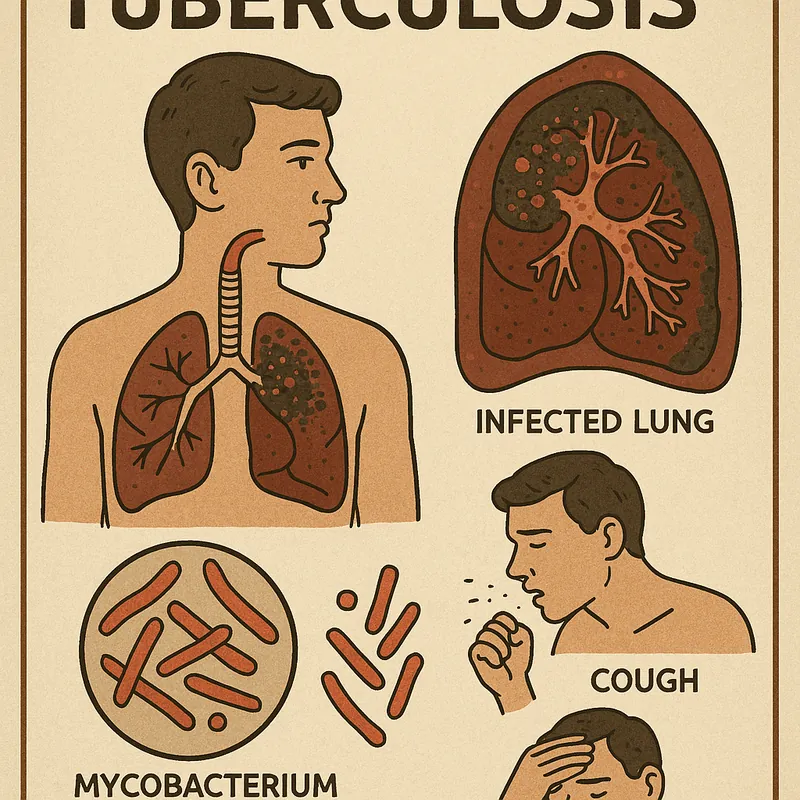
Bacterial infection (Mycobacterium tuberculosis) primarily affecting the lungs. Latent in ~25% of the global population. Vitamin D deficiency, malnutrition, and immune compromise dramatically increase reactivation risk.
Last updated:
Tuberculosis (TB) is a contagious bacterial infection caused by Mycobacterium tuberculosis, primarily affecting the lungs (pulmonary TB) but capable of infecting almost any organ (extrapulmonary TB). Spread through airborne respiratory droplets, it remains one of the world's deadliest infectious diseases, killing ~1.3 million annually worldwide.
Two distinct forms: Latent TB infection (LTBI), bacteria present but contained by immune system, asymptomatic, not contagious; affects ~25% of global population. Active TB disease, bacterial replication causes symptoms and is contagious; develops in ~5-10% of latent infections, especially when immunity is compromised. Treatment is essential and curative.
The major modern challenges are drug-resistant TB (MDR-TB, XDR-TB) requiring 18-24+ months of treatment, and reactivation in immunocompromised patients (HIV, biologics, transplant recipients). Vitamin D deficiency, malnutrition, diabetes, and tobacco use significantly increase risk. New shorter regimens (4-month rifapentine-based) and oral drugs for resistant TB are transforming treatment.
Bacteria present but dormant. Positive TST or IGRA, normal CXR. Asymptomatic. NOT contagious. Treated to prevent reactivation (3 months rifapentine/isoniazid; 4 months rifampin).
Extrapulmonary: lymph nodes, bone, kidney, brain. MDR-TB: resistant to isoniazid + rifampin. XDR-TB: also resistant to fluoroquinolones + injectables. New oral regimens (bedaquiline-based) revolutionary.
Latent TB is asymptomatic. Active TB typically presents with chronic respiratory symptoms plus constitutional features. Often develops gradually over weeks-months.
Initially dry, becomes productive. Most characteristic symptom of pulmonary TB. Persistent cough beyond 3 weeks in at-risk individuals warrants TB testing.
Streaks of blood common; large volume bleeding indicates cavitation. Classic finding but not universal. Always investigate persistent hemoptysis.
Pleuritic chest pain, worsened by breathing. May indicate pleural involvement, pleural effusion (TB pleurisy).
Late finding with extensive lung involvement. May indicate pleural effusion or advanced disease.
"Consumption", TB's historical name. Significant unintentional weight loss. Combined with respiratory symptoms, strongly suggests TB or cancer.
Drenching night sweats requiring change of clothes/bedding. Classic TB symptom. Also seen in lymphoma, other infections.
Often in afternoons/evenings. May be subtle. Combined with night sweats and weight loss = classic TB triad.
Chronic disabling fatigue. Anorexia. Develop slowly over weeks-months. Often dismissed until significant weight loss occurs.
Blood test (QuantiFERON-TB Gold, T-SPOT). Preferred over TST in BCG-vaccinated patients. Single visit. Highly specific.
Intradermal injection, read at 48-72 hours. Positive cutoffs vary by risk (5mm, 10mm, 15mm). False positive with BCG vaccination.
After positive TST/IGRA, rule out active TB. Normal CXR with positive test โ latent TB. Abnormal CXR โ workup for active disease.
Country of origin, recent travel, contact with active TB, healthcare/prison work, HIV status, immunosuppressive therapy planned.
ADJUNCT to conventional TB therapy. Nutrition critical, malnutrition is both cause and consequence of TB.
High-calorie, high-protein, vitamin and mineral-rich diet. Severe wasting is hallmark of TB, aggressive nutrition is essential therapy.
Eggs, fish, poultry, dairy, legumes. Critical for tissue repair and immune function. Significantly higher than usual recommendations.
40-45 kcal/kg/day. Nuts, nut butters, olive oil, avocados, whole milk, ghee. Combat severe wasting characteristic of TB.
Carrots, sweet potatoes, leafy greens, citrus, peppers, berries. Support immune function and mucosal integrity.
Wild salmon, sardines, mackerel. Provides vitamin D and anti-inflammatory omega-3. 2-3x weekly.
5-6 meals/day. Better tolerance when appetite is poor. Maintains positive energy balance for weight gain.
Major TB risk factor. Continuing during treatment worsens lung damage and outcomes. Quit at any time helps.
Severe interaction with TB drugs (especially isoniazid, rifampin), hepatotoxicity risk. Avoid entirely during treatment.
When intake is limited, every calorie should be nutrient-dense. Avoid sodas, sweets in favor of high-quality calories.
Low nutrient density. Pro-inflammatory. Don't waste limited stomach capacity on processed foods.
Isoniazid weakly inhibits MAO. Aged cheeses, cured meats, fermented foods can rarely trigger reactions. Significance debated.
Pyridoxine (B6) is REQUIRED with isoniazid. Vitamin D, multivitamin, and zinc support recovery.
| Supplement | Mechanism & Evidence | Suggested Dose | Timing | Notes |
|---|---|---|---|---|
| Pyridoxine (Vitamin B6), REQUIRED | Prevents isoniazid-induced peripheral neuropathy. STANDARD with all INH regimens. | 25-50mg/day | With INH dose | NON-NEGOTIABLE with isoniazid. Higher dose (50-100mg) for diabetics, pregnant, malnourished. |
| Vitamin D3 | Deficiency major risk factor for TB. May enhance immune response to mycobacteria. | 5,000-10,000 IU/day (titrate to >40 ng/mL) | With fat meal | Higher doses to correct deficiency. Test baseline and 3 months. |
| Multivitamin (High Quality) | TB and treatment cause multiple micronutrient deficiencies. Broad-spectrum support. | 1 quality multivitamin/day | With food | Choose one with adequate B-complex, fat-soluble vitamins. |
| Zinc | Often deficient in TB patients. Supports immune function. May improve treatment response. | 15-30mg/day | With food | Don't exceed 30mg long-term. Cycle with copper supplementation if extended use. |
| Omega-3 (EPA/DHA) | Anti-inflammatory; supports weight maintenance. May reduce TB-related inflammation. | 2,000-3,000mg/day | With fat meal | Continue during and after treatment. |
| Probiotics | Restore microbiome diversity disrupted by long antibiotic course. Support immune function. | 10-30 billion CFU/day, multi-strain | With or without food | Continue throughout treatment and 2-3 months after. |
| N-Acetyl Cysteine (NAC) | Antioxidant. May enhance TB drug efficacy and reduce hepatotoxicity. Emerging evidence. | 600-1,200mg/day | Divided doses | Some evidence as adjunctive in MDR-TB. Discuss with TB specialist. |
| Whey Protein / Protein Powder | Easy way to boost protein intake when appetite limited. Critical during severe wasting. | 20-40g protein supplement/day | Between meals | Add to smoothies, foods. Compensates for poor appetite. |
TB is curable in nearly all cases when treated properly. Antibiotic adherence over 4-6 months is essential, incomplete treatment drives drug resistance. Combine antibiotic therapy with aggressive nutritional support, vitamin D optimization, and addressing risk factors. Free treatment available through public health departments.