Chronic Venous Insufficiency

Valves in the leg veins stop closing properly, so blood pools and pressure builds in the skin. It causes aching, swelling, skin damage and ultimately ulcers. Compression is the treatment, and it is the one thing that must never be applied before the arterial circulation has been checked.

Check Arteries First Evidence-Based Root-Cause Focus

Last updated:

🚨 A calf that becomes swollen, painful, warm and tight over hours or days, especially in one leg, needs assessing the same day for a deep vein thrombosis. That is a different and more urgent problem than chronic venous insufficiency. Never buy and apply compression stockings for a leg that has not been assessed. If the arterial supply to the leg is poor, compression can cause serious damage, which is why an ankle-brachial pressure measurement comes first. A break in the skin that is not healing needs to be seen, not dressed at home indefinitely.

What Is Chronic Venous Insufficiency?

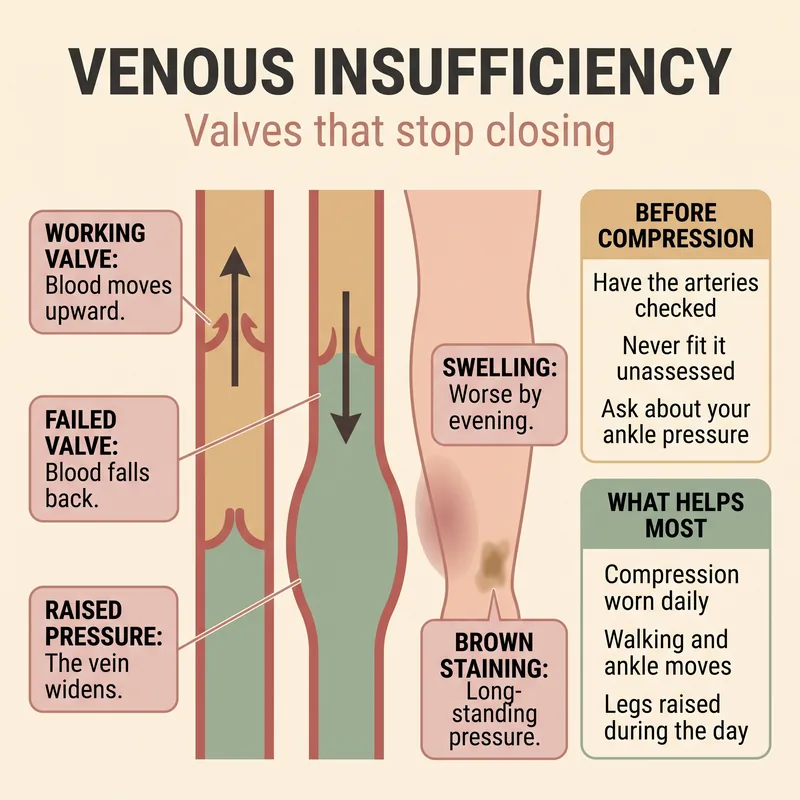
Leg veins carry blood upward against gravity using one-way valves and the pumping action of the calf muscle. When those valves fail, blood refluxes downward and pressure rises in the small vessels of the skin, particularly around the ankle. That sustained pressure is what causes the swelling, the brown staining, the hardening and eventually the ulceration.

It sits on a spectrum. Visible varicose veins at one end, and a venous leg ulcer at the other, with the same underlying mechanism throughout. It is extremely common, it is often dismissed as cosmetic, and the skin changes are the point at which it stops being cosmetic.

The calf muscle is part of the pump. That is why walking helps, why prolonged standing or sitting makes it worse, and why an immobile ankle makes it much worse.
💡 Key Insight: This is an unusual page for this site, because a herbal preparation actually has supporting trial evidence here. A Cochrane review concluded that horse chestnut seed extract is an efficacious and safe short-term treatment for chronic venous insufficiency, while noting several caveats and calling for larger definitive trials1. Both halves of that sentence are reported here.
Cross-section of a leg vein comparing a working one-way valve with a failed valve allowing blood to flow backwards, beside a lower leg showing swelling and skin discolouration

🧵 Compression is the treatment

It is the foundation of management, and compression also reduces recurrence once an ulcer has healed2. Worn consistently, not occasionally.

⚠️ Arteries checked before compression

Compression on a leg with poor arterial supply can cause serious harm. An ankle-brachial pressure measurement comes first, every time.

🚶 The calf is the pump

Walking and ankle movement drive venous return. Prolonged standing still is worse than walking, and a stiff ankle is worse than both.

How Venous Insufficiency Presents

Worse as the day goes on, better with the legs up. That pattern is the clue.

FeatureWhat it looks likeWorth knowing
Aching, heaviness, tiredness in the legsWorse by evening, worse after standing, better with the legs raisedThe pattern matters more than the sensation. Arterial pain behaves the opposite way
Swelling around the ankleSock marks, shoes tighter at nightUsually settles overnight early on, and stops settling as it progresses
Varicose veinsVisible, ropy, raisedNot merely cosmetic when symptoms or skin changes are present
Brown staining around the ankleDiscolouration that does not fadeA sign the pressure has been high for a long time. This is when it stops being cosmetic
Hard, tight, shiny skin at the lower calfThe leg narrowing above the ankleAdvanced skin change. Report it, and get compression assessed
Itching and dry, scaly skinOften treated as eczema, and it is a venous problemScratching here breaks skin that heals badly. See eczema for skin care that still applies
A break in the skin that will not healTypically just above the inner ankleA venous leg ulcer. Needs proper assessment, not indefinite home dressing
Night cramps and restless legsCommon companionsWorth mentioning, though they have other causes too. See iron deficiency
⚠️ Learn which way the pain goes. Venous pain is worse standing and better with the legs up. Arterial pain is the reverse: worse with the legs elevated and worse on walking, and it may wake you at night, relieved by hanging the leg out of bed. That distinction is not academic, because compression helps the first and can seriously harm the second. If your leg pain improves when you hang it down, say so before anyone fits a stocking.

How Venous Insufficiency Is Assessed

One test comes before treatment, and it is a safety test rather than a diagnostic one.

MeasureWhat it tells youWhat it misses
Ankle-brachial pressure indexWhether compression is safe. This is the test that must come firstCan read falsely high in diabetes and in stiff arteries, so results are interpreted with the examination. See diabetes
Duplex ultrasoundWhich veins are refluxing, and whether a clot is presentAvailability varies; it guides whether a procedure would help
Examination of the skinStaining, hardening, healed ulcer scars, active ulcerationThe stage, which drives how urgently to act
Assessment for deep vein thrombosis if the change was rapidWhether this is an acute clot rather than a chronic problemDifferent urgency entirely. Sudden one-sided swelling is a same-day question
Ankle movement and mobilityWhether the calf pump is workingA stiff ankle is a treatable contributor and is almost never assessed
Weight and waistA major and modifiable contributor to venous pressureSee obesity
Bloods where healing is poorAnaemia, diabetes, nutritional deficiency, all of which slow healingSee iron deficiency anaemia
Heart, kidney and liver assessment if both legs swellWhether the swelling is venous at allSwelling in both legs has other causes; see heart failure and chronic kidney disease
💡 Ask one question before any stocking is fitted: has my ankle-brachial pressure been checked? It is quick, it is the standard of care, and it is the difference between compression being the treatment and compression being a source of harm. Do not buy compression online for an unassessed leg.

Holistic vs. Conventional Treatment for Venous Insufficiency

🌿 HOLISTIC
💊 CONVENTIONAL
🌿

Holistic / Functional Approach

Working the calf pump, reducing the load on it, and one herbal with real evidence

Best Evidenced Non-Drug Step
Compression, worn consistently, which is also what reduces ulcer recurrence after healing2
Where A Herbal Actually Helps
Horse chestnut seed extract, called an efficacious and safe short-term treatment by a Cochrane review, with caveats1
Timeline
Swelling and aching respond within weeks. Skin staining fades slowly or not at all
Limitation, stated plainly
Nothing here restores a failed valve. This is pressure management, and it works only while it is being done

Full Holistic Approach Includes

  • Compression, correctly fitted, after the arteries are checked, and worn daily rather than on bad days.
  • Walking every day, which drives the calf pump. Standing still is the worst position, worse than sitting.
  • Ankle exercises if you cannot walk far: circles and up-and-down flexes, repeatedly, throughout the day.
  • Elevating the legs above hip level for periods during the day, not only at night.
  • Weight reduction where relevant, which lowers the pressure the veins work against. See obesity.
  • Skin care: emollients daily on fragile skin, since a scratch here can become an ulcer.
  • Treating constipation, since straining raises abdominal and therefore venous pressure. This is the same mechanism as hemorrhoids, which commonly coexist.
  • Avoiding long unbroken periods of standing or sitting, and moving the ankles when you cannot avoid them.
🌿 Worth knowing: the honest difficulty with compression is not whether it works. It is that stockings are hard to put on, uncomfortable in heat, and easy to abandon. If yours are unwearable, that is a fitting problem with solutions, including different classes, wraps and applicator aids. Ask, rather than quietly stopping.

Diet for Venous Insufficiency

Aimed at the pressure the veins work against, and at healing skin.

💡 What diet does and does not do here. No dietary pattern repairs a failed vein valve. What nutrition affects is the pressure the system works against, through weight and through constipation, and how well damaged skin heals. Those are worth doing well and they are not a substitute for compression, which remains the treatment.
ChangeWhyPractical note
Weight reduction where relevantRaised abdominal pressure impedes venous return from the legs, and excess weight worsens every stageGradual. See obesity
Enough fibre and fluidStraining at stool raises abdominal pressure directly, the same mechanism that drives hemorrhoidsIncrease fibre gradually with fluid, or it worsens bloating
Adequate protein where skin is brokenWound healing needs it, and older adults with ulcers are frequently shortSee sarcopenia. If you have kidney disease, the target comes from your kidney team
Iron and vitamin C if deficientAnaemia and deficiency both slow healingTest rather than assume. Do not self-supplement iron. See iron deficiency anaemia
Less added saltReduces fluid retention, which worsens ankle swellingHelpful for the swelling, and not a treatment for the underlying reflux
A vegetable-forward patternServes the cardiovascular and metabolic picture and supports healingSensible rather than proven for the veins themselves, and presented that way
Alcohol in moderationContributes to weight and to fluid shiftsMinor here compared with weight, walking and compression
Cutting fluid to reduce swellingDoes not work and causes other problemsThe swelling is a pressure problem, not a fluid-intake problem
⚠️ Both legs swelling is a different question. Venous insufficiency is usually worse in one leg and follows the standing pattern. Symmetrical swelling in both legs, particularly with breathlessness, weight gain or reduced urine output, needs assessing for heart, kidney or liver causes rather than being treated as venous. See heart failure and chronic kidney disease.

Evidence-Based Supplements

One entry here has genuine Cochrane support, which is rare enough on this site to say clearly.

🚨 No supplement replaces compression, and none repairs a valve. Never start compression on an unassessed leg, whatever else you are taking. Tell your clinician about everything, because several of the products used for this condition affect bleeding risk and matter if you are on an anticoagulant or facing a procedure. A non-healing wound needs a service, not a supplement.
SupplementWhat it is actually forTypical rangeTimingNotes & cautions
Compression The treatment, listed at the top of this table because it does more than anything below it and is the thing people abandon. Class and fit set after an ankle-brachial pressure measurement Daily, put on before the leg swells in the morning Not a supplement. Also reduces recurrence after an ulcer heals2. If it is unwearable, that is a fitting problem to solve rather than a reason to stop.
Horse chestnut seed extract Reducing leg pain, swelling and itching in chronic venous insufficiency. A Cochrane review called it an efficacious and safe short-term treatment, while noting several caveats and calling for larger definitive trials1. Discuss with your clinician rather than self-selecting a preparation With food Short-term evidence, and an adjunct rather than a replacement for compression. Raw horse chestnut seeds are toxic; only standardised preparations are meant. Caution with anticoagulants and before surgery.
Iron, vitamin C or protein, if deficient Supporting wound healing where a genuine deficiency exists. Set by your clinician on the basis of blood results As advised Test first. Do not supplement iron without a test; excess iron is harmful. See iron deficiency anaemia.
Flavonoid preparations such as diosmin Used in some countries for venous symptoms, with a weaker and less consistent evidence base than compression. Discuss with your clinician With food Listed honestly rather than recommended, and an adjunct at most. Compression remains the treatment.
🚨 What to avoid, specifically. Compression bought online for a leg nobody has assessed, which is the central harm on this page. Raw horse chestnut seeds or home preparations, which are toxic; only standardised extracts are meant. Dressing a non-healing ulcer at home for months instead of getting it assessed. Cutting fluid intake to reduce swelling. Products claiming to repair or regenerate valves, which nothing does. And treating symmetrical swelling in both legs as venous without excluding heart, kidney and liver causes.
💡 Where the real leverage is. Getting the arteries checked and the compression properly fitted, wearing it daily rather than on bad days, walking and moving the ankles, losing weight if it applies, and getting any non-healing break in the skin seen early. Those five do more than every vein supplement on the market combined.

References & Evidence Notes

Each numbered entry below is either a source you can follow or a note setting out what the evidence does and does not support. Both are numbered together so the markers in the text line up.

Last reviewed 3 September 2026. Supplement entries are cross-checked against the NIH National Center for Complementary and Integrative Health and the Linus Pauling Institute Micronutrient Information Center.3 This page is nutrition education, not medical advice, and it does not replace your doctor. No diet or supplement repairs a failed vein valve, and none replaces compression. Compression must not be applied to a leg whose arterial circulation has not been assessed, because in reduced arterial supply it can cause serious harm. A calf that becomes swollen and painful over hours needs same-day assessment for a clot, and a break in the skin that will not heal needs a proper service rather than indefinite home dressing. What nutrition education can do is help you understand the evidence well enough to have a better conversation with the clinician who does treat you.

  1. Pittler MH, Ernst E. Horse chestnut seed extract for chronic venous insufficiency. Cochrane Database Syst Rev. 2012;(11):CD003230. PubMed 23152216. The authors concluded that horse chestnut seed extract is an efficacious and safe short-term treatment for chronic venous insufficiency, while stating that several caveats exist and that larger definitive randomised trials are required to confirm it. Both halves are reported on this page, and the extract is presented as an adjunct to compression rather than an alternative to it.
  2. Compression for preventing recurrence of venous ulcers. Cochrane Database Syst Rev. 2024. PubMed 38451842. Cited for the point that compression continues to matter after an ulcer has healed, which is where adherence most often lapses and where the next ulcer comes from.
  3. NIH National Center for Complementary and Integrative Health, nccih.nih.gov, and the Linus Pauling Institute Micronutrient Information Center, lpi.oregonstate.edu.