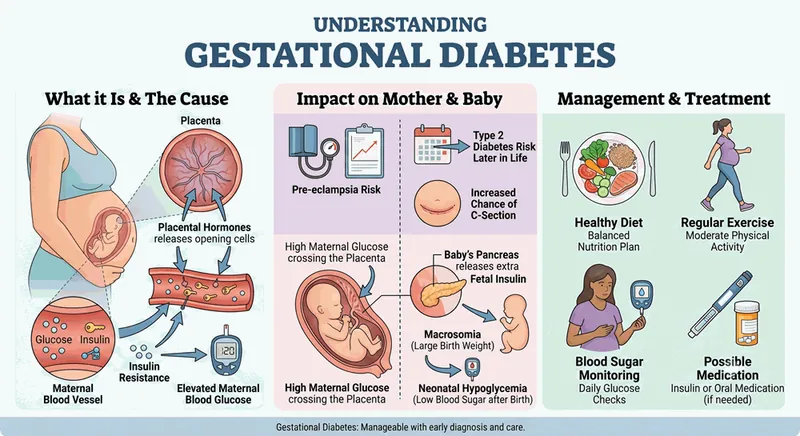
A pregnancy-specific glucose intolerance affecting 2 to 10 percent of pregnancies, driven by placental hormones that overwhelm the pancreas. Most cases can be managed by nutrition alone, with profound effects on maternal and infant outcomes.
Last updated:
Gestational diabetes mellitus (GDM) is glucose intolerance with first onset or first recognition during pregnancy, typically diagnosed in the second or third trimester via an oral glucose tolerance test.
Pregnancy is a naturally insulin-resistant state. The placenta produces hormones (human placental lactogen, cortisol, progesterone, estrogen) that intentionally raise maternal blood sugar to push more glucose to the growing fetus. The mother's pancreas normally compensates by producing 2 to 3 times more insulin. Gestational diabetes develops when the pancreas cannot keep up with this added demand, often because insulin resistance was already present before pregnancy (sometimes subclinically), or because beta-cell reserve is reduced.
GDM is classified by management requirements. The classification is not about severity per se, it is about which intervention is needed. The distinction matters for monitoring intensity, delivery timing, and postpartum follow-up. About 80 percent of GDM cases are class A1, controllable with nutrition and movement alone:
"Gestational diabetes affects up to 10 percent of pregnancies in the United States, with rates rising in parallel with obesity, sedentary lifestyles, and refined-carbohydrate intake. It is a near-perfect window into future type 2 diabetes risk, with up to 70 percent of affected women progressing within 20 years."
โ American Diabetes Association, Standards of Medical Care in Diabetes, 2024Blood glucose is kept in target with nutrition, post-meal walks, and sleep optimization alone. Fasting less than 95 mg/dL, 1-hour post-meal less than 140 mg/dL (or 2-hour less than 120 mg/dL). The strong majority of GDM falls into this class and resolves at delivery.
Glucose abnormalities found at first prenatal visit (HbA1c ≥ 6.5%, fasting ≥ 126 mg/dL, random ≥ 200 mg/dL with symptoms) likely reflect pre-existing type 2 diabetes that was undiagnosed. Carries higher risks of congenital anomalies and requires immediate intensive management.
A history of GDM identifies a high-risk metabolic phenotype. Up to 70 percent of women with prior GDM develop type 2 diabetes within 20 years. Recurrence in subsequent pregnancies is approximately 30 to 70 percent. Postpartum lifestyle is the single largest determinant of long-term outcome.
GDM is mostly silent. Most women feel fine and are diagnosed only by the routine 24-to-28-week OGTT. When symptoms appear, they typically reflect significant hyperglycemia and warrant prompt evaluation, especially in the third trimester.
A constant need to drink water beyond normal pregnancy thirst. High blood glucose pulls fluid into the bloodstream and then out into the urine, leaving the body chronically slightly dehydrated. New-onset extreme thirst in pregnancy is not normal and warrants a glucose check.
Beyond the normal pregnancy increase from uterine pressure, GDM produces high-volume, frequent urination including overnight. The kidneys spill glucose into the urine, dragging water with it. New severe nocturia warrants a glucose screen.
Pregnancy fatigue is real, but fatigue that worsens dramatically after meals, leaves you unable to function in the afternoon, or recovers only with sugar/caffeine reflects the post-meal insulin/glucose roller coaster of poorly controlled GDM.
Sharp post-meal glucose spikes are followed by reactive lows, producing urgent cravings for sweets and fast carbs, often with shakiness, irritability, or anxiety. One of the earliest behavioral signs that insulin resistance is significant.
High glucose causes the lens of the eye to swell, transiently changing the refractive index. Vision blurs at distance or for reading, often fluctuating with glucose levels. Resolves once glucose normalizes, but is a clue worth checking.
Vaginal yeast feeds on glucose, and women with poorly controlled GDM commonly develop recurrent or stubborn yeast infections. Worth a glucose screen if you have new or repeated yeast in pregnancy.
Maternal hyperglycemia crosses the placenta. The fetus responds by producing extra insulin, which acts as a growth factor. Estimated fetal weight in the 90th percentile or higher, or abdominal circumference disproportionately ahead of head, often points to GDM.
Hyperglycemic fetuses urinate more, producing increased amniotic fluid (AFI > 24 cm or single deepest pocket > 8 cm). Polyhydramnios on routine ultrasound is one of the most reliable structural clues to underlying GDM.
Weight gain accelerating beyond the expected pregnancy curve, especially in the second trimester, may reflect both insulin resistance (driving fat storage) and increased amniotic fluid. Worth raising with your provider.
Elevated glucose impairs immune function and tissue repair. Cuts that take longer than expected to heal, or recurrent skin infections (boils, cellulitis), in pregnancy can be early markers of significant hyperglycemia.
Glucose in the urine feeds bacteria. Women with GDM have higher rates of UTIs and asymptomatic bacteriuria, which itself raises the risk of pyelonephritis and preterm labor. Universal screening at first prenatal visit catches this.
GDM increases pre-eclampsia risk approximately 2-fold. The shared root, insulin resistance and endothelial dysfunction, is why optimizing glucose lowers both risks. Watch for new BP elevation alongside any GDM symptoms.
All pregnant women in the U.S. are screened at 24 to 28 weeks. High-risk women are screened earlier. Diagnosis is purely lab-based; symptoms are not required.
These do not diagnose GDM, but help identify women who should request earlier screening and prepare them for self-monitoring once diagnosed:
Score 1 point each: prior GDM, prior baby > 4000 g, BMI > 30, age > 35, PCOS, first-degree relative with type 2 diabetes, South Asian / Hispanic / African / Pacific / Indigenous ethnicity, history of unexplained stillbirth, persistent glucosuria. Score of 2 or more warrants early-pregnancy OGTT or HbA1c at the first visit, not waiting until 24 to 28 weeks.
A simple finger-stick meter (Contour, OneTouch, FreeStyle) can be used pre-diagnosis to spot-check fasting glucose (target < 95) or 1-hour post-meal (target < 140). Once diagnosed, 4 readings per day (fasting + 1 hour after each meal) is standard. Continuous glucose monitors (Dexcom, Libre) are increasingly used and provide much richer data.
Log every meal and the corresponding 1-hour glucose. Patterns become clear within a week: which carbs spike you, which protein-first combos do not, how walking after meals changes the curve. This is the single most empowering tool for women with GDM and often reveals that "carb sensitivity" is highly individual.
Nutrition is foundational in both approaches. The difference is in the carbohydrate philosophy, the depth of nutrition education, and how medication is positioned. Toggle below to compare.
Low-glycemic, protein-anchored eating + post-meal walks + adequate sleep, in partnership with OB monitoring
GDM is the intersection of normal pregnancy insulin resistance with reduced pancreatic reserve. The same root drivers as type 2 diabetes apply, the pregnancy just unmasks them earlier.
| Root Cause | How It Contributes to GDM | Holistic Solution |
|---|---|---|
| Pre-existing Insulin Resistance | Most women with GDM had underlying insulin resistance before pregnancy. Placental hormones simply unmask it. Often seen in PCOS, central adiposity, and family history of T2D. | Pre-conception low-glycemic eating, strength training, inositol; treat PCOS before conception |
| Placental Hormone Surge | Human placental lactogen, cortisol, progesterone, and estrogen rise sharply after 20 weeks, driving 50 to 70 percent reduction in maternal insulin sensitivity. Most pronounced 24 to 32 weeks. | Anticipate it: tighten carb quality at 20 weeks; protein-first eating; walking habit established early |
| Reduced Beta-Cell Reserve | Some women have pancreatic beta cells that cannot ramp up insulin production to the required 2 to 3×. Often a polygenic genetic predisposition shared with T2D. | Reduce demand on beta cells, low-glycemic eating, magnesium, chromium, post-meal walks |
| Excess Body Weight / Visceral Adiposity | Visceral fat releases inflammatory cytokines and free fatty acids that impair insulin signaling. BMI > 30 raises GDM risk 3 to 4×. | Pre-conception weight optimization (not pregnancy weight loss); strength training, sleep, gut health, EWG produce |
| Refined Carbohydrate Intake | White flour, sugar, juice, soda, and ultra-processed foods raise insulin demand acutely and worsen the underlying resistance. | Eliminate refined grains and added sugar; build meals around protein, vegetables, healthy fat, and whole-food slow carbs |
| Sedentary Lifestyle | Inactivity sharply reduces muscle glucose uptake. Muscle is the primary glucose disposal site. Even 10 to 15 minute walks after meals reduce post-meal glucose 20 to 30 percent. | Daily 30 to 45 minutes movement (walking, prenatal yoga, swimming); post-meal walks; modified strength training |
| Sleep Deprivation | Even one short night raises insulin resistance the next morning. Chronic short sleep (less than 6 hours) is a strong independent risk factor. | 7 to 9 hours sleep; sleep apnea screen if snoring or BMI > 30; left-side sleep wedge for comfort |
| Vitamin D Deficiency | Vitamin D regulates insulin signaling and pancreatic beta-cell function. Deficient women (< 20 ng/mL) have ~2× the GDM risk. | Test 25-OH-D pre-conception; supplement 2000 to 4000 IU/day with K2 to reach 40 to 50 ng/mL |
| Magnesium Deficiency | Magnesium is required for insulin receptor activation. Deficient women have higher fasting glucose and higher GDM risk. Pregnancy increases magnesium need. | Magnesium-rich foods (pumpkin seeds, leafy greens, dark chocolate); supplement 300 to 400 mg glycinate |
| Family History & Ethnicity | First-degree relative with T2D doubles GDM risk. South Asian, Hispanic, African, Pacific Islander, and Indigenous women have 2 to 4× higher baseline risk because of genetics interacting with the modern diet. | Genetics load the gun, lifestyle pulls the trigger. The same lifestyle levers work; consider earlier screening at first prenatal visit |
Diet is the highest-leverage intervention for GDM. With careful nutrition, about 80 percent of women keep glucose in target without medication. All recommendations below are pregnancy-safe and align with prenatal guidelines.
Standard GDM advice often prescribes 175 g/day of carbs. Many women with GDM do better at 100 to 150 g of whole-food carbs, with the savings reinvested in protein, fat, and non-starchy vegetables. Pregnancy still requires adequate calories, around 2200 to 2500 in the second and third trimesters, so the cut is in carb quality and quantity, not in food volume.
Breakfast is the hardest meal: insulin resistance is highest in the morning, and many women cannot tolerate more than 15 to 25 g of carbs before noon. Smaller, protein-heavy breakfasts and larger lunches/dinners (with more carbs) is the pattern that fits most women.
All supplements below are pregnancy-safe at the doses listed. Always confirm with your OB or midwife. Items flagged as contraindicated should not be used during pregnancy. Supplements support, but never replace, nutrition and movement.
| Supplement | Role in GDM Recovery | Suggested Dose | Timing | Notes (Pregnancy Safety) |
|---|---|---|---|---|
| High-Quality Prenatal Multivitamin | Foundation. Should contain 800 to 1000 mcg methylfolate, 25 to 30 mg iron, 150 mcg iodine, 8 to 12 mg zinc, active B vitamins. | 1 to 2 capsules/day per product | With breakfast or split AM/PM | Universally recommended. Choose third-party tested (NSF, USP). |
| Myo-Inositol + D-Chiro-Inositol (40:1) | Best-evidenced supplement for GDM prevention and treatment. RCTs show ~50% reduction in GDM incidence in high-risk women. Improves insulin sensitivity at the cellular level. | 2 to 4 g myo + 50 to 100 mg D-chiro/day | Split, half AM and half PM | Pregnancy-safe in standard doses; confirm with OB. Especially useful in PCOS-associated GDM. |
| Vitamin D3 (with K2) | Regulates insulin signaling, pancreatic beta-cell function, and BP. Deficient women (less than 20 ng/mL) have ~2× the GDM risk. | 2000 to 4000 IU D3 + 90 to 180 mcg MK-7 K2 per day | With fat-containing meal, morning | Pregnancy-safe. Test 25-OH-D; dose to target 40 to 50 ng/mL. |
| Magnesium Glycinate | Required for insulin receptor activation; lowers fasting and post-meal glucose modestly; helps sleep and prevents leg cramps. | 300 to 400 mg elemental Mg/day | Evening, 30 to 60 min before bed | Pregnancy-safe in glycinate form. Avoid magnesium oxide / citrate at high doses (laxative). |
| Choline (bitartrate or phosphatidylcholine) | Pregnancy RDA 450 mg; growing evidence supports 930 mg/day. Supports fetal brain, liver, and placental function; modestly improves maternal lipid and glucose profile. | 450 to 930 mg/day (3 eggs ≈ 500 mg) | With food, split if higher dose | Pregnancy-safe and underdosed in most prenatals. |
| Omega-3 DHA/EPA | Reduces inflammation, supports insulin sensitivity and fetal brain development; modest effect on fasting glucose. | 1 to 2 g combined EPA+DHA/day; at least 200 to 300 mg DHA | With meals | Pregnancy-safe. IFOS-certified low-mercury fish oil or algae oil. Avoid cod liver oil at higher doses (vitamin A). |
| Methylated Folate (L-5-MTHF) | Required for fetal neural tube and methylation; reduces homocysteine. Critical with MTHFR variants. | 800 to 1000 mcg/day (usually in prenatal) | Morning with food | Pregnancy-safe and essential. Use L-methylfolate over folic acid if MTHFR known or suspected. |
| Vitamin B12 (methylcobalamin) | Insulin signaling, energy, and methylation; metformin depletes B12, so essential if on metformin. | 500 to 1000 mcg/day if levels low | Morning, sublingual or with food | Pregnancy-safe. Methylcobalamin preferred. |
| Iron (only if deficient) | Iron deficiency raises GDM risk; over-supplementation can also paradoxically worsen insulin sensitivity (oxidative stress). | 30 to 60 mg elemental iron/day if ferritin low | Empty stomach with vitamin C if tolerated | Pregnancy-safe when indicated. Test ferritin first; don't blindly supplement. Take 2 hours from calcium. |
| Probiotic (pregnancy-safe strains) | Supports gut microbiome (linked to insulin sensitivity); modest fasting glucose reduction in RCTs. | 10 to 25 billion CFU/day, multi-strain | With or after food | Pregnancy-safe with mainstream strains (Lactobacillus, Bifidobacterium). |
| Cinnamon (Ceylon, culinary doses) | Modest fasting and post-meal glucose reduction at culinary doses; supports insulin sensitivity. | 1/2 to 1 tsp Ceylon cinnamon/day in food | With carb meals | Pregnancy-safe at culinary doses. Avoid high-dose cinnamon supplements (Cassia type contains coumarin, liver-toxic). |
| Apple Cider Vinegar (food-based) | 1 to 2 tbsp in water before a carb-containing meal lowers post-meal glucose by 15 to 30 percent. | 1 to 2 tbsp in 8 oz water, 10 min before meal | Before largest carb meal(s) | Pregnancy-safe. Dilute well; avoid undiluted vinegar (enamel/esophagus). |
| Iodine | Required for fetal thyroid and brain development; many prenatals contain only 150 mcg. | 150 to 250 mcg/day total | Morning with food | Pregnancy-safe at recommended doses. Avoid high-dose kelp/iodine drops without thyroid testing. |
| Calcium (food + supplement to RDA) | Pregnancy RDA 1000 mg; helps BP, bone, and possibly insulin signaling. WHO supports 1500 mg in low-calcium populations. | 500 to 1000 mg/day supplement to reach 1500 mg total | Split, 500 mg twice daily; 2 hours from iron | Pregnancy-safe. |
| Berberine โ | NOT pregnancy-safe; crosses placenta and can cause neonatal hyperbilirubinemia. Excellent for non-pregnant insulin resistance, stop at positive test. | Do not use during pregnancy | Discontinue at conception | Contraindicated in pregnancy. Resume postpartum if not breastfeeding. |
| Bitter Melon / Gymnema โ | NOT well-studied in pregnancy; some uterine-stimulant concern. Avoid until postpartum. | Do not use during pregnancy | Avoid entirely | Contraindicated in pregnancy. Useful in non-pregnant blood-sugar protocols. |
| Alpha-Lipoic Acid (high-dose) โ ๏ธ | Limited pregnancy safety data at therapeutic doses; some functional providers use in modest amounts. Skip unless OB-directed. | Generally avoid; if used, < 300 mg/day with OB approval | Empty stomach | Use only with OB approval. Preferred postpartum. |
Understanding what to expect from each approach helps set realistic expectations and make informed choices.
Optimize HbA1c (< 5.7%), vitamin D, magnesium, body composition. Treat PCOS, insulin resistance, sleep apnea. Inositol if metabolically primed.
Within 1 week of diagnosis: begin protein-anchored eating, post-meal walks, 4×/day glucose monitoring. Most reach targets within 5 to 10 days.
Glucose targets met daily for ~80% (A1 class). Weekly OB visits; growth ultrasound at 32 to 36 weeks. Maintain supplement protocol.
Glucose typically normalizes within 24 hours of delivery. 75-g OGTT at 6 to 12 weeks postpartum. Breastfeeding lowers long-term T2D risk.
Sustained lifestyle halves T2D progression (DPP); lower recurrence in next pregnancy; healthier infant metabolic profile
Limited intervention unless prior GDM or diabetes. First prenatal visit screening if high-risk.
RD referral for carb-counting (often 175 g/day). Glucose meter and finger-stick monitoring. Insulin if targets missed after 1 to 2 weeks.
Insulin dose titrated weekly. Growth ultrasound at 32 to 36 weeks. NSTs starting 32 weeks if A2. Planned delivery 37 to 40 weeks depending on class.
Insulin stopped at delivery. 75-g OGTT at 6 to 12 weeks (often missed). Limited lifestyle counseling beyond "watch your weight."
Up to 70% develop T2D within 20 years if lifestyle change is not implemented
"Gestational diabetes is a warning, not a sentence. The window of pregnancy is the best chance most women will ever have to see, address, and reverse the insulin resistance that would otherwise become type 2 diabetes a decade later."
Explore related conditions below or revisit the Symptom Checker to map your full symptom picture across the library.