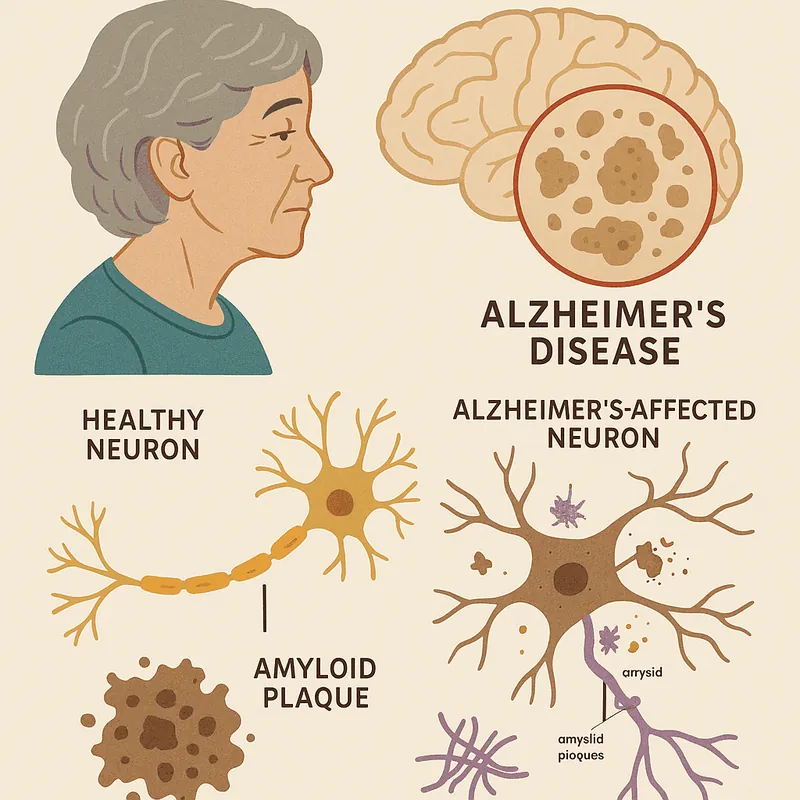
Progressive neurodegeneration marked by amyloid plaques, tau tangles, and brain insulin resistance, sometimes called Type 3 Diabetes. Lifestyle and nutritional interventions (Mediterranean/MIND diet, omega-3, B-vitamins, sleep) significantly modify risk.
Last updated:
Alzheimer's disease is the most common form of dementia (~60-80% of cases), characterized by progressive cognitive decline, memory loss, and behavioral changes. Pathologically defined by amyloid-beta plaques and tau neurofibrillary tangles, with widespread neuron loss particularly in the hippocampus and cortex.
Increasingly understood as a multifactorial disease driven by insulin resistance in the brain ("Type 3 Diabetes"), chronic neuroinflammation, mitochondrial dysfunction, oxidative stress, and vascular factors. The Bredesen protocol and emerging precision-medicine approaches identify modifiable contributors in each patient.
Critical insight: pathology begins 15-20 years before symptoms. The window for prevention is now, middle age. Lifestyle interventions (Mediterranean/MIND diet, exercise, sleep, social engagement, cognitive activity) can delay onset by 5+ years in those with genetic risk (APOE4).
Subtle memory or thinking problems noticeable but not interfering with daily life. ~15% per year progress to dementia. CRITICAL window for intervention, lifestyle changes can prevent progression.
Loss of recognition of loved ones, language, mobility, swallowing. 24/7 care required. Death usually from pneumonia or other complications, 8-12 years average from diagnosis.
Memory loss is the classic symptom but other cognitive domains often decline first. Early recognition matters, the earlier intervention starts, the more decline can be prevented.
Forgetting recent conversations, repeating questions, misplacing items, missing appointments. The earliest and most prominent symptom. Long-term memories preserved early.
Pausing mid-sentence to search for words, substituting general terms ("thing" for specific items), trouble following conversations. Vocabulary shrinks.
Getting lost in familiar places, confusion about time/date, difficulty following directions. Spatial navigation declines early.
Trouble planning, managing finances, following recipes, problem-solving. Multi-step tasks become difficult. Bills go unpaid, finances mismanaged.
Depression, anxiety, apathy, irritability. Withdrawal from hobbies and social activities. Personality changes, may become more or less outgoing than before.
Disrupted sleep-wake cycle. "Sundowning", confusion and agitation worsening late afternoon/evening. Reduced REM sleep impairs memory consolidation.
In later stages: paranoia (someone's stealing from me), hallucinations, agitation, wandering. Often distressing for caregivers.
Progressive inability to bathe, dress, toilet, eat, walk. Activities of Daily Living (ADLs) decline. Eventually 24/7 care needed.
MoCA (Montreal Cognitive Assessment), more sensitive than MMSE for early disease. MMSE (Mini-Mental State Exam). Mini-Cog (quick screening).
2-4 hour battery assessing memory, language, executive function, visuospatial skills. Most sensitive for early detection and differential diagnosis.
Hippocampal atrophy, generalized cortical atrophy. Rules out other causes, strokes, tumors, normal pressure hydrocephalus, vascular dementia.
Amyloid PET, Tau PET, FDG-PET. Confirms Alzheimer's pathology in vivo. Expensive but increasingly available. New blood-based amyloid tests are emerging.
Address modifiable risk factors aggressively. FINGER trial showed 25% reduction in cognitive decline with lifestyle intervention.
The MIND diet (Mediterranean-DASH Intervention for Neurodegenerative Delay) reduces Alzheimer's risk by 53% with strict adherence and 35% with moderate adherence (Rush University).
Spinach, kale, collards, arugula. One serving daily linked to 11-year cognitive age reversal. Folate, vitamin K, lutein support brain function.
Blueberries, strawberries, blackberries. Anthocyanins cross blood-brain barrier. Slow cognitive aging by ~2.5 years per study.
Wild salmon, sardines, mackerel, herring. DHA is structural to neuronal membranes. Low DHA correlates with smaller brain volume.
Walnuts (omega-3), almonds (vitamin E), pistachios. 1 oz daily, reduces inflammation, improves cognition.
Extra virgin olive oil, polyphenols (oleocanthal) clear amyloid in animal models. 2-4 tbsp daily.
Drive brain insulin resistance ("Type 3 Diabetes"). White bread, pastries, sweets, sodas. Causal in cognitive decline.
Original MIND diet limits cheese. Some evidence saturated fat worsens cognitive decline. Moderate intake of higher-fat dairy may be neutral.
Pro-inflammatory advanced glycation end-products (AGEs), trans fats. Strong association with cognitive decline.
>7 drinks/week increases dementia risk. Heavy use directly neurotoxic. Light/moderate use ambiguous, when in doubt, abstain.
Limit to <4 servings red meat/week. Avoid processed meats. Heme iron + AGEs increase neuroinflammation.
Supplements support but don't replace the lifestyle foundation. Best evidence for omega-3, B vitamins, vitamin D, and choline-related compounds.
| Supplement | Mechanism & Evidence | Suggested Dose | Timing | Notes |
|---|---|---|---|---|
| Omega-3 (EPA/DHA) | DHA structural to neurons. Slows brain atrophy. Higher doses needed in APOE4 carriers due to reduced DHA transport. | 2,000-4,000mg EPA+DHA/day | With fat meal | Higher dose for APOE4 carriers. Test omega-3 index (target >8%). |
| Vitamin D3 | Low D associated with 50% higher dementia risk. Receptors throughout brain. Anti-inflammatory. | 2,000-5,000 IU/day (titrate to 50-80 ng/mL) | With fat meal | Pair with K2 200mcg. |
| B-Complex (B12, B6, Folate) | Lower homocysteine, high homocysteine doubles dementia risk. VITACOG trial showed 30-50% reduction in brain atrophy. | B12 1,000mcg + B6 20mg + Folate 800mcg/day (methylated forms) | Morning with food | Use methylcobalamin, P5P, methylfolate. Test homocysteine. |
| Curcumin (Bioavailable) | Anti-inflammatory, anti-amyloid in animal models. Crosses blood-brain barrier. Promising small human trials. | 500-1,500mg/day (liposomal or with piperine) | With fat meal | Standard curcumin poorly absorbed. |
| Lion's Mane Mushroom | Stimulates nerve growth factor (NGF). Small trial showed cognitive improvement in MCI. | 1,000-3,000mg/day | Divided doses | Effects diminish after stopping. Choose extracts standardized to beta-glucans/hericenones. |
| Phosphatidylserine | Brain membrane phospholipid. May improve memory in early-stage cognitive decline. | 100-300mg/day | With meals | Sunflower-derived preferred over soy. |
| Magnesium L-Threonate | Only form that crosses blood-brain barrier effectively. May improve cognitive function. | 1,500-2,000mg/day (providing ~144mg elemental Mg) | Evening | Pricey but unique BBB penetration. Branded Magteinรยฎ. |
| Citicoline (CDP-Choline) | Increases acetylcholine and phospholipid synthesis. Improves attention, memory in vascular and Alzheimer's dementia. | 250-1,000mg/day | Morning | Well-tolerated. Synergistic with cholinesterase inhibitors. |
Alzheimer's pathology begins 15-20 years before symptoms. The interventions that work, MIND diet, exercise, sleep, social engagement, cardiometabolic optimization, hearing care, only help if started early. If you're 40+, the time to begin brain protection is now.