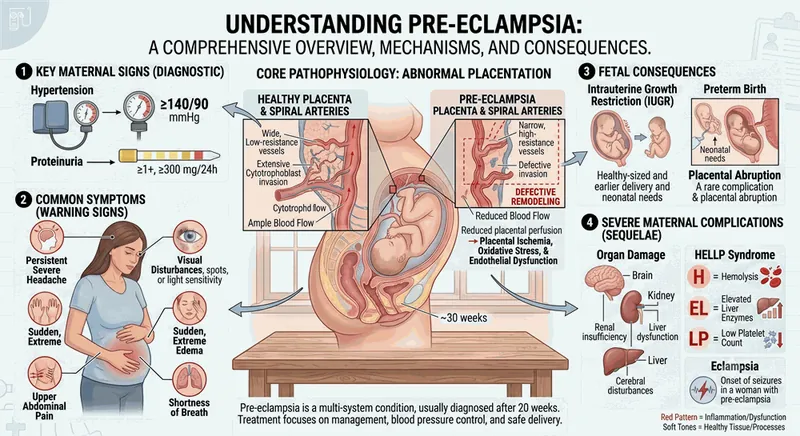
Pre-eclampsia, Pregnancy Hypertension + Endothelial Dysfunction

A pregnancy-specific multi-system disorder of new-onset hypertension with proteinuria or end-organ damage after 20 weeks, affecting 5 to 8 percent of pregnancies worldwide and a leading cause of maternal-fetal morbidity.

5โ€“8% of Pregnancies After 20 Weeks Placental Origin Prevention Possible

Last updated:

What Is Pre-eclampsia?

Pre-eclampsia is a pregnancy-specific hypertensive disorder defined by new-onset high blood pressure plus either proteinuria or evidence of end-organ damage, arising after 20 weeks gestation in a previously normotensive woman.

At its root, pre-eclampsia is a disorder of abnormal placentation. In early pregnancy, the trophoblast cells of the placenta normally remodel the maternal spiral arteries into wide, low-resistance vessels that deliver high blood flow to the developing fetus. In pre-eclampsia, this remodeling is incomplete. The narrowed vessels under-perfuse the placenta, triggering the release of anti-angiogenic factors (sFlt-1, soluble endoglin) into the maternal circulation. These factors damage the maternal endothelium throughout the body, producing the hypertension, proteinuria, edema, and end-organ dysfunction that define the disease.

Pre-eclampsia is graded by severity and presentation. Each form requires different surveillance and management. The only definitive cure is delivery of the placenta, but evidence-based nutrition and prenatal care can substantially lower the risk of progression:

Pre-eclampsia, placental dysfunction and maternal endothelial damage

"Pre-eclampsia complicates 2 to 8 percent of pregnancies worldwide and remains a leading cause of maternal and perinatal morbidity and mortality, accounting for more than 70,000 maternal and 500,000 fetal deaths globally each year."

โ€” Rana et al., 2019, Circulation Research, Pre-eclampsia: Pathophysiology, Challenges, and Perspectives

๐ŸŸข Gestational Hypertension (precursor)

New-onset blood pressure of 140/90 mmHg or higher after 20 weeks, without proteinuria or end-organ damage. About 15 to 25 percent will progress to pre-eclampsia, especially when onset is before 34 weeks. Requires increased monitoring but is not pre-eclampsia itself.

  • โ†’Hallmarks: BP ≥ 140/90 on two readings 4 hours apart, no proteinuria, no symptoms
  • โ†’Primary lever: Weekly BP and urine dipstick, sleep on the left side, magnesium-rich nutrition
  • โ†’Labs: Normal CBC, normal LFTs, normal creatinine, no proteinuria, normal sFlt-1/PlGF ratio
  • โ†’Key supports: Low-dose aspirin if risk factors present, magnesium, vitamin D, choline, prenatal monitoring

๐ŸŸก Pre-eclampsia without Severe Features

BP 140/90 or higher plus either proteinuria (300 mg or more per 24 hours, or protein/creatinine ratio ≥ 0.3) or end-organ involvement, without severe-feature criteria. Generally allows expectant management until 37 weeks with intensive surveillance.

  • โ†’Hallmarks: Hypertension + proteinuria, often mild edema, lab abnormalities below severe thresholds
  • โ†’Primary lever: Twice-weekly fetal monitoring, weekly labs, daily BP at home, plan delivery by 37 weeks
  • โ†’Labs: Proteinuria ≥ 300 mg/24h, mild platelet drop, mild LFT rise, normal creatinine
  • โ†’Key supports: Strict OB co-management, anti-inflammatory nutrition, daily kick counts, fetal growth scans

๐Ÿ”ด Pre-eclampsia with Severe Features / HELLP

BP 160/110 or higher, severe proteinuria, thrombocytopenia (less than 100,000), elevated LFTs, severe headache, visual changes, RUQ pain, pulmonary edema, or renal insufficiency. HELLP (Hemolysis, Elevated Liver enzymes, Low Platelets) is the most severe variant. Requires hospitalization and often immediate delivery.

  • โ†’Hallmarks: Severe headache, blurred vision, RUQ pain, scotomata, shortness of breath, brisk reflexes
  • โ†’Primary lever: Hospital admission, IV magnesium sulfate for seizure prophylaxis, antihypertensives, delivery
  • โ†’Labs: Platelets < 100k, AST/ALT 2× upper limit, creatinine > 1.1, LDH elevated, hemolysis on smear
  • โ†’Key supports: Emergency obstetric care, betamethasone if < 34 weeks, delivery timing per maternal-fetal medicine

โšซ Eclampsia & Postpartum Pre-eclampsia

Eclampsia is the onset of generalized tonic-clonic seizures in a woman with pre-eclampsia, a true obstetric emergency. Postpartum pre-eclampsia presents up to 6 weeks after delivery, often catching women off-guard once they have gone home. Severe headache and elevated BP postpartum must never be dismissed.

  • โ†’Hallmarks: Seizures, altered mental status, postpartum severe headache, BP ≥ 160/110 after birth
  • โ†’Primary lever: Continued BP monitoring 7 to 10 days postpartum, magnesium sulfate if seizing, ER if symptomatic
  • โ†’Labs: Same severe-feature lab abnormalities; cerebral imaging if seizures or focal neurology
  • โ†’Key supports: Postpartum BP cuff at home, NSAID avoidance, gradual return to activity, future cardiovascular screening

Pre-eclampsia Statistics & Research

5โ€“8%
of pregnancies worldwide develop pre-eclampsia
70,000+
maternal deaths annually from pre-eclampsia and its complications
500,000+
fetal and neonatal deaths annually worldwide
~62%
reduction in early-onset pre-eclampsia with low-dose aspirin in high-risk women (ASPRE trial)
2ร—
lifetime cardiovascular disease risk after pre-eclampsia history
15โ€“25%
recurrence in subsequent pregnancies; higher with early or severe disease

How Pre-eclampsia Presents

Early pre-eclampsia is often silent, the reason routine BP and urine checks at every prenatal visit matter. Symptomatic pre-eclampsia signals severe disease and requires same-day evaluation. Any pregnant woman with new symptoms in the second half of pregnancy should know the warning signs by heart.

๐Ÿšจ Vascular & Cardiovascular Signs

๐Ÿ“ˆ

New-Onset Hypertension After 20 Weeks

Blood pressure of 140/90 mmHg or higher on two occasions at least 4 hours apart, in a woman who was previously normotensive. Severe-range readings of 160/110 mmHg or higher require evaluation within 15 minutes. Home BP monitoring is appropriate from 20 weeks if any risk factors are present.

๐Ÿ’ง

Rapid-Onset Edema (Face, Hands, Pulmonary)

Sudden swelling of the face, eyelids, and hands (rings stop fitting overnight) is more concerning than gradual ankle swelling. Pulmonary edema, the lungs filling with fluid, presents as shortness of breath when lying flat or new orthopnea, and is a severe feature.

โš–๏ธ

Sudden Weight Gain (more than 2 lb / 1 kg per week)

Rapid weight gain beyond the expected pregnancy curve, especially in the third trimester, reflects fluid retention from leaky capillaries. A jump of 2 to 5 pounds over a few days warrants a same-day BP and urine check, even if you feel fine.

๐Ÿ˜ฃ

Severe, Persistent Headache

A new headache that does not respond to acetaminophen, that is worse than typical, or that comes with visual changes is a hallmark severe-feature symptom. Frontal or occipital pressure, throbbing, or "the worst headache of pregnancy" demands immediate evaluation.

๐Ÿ‘๏ธ

Visual Disturbances (Scotomata, Blurred Vision)

Spots or flashing lights in the visual field, blurred vision, double vision, or temporary loss of vision reflect cerebral edema or retinal vasospasm. These are severe-feature symptoms and require emergency evaluation, even if BP measured at home looks normal.

๐Ÿซ

Shortness of Breath / Pulmonary Edema

New shortness of breath at rest, when lying flat, or with mild activity, especially with chest tightness or pink-tinged sputum, suggests pulmonary edema. Late-pregnancy shortness of breath from a large uterus is common, but new severity warrants assessment.

๐Ÿงฌ End-Organ & Systemic Signs

๐Ÿงช

Proteinuria (Protein in the Urine)

300 mg or more of protein in a 24-hour urine collection, or a protein/creatinine ratio of 0.3 or higher, or 1+ or higher on a dipstick. Detected on routine prenatal urine dips and the most common first laboratory sign. Foamy or frothy urine at home is suggestive but not specific.

๐Ÿคฐ

Right Upper Quadrant or Epigastric Pain

Pain under the right ribs or just below the breastbone, sometimes mistaken for heartburn or gallbladder pain, reflects liver capsule stretch from hepatic edema and is a severe feature of HELLP syndrome. Particularly worrisome when accompanied by nausea, vomiting, or shoulder-tip pain.

๐Ÿคข

New Nausea / Vomiting in Late Pregnancy

First-trimester morning sickness has typically resolved by 16 weeks. New nausea and vomiting in the second or third trimester, especially with headache or RUQ pain, may signal HELLP syndrome and is not a normal "return of morning sickness."

๐Ÿฉธ

Thrombocytopenia & Easy Bruising

Platelets below 100,000 / microliter, often with new bruising, gum bleeding, or petechiae, is a defining feature of HELLP. Detected on CBC and a key reason a low-threshold lab workup matters whenever BP rises.

๐Ÿšฝ

Decreased Urine Output / Renal Involvement

Producing notably less urine than usual, or new dark/concentrated urine, may signal acute kidney injury from pre-eclampsia. Creatinine greater than 1.1 mg/dL, or a doubling of baseline, is a severe feature.

๐Ÿ‘ถ

Decreased Fetal Movement / IUGR

Reduced fetal kick counts, slowed fetal growth, or oligohydramnios on ultrasound reflect placental insufficiency from the underlying disease. Any change in fetal movement pattern in the third trimester is a same-day evaluation, irrespective of BP.

โš ๏ธ Call labor & delivery immediately if you experience: severe headache that does not improve with rest, vision changes (spots, blurring), severe RUQ or epigastric pain, sudden swelling of face/hands, shortness of breath, decreased fetal movement, or BP 160/110 or higher. Do not wait for your next prenatal visit. Postpartum, these symptoms can appear up to 6 weeks after delivery.

How to Test for Pre-eclampsia

Diagnosis is clinical and lab-supported. Every prenatal visit from 20 weeks should include BP, urine dipstick, weight, and symptom screening. Suspected pre-eclampsia is confirmed with a structured lab workup and fetal evaluation.

๐Ÿ  At-Home Screening

These do not diagnose pre-eclampsia, but they identify the women who need urgent clinical evaluation:

๐Ÿฉบ Home Blood Pressure Monitoring

Use a validated upper-arm cuff (Omron, Microlife). Sit quietly for 5 minutes, feet flat, arm supported at heart level. Take two readings 1 minute apart, average them. Check daily after 20 weeks if at risk; twice daily if BP is borderline. Log every reading with the time. Persistent BP ≥ 140/90 or any single reading ≥ 160/110 demands same-day care.

๐Ÿ“‹ Daily Symptom Diary

Track headache severity (0 to 10), visual changes, RUQ or epigastric pain, swelling (face, hands, legs), sudden weight changes, nausea, and any decrease in fetal movement. A simple "any/no" note each evening builds a clear pattern your provider can act on. Bring it to every prenatal visit.

๐Ÿ‘ถ Daily Fetal Kick Counts (from 28 weeks)

Lie on the left side after a meal at the same time each day. Count distinct fetal movements; 10 movements within 2 hours is reassuring. Less than 10, or any noticeable drop in usual pattern, warrants same-day labor & delivery evaluation. Critical screen for placental insufficiency that often accompanies pre-eclampsia.

๐Ÿ”ฌ Lab & Clinical Tests

๐Ÿงช Urine Protein Quantification

Urine dipstick at every prenatal visit. Urine protein/creatinine ratio ≥ 0.3 mg/mg confirms proteinuria. 24-hour urine collection for total protein ≥ 300 mg remains the gold standard. New proteinuria after 20 weeks plus hypertension confirms pre-eclampsia.

๐Ÿฉธ Pre-eclampsia Lab Panel

CBC (platelets < 100,000 is a severe feature), LFTs (AST/ALT ≥ 2× upper limit), creatinine (≥ 1.1 mg/dL or doubling), uric acid (often elevated), LDH (elevated in hemolysis), peripheral blood smear (schistocytes in HELLP). Repeat weekly or more often once diagnosed.

๐Ÿงฌ sFlt-1/PlGF Ratio (where available)

A maternal blood biomarker ratio reflecting placental angiogenic balance. A ratio ≤ 38 has high negative predictive value, ruling out pre-eclampsia within 1 week. A ratio > 85 (early-onset) or > 110 (late-onset) supports the diagnosis. Especially useful in evaluating ambiguous cases.

๐Ÿ“ท Fetal Ultrasound & Doppler Studies

Fetal biometry for growth restriction (estimated fetal weight < 10th percentile). Amniotic fluid index for oligohydramnios. Umbilical artery Doppler for placental resistance (absent or reversed end-diastolic flow is ominous). Uterine artery Doppler in the first trimester helps predict risk.

โค๏ธ Non-Stress Test / Biophysical Profile

An external fetal heart rate monitor for 20 to 40 minutes assesses fetal well-being and placental function. Biophysical profile combines NST with ultrasound assessment of fetal tone, movement, breathing, and amniotic fluid. Performed once or twice weekly once pre-eclampsia is confirmed.

๐Ÿงซ Pre-conception Risk Screening

Before or in early pregnancy, screen for established risk factors: prior pre-eclampsia, chronic hypertension, chronic kidney disease, diabetes, antiphospholipid syndrome (lupus anticoagulant, anti-cardiolipin), thrombophilia, BMI > 30, age > 40, multiple gestation, first pregnancy, and family history. Two or more major risks justifies low-dose aspirin from 12 to 36 weeks.

Holistic vs. Conventional Treatment for Pre-eclampsia

Pre-eclampsia is a medical emergency once diagnosed; holistic and conventional approaches converge on close obstetric care. The real divergence is in prevention, where evidence-based nutrition and supplements have substantial effect. Toggle below to compare.

๐ŸŒฟ HOLISTIC
๐Ÿ’Š CONVENTIONAL
๐ŸŒฟ

Holistic / Functional Approach

Prevention-focused: optimize endothelial function, placental development, and metabolic health in partnership with OB care

Primary Treatment
Pre-conception nutrient optimization + adequate protein (80 to 100 g/day) + targeted supplements (calcium, vitamin D, magnesium, choline, omega-3) + close prenatal partnership
Duration
Start 3 months before conception, continue through pregnancy and 6 weeks postpartum
Effect on Underlying Disorder
Reduces incidence and severity; once diagnosed, supports better outcomes alongside medical care
Maternal-Fetal Outcome
Lower risk of severe features, IUGR, and preterm delivery; better postpartum cardiovascular recovery
Protocol Includes (always alongside OB care)
  • Protein-anchored eating, 80 to 100 g daily, eggs, wild fish, pastured poultry, lentils, supports plasma volume expansion
  • Calcium 1000 to 1500 mg/day (food + supplement), strong evidence for risk reduction especially in low-calcium populations
  • Vitamin D3 2000 to 4000 IU/day with K2, target 30 to 50 ng/mL, address near-universal deficiency in pregnancy
  • Magnesium glycinate 300 to 400 mg/day for vascular tone and sleep (avoid magnesium oxide / citrate at high doses for GI reasons)
  • Choline 450 to 930 mg/day (eggs, liver), supports placental and fetal brain development; reduces inflammatory markers
  • Omega-3 DHA/EPA 1 to 2 g/day from low-mercury fish or tested algae oil, anti-inflammatory and vascular support
  • Daily 30-minute walk, left-side sleep, hydration 2.5 to 3 L/day, stress reduction (gentle yoga, breathwork)
  • Low-dose aspirin 81 to 150 mg/day from 12 to 36 weeks if any high-risk factor (only on OB recommendation)
โœ… Side effects: Mild GI changes from calcium or magnesium supplements (split doses); rare loose stools from omega-3. Important: Holistic care is supportive, not a substitute for obstetric monitoring. Once pre-eclampsia is diagnosed, delivery timing and medications must be guided by maternal-fetal medicine.

Root Causes of Pre-eclampsia

Pre-eclampsia is multi-factorial. It begins with abnormal placentation in the first trimester and ends with systemic endothelial dysfunction by the third. Most root causes are modifiable in part, especially before conception.

Root Cause How It Contributes to Pre-eclampsia Holistic Solution
Abnormal Placentation / Shallow Trophoblast InvasionIncomplete remodeling of the maternal spiral arteries in early pregnancy leads to under-perfused placenta. The placenta releases anti-angiogenic factors (sFlt-1, sEng), damaging maternal endothelium.Pre-conception folate, choline, omega-3, and B12 optimization; address chronic inflammation and insulin resistance before pregnancy
Endothelial DysfunctionMaternal blood vessels lose their ability to dilate. Nitric oxide production falls, oxidative stress rises, capillaries leak, and BP climbs throughout the body.Arginine + citrulline from food (watermelon, beets, leafy greens), magnesium, vitamin D, omega-3, antioxidant-rich diet
Chronic Hypertension (Pre-existing)Women entering pregnancy with HTN have 4 to 5× the risk of pre-eclampsia. The vascular system is already primed for dysfunction.Pre-conception BP optimization, DASH-style eating, sodium balance (not restriction in pregnancy), magnesium, regular movement
Insulin Resistance & Metabolic SyndromeHyperinsulinemia and visceral adiposity drive inflammation and endothelial dysfunction. Often unrecognized in non-diabetic women entering pregnancy.Pre-conception low-glycemic eating, inositol, strength training, address PCOS if present; aim for HbA1c < 5.7%
Antiphospholipid Syndrome & ThrombophiliaAutoimmune clotting disorders cause placental micro-thrombosis, infarction, and insufficiency. Strong association with recurrent pre-eclampsia.Screen with lupus anticoagulant, anti-cardiolipin, anti-ฮฒ2-glycoprotein; if positive, OB co-management with low-dose aspirin + heparin
Calcium DeficiencyInadequate dietary calcium (less than 600 mg/day) raises pre-eclampsia risk substantially. WHO recommends 1500 to 2000 mg/day in low-calcium populations.Dairy if tolerated, sardines with bones, dark leafy greens, almonds, tofu; supplement 1000 to 1500 mg/day if intake is low
Vitamin D DeficiencyVitamin D regulates implantation, angiogenesis, and immune tolerance of the fetus. Deficient women (25-OH-D < 20 ng/mL) have ~2× the risk of pre-eclampsia.25-OH vitamin D testing pre-conception; supplement 2000 to 4000 IU D3 with K2 to reach 40 to 50 ng/mL
Inadequate Protein / Plasma Volume FailurePregnancy requires plasma volume expansion of 40 to 50 percent, which requires substantial protein (80 to 100 g/day). Inadequate protein impairs this expansion and contributes to hypertension.Anchor every meal with quality protein, eggs, wild fish, pastured poultry, lentils, Greek yogurt; aim for 80 to 100 g/day
Chronic Inflammation & Oxidative StressElevated CRP, TNF-ฮฑ, and oxidative markers damage placental and maternal endothelium. Drivers include obesity, periodontal disease, gut dysbiosis, and ultra-processed foods.Mediterranean-style eating, omega-3, dental cleaning pre-conception, eliminate seed oils and ultra-processed foods, gut health work
Risk Factors: Age, Parity, Multiple GestationFirst pregnancy, age over 35 or under 20, twin/triplet pregnancy, prior pre-eclampsia, BMI > 30, IVF conception, and 10+ year interval between pregnancies all increase risk.Risk-factor mapping pre-conception; low-dose aspirin from 12 to 36 weeks if any high-risk factor (with OB approval)

Pre-eclampsia Diet Guide

Diet is the most powerful prevention tool. Once diagnosed, nutrition supports outcomes but cannot replace obstetric care. All recommendations here are pregnancy-safe and align with mainstream prenatal guidance.

๐Ÿฅš

The Protein-First, Mediterranean-Style Prenatal Pattern

Pregnancy requires the maternal blood volume to expand by 40 to 50 percent. That expansion needs protein, salt to taste, electrolytes, and steady fluids. Women with inadequate protein and electrolyte intake have lower plasma volume and higher rates of pre-eclampsia. The myth that "low-salt and low-protein protects pregnancy" is outdated and not supported by modern evidence.

The framework: build every meal around protein, anchor with non-starchy vegetables, include healthy fats, and treat slow carbs as a smaller side. Salt to taste from real food. Drink to thirst. This is the Mediterranean pattern adapted for pregnancy.

The 4 Anchors of Every Meal:

  • 1Protein 25 to 35 g, aim for 80 to 100 g daily across meals to support plasma volume
  • 2Non-starchy vegetables fill half the plate, leafy greens, cruciferous, peppers
  • 3Healthy fat, extra-virgin olive oil, avocado, nuts, wild fish for hormone and fetal brain support
  • 4Slow carbs from whole foods, sweet potato, quinoa, lentils, berries, oats

Hydration & Salt:

  • ๐Ÿ’งHydrate to thirst, 2.5 to 3 L/day from water, broth, herbal teas, fruit
  • ๐Ÿง‚Salt to taste, low-salt diets do not prevent pre-eclampsia; needed for plasma volume
  • ๐ŸฅฃBone broth or miso broth daily, electrolytes + glycine + collagen for vascular health
  • ๐Ÿšถ10 to 15 minute walk after meals, supports glucose regulation and venous return
๐Ÿ’ก Once diagnosed, follow OB guidance on activity and fluid restrictions. Do not self-restrict salt or fluids without your provider's input.
โš ๏ธ These foods drive inflammation, endothelial dysfunction, and insulin resistance, all upstream of pre-eclampsia.
  • โœ—Ultra-processed foods: Packaged snacks, fast food, frozen meals, refined seed-oil-heavy products are linked to higher pre-eclampsia rates
  • โœ—Industrial seed oils: Soybean, canola, corn, cottonseed, sunflower, safflower, drivers of inflammation; cook with olive oil, butter, ghee, avocado oil instead
  • โœ—Refined sugar & sugary drinks: Soda, juice, candy, baked goods spike insulin and worsen endothelial function
  • โœ—High-mercury fish: Avoid swordfish, tilefish, king mackerel, shark, bigeye tuna; mercury impairs fetal neurology
  • โœ—Raw and unpasteurized products: Raw fish, raw eggs, unpasteurized dairy, deli meats (unless heated), Listeria and Toxoplasma risk
  • โœ—Alcohol: No safe level in pregnancy; raises BP, harms fetal brain development
  • โœ—Excess caffeine: Limit to 200 mg/day (about 1 to 2 cups of coffee); higher intake associated with growth restriction
  • โœ—Artificial sweeteners (excess): Limit aspartame, sucralose, saccharin; some evidence of impact on gut microbiome and glucose handling
  • โœ—Excess processed red meat: Bacon, hot dogs, deli meats with nitrates; tied to higher BP and inflammation
๐Ÿ’ก Pregnancy-safe foods that support placental development, plasma volume, and endothelial function. Aim for every category daily.
  • โœ“Quality proteins: Pastured eggs (2 to 3 daily, choline source), wild salmon, sardines, pastured poultry, grass-fed beef, lentils, beans, plain Greek yogurt
  • โœ“Calcium-rich foods: Plain whole-milk yogurt and kefir if tolerated, sardines with bones, tahini, almonds, kale, collards, bok choy, fortified plant milks
  • โœ“Leafy greens (daily): Spinach, kale, chard, arugula, romaine, folate + magnesium + nitrates that support vascular function
  • โœ“Beets, watermelon, garlic: Natural sources of nitrates and arginine that support nitric oxide and healthy BP
  • โœ“Low-mercury fatty fish (2 to 3×/week): Wild salmon, sardines, anchovies, mackerel (Atlantic), trout, omega-3 for inflammation and fetal brain
  • โœ“Healthy fats: Extra-virgin olive oil, avocado, walnuts, almonds, pumpkin seeds, flax seeds, coconut oil in moderation
  • โœ“Slow carbs: Sweet potato, butternut squash, quinoa, oats, lentils, chickpeas, fiber + magnesium + steady glucose
  • โœ“Bone broth & collagen: Daily mug of bone broth supplies glycine, electrolytes, and minerals; supports vascular and connective tissue
  • โœ“Berries & pomegranate: Polyphenol-rich; reduce oxidative stress and support endothelial function

Key Supplements for Pre-eclampsia Recovery

All supplements below are pregnancy-safe at the doses listed and are commonly recommended within prenatal care. Always confirm individual doses and any pre-existing-condition modifications with your OB or midwife. Items flagged as contraindicated should not be used without explicit obstetric approval.

Supplement Role in Pre-eclampsia Recovery Suggested Dose Timing Notes (Pregnancy Safety)
High-Quality Prenatal MultivitaminFoundation. Should contain 800 to 1000 mcg methylfolate (not folic acid for MTHFR variants), 25 to 30 mg iron, 150 mcg iodine, 8 to 12 mg zinc, and active B vitamins.1 to 2 capsules/day per productWith breakfast or split AM/PMUniversally recommended in pregnancy. Choose third-party tested (NSF, USP).
Calcium Carbonate / CitrateStrong evidence for pre-eclampsia risk reduction in low-calcium diets. WHO recommends 1500 to 2000 mg/day when dietary intake is below 600 mg.500 to 1000 mg/day (food + supplement to reach 1500 mg total)Split, 500 mg twice daily; take 2 hours from ironPregnancy-safe. Citrate better absorbed if taking acid-suppressing medication.
Vitamin D3 (with K2)Regulates implantation, immune tolerance, and BP. Deficiency (less than 20 ng/mL) doubles pre-eclampsia risk. Target 30 to 50 ng/mL.2000 to 4000 IU D3 + 90 to 180 mcg MK-7 K2 per dayWith a fat-containing meal, morningPregnancy-safe. Test 25-OH-D; dose to target. Avoid mega-doses (greater than 10,000 IU/day) without monitoring.
Magnesium GlycinateSupports vascular tone, sleep, and may reduce HTN. Lower risk of preterm contractions in deficient women.300 to 400 mg elemental magnesium per dayEvening, 30 to 60 minutes before bedPregnancy-safe in glycinate or bisglycinate form. Avoid magnesium oxide / citrate at high doses (laxative effect).
Choline (as bitartrate or phosphatidylcholine)RDA in pregnancy is 450 mg; emerging evidence supports 930 mg/day. Reduces sFlt-1 levels and supports placental function and fetal brain.450 to 930 mg/day (3 eggs supply ~500 mg)With food, split if higher dosePregnancy-safe and underdosed in most prenatals. Liver, eggs, and salmon are top food sources.
Omega-3 DHA/EPA (algae or low-mercury fish oil)Reduces inflammation, supports endothelial function and fetal brain development. Cochrane review supports reduced preterm birth risk.1 to 2 g combined EPA+DHA per day; at least 200 to 300 mg DHAWith mealsPregnancy-safe. Choose IFOS-certified low-mercury fish oil or algae oil. Cod liver oil acceptable if vitamin A < 5000 IU/day.
Methylated Folate (L-5-MTHF)Supports placentation, methylation, and homocysteine regulation. Critical for women with MTHFR variants.800 to 1000 mcg/day (often in prenatal)Morning with foodPregnancy-safe and essential. Use L-methylfolate over folic acid if MTHFR known or suspected.
Vitamin B12 (methylcobalamin)Pairs with folate for methylation; deficient women (especially vegetarian/vegan) have higher homocysteine and pre-eclampsia risk.500 to 1000 mcg/day if levels are lowMorning, sublingual or with foodPregnancy-safe. Methylcobalamin preferred over cyanocobalamin.
L-Arginine (food-first or modest supplement)Nitric oxide precursor; RCTs show modest BP reduction and lower pre-eclampsia incidence in high-risk women when started early.3 g/day (only with OB approval)Split, twice daily on empty stomachSpeak with OB before adding. Food sources (watermelon, beets, pumpkin seeds, nuts) are first-line.
CoQ10 (Ubiquinol)Mitochondrial support for placental cells under oxidative stress. RCT evidence shows ~50% reduction in pre-eclampsia in high-risk women with 200 mg/day.100 to 200 mg ubiquinol per dayWith a fat-containing meal, morningPregnancy-safe at standard doses. Most useful when started pre-conception or in the first trimester.
Iron (only if deficient)Iron deficiency raises pre-eclampsia risk; over-supplementation can also worsen oxidative stress.30 to 60 mg elemental iron/day if ferritin is lowEmpty stomach with vitamin C if toleratedPregnancy-safe when indicated. Test ferritin first; do not supplement above 100 mg without monitoring. Take 2 hours from calcium.
Vitamin C (from food + low-dose supplement)Antioxidant support for endothelium; works with vitamin E. Combined antioxidant therapy trials have been mixed; food-first preferred.500 to 1000 mg/day from food and supplementWith mealsPregnancy-safe. Avoid mega-dosing (greater than 2000 mg/day).
Probiotic (pregnancy-safe strains)Supports gut and oral microbiome, reduces systemic inflammation; some evidence of BP benefit.10 to 25 billion CFU/day, multi-strainWith or after foodPregnancy-safe with mainstream strains (Lactobacillus, Bifidobacterium). Avoid spore-based unless approved.
SeleniumAntioxidant cofactor (glutathione peroxidase); pre-eclampsia is associated with low selenium status. Caution required, narrow safe range.60 to 100 mcg/day, food preferred (2 Brazil nuts ≈ 100 mcg)With foodPregnancy-safe at modest doses. Do not exceed 200 mcg/day; toxicity above 400 mcg.
IodineRequired for fetal thyroid and brain development; many prenatals contain only 150 mcg, often inadequate without iodized salt or seafood.150 to 250 mcg/day total (prenatal + food)Morning with foodPregnancy-safe at recommended doses. Avoid high-dose kelp or iodine drops without thyroid testing.
Low-Dose Aspirin (81 to 150 mg)Strongest pharmacologic prevention for high-risk women; reduces early-onset pre-eclampsia by ~60% (ASPRE trial). Must be prescribed/approved by OB.81 to 150 mg/day from 12 to 36 weeksEvening (some evidence of better effect)Only on OB recommendation. Not a self-prescribed supplement; this is a prescription decision.
Vitex (Chasteberry) โŒNOT pregnancy-safe; affects prolactin and progesterone; can disrupt pregnancy hormonal milieu.Do not use during pregnancyDiscontinue immediately at positive testContraindicated in pregnancy. Useful pre-conception in some cycles; stop at conception.
Black Cohosh / Blue Cohosh โŒNOT pregnancy-safe; uterine stimulants and associated with neonatal complications.Do not use during pregnancyAvoid entirelyContraindicated in pregnancy. Common in "labor prep" blends; check every label.
โš ๏ธ Pregnancy supplement principle: "Pregnancy-safe" does not mean "without input from your provider." Confirm every supplement with your OB or midwife, especially if you have pre-existing conditions, are on medication, or have a history of pre-eclampsia. Many herbs (Vitex, black cohosh, blue cohosh, dong quai, high-dose vitamin A, willow bark) are contraindicated even when sold over the counter.

Healing Timeline: Conventional vs. Holistic

Understanding what to expect from each approach helps set realistic expectations and make informed choices. For pre-eclampsia, the two approaches are best used together, not in opposition.

๐ŸŒฟ Holistic Protocol
Pre-conception (3 months prior)

Optimize 25-OH vitamin D, ferritin, B12, methylfolate, choline. Address insulin resistance, gut health, weight, and chronic inflammation. Reduce BPA/phthalate exposure.

Weeks 6โ€“20

Protein-anchored eating, calcium 1500 mg/day, magnesium 300 mg/day, omega-3 1 to 2 g/day, choline 450 to 930 mg/day. Establish prenatal care. Discuss low-dose aspirin if high-risk.

Weeks 20โ€“36

Home BP monitoring twice daily if at risk, daily symptom diary, kick counts from 28 weeks, weekly prenatal visits from 32 weeks. Maintain supplement protocol. Walk daily, sleep on left side, hydrate to thirst.

Birth & Postpartum 0โ€“6 weeks

Continue BP monitoring for 6 weeks; risk persists postpartum. Restore mineral stores (iron, magnesium, vitamin D). Bone broth, protein, omega-3. Watch for postpartum symptoms.

Long-Term Outlook

Lower recurrence in next pregnancy with continued cardiovascular and metabolic optimization; cardiovascular screening every 1 to 2 years

๐Ÿ’Š Conventional Treatment
Pre-conception

Limited intervention unless prior history. Risk-factor assessment at first prenatal visit. Generic prenatal vitamin advised.

Weeks 12โ€“36

Low-dose aspirin 81 to 150 mg/day if high-risk. Prenatal visits every 4 weeks until 28, every 2 weeks until 36, weekly after. BP and urine dip at each visit.

Diagnosis & Surveillance

Hospitalization for severe features. Antihypertensives (labetalol, nifedipine). IV magnesium sulfate for seizure prophylaxis. Antenatal corticosteroids if < 34 weeks.

Delivery

Definitive cure. 37 weeks for mild; earlier if severe features or fetal compromise. Magnesium sulfate continued 24 hours postpartum.

Long-Term Outlook

2× lifetime cardiovascular disease risk; 4× chronic hypertension risk; recurrence 15 to 25% in next pregnancy

"Pre-eclampsia is a disorder of the placenta with consequences for the entire mother. Nutrition cannot replace obstetric care, but it can lower the risk of ever needing it."

Ready to Address Your Pre-eclampsia at the Root?

Explore related conditions below or revisit the Symptom Checker to map your full symptom picture across the library.