Lung inflammation from bacterial, viral, or fungal infection (pneumonia) or inflammation of bronchial tubes (bronchitis). Recovery and resistance are strongly influenced by immune function, vitamin D status, zinc, and gut microbiome diversity.
Last updated:
Pneumonia is infection of the lung's air sacs (alveoli), causing inflammation, fluid accumulation, and impaired oxygen exchange. Bronchitis is inflammation of the larger airways (bronchi) without involvement of lung tissue. Both cause cough and respiratory symptoms but differ significantly in severity and treatment.
Pneumonia is classified by setting: community-acquired (CAP, most common), hospital-acquired (HAP, >48h after admission), ventilator-associated (VAP), and aspiration pneumonia. Causes range from bacteria (Streptococcus pneumoniae most common; also Mycoplasma, Legionella, Chlamydia) to viruses (influenza, RSV, COVID-19, rhinovirus) to fungi (in immunocompromised).
Acute bronchitis is almost always viral (~90%) and self-limited. Antibiotics are NOT helpful for typical acute bronchitis but are widely overprescribed. Chronic bronchitis is part of COPD, distinct from acute infection. Pneumonia is the leading infectious cause of death in adults >65; vaccines (pneumococcal, flu, COVID) and timely treatment save lives.
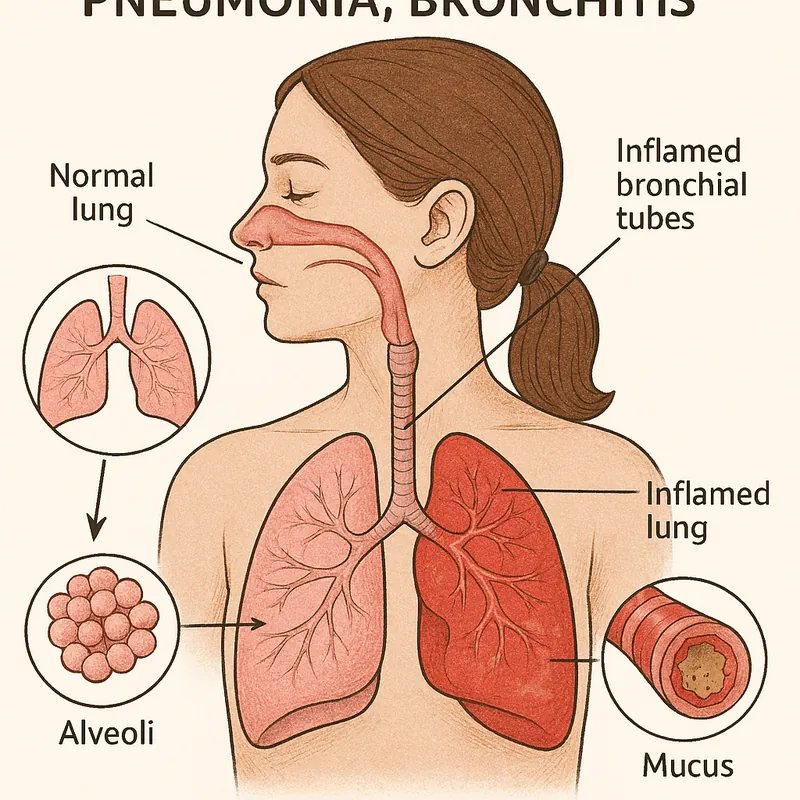
Self-limited cough lasting 1-3 weeks. Almost always viral. Treatment: supportive only. Antibiotics overprescribed, NOT helpful for typical cases. Honey, hydration, rest.
HAP, VAP, aspiration, or severe CAP. Higher mortality. Resistant organisms common. Hospital admission with broad-spectrum antibiotics ยฑ ICU care. Annual mortality significant.
Pneumonia is generally more severe than bronchitis. Watch for warning signs that indicate severe disease.
Often productive of green, yellow, or rust-colored sputum. Bloody streaks possible. Sudden onset distinguishes from chronic conditions.
High fever (often >39ยฐC/102ยฐF), shaking chills (rigors). May be absent in elderly (more often presents with confusion).
Increased respiratory rate, work of breathing. Air hunger. Most concerning when at rest. Indicates significant lung involvement.
Sharp pain worsened by breathing in or coughing. Localized to affected lung area. Indicates pleural inflammation.
Blue lips/fingertips. Pulse ox <92% (or <88% in COPD patients). Hypoxemia. EMERGENCY, ER immediately.
May be the only symptom in elderly. Hypoxia, sepsis. New-onset confusion in older adults with respiratory symptoms, always think pneumonia.
Signs of sepsis from pneumonia. Tachycardia >125, hypotension. Aggressive resuscitation + IV antibiotics needed.
Streaks of blood common in pneumonia. Large volumes (>tablespoon) warrant urgent evaluation, rule out tuberculosis, lung cancer, PE.
Standard initial imaging. Confirms pneumonia (consolidation, infiltrates), assesses severity, identifies complications (effusion, abscess). May be normal early.
When CXR unclear, suspected complications, treatment failure, suspected alternative diagnosis (cancer, PE). Higher sensitivity.
Emerging bedside tool. High sensitivity for pneumonia. No radiation. Useful in pregnant patients, children.
Critical bedside assessment. SpO2 <92% on room air indicates significant hypoxemia, often requires hospitalization.
Effective for bronchitis (viral) and as ADJUNCT for pneumonia. Bacterial pneumonia requires antibiotics.
Anti-inflammatory, immune-supportive, easily digestible during illness. Adequate protein for recovery.
Hydrating, easily digestible, anti-inflammatory. Mild mucolytic effect. Time-tested grandma medicine with real science backing.
Water, herbal teas, warm broths. Thins respiratory secretions, supports immune function. Aim 8-10 cups/day.
Honey-ginger-lemon tea, herbal teas. Soothing for throat, hydrating. Honey is evidence-based cough suppressant (1-2 tsp).
1-1.5g/kg/day. Critical for immune function and recovery. Eggs, fish, poultry, legumes. Soft, easy to eat when fatigued.
Anti-inflammatory, immune-supportive, mild antimicrobial. Add liberally to broths, soups. Crush garlic 10 min before cooking.
Top modifiable risk factor for pneumonia. Continuing to smoke during pneumonia worsens outcomes. Avoid secondhand smoke entirely during recovery.
Some patients report dairy thickens mucus; others tolerate fine. If notable mucus increase with dairy, limit during illness.
Suppresses immune function. Drives inflammation. Eliminate sodas, sweets, sugary foods during recovery.
Immune suppressant, dehydrating, interacts with antibiotics. Avoid during illness and recovery.
Pro-inflammatory, low nutrient density. Spend caloric intake on nutrient-dense foods that support recovery.
Best evidence: vitamin D, zinc, NAC, vitamin C. Most important: prevention via vaccines and vitamin D optimization.
| Supplement | Mechanism & Evidence | Suggested Dose | Timing | Notes |
|---|---|---|---|---|
| Vitamin D3 | Deficiency strongly associated with respiratory infection severity. May reduce risk and severity. | 2,000-5,000 IU/day (titrate to 50-80 ng/mL) | With fat meal | Test baseline. Higher loading doses for acute infection (10,000 IU/day ร 1 week). |
| Zinc | Zinc lozenges shorten viral upper respiratory infections. Supports immune function. | 30-50mg/day during acute illness | Empty stomach (lozenges) | Acetate or gluconate lozenges most effective. Don't exceed 50mg/day long-term. |
| N-Acetyl Cysteine (NAC) | Mucolytic, thins respiratory secretions. Glutathione precursor. May reduce flu severity. | 600-1,800mg/day | Divided doses | Especially useful with thick sputum. May cause sulfur smell initially. |
| Vitamin C | Mixed evidence but may shorten duration. Immune support. | 500-2,000mg/day | Divided doses | Higher doses (3-5g) may cause diarrhea, back off. |
| Probiotics | May reduce respiratory infection frequency, support immune function. Especially after antibiotics. | 10-30 billion CFU/day, multi-strain | With or without food | Continue 2-4 weeks after antibiotic courses. |
| Quercetin | Anti-viral and anti-inflammatory in lab studies. May reduce viral replication. | 500-1,000mg/day | With food | Often combined with bromelain for absorption. |
| Elderberry (Sambucus) | Modest evidence for shortening viral respiratory infections; especially flu. | Per product label (typically 15mL syrup 2-4x/day) | With food | Use early in viral infections. Caution in severe pneumonia. |
| Andrographis | Some evidence for shortening upper respiratory infection duration. | 200-400mg/day (standardized extract) | With food | Bitter taste. Use short-term during illness. |
Vaccines, vitamin D, smoking cessation, and immune-supportive nutrition prevent most pneumonia. When infection occurs, distinguish viral from bacterial, antibiotics for bacterial pneumonia save lives; antibiotics for viral bronchitis cause harm without benefit. Watch for warning signs and seek care for severe symptoms.