High Cholesterol

Elevated cholesterol, specifically oxidized LDL, is a primary driver of atherosclerosis, the arterial plaque buildup that underlies heart attacks and strokes worldwide. But cholesterol itself is not the enemy: it is the inflammatory, oxidized form of LDL, compounded by insulin resistance and gut dysbiosis, that silently hardens arteries over decades. A targeted dietary approach can meaningfully lower LDL and support vascular health. In the best-studied pattern of this kind, the Portfolio diet, LDL fell by about 17% in everyday conditions and by up to 35% under fully supervised conditions.

86 Million US Adults Silent Killer Responds to Diet

Last updated:

⚠️ Medication safety, please read first. The nutrition and supplement approaches on this page are meant to work alongside your prescribed treatment, never to replace it. Never stop, reduce, or change your cholesterol-lowering medication without your prescriber’s guidance, doing so can be dangerous. Several supplements interact with cholesterol-lowering medication, so talk to your prescriber or pharmacist before starting anything on this page.

What Is High Cholesterol?

Hypercholesterolemia is defined as total blood cholesterol above 200 mg/dL, with LDL cholesterol above 130 mg/dL considered borderline-high. But this traditional view is incomplete, the critical issue is not total cholesterol but the inflammatory state that converts LDL particles into oxidized LDL (oxLDL), which embeds in arterial walls and initiates atherosclerotic plaque formation.

Cholesterol is a vital molecule: it forms every cell membrane in the body, is the backbone of all steroid hormones (cortisol, estrogen, testosterone, Vitamin D), enables bile production for fat digestion, and is essential for brain function. Your liver produces approximately 75–80% of all cholesterol, dietary cholesterol is a relatively minor contributor. What drives dangerous cholesterol patterns is chronic inflammation, oxidative stress, insulin resistance, and gut dysbiosis.

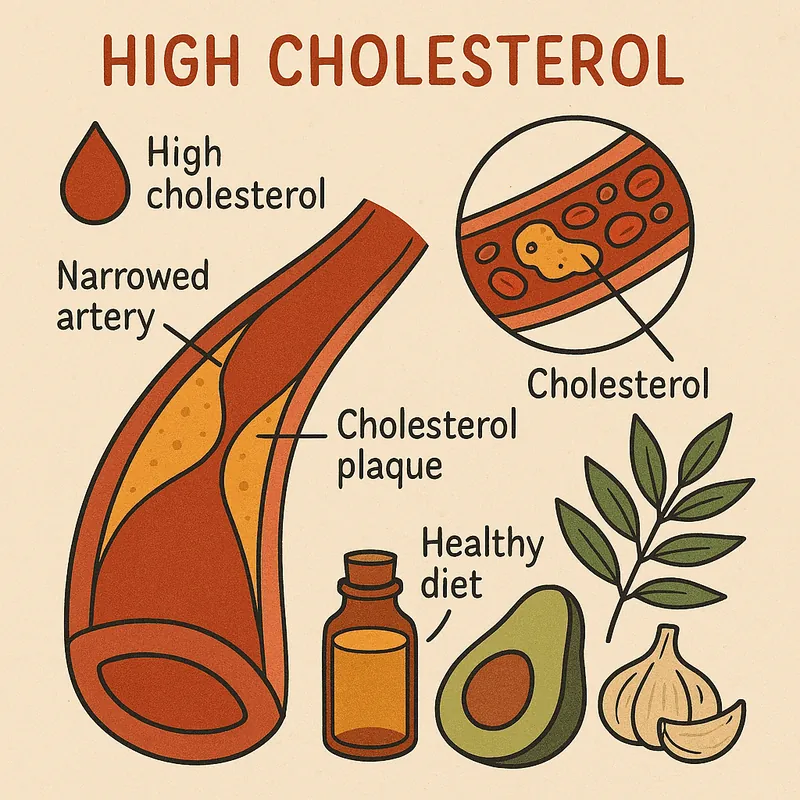
Atherosclerosis, the progressive hardening and narrowing of arteries from plaque deposits, is the underlying mechanism behind coronary artery disease, heart attacks, and ischemic strokes. The plaque is composed of oxLDL, macrophages (foam cells), calcium, fibrous tissue, and inflammatory debris. The good news: multiple dietary compounds and targeted supplements have demonstrated the ability to stabilize and even regress arterial plaque.

⚠️ Important: High cholesterol is a cardiovascular risk factor that requires clinical assessment. If you have been diagnosed with familial hypercholesterolemia, or have existing cardiovascular disease, please work with your physician before modifying or stopping statin therapy. The nutritional strategies here are evidence-based and many can be used alongside conventional treatment.
High cholesterol, arterial plaque and LDL buildup

Understanding Your Cholesterol Numbers

Total CholesterolOptimal: <180 mg/dL
LDL ("Bad")Optimal: <100 mg/dL (high-risk: <70)
HDL ("Good")Optimal: >60 mg/dL
TriglyceridesOptimal: <100 mg/dL
ApoB (best marker)Optimal: <70 mg/dL
hs-CRP (inflammation)Optimal: <1 mg/L

Types & Classifications

🧬 Primary / Familial Hypercholesterolemia

Genetically driven, mutations in the LDL receptor gene (LDLR), ApoB gene, or PCSK9 gene impair LDL clearance from the blood. Familial Hypercholesterolemia (FH) affects 1 in 250 people and causes LDL levels above 190 mg/dL despite a healthy diet. Heterozygous FH raises cardiovascular risk 3–10x; homozygous FH (1 in 300,000) requires aggressive intervention. Identified by premature cardiovascular disease in family members, tendon xanthomas, and corneal arcus before age 45. Statin therapy is typically essential; holistic nutrition significantly augments outcomes.

βš–οΈ Secondary Hypercholesterolemia

Cholesterol elevation caused by an underlying, addressable condition: hypothyroidism (substantially raises LDL, always test TSH in hypercholesterolemia), type 2 diabetes / insulin resistance (raises triglycerides and small dense LDL), chronic kidney disease, liver disease, obstructive sleep apnea, and medications (thiazide diuretics, beta-blockers, corticosteroids, anabolic steroids, retinoids). Treating the root cause often normalizes cholesterol without additional lipid-lowering treatment. Secondary causes must be ruled out before initiating statin therapy.

πŸ”€ Mixed Dyslipidemia

The most metabolically dangerous pattern, elevated LDL combined with high triglycerides (>150 mg/dL) and low HDL (<40 mg/dL in men, <50 mg/dL in women). This "atherogenic triad" is the lipid signature of insulin resistance, metabolic syndrome, and NAFLD (non-alcoholic fatty liver disease). It is associated with a disproportionately high concentration of small, dense LDL particles, the most oxidation-prone and atherogenic LDL subtype. Even with a "normal" LDL number, high triglycerides and low HDL indicate significant cardiovascular risk. The dietary change most consistently associated with improving this pattern is reducing refined carbohydrates and sugar.

86M
US adults with total cholesterol above 200 mg/dL (CDC)1
17%
LDL reduction from the Portfolio dietary pattern in everyday conditions2
6–12%
LDL reduction from plant sterols at 0.6–3.3 g/day, across 124 placebo-controlled trials6
25%
Cardiovascular event reduction with prescription-dose EPA, in statin-treated patients with high triglycerides (REDUCE-IT)5

The Silent Buildup: Recognizing Cholesterol Damage

High cholesterol is almost entirely asymptomatic until vascular damage is advanced, hence the term "silent killer." By the time symptoms appear, atherosclerosis has typically been progressing for 20–30 years. Knowing the subtle and late signs is critical for early intervention.

⚠️ Early & Subtle Signs

πŸ‘οΈ

Xanthelasma & Corneal Arcus

Yellowish fatty deposits under the eyelid skin (xanthelasma) or a gray-white arc around the cornea (corneal arcus before age 45) are direct cholesterol deposits, visible markers of hypercholesterolemia or familial hypercholesterolemia. Tendon xanthomas (fatty bumps over the Achilles tendon or knuckles) indicate severe, longstanding cholesterol elevation and strongly suggest FH. These are cosmetically visible signs of a systemic lipid disorder requiring investigation.

🦡

Peripheral Artery Disease Symptoms

Atherosclerosis affecting the leg arteries causes claudication, cramping, aching, or fatigue in the calves, thighs, or buttocks during walking that resolves with rest. As disease progresses: cold feet, diminished foot pulses, non-healing wounds on the toes or feet, and skin color changes. PAD is a major marker of systemic atherosclerosis, its presence correlates strongly with coronary and carotid artery disease.

😴

Erectile Dysfunction as Early Warning

Endothelial dysfunction, the impaired ability of blood vessel walls to relax and dilate, is one of the earliest manifestations of atherosclerosis. The penile arteries are among the smallest coronary-caliber vessels, and ED often precedes cardiac symptoms by 3–5 years in men with underlying cardiovascular disease. ED in men under 50 is now considered a cardiovascular risk marker. Improved endothelial function with nitric oxide-boosting foods (beetroot, pomegranate, dark leafy greens) is directly beneficial.

🚨 Advanced & Emergency Signs

πŸ’”

Chest Pain (Angina)

Stable angina, chest tightness, pressure, or pain triggered by exertion and relieved by rest or nitrates, indicates significant coronary artery narrowing (>70% occlusion). Unstable angina (occurring at rest or with increasing frequency/severity) is a cardiovascular emergency. Atherosclerotic plaque rupture, triggered by inflammation, causes acute myocardial infarction (heart attack). A large proportion of first heart attacks occur in people with "only mildly elevated" LDL but high inflammation (elevated hs-CRP).

🧠

TIA & Stroke Symptoms

Carotid artery atherosclerosis causes transient ischemic attacks (TIAs, "mini-strokes"): sudden one-sided weakness or numbness, speech difficulty, visual disturbance, or severe headache lasting minutes to hours. TIA is a medical emergency, 10–15% of TIA patients have a full stroke within 90 days. Carotid intima-media thickness (CIMT), measurable by ultrasound, provides a direct, non-invasive window into atherosclerosis progression and regression with treatment.

πŸ“Š

Elevated Triglycerides & Fatty Liver

Severely elevated triglycerides (above 500 mg/dL) cause acute pancreatitis, a potentially life-threatening emergency with severe abdominal pain, nausea, and vomiting. Moderate hypertriglyceridemia (150–500 mg/dL) drives NAFLD, fat accumulation in the liver that can progress to NASH (non-alcoholic steatohepatitis), cirrhosis, and liver cancer. The dietary change most consistently linked to lower triglycerides is cutting sugar, fructose and refined carbohydrates, and alcohol entirely.

Why Cholesterol Becomes Dangerous: Inflammation, Oxidation & Insulin Resistance

Elevated LDL alone does not cause heart disease, it is the combination of excess LDL particles, oxidative stress, chronic inflammation, and endothelial damage that transforms a protective molecule into an arterial threat.

πŸ”₯ Oxidized LDL & Inflammation

Native LDL is relatively harmless, it becomes dangerous when oxidized by reactive oxygen species (free radicals) in the presence of chronic inflammation. Oxidized LDL (oxLDL) is taken up by macrophages in the arterial wall, forming "foam cells", the earliest visible stage of plaque formation. OxLDL also activates NF-ΞΊB, the master inflammatory transcription factor, triggering a self-amplifying inflammatory cascade. Dietary antioxidants (polyphenols, Vitamin C, Vitamin E, CoQ10) directly inhibit LDL oxidation. Reducing hs-CRP below 1 mg/L is as important as reducing LDL for cardiovascular risk.

⚑ Insulin Resistance & Small Dense LDL

Insulin resistance drives the most atherogenic lipid pattern: elevated triglycerides, low HDL, and an LDL particle shift toward small, dense LDL (sdLDL). Small dense LDL particles are smaller and more numerous, pass more easily through the endothelial lining, resist LDL receptor binding (remaining in circulation longer), and are more susceptible to oxidation than large, buoyant LDL. A person with 130 mg/dL LDL but predominantly sdLDL particles has substantially higher cardiovascular risk than someone with 160 mg/dL predominantly large, buoyant LDL. Standard lipid panels miss this, ApoB and NMR LDL particle testing reveal the truth.

🦠 Gut Microbiome & TMAO

The gut microbiome influences cardiovascular risk through several pathways. Certain gut bacteria metabolize dietary choline and carnitine (found in red meat and eggs) into trimethylamine (TMA), which the liver converts to trimethylamine N-oxide (TMAO), a potent driver of atherosclerosis that promotes cholesterol deposition in arterial walls independent of LDL levels. Dysbiosis also increases intestinal permeability, allowing bacterial lipopolysaccharides (LPS) to enter circulation and activate systemic inflammation. Conversely, a diverse, plant-rich microbiome produces short-chain fatty acids (butyrate, propionate) that reduce hepatic cholesterol synthesis and protect the vascular endothelium.

Beyond the Basic Lipid Panel: Advanced Cardiovascular Testing

The standard fasting lipid panel misses the majority of cardiovascular risk information. Advanced testing reveals particle size, arterial calcification, inflammation, and genetic risk, providing a complete picture to guide both holistic and conventional intervention.

πŸ“‹ Standard Lipid Testing

πŸ“Š Fasting Lipid Panel

The basic screen: total cholesterol, LDL-C (often calculated, not directly measured), HDL-C, and triglycerides. Fasting 9–12 hours before testing improves accuracy, especially for triglycerides. Direct LDL measurement (not Friedewald equation) is more accurate when triglycerides exceed 400 mg/dL. The standard panel should be obtained at least every 5 years from age 20, or annually when treating dyslipidemia. Target: LDL <100 mg/dL (optimal), <70 mg/dL (high-risk individuals), triglycerides <100 mg/dL, HDL >60 mg/dL.

πŸ”¬ ApoB, The Superior LDL Marker

Apolipoprotein B is the structural protein of every atherogenic lipoprotein particle (LDL, VLDL, IDL, Lp(a)). One ApoB = one atherogenic particle. ApoB directly measures the total number of particles that can penetrate arterial walls, and predicts risk better than LDL-C does. Many people with "normal" LDL-C have elevated ApoB due to a high number of small, dense particles. Target: ApoB <70 mg/dL (optimal), <60 mg/dL (very high-risk). ApoB is increasingly recommended by cardiologists as the primary treatment target over LDL-C.

⚑ Lp(a), The Genetic Wildcard

Lipoprotein(a) is genetically determined (80–90% heritable), does not respond to diet or most lifestyle changes, and is an independent, potent cardiovascular risk factor. Elevated Lp(a) (above 50 mg/dL or 125 nmol/L) is found in 20% of the population and significantly increases risk of early heart attack, stroke, and aortic stenosis. Lp(a) should be measured at least once in all adults. Niacin lowers Lp(a) by roughly 20 to 30%, but that biochemical effect did not translate into fewer cardiovascular events in outcome trials, and it carried real harm. See the niacin entry in the supplement table below before considering it. New RNA-based therapies targeting Lp(a) are in late-stage trials.

πŸ”¬ Advanced Cardiovascular Testing

πŸ«€ Coronary Artery Calcium (CAC) Score

The CAC scan (CT-based, no contrast) quantifies calcified plaque in the coronary arteries, providing a direct, personalized measure of existing atherosclerotic burden. A CAC of 0 in someone over 50 (absent familial risk factors) indicates substantially lower short-term risk, and is one input your clinician may weigh when discussing whether statin therapy is warranted. It is not on its own a reason to stop or decline treatment. A CAC above 100 indicates significant plaque and warrants aggressive intervention. CAC adds predictive information beyond traditional risk factors and is one input clinicians use when discussing statin therapy decisions in intermediate-risk patients. Low-dose radiation, ~$150–300, not covered by all insurance.

πŸ“‰ hs-CRP & Inflammatory Markers

High-sensitivity C-reactive protein (hs-CRP) reflects systemic inflammation, the key co-driver of cardiovascular risk alongside LDL. The JUPITER trial demonstrated that individuals with normal LDL but elevated hs-CRP (above 2 mg/L) benefited significantly from statin therapy, linking inflammation to independent cardiovascular risk. OxLDL (oxidized LDL antibodies), homocysteine (above 10 Β΅mol/L increases risk), and fibrinogen are additional markers. Reducing hs-CRP below 1 mg/L through diet and lifestyle is a primary therapeutic goal, achievable through omega-3, curcumin, dietary polyphenols, and stress reduction.

🧬 NMR LipoProfile (Particle Size Testing)

Nuclear Magnetic Resonance spectroscopy directly measures LDL particle number (LDL-P) and particle size distribution, the most accurate assessment of atherogenic particle burden. Distinguishes between Pattern A (large, buoyant, less dangerous) and Pattern B (small, dense, highly atherogenic). Someone can have a normal LDL-C of 120 mg/dL but an LDL-P of 1600 nmol/L (high-risk) because they have many small particles. Available through clinical laboratories offering NMR lipoprotein particle testing. Diet changes (eliminating refined carbs, increasing omega-3) consistently shift LDL pattern from B to A.

Holistic vs. Conventional Treatment for High Cholesterol

🌿 HOLISTIC
πŸ’Š CONVENTIONAL
🌿

Holistic / Functional Approach

lipid-lowering diet, berberine, plant sterols, omega-3, red yeast rice, psyllium, Vitamin K2, nattokinase

Berberine Evidence
Meta-analyses of randomised trials find berberine lowers LDL by about 0.46 mmol/L and triglycerides by about 0.34 mmol/L, reductions the reviewers describe as small. Most trials were conducted in China, which limits how far the findings generalise3
Dietary Impact
Dietary patterns emphasizing soluble fiber, plant sterols, soy protein and nuts lower LDL by roughly 17% in free-living conditions, and by up to 35% when all food is provided and supervised2
Timeline
Measurable LDL reduction in 4–6 weeks with berberine + diet; arterial plaque stabilization in 3–6 months; plaque regression in 12+ months
Advantage
Addresses root causes (inflammation, insulin resistance, oxidized LDL, gut dysbiosis) rather than just lowering a number, improving overall metabolic health simultaneously

Full Holistic Cholesterol Protocol

  • An anti-atherogenic dietary pattern (see Diet section below), the foundation of cholesterol management. The best-studied version, the Portfolio diet, lowered LDL by about 17% in everyday conditions and up to 35% under tightly controlled metabolic-ward conditions2
  • Berberine HCl, activates AMPK, upregulates LDL receptors and reduces hepatic cholesterol synthesis. Meta-analyses of randomised trials report reductions in LDL of about 0.46 mmol/L and in triglycerides of about 0.34 mmol/L, characterised by reviewers as small. Roughly 83% of the trials were conducted in mainland China or Hong Kong3
  • Plant sterols and stanols, structurally mimic cholesterol and competitively block its absorption in the intestine. A meta-analysis of 124 placebo-controlled trials in 9,600 adults found a consistent dose–response reduction in LDL of 6–12% at intakes of 0.6–3.3g/day, with about 10% at 2g/day. Available as supplements or fortified foods, and the FDA permits a heart-health claim6
  • Omega-3 fatty acids, EPA reduces VLDL synthesis and triglycerides. The American Heart Association reports that 4g/day of prescription omega-3 lowers triglycerides by roughly 20–30%; lower intakes of 1–2g/day achieve about 5–10%. The REDUCE-IT trial found 4g/day of prescription EPA reduced cardiovascular events by 25% in patients already on statins with elevated triglycerides5
  • Psyllium husk (10–15g/day in two doses with water), the soluble fiber forms a gel in the intestine that binds bile acids, forcing the liver to synthesize new bile from cholesterol, effectively lowering LDL by 5–10%. Also feeds Bifidobacterium and produces butyrate, improving gut barrier integrity
  • Red Yeast Rice, discuss with your doctor before taking any. Its active compound, monacolin K, is chemically identical to a prescription statin, so this is a statin whether or not it is sold as a supplement. European regulators cap supplements at under 3 mg of total monacolins per day; EFSA judged intakes of 10 mg/day a significant safety concern and recorded severe reactions, including rhabdomyolysis and liver injury, at intakes as low as 3 mg/day. The FDA treats monacolin K as an unapproved drug. Product quality is also a real problem: in one analysis of 37 red yeast rice supplements, only one contained the kidney toxin citrinin at a safe level. Never combine it with a prescription statin, and do not use it as a statin substitute without medical supervision4
  • Aged garlic extract, reduces LDL oxidation and inhibits platelet aggregation. Meta-analyses find a modest reduction in total cholesterol, on the order of 9%, but reviewers describe the robustness of the effect as debatable and its value in treating high cholesterol as questionable. Treat it as a supporting measure rather than a primary one7
  • Vitamin K2 (MK-7), activates matrix Gla protein, an inhibitor of vascular calcification, which may direct calcium away from arterial walls and toward bone. A three-year randomised trial reported reduced arterial stiffness in postmenopausal women. The evidence base here is small, and this mechanism is not established as a treatment for high cholesterol8
  • Nattokinase (2,000–4,000 FU/day), a serine protease from fermented natto that cleaves fibrin, reduces fibrinogen (a cardiovascular risk factor), and demonstrates modest direct plaque-reducing effects in Japanese clinical research. Not suitable with anticoagulant medications
  • CoQ10 (200–400mg Ubiquinol/day), essential when using red yeast rice (which depletes CoQ10 like statins); supports mitochondrial function in cardiac muscle; improves endothelial function and reduces oxidative LDL modification
βœ… Holistic advantage: Berberine, plant sterols, omega-3, and the diet and lipid management collectively address all major cardiovascular risk factors simultaneously, LDL quantity, LDL quality (particle size and oxidation), triglycerides, HDL, inflammation, and insulin resistance, addressing several risk factors at once. These are complements to lipid-lowering medication where it is indicated, not substitutes for it, and the choice belongs with your prescriber.

The Complete Anti-Atherogenic Diet Protocol

This is not simply a "low-fat" or "heart-healthy" checklist, it is a specific, evidence-based dietary strategy designed to simultaneously lower LDL, reduce LDL oxidation, reverse endothelial dysfunction, reduce arterial inflammation, lower triglycerides, and actively promote plaque stabilization and regression.

πŸ—“οΈ Daily Lipid-Lowering Protocol

πŸŒ… Morning (Fasted or with Breakfast)

🍡
Pomegranate juice (4 oz) or pomegranate extract, inhibits LDL oxidation and stimulates paraoxonase-1, the HDL-associated enzyme that reverses LDL oxidation. The often-quoted carotid thickness figure comes from a small uncontrolled study and should not be treated as established
πŸ‹
Warm water with lemon + 1 tsp apple cider vinegar, stimulates bile production, alkalizes the gut, and provides acetic acid which activates AMPK similarly to berberine
πŸ“
Oatmeal (steel-cut) with berries, ground flaxseed & walnuts, beta-glucan from oats reduces LDL 5–10% via bile acid binding; berries provide anthocyanins (raise HDL 5–8%); flaxseed provides ALA omega-3 and lignans; walnuts reduce LDL and inflammation
🍡
Green tea (2–3 cups or EGCG extract), EGCG inhibits intestinal cholesterol absorption, reduces LDL oxidation, improves endothelial function, and reduces hs-CRP; meta-analysis: 5–7 mg/dL LDL reduction

πŸ₯— Lunch & Dinner Building Blocks

🐟
Fatty fish 4–5x/week (wild salmon, sardines, mackerel, herring), at prescription doses, omega-3 lowers triglycerides by roughly 20–30%, improves HDL particle quality and reduces LDL oxidation5
πŸ«’
Extra virgin olive oil (3–4 tbsp/day) as primary fat, oleocanthal has anti-inflammatory potency similar to ibuprofen; oleic acid reduces LDL oxidation; polyphenols improve endothelial function; PREDIMED trial: 30% cardiovascular event reduction vs. low-fat diet
πŸ§„
Raw garlic (2–4 cloves/day) or Aged Garlic Extract, allicin inhibits cholesterol synthesis and LDL oxidation and decreases platelet aggregation. Meta-analyses find a modest reduction in total cholesterol, around 9%, though reviewers describe the robustness of the effect as debatable7
πŸ₯‘
Avocado (½–1 daily), replaces saturated fat with heart-healthy monounsaturated fat; reduces LDL 13%, reduces LDL oxidation, raises HDL, and provides plant sterols (~76mg/avocado). RCT confirms superiority to low-fat diets for LDL reduction

🌿 Daily Non-Negotiables

πŸ…
Tomatoes/tomato paste daily, lycopene, better absorbed from cooked tomatoes with olive oil, reduces LDL oxidation in meta-analysis; reduces carotid CIMT
🫐
Mixed berries (1–2 cups daily), anthocyanins raise HDL 5–8%, reduce LDL oxidation, improve endothelial function (NO production), and lower hs-CRP
🌾
Legumes (1 cup daily: lentils, chickpeas, black beans), soluble fiber, plant protein, isoflavones (soy varieties); meta-analysis: 5% LDL reduction; significantly reduces small dense LDL proportion
πŸ₯¦
Cruciferous vegetables (daily), sulforaphane activates Nrf2 (the master antioxidant response), directly inhibiting LDL oxidation; indole-3-carbinol supports liver cholesterol metabolism
🟑
Turmeric + black pepper (1–2 tsp daily), curcumin reduces LDL by 33 mg/dL in meta-analysis, reduces hs-CRP, inhibits LDL oxidation; black pepper increases curcumin absorption 2,000%

❌ Arterial Damage Foods, Eliminate Completely

🚫
Trans fats (partially hydrogenated oils), raise LDL, lower HDL, increase Lp(a), and directly promote arterial inflammation. Present in margarine, commercial baked goods, fried fast food. Even "0g trans fat" labels can contain up to 0.49g/serving
🚫
Refined carbohydrates & added sugar, drive triglycerides, VLDL, and small dense LDL; raise uric acid; create advanced glycation end-products (AGEs) that crosslink collagen in arterial walls, accelerating stiffening
🚫
Processed meats (bacon, deli meats, hot dogs), high in sodium, nitrites, and saturated fat; independently associated with cardiovascular disease; nitrites generate TMAO from gut bacteria
🚫
Industrial seed oils (soybean, corn, sunflower, canola), high in omega-6 linoleic acid; easily oxidized at cooking temperatures, generating aldehydes and oxidized lipids that directly accelerate LDL oxidation and arterial inflammation
🚫
Alcohol, raises triglycerides, drives VLDL, increases blood pressure, and promotes liver fat accumulation (NAFLD). Even moderate consumption worsens triglyceride-dominant dyslipidemia

🌟 Top Cholesterol-Lowering Foods, The Evidence

🍎

Pectin-Rich Fruits

Apples, pears, and citrus provide pectin, a soluble fiber that binds bile acids and directly lowers LDL 7–10%. One apple per day plus psyllium combines for up to 15% LDL reduction.

🌰

Nuts (Walnuts, Almonds)

30g nuts/day reduces LDL 5–10%, raises HDL, and reduces LDL oxidation. Walnuts (highest ALA omega-3) are specifically associated with reduced carotid CIMT in the PREDIMED-Plus trial.

🍫

Dark Chocolate (β‰₯85%)

Flavanols increase nitric oxide (NO) production, improve endothelial function, reduce blood pressure 2–3 mmHg, lower LDL oxidation, and reduce platelet aggregation. 20–30g daily is the evidence-based dose.

🌿

Artichoke Leaf Extract

Cynarin in artichoke inhibits HMG-CoA reductase (same as statins) and increases bile acid excretion. RCTs show 18–25% LDL reduction and significant liver-protective effects, particularly valuable with NAFLD-driven dyslipidemia. If you have gallstones, or have never been checked for them, agree this with your clinician first: gallstones are common and usually silent, and deliberately stimulating gallbladder contraction when stones are present can trigger biliary colic or block a bile duct.

Evidence-Based Supplements for Cholesterol & Arterial Health

These supplements have clinical trial support specifically for LDL reduction, triglyceride control, HDL improvement, LDL oxidation prevention, and arterial plaque management. Used together with the diet and lipid management, they provide comprehensive cardiovascular protection.

SupplementMechanism & EvidenceSuggested DoseTimingNotes
Berberine HClActivates AMPK, upregulates LDL receptor expression and inhibits PCSK9. Meta-analyses of randomised trials report reductions in LDL of about 0.46 mmol/L and triglycerides of about 0.34 mmol/L, which the reviewers characterise as small. Around 83% of the trials were conducted in mainland China or Hong Kong, which limits how far the results generalise.3Set with your prescriberWith meals (food slows absorption slightly but improves GI tolerance)Start at 500mg once daily for 1 week, then increase to twice daily, then 3x to minimize GI adaptation effects (loose stools, nausea). Do not combine with immunosuppressant medication or other prescriptions processed by the same liver enzymes without physician guidance. Pairs powerfully with plant sterols, additive LDL reduction when combined. Berberine inhibits CYP3A4 and P-glycoprotein, so it can raise blood levels of many prescription medicines, and it lowers blood sugar on its own. Check with your prescriber before starting it, particularly alongside glucose-lowering medication, an anticoagulant, an immunosuppressant, or any drug with a narrow safe range. Not for use in pregnancy or breastfeeding.
Plant Sterols / StanolsStructurally similar to cholesterol, so they competitively displace it from intestinal micelles and reduce its absorption. A meta-analysis of 124 placebo-controlled trials in 9,600 adults found a consistent dose–response reduction in LDL of 6–12% across intakes of 0.6–3.3 g/day, around 10% at 2 g/day, without affecting HDL or triglycerides.6Set with your prescriberMust be taken with meals containing some fat for optimal absorption and bile acid displacement effectDose-response peaks at ~2g/day, higher doses provide minimal additional benefit. Do not exceed 3g/day (may reduce fat-soluble vitamin absorption). Source matters: choose stanols over sterols for marginally superior LDL reduction at equivalent doses. Carotene and Vitamin E levels may decrease slightly, compensate with colorful vegetables.
Omega-3 (EPA + DHA)EPA and DHA reduce VLDL and triglyceride synthesis. The American Heart Association reports that 4 g/day of prescription omega-3 lowers triglycerides by roughly 20–30%, with 1–2 g/day achieving about 5–10%. REDUCE-IT found 4 g/day of prescription EPA reduced cardiovascular events by 25% in patients already taking statins with elevated triglycerides.5Set with your prescriberWith the largest fat-containing meal; dietary fat substantially increases absorptionTriglyceride-form fish oil is better absorbed than the ethyl ester form. Check omega-3 index at 3 months (target above 8%). High-dose EPA slightly raises LDL-C in some patients while significantly improving LDL particle quality, track ApoB, not just LDL-C. Refrigerate after opening.
Psyllium HuskA soluble fiber that forms a viscous gel in the intestine, binding bile acids and cholesterol and forcing the liver to draw LDL from the blood to make new bile. Pooled trial data indicate an LDL reduction of roughly 5–10%. Also feeds beneficial gut bacteria.11Set with your prescriber30 minutes before meals with a large glass of water, the pre-meal timing maximizes bile acid bindingStart at 5g/day and increase over 2 weeks to prevent bloating and gas (fiber adaptation). Drink at least 8oz of water per dose, psyllium without adequate water can cause GI obstruction. If on thyroid medication, take psyllium 4+ hours away (can interfere with absorption). Organic psyllium from India (Metamucil, NOW Psyllium) are clean sources.
Aged Garlic Extract (AGE)Fermentation converts allicin to S-allylcysteine. Meta-analyses find a modest reduction in total cholesterol, on the order of 9%, but reviewers describe the robustness of the effect as debatable and its value in treating high cholesterol as questionable. Reasonable as a supporting measure, not a primary one.7Set with your prescriberWith meals, can be split morning and eveningAged garlic extract is the form used in most clinical trials. Fresh garlic (2–4 cloves/day, crushed and rested 10 minutes to maximize allicin formation) provides complementary benefits. If taking blood thinners, consult physician, garlic has modest antiplatelet effects. Do not take with antiretroviral medications, may reduce drug levels.
Vitamin K2 (MK-7)Menaquinone-7 activates Matrix Gla Protein, an inhibitor of arterial calcification. In theory, adequate K2 helps direct calcium away from arterial walls. A three-year randomised trial reported improved arterial stiffness in healthy postmenopausal women. MK-7 has a longer half-life than MK-4. The evidence base is small, and this is not established as a treatment for high cholesterol.8Set with your prescriberWith the largest fat-containing meal of the day (fat-soluble)MK-7 has a much longer half-life than MK-4 (around 72 hours versus about 1 hour), so it maintains steadier blood levels. Take with D3 (D3+K2 is the optimal combination, D3 increases calcium absorption; K2 ensures proper deposition). If taking a vitamin K antagonist blood thinner, K2 can affect INR, consult physician. Do not confuse with K1 (phylloquinone), which has minimal arterial calcification effect.
NattokinaseBleeding risk, do not take this without medical advice. A fibrin-degrading enzyme from fermented soy. A 26-week randomised trial reported reductions in fibrinogen and clotting factors. Critically, the clinical trials establishing its safety excluded people taking anticoagulants, so there is little evidence on that combination, and case reports document increased bleeding when nattokinase was combined with a prescription anticoagulant without supervision. Not appropriate alongside anticoagulant or antiplatelet medicines, including aspirin.12Do not start without medical advice, especially on any blood thinner.On an empty stomach or between meals for maximum fibrinolytic activity; avoid taking with large protein mealsDo NOT combine with prescription anticoagulants or antiplatelet medicines without physician supervision, significant bleeding risk. Discontinue 7–10 days before any surgery. Not suitable during pregnancy. Choose a product with third-party testing.
Niacin (Nicotinic Acid)No longer recommended for routine use, and this entry is here to explain why. High-dose niacin does raise HDL and lower triglycerides and Lp(a), but two large outcome trials found those changes did not translate into benefit. AIM-HIGH was halted early for futility, and HPS2-THRIVE, in 25,673 patients, found no reduction in major vascular events when niacin was added to statin therapy. Both found real harm: new-onset diabetes and worsened diabetic control, plus excess infections, bleeding, and gastrointestinal, musculoskeletal and skin events. The National Lipid Association advises curtailing routine use in statin-treated patients. It retains a narrow role, decided by a specialist, in familial hypercholesterolaemia, severe hypertriglyceridaemia and statin intolerance.13Specialist decision only. Not a self-directed supplement.Timing and flush management are set by the prescribing specialist, not self-directedIf a specialist does prescribe niacin, monitoring typically includes liver enzymes (ALT, AST) at baseline and periodically, caution with active liver disease, gout or peptic ulcer, tapering rather than abrupt discontinuation, and extra monitoring alongside a statin because of myopathy risk. Niacinamide is a different compound with no lipid effect and is not interchangeable.
CoQ10 (Ubiquinol)Essential for mitochondrial energy production and acts as a lipid-phase antioxidant. Statins and red yeast rice both inhibit the mevalonate pathway and lower circulating CoQ10, which is the basis for the common suggestion that supplementing it eases statin-related muscle symptoms. Trial evidence for that is mixed and it is not established practice, so treat it as plausible rather than proven, and raise it with your prescriber rather than adding it unilaterally.10Set with your prescriberWith a fat-containing meal, essential for absorptionUbiquinol (reduced form) is 3–4x more bioavailable than ubiquinone, especially important for individuals over 50. CoQ10 is commonly suggested alongside red yeast rice, though the evidence is mixed; discuss it with your doctor. Statins deplete CoQ10 regardless of whether myopathy is experienced, supplementation is advisable for all statin users. Synergizes with omega-3 (combined effect on endothelial function is greater than either alone). Choose a product with third-party testing.

Ready to Start Clearing Your Arteries Naturally?

The diet and lipid management combined with berberine, plant sterols, omega-3, and Vitamin K2 creates a comprehensive strategy that addresses LDL quantity, LDL quality, arterial inflammation, triglycerides, and plaque calcification simultaneously. In the best-studied dietary pattern of this type, LDL fell by about 17% in everyday conditions and by up to 35% when all food was provided and supervised.2

References & Evidence Notes

Each numbered entry below is either a source you can follow or a note setting out what the evidence does and does not support. Both are numbered together so the markers in the text line up.

Last reviewed 26 August 2026. Supplement entries are cross-checked against the NIH National Center for Complementary and Integrative Health and the Linus Pauling Institute Micronutrient Information Center.10 This page is nutrition education, not medical advice, and it does not replace your doctor. If you take a statin or any lipid-lowering medication, do not change or stop it, and do not add a supplement, without speaking to your prescriber.

  1. Centers for Disease Control and Prevention. High Cholesterol Facts. cdc.gov
  2. Chiavaroli L, Nishi SK, Khan TA, et al. Portfolio Dietary Pattern and Cardiovascular Disease: a systematic review and meta-analysis of controlled trials. Prog Cardiovasc Dis. ScienceDirect. Approximately 17% LDL reduction in free-living conditions; up to 35% under controlled metabolic conditions.
  3. Ju J, et al. Efficacy and safety of berberine for dyslipidaemias: a systematic review and meta-analysis of randomized clinical trials. PubMed 30466986. See also the sex-specific meta-analysis, PubMed 36941490.
  4. European Food Safety Authority. Scientific opinion on the safety of monacolins in red yeast rice. PMC7009499. On product quality and citrinin contamination see PMC11202976, and Mayo Clinic's summary of red yeast rice.
  5. Skulas-Ray AC, et al. Omega-3 Fatty Acids for the Management of Hypertriglyceridemia: a Science Advisory from the American Heart Association. Circulation. 2019. ahajournals.org
  6. Plant sterols and plant stanols in the management of dyslipidaemia and prevention of cardiovascular disease. PMC10343346. Meta-analysis of 124 placebo-controlled trials in 9,600 adults.
  7. Effect of garlic on serum lipids: an updated meta-analysis. PubMed 23590705. See also Stevinson C, Pittler MH, Ernst E. Garlic for treating hypercholesterolemia. NCBI Bookshelf.
  8. Knapen MHJ, et al. Menaquinone-7 supplementation improves arterial stiffness in healthy postmenopausal women: a double-blind randomised clinical trial. Thromb Haemost. 2015.
  9. Grundy SM, et al. AHA/ACC Guideline on the Management of Blood Cholesterol. ahajournals.org. High-intensity statin therapy is defined by an LDL reduction of 50% or more.
  10. National Center for Complementary and Integrative Health (NIH), nccih.nih.gov, and the Linus Pauling Institute Micronutrient Information Center, lpi.oregonstate.edu/mic.
  11. Pooled analyses of psyllium and soluble fiber trials for LDL reduction, PubMed 38688104, a meta-analysis of randomised trials in adults reporting an LDL fall of about 0.35 mmol/L. See the Portfolio dietary pattern meta-analysis at ref. 2, in which soluble fiber is one of four components each contributing roughly 5–10%.
  12. Memorial Sloan Kettering Cancer Center, Nattokinase, mskcc.org. Hsia CH, et al. Nattokinase decreases plasma levels of fibrinogen, factor VII and factor VIII in human subjects. Nutr Res. 2009, PubMed 19358933. The human trial evidence does not cover people taking anticoagulants, so the combination is unstudied rather than shown to be safe.
  13. HPS2-THRIVE Collaborative Group. Effects of extended-release niacin with laropiprant in high-risk patients. N Engl J Med. 2014;371:203–212, and the AIM-HIGH Investigators, N Engl J Med. 2011;365:2255–2267. National Lipid Association summary: lipid.org.