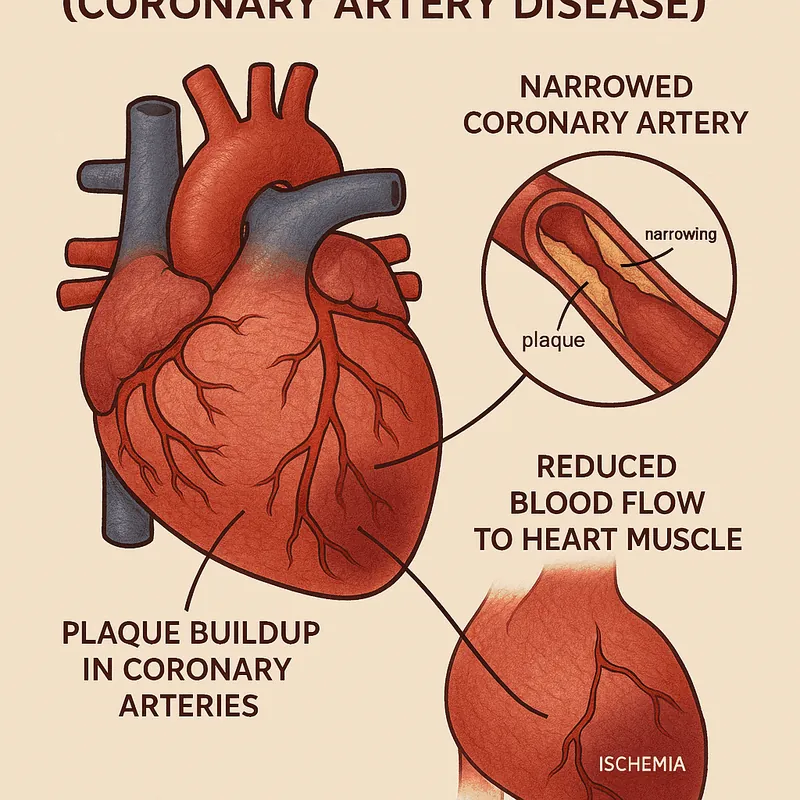
Ischemic Heart Disease (Coronary Artery Disease)

The #1 killer of adults worldwide. Atherosclerotic plaque narrows the coronary arteries, restricting blood flow to heart muscle. Largely driven by oxidized LDL, inflammation, and metabolic syndrome, all highly modifiable through nutrition.

Cardiovascular Evidence-Based Root-Cause Focus

Last updated:

What Is Ischemic Heart Disease?

Ischemic Heart Disease (IHD), also called Coronary Artery Disease (CAD), is narrowing or blockage of the coronary arteries from atherosclerotic plaque buildup. The result: oxygenated blood can't reach the heart muscle adequately, especially during exertion. Plaque rupture triggers a heart attack.

IHD is the #1 cause of death globally, ~9 million deaths annually. It's not primarily a "cholesterol problem" but an inflammatory disease of the arterial wall, accelerated by oxidized LDL, insulin resistance, endothelial dysfunction, gut-derived TMAO, and chronic systemic inflammation. The traditional risk factors explain only ~50% of cases.

The good news: atherosclerosis is partially reversible. Landmark trials (Ornish, Esselstyn) document measurable coronary plaque regression with aggressive lifestyle intervention, without surgery or medications in motivated patients.

โš ๏ธ 50% of first heart attacks are FATAL or occur in people with "normal" cholesterol. Standard lipid panels miss the most important markers, ApoB, LDL-P, Lp(a), and inflammatory markers (hsCRP). Demand advanced lipid testing if you have any cardiovascular risk factor.
Ischemic Heart Disease illustration

Spectrum of Ischemic Heart Disease

๐ŸŒฑ Stable Angina

Predictable chest discomfort on exertion, relieved by rest. Plaque has narrowed but is stable. Most amenable to lifestyle reversal, extensive evidence for plaque regression at this stage.

๐ŸŒ— Acute Coronary Syndrome

Unstable angina, NSTEMI, or STEMI. Plaque has ruptured and a clot is forming. MEDICAL EMERGENCY. After acute treatment, secondary prevention through lifestyle is critical to prevent recurrence.

๐ŸŒ‘ Ischemic Cardiomyopathy

Chronic reduced blood flow has damaged heart muscle, causing heart failure with reduced ejection fraction. Mediterranean diet, omega-3, CoQ10 slow further decline.

9M
Annual deaths globally
50%
Of first heart attacks occur with normal cholesterol
~80%
Preventable through lifestyle factors
3-6%
Coronary plaque regression possible with intensive lifestyle change

Symptoms of Ischemic Heart Disease

Symptoms vary widely. Classic chest pain represents only a fraction of presentations, especially in women, diabetics, and the elderly, where atypical symptoms dominate. Knowing the full spectrum saves lives.

๐Ÿ’” Classic Cardiac Symptoms

๐Ÿ˜ค

Chest Pain or Pressure (Angina)

Substernal pressure, squeezing, heaviness, often described as "an elephant on my chest." May radiate to left arm, neck, jaw, or back. Stable angina is triggered by exertion; unstable comes on at rest. Worsening pattern is an emergency.

๐Ÿ˜ฎโ€๐Ÿ’จ

Shortness of Breath on Exertion

Heart muscle starved of oxygen can't pump effectively. May occur without chest pain, especially in women and diabetics. New-onset breathlessness with previously tolerable activity warrants cardiac workup.

โšก

Palpitations & Irregular Rhythm

Ischemic heart muscle is electrically unstable. New palpitations or fluttering, especially with exertion, can indicate developing CAD. Atrial fibrillation often co-occurs.

๐Ÿฅถ

Cold Sweats & Clamminess

Sudden, drenching sweat unrelated to environment or activity, especially with other cardiac symptoms, often heralds an acute coronary event. Sympathetic surge response to ischemia.

๐Ÿšจ Atypical & Warning Signs

๐Ÿคข

Nausea, Indigestion, or Vague Upper Abdominal Discomfort

More common in women, diabetics, and the elderly. Heart attacks frequently mistaken for heartburn. If new and unexplained, especially with exertion, get evaluated.

๐Ÿ˜ด

Unexplained Fatigue & Weakness

Especially in women, profound new fatigue weeks before a cardiac event is well documented. Reflects reduced cardiac output. "I just couldn't do my normal walk" is a red flag.

๐Ÿฆด

Jaw, Neck, Back, or Arm Pain

Referred pain from cardiac ischemia. Left arm classic, but can be either arm, jaw, neck, or upper back. Pain without obvious orthopedic cause, especially with exertion, must be evaluated cardiac-first.

๐Ÿ˜ต

Lightheadedness, Syncope, or Near-Fainting

Reduced cardiac output OR arrhythmia. Syncope in someone with cardiac risk factors is high-stakes, could be ventricular tachycardia or severe ischemia. ALWAYS evaluate.

How to Test for Coronary Artery Disease

๐Ÿ”ฌ Advanced Lipid Panel (Foundation)

๐Ÿงฌ ApoB & LDL Particle Number (LDL-P)

ApoB measures every atherogenic particle directly. Better predictor than standard LDL-C. Optimal: <80 mg/dL (high-risk <60). Half of heart attacks occur with "normal" LDL-C because particle count was elevated, request this test.

โš™๏ธ Lipoprotein(a), Lp(a)

Genetically determined; ~20% of population has elevated Lp(a) (>75 nmol/L), independently doubling cardiovascular risk. Test ONCE in adult life. Currently no medication lowers Lp(a) significantly; aggressive risk factor control is essential.

๐Ÿ”ฅ hsCRP (Inflammation Marker)

High-sensitivity CRP measures systemic inflammation. <1.0 mg/L low risk; 1.0-3.0 average; >3.0 high. JUPITER and CANTOS trials show reducing inflammation reduces cardiac events independently of cholesterol.

๐Ÿฉป Imaging & Functional Tests

๐Ÿฉป Coronary Calcium Score (CAC)

Non-contrast CT directly visualizes calcified plaque. Score 0: minimal risk; 1-99: mild; 100-399: moderate; >400: high. Most powerful predictor of future cardiac events. Recommended every 5 years from age 40+ if risk factors present.

๐Ÿ“ˆ CT Coronary Angiography (CTCA)

Contrast CT visualizes coronary anatomy, including non-calcified (soft) plaque, the more dangerous type. Now first-line for evaluating chest pain in many guidelines. Non-invasive alternative to cardiac cath.

๐Ÿƒ Stress Test (Exercise or Pharmacologic)

Treadmill ECG, stress echo, or nuclear (myocardial perfusion). Detects significant blockages by inducing ischemia. Best for symptomatic patients with intermediate risk.

๐Ÿฉบ Cardiac Catheterization

Invasive gold standard. Reserved for those with abnormal non-invasive tests, ongoing symptoms, or suspected ACS. Allows direct measurement and immediate intervention (stent) if needed.

Holistic vs. Conventional Treatment for IHD

๐ŸŒฟ HOLISTIC
๐Ÿ’Š CONVENTIONAL
๐ŸŒฟ

Holistic / Functional Approach

Mediterranean diet, omega-3, magnesium, K2, exercise, stress reduction, gut microbiome optimization

Plaque Regression
Ornish & Esselstyn protocols document up to 4-6% coronary plaque regression in 1 year
Mortality Reduction
Mediterranean diet: 30% reduction in cardiovascular events (PREDIMED trial)
Timeline
LDL drops within weeks; endothelial function improves in 1-3 months; plaque regression visible in 6-12 months
Advantage
Addresses inflammation, insulin resistance, gut dysbiosis AND lipids simultaneously
Full Holistic Protocol Includes
  • Mediterranean or whole-food plant-based diet, most extensively studied dietary patterns for CV protection
  • Omega-3 EPA/DHA (2-4g/day), anti-inflammatory, anti-arrhythmic, modestly lowers triglycerides
  • Eliminate ultra-processed foods, refined sugars, industrial seed oils, trans fats
  • Resistance training + aerobic exercise, 150 min/week moderate aerobic + 2x/week resistance
  • Berberine (500mg 2-3x/day), lowers LDL, triglycerides, glucose via AMPK pathway
  • Vitamin K2 (MK-7) 100-200mcg/day, directs calcium to bones, away from arterial walls
  • Magnesium (300-400mg/night), vasodilatory, antiarrhythmic, BP-lowering
  • Stress management, meditation, breathwork, time outdoors
  • Sleep 7-9 hours, short sleep doubles cardiovascular event risk; treat sleep apnea aggressively
  • Gut microbiome work, high-fiber diet reduces TMAO (gut-derived cardiotoxin)
โœ… Important: Holistic approaches complement but don't replace acute cardiac care. If you've had a heart attack, stent, or bypass, work WITH your cardiologist on lifestyle, never discontinue medications without clinical guidance.

Diet for Reversing & Preventing CAD

No medication outperforms a Mediterranean or plant-forward diet for cardiovascular protection. The choices you make at every meal shape your arterial wall over years.

โœ… Prioritize These:

๐ŸŸ Fatty Fish 3x/week

Salmon, sardines, mackerel, anchovies. EPA/DHA omega-3 reduce inflammation, triglycerides, arrhythmia risk. Wild-caught preferred.

๐Ÿซ’ Extra-Virgin Olive Oil

2-3 tablespoons daily. Polyphenols (oleocanthal, oleuropein) provide profound anti-inflammatory and anti-atherogenic effects. PREDIMED used 50ml/day.

๐Ÿฅœ Nuts (1 ounce/day)

Walnuts, almonds, pistachios, hazelnuts. Heart-healthy fats, fiber, magnesium. Daily nut consumption reduced CV events 28% in PREDIMED.

๐Ÿฅฌ Vegetables & Legumes

Leafy greens (nitrates โ†’ nitric oxide for endothelial function), beans, lentils, chickpeas. Soluble fiber binds cholesterol; nitrates dilate arteries.

โŒ Limit or Eliminate:

๐Ÿž Refined Carbs & Sugar

Drive small-dense LDL formation, insulin resistance, triglyceride elevation. White bread, pasta, rice, sweets, soda.

๐ŸŸ Industrial Seed Oils & Trans Fats

Soybean, corn, cottonseed, "vegetable" oils. High in oxidized linoleic acid that promotes oxidative LDL. Avoid fried fast food, packaged snacks, margarine.

๐ŸŒญ Processed & Cured Meats

Bacon, sausage, deli meats, hot dogs. Nitrates/nitrites, advanced glycation end products, high sodium. Strongly linked to CV mortality.

๐Ÿฅ› Excess Saturated Fat (Contextually)

Especially as PART of a processed-food diet. Replace with monounsaturated (olive oil) and omega-3 fats. Coconut oil raises LDL significantly, minimize.

Evidence-Based Supplements for Cardiovascular Protection

These supplements target the multiple pathways driving atherosclerosis, lipids, inflammation, oxidative stress, mitochondrial function, and endothelial health.

SupplementMechanism & EvidenceSuggested DoseTimingNotes
Omega-3 EPA/DHAAnti-inflammatory, anti-arrhythmic, triglyceride-lowering. EPA-only formulations (icosapent ethyl/Vascepa) reduced major cardiac events 25% in REDUCE-IT.2-4g combined EPA+DHA/dayWith largest fat mealTriglyceride form best absorbed. IFOS-certified. Especially valuable when triglycerides >150.
CoQ10 (Ubiquinol)Mitochondrial cofactor. Statins deplete CoQ10 by 40%+, supplementation reduces statin myalgia and may reduce CV events in heart failure (Q-SYMBIO trial).100-300mg ubiquinol/dayWith fat mealCritical add-on if on statins. Ubiquinol form better absorbed than ubiquinone.
Magnesium GlycinateVasodilatory, BP-lowering, antiarrhythmic, anti-platelet. Magnesium deficiency is a CV risk factor in its own right.300-400mg elemental/nightBefore bedGlycinate or threonate. Most Americans deficient. Especially important if on diuretics.
Vitamin K2 (MK-7)Activates Matrix-Gla protein, which inhibits arterial calcification. Rotterdam Study: high K2 intake associated with 50% lower CV mortality.100-200mcg MK-7/dayWith fat mealTake with vitamin D3. Avoid if on warfarin (consult prescriber).
BerberineLowers LDL ~25%, triglycerides ~35%, fasting glucose. Activates AMPK pathway. Equivalent to low-dose statin for lipid lowering in metabolic syndrome.500mg 2-3x/dayWith mealsGI tolerance improves over 2 weeks. Monitor when combined with prescription diabetes meds.
Aged Garlic ExtractReduces BP modestly, slows coronary calcification (multiple imaging studies), improves endothelial function. Kyolic-aged garlic specifically shown to slow CAC progression.1,200-2,400mg/dayWith meals, split dosesAged extract (Kyolic) more studied than raw garlic. Mild blood-thinning, stop before surgery.
Curcumin (Turmeric Extract)Anti-inflammatory, improves endothelial function, modestly lowers triglycerides. Promising human data for slowing atherosclerosis.500-1,000mg bioavailable form 2x/dayWith foodMeriva, Theracurmin, or BCM-95. Standard turmeric powder poorly absorbed.
L-Citrulline / Beetroot NitratesBoth increase nitric oxide availability, improves endothelial function, lowers BP, increases exercise capacity. Beetroot juice specifically reduces systolic BP 5-10 mmHg.Citrulline 3-6g/day OR beetroot juice 250-500mL/day30-60 min before exercise or with mealsBeetroot turns urine pink, harmless. Citrulline more reliable than arginine.
Vitamin D3Deficiency associated with increased CV mortality. Most CV patients are deficient. Repletion supports BP control, insulin sensitivity, immune regulation.2,000-5,000 IU/dayWith fat mealTest 25(OH)D; target 50-70 ng/mL. Always pair with K2.

Atherosclerosis Is Largely Reversible

Lifestyle interventions can stabilize and even regress coronary plaque. The interventions that protect your heart also protect your brain, kidneys, and metabolic health.