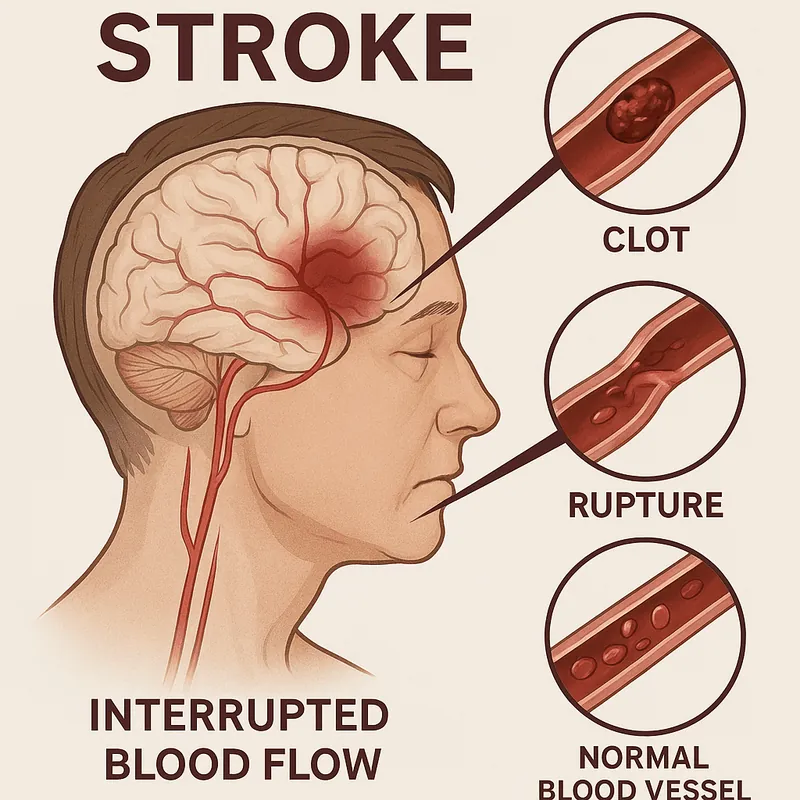
Stroke

A medical emergency where blood flow to the brain is blocked (ischemic, ~87%) or a vessel ruptures (hemorrhagic). Long-term prevention centers on blood pressure, glycemic control, lipid management, and anti-inflammatory nutrition.

Cardiovascular Evidence-Based Root-Cause Focus

Last updated:

What Is a Stroke?

A stroke occurs when blood flow to a part of the brain is interrupted, causing rapid neuronal death. The brain consumes ~20% of cardiac output and tolerates ischemia very poorly, an estimated 1.9 million neurons die per minute during acute stroke. "Time is brain."

Strokes fall into two main categories: ischemic (~87%), where a clot blocks a brain artery (often from atrial fibrillation, atherosclerosis, or carotid stenosis), and hemorrhagic (~13%), where a vessel ruptures (usually from uncontrolled hypertension or aneurysm). The distinction is critical, treatment is opposite.

Transient ischemic attacks (TIA, "mini-strokes") produce stroke symptoms that resolve within 24 hours, but are urgent warnings of impending stroke. Up to 15% of TIA patients have a major stroke within 3 months. Every TIA is an emergency.

๐Ÿšจ EMERGENCY: Call 911 immediately for any sudden onset of: facial drooping, arm weakness, speech difficulty, severe headache, vision loss, or sudden severe vertigo. Use the BE FAST test (Balance, Eyes, Face, Arms, Speech, Time). Treatment within 3-4.5 hours of symptom onset is dramatically more effective.
Stroke illustration

Types of Stroke

๐ŸŒฑ Ischemic Stroke (~87%)

Clot blocks brain artery. Causes: cardioembolic (afib), large-artery atherosclerosis, small-vessel disease (lacunar). Treatment: tPA within 4.5 hours, thrombectomy within 24 hours for large vessel occlusion.

๐ŸŒ— Hemorrhagic Stroke (~13%)

Vessel ruptures, bleeding into brain. Intracerebral (uncontrolled BP) or subarachnoid (aneurysm rupture). Higher mortality. Treatment: BP control, neurosurgical evaluation.

๐ŸŒ‘ TIA ("Mini-Stroke")

Stroke symptoms resolve within 24 hours (usually within minutes). NOT benign, 15% have major stroke within 3 months. Urgent workup and prevention required.

~795K
Annual US strokes
5th
Leading US cause of death
~80%
Of strokes are preventable
1.9M
Neurons die per minute during stroke

Recognize a Stroke, BE FAST

Sudden onset is the signature. Use BE FAST to quickly identify stroke. Time-sensitive treatment depends on rapid recognition.

โฐ BE FAST Acute Signs

โš–๏ธ

B, Balance & Coordination Loss

Sudden loss of balance, severe dizziness, difficulty walking, unable to stand. May indicate cerebellar or brainstem stroke. Easily missed.

๐Ÿ‘๏ธ

E, Eyes / Vision Changes

Sudden vision loss in one or both eyes, double vision, blurred vision, visual field cut. Patient may bump into things on one side.

๐Ÿ˜ถ

F, Face Drooping

One side of face droops or feels numb. Ask the person to smile, is the smile uneven? Crooked mouth, drooping eyelid.

๐Ÿ’ช

A, Arm Weakness

One arm weak or numb. Ask the person to raise both arms, does one drift downward? May affect leg as well (hemiparesis).

๐Ÿ“ž Critical Time-Sensitive

๐Ÿ’ฌ

S, Speech Difficulty

Slurred speech, garbled words, inability to speak, can't understand what's being said. Ask the person to repeat a simple sentence, is it slurred or strange?

๐Ÿ“ž

T, Time to Call 911

If ANY symptoms present, call 911 immediately. Note time of symptom onset, critical for treatment eligibility (tPA window: 4.5 hours; thrombectomy: 24 hours).

๐Ÿค•

Sudden Severe Headache ("Thunderclap")

"Worst headache of my life", sudden onset, severe, peaks within seconds. Suggests subarachnoid hemorrhage (often aneurysm). Medical emergency.

๐Ÿ˜ต

Confusion or Loss of Consciousness

Sudden confusion, trouble understanding, decreased consciousness. May be the only symptom in some strokes. Do not dismiss in older patients.

How Stroke Is Diagnosed

๐Ÿฉป Acute Imaging

๐Ÿ“ก CT Head (Non-Contrast)

FIRST imaging, done within minutes of ER arrival. Distinguishes ischemic from hemorrhagic stroke. Cannot exclude tPA if normal early. Rules out bleed.

๐Ÿ“ก CT Angiogram (CTA)

Visualizes blood vessels, identifies large vessel occlusion (LVO) for thrombectomy candidates. CT perfusion identifies salvageable tissue ("penumbra").

๐Ÿ“ก MRI with Diffusion-Weighted Imaging

Most sensitive for early ischemia, detects strokes invisible on CT. Used after acute decisions, for staging and small lacunar strokes.

๐Ÿ” Etiology Workup

โค๏ธ ECG & Holter Monitor

Identifies atrial fibrillation, major cause of cardioembolic stroke. Extended monitoring (30 days+) often needed to detect paroxysmal afib.

๐Ÿซ€ Echocardiogram

Looks for cardiac source of embolism, patent foramen ovale (PFO), thrombus, valvular disease. TEE (transesophageal) more sensitive.

๐Ÿฉบ Carotid Doppler/Duplex

Identifies carotid stenosis, >70% stenosis often warrants endarterectomy or stenting to prevent recurrence.

๐Ÿฉธ Vascular Risk Workup

Lipid panel, HbA1c, homocysteine, Lp(a), CRP, hypercoagulability panel in younger strokes. Identifies modifiable risk factors.

Holistic vs. Conventional Treatment

๐ŸŒฟ HOLISTIC
๐Ÿ’Š CONVENTIONAL
๐ŸŒฟ

Holistic / Functional Approach

PREVENTION (80% of strokes preventable) + RECOVERY support. Acute treatment is hospital-only.

Acute Stroke
EMERGENCY, call 911. No holistic acute treatment. Every minute matters.
Prevention
~80% of strokes preventable via BP control, lipids, diet, exercise, smoking cessation
Post-Stroke Recovery
Neuroplasticity supported by nutrition, exercise, intense rehab, sleep, social engagement
Recurrence
~25% recurrence within 5 years without aggressive secondary prevention
Comprehensive Prevention & Recovery
  • Aggressive blood pressure control, target <130/80. Single most important modifiable factor. Each 10mmHg reduction โ†’ 27% stroke risk reduction.
  • Mediterranean or DASH diet, 30% stroke risk reduction. Vegetables, fruits, fish, olive oil, nuts, whole grains, beans.
  • Quit smoking, stroke risk falls 50% within 1 year. Equal to baseline non-smoker within 5 years.
  • Aerobic exercise 150+ min/week, reduces stroke risk 25-30%. Resistance training 2x/week.
  • Address sleep apnea, major and underdiagnosed risk factor. CPAP if AHI >15.
  • Limit alcohol, <1 drink/day women, <2 men (or none, recent evidence suggests no safe amount)
  • Optimize diabetes control, HbA1c <7. Prediabetes (HbA1c 5.7-6.4) also increases risk.
  • Treat afib aggressively, anticoagulation per CHA2DS2-VASc score
  • Address atherosclerosis, LDL <70 in high-risk; statin therapy proven; address Lp(a)
  • Omega-3 EPA/DHA, reduce inflammation and arrhythmia risk
  • Stress reduction, meditation, yoga; chronic stress elevates BP and clotting
  • Post-stroke: intense rehab, physical, occupational, speech therapy. Neuroplasticity drives recovery, especially first 6 months.
  • Post-stroke nutrition, Mediterranean diet supports recovery; correct dysphagia-related malnutrition
โœ… Critical: ~80% of strokes are preventable. The big four: control BP, don't smoke, eat Mediterranean, exercise. Add: treat afib if present, optimize cholesterol, control diabetes. These interventions are far more powerful than any drug for STROKE PREVENTION.

Diet for Stroke Prevention & Recovery

Mediterranean and DASH diets reduce stroke risk ~30%. Post-stroke: same diet supports brain recovery via reduced inflammation and improved vascular health.

โœ… Prioritize:

๐Ÿฅฌ Leafy Greens & Vegetables

5-7+ servings daily. Nitrate-rich vegetables (beets, spinach, arugula) lower BP. Folate-rich foods lower homocysteine.

๐ŸŸ Fatty Fish (2-3x/week)

Wild salmon, sardines, mackerel. Omega-3 reduces stroke risk and supports neuroplasticity post-stroke. Anti-arrhythmic effects.

๐Ÿซ’ Extra Virgin Olive Oil

2-4 tablespoons daily as primary fat. PREDIMED trial showed 30% reduction in cardiovascular events including stroke.

๐Ÿซ Berries & Fruits

Especially berries, citrus, apples. Flavonoids improve endothelial function. Potassium-rich foods (bananas) help BP.

๐ŸŒฐ Nuts (5+/week)

Walnuts (omega-3), almonds, pistachios. 1 oz daily, improves cholesterol, BP, vascular function.

โŒ Strictly Avoid/Limit:

๐Ÿง‚ High Sodium

Target <2,300mg/day (<1,500mg if hypertensive). Hidden in processed foods, restaurant meals, canned soups, deli meats. Read labels obsessively.

๐Ÿ” Processed/Ultra-Processed Foods

High intake associated with 33% increased stroke risk. Trans fats, sodium, additives, refined carbs.

๐Ÿฅฉ Red & Processed Meats

Limit red meat <3 servings/week; eliminate processed meats (bacon, sausage, deli). Saturated fat, sodium, nitrates increase stroke risk.

๐Ÿท Heavy Alcohol

>2 drinks/day doubles stroke risk. Recent evidence suggests no safe amount. Binge drinking particularly dangerous.

๐Ÿฌ Refined Sugar & Sweet Drinks

Drive insulin resistance, hypertension. Sodas, juices, sweets. Each daily sugary drink increases stroke risk ~16%.

Evidence-Based Supplements

For prevention and post-stroke recovery. Critical: tell your doctor about all supplements, many interact with blood thinners.

SupplementMechanism & EvidenceSuggested DoseTimingNotes
Omega-3 (EPA/DHA)Reduces inflammation, improves endothelial function, modestly lowers stroke risk. Supports neuroplasticity post-stroke.2,000-4,000mg EPA+DHA/dayWith fat mealCaution at high doses with anticoagulants, discuss with cardiologist.
Vitamin D3Deficiency increases stroke risk. Supports vascular health, reduces inflammation.2,000-5,000 IU/day (titrate to 50-80 ng/mL)With fat mealPair with K2 200mcg. Test baseline.
MagnesiumReduces BP, prevents arrhythmias, improves endothelial function. Each 100mg/day โ†’ 9% stroke risk reduction.400-600mg/dayEveningGlycinate, malate, or threonate. Avoid oxide.
B-Complex (Folate, B6, B12)Lowers homocysteine, high homocysteine increases stroke risk. Methylated forms preferred for MTHFR variants.Folate 800mcg + B6 25mg + B12 1,000mcgMorningTest homocysteine; target <9.
Coenzyme Q10Mitochondrial support; reduces BP modestly; protects against statin myopathy in those on statins.100-200mg/dayWith fat mealUbiquinol form preferred over age 50.
BerberineLowers BP, lipids, blood sugar, addresses multiple stroke risk factors. Comparable to metformin for glycemic control.500mg 2-3x/dayWith mealsCheck drug interactions; reduces CYP3A4 metabolism.
Citicoline (Post-Stroke)Neuroprotective; supports neuroplasticity and recovery. Used IV in some countries acutely.500-2,000mg/dayDivided dosesBest evidence for recovery, not prevention. Discuss with neurologist.
Vitamin K2 (MK-7)Directs calcium to bones, away from arteries. Reduces vascular calcification.100-200mcg/dayWith fat mealCAUTION on warfarin, interferes with anticoagulation. Safe with DOACs.

Most Strokes Are Preventable

80% of strokes can be prevented through lifestyle and medical risk factor management. Control BP, don't smoke, eat Mediterranean, exercise, treat sleep apnea, manage diabetes, address afib. If you've already had a stroke or TIA, secondary prevention is even more aggressive, work with both a neurologist and a knowledgeable nutritionist.