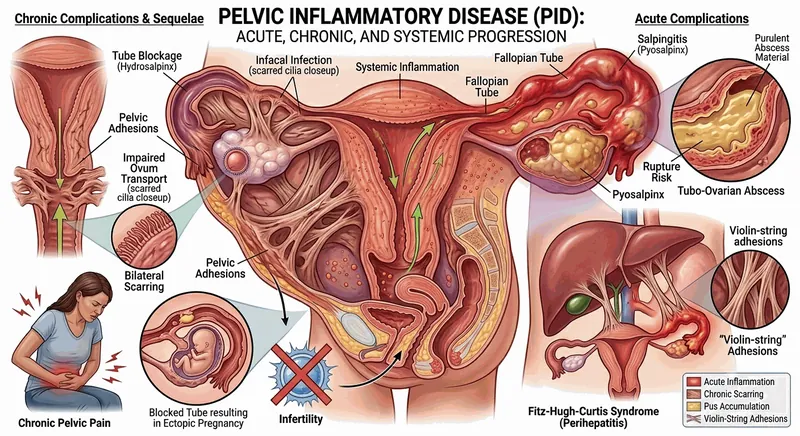
An infection of the upper female reproductive tract, the uterus, fallopian tubes, and ovaries, that affects roughly 1 million American women each year. Time-sensitive: antibiotics first, then aggressive holistic restoration to protect fertility and prevent chronic pelvic pain.
Last updated:
PID is the clinical syndrome that results when bacteria ascend from the vagina and cervix into the upper reproductive tract, infecting and inflaming the endometrium, fallopian tubes, ovaries, and surrounding peritoneum.
In roughly 75 to 85 percent of cases, the original trigger is an untreated sexually transmitted infection, most commonly Chlamydia trachomatis or Neisseria gonorrhoeae. Other contributors include anaerobic bacteria from bacterial vaginosis, Mycoplasma genitalium, and post-procedural infection after IUD insertion, endometrial biopsy, or pregnancy termination. Once organisms breach the cervical mucus barrier, they trigger a polymicrobial inflammatory response that can scar tubes in weeks. PID is the leading preventable cause of female infertility and tubal-factor ectopic pregnancy.
PID is staged by clinical course rather than ultrasound appearance. Recognizing which stage you are in determines whether the priority is emergency antibiotics, tissue restoration, or both:
"Even a single episode of PID can leave a woman with chronic pelvic pain, infertility, or an ectopic pregnancy. The tubal damage often begins within days of infection, long before the diagnosis is made."
โ CDC, Sexually Transmitted Infections Treatment Guidelines, 2021The classic presentation: lower abdominal pain, abnormal discharge, fever, dyspareunia, and tenderness on bimanual exam. This is a medical emergency for fertility, antibiotics within 72 hours preserve tubal function.
Long-term sequelae of one or more prior episodes. Active infection has cleared but inflammation has matured into scar tissue, adhesions, and chronic pelvic pain. Approximately 30 percent of PID patients develop this.
A walled-off collection of pus involving the fallopian tube and ovary. Found in roughly 15 to 30 percent of hospitalized PID cases. Surgical or interventional drainage may be needed in addition to IV antibiotics.
PID is famously deceptive. The classic textbook fever-and-severe-pain presentation is only one face of the disease, and the silent or mild presentation is statistically more common. Any combination of new pelvic discomfort plus discharge changes plus a recent unprotected encounter is enough to warrant testing.
Bilateral aching, cramping, or stabbing pain in the lower abdomen, classically below the umbilicus and worse with movement or intercourse. Often described as "different from period pain", duller, more constant, and not relieved by NSAIDs. Onset is typically within a week of an STI exposure or post-procedure.
Increased volume, yellow-green color, foul or fishy odor, or pus-like consistency. Often accompanied by cervicitis on exam, a friable, bleeding cervix that produces mucopus. The discharge change is one of the earliest signs and is too often dismissed as "just a yeast infection".
Sharp, deep pelvic pain triggered by penetration, especially with deep thrusting, that persists for hours after. Distinct from entry-pain conditions like vulvodynia or vaginismus. Often the first symptom in subclinical PID and a key reason to seek evaluation rather than wait it out.
Spotting between periods, after sex, or after a bowel movement reflects an inflamed, friable cervix and endometrium. Heavier, longer, or more painful periods may also appear. Any unscheduled bleeding within 3 months of a possible STI exposure is a red-flag symptom.
Burning with urination, urgency, and frequency mimic a UTI but persist with a negative urine culture. Reflects inflammation of the surrounding pelvic structures and possible co-infection of the urethra. Any UTI-like symptoms that do not respond to a first-line antibiotic should prompt STI evaluation.
When inflammation reaches the cul-de-sac (the pouch behind the uterus), pressure on the rectum produces deep ache, painful bowel movements, and a sensation of fullness. This is a clue that infection has spread beyond the tubes to the surrounding peritoneum.
Temperatures over 38.3ยฐC (101ยฐF), often with chills and rigors, are diagnostic of acute PID. Subclinical PID may show only low-grade temperatures or just night sweats. Unexplained fever in a sexually active woman of reproductive age should trigger PID workup.
Peritoneal inflammation can cause significant GI distress, especially if a tubo-ovarian abscess has formed. Persistent vomiting plus pelvic pain warrants emergency evaluation to rule out abscess rupture or appendicitis.
The systemic immune response to bacterial infection is metabolically expensive. Crushing tiredness, brain fog, and a sense of "feeling sick all over" often precede the classic pelvic symptoms by days or weeks, especially in subclinical cases.
After resolution of the acute infection, roughly 30 percent of women develop daily or near-daily pelvic pain lasting 6+ months. Driven by adhesions, scar tissue, and neuropathic sensitization. Disabling for many and often dismissed as "just stress" or endometriosis.
Scarring of the fallopian tubes blocks the egg's passage or traps a fertilized embryo. Even a single PID episode raises ectopic pregnancy risk 6 to 10-fold and tubal infertility risk to roughly 12 percent. Risk compounds with each subsequent episode.
In roughly 10 percent of PID cases, infection spreads up the right paracolic gutter to the liver capsule, producing sharp right upper quadrant pain that mimics gallbladder disease. Often missed in the ER because no one connects upper-abdominal pain to a gynecologic infection.
Diagnosis is primarily clinical, made on bedside criteria, with labs and imaging used to confirm and rule out mimics. CDC criteria allow empirical treatment based on minimum findings to avoid delays that destroy fertility.
PID requires in-person evaluation, but these signals indicate that you should not wait for a routine appointment, you should be seen within 24 to 72 hours:
Score 1 point for each: lower abdominal pain > 24 hours, abnormal discharge, painful sex, painful urination not responsive to UTI treatment, intermenstrual bleeding, low-grade fever or chills, recent new partner or partner with possible STI exposure, recent IUD insertion or pregnancy termination. Score of 3 or more in a sexually active woman is presumed PID until ruled out.
Mail-in NAAT kits (Everlywell, Nurx, LetsGetChecked, MyLab Box, Planned Parenthood Direct) test vaginal swab or urine for chlamydia, gonorrhea, trichomonas, and Mycoplasma. Results in 3 to 5 days. A positive result in any symptomatic woman should be treated as PID even before pelvic exam.
Track temperature twice daily, pain severity (0 to 10), discharge changes, and bleeding pattern. Bring this log to your appointment, it dramatically shortens the diagnostic process. Persistent low-grade fever (37.5 to 38ยฐC) plus pelvic symptoms warrants urgent care even without classic "high" fever.
Toggle between the two approaches to compare treatments, outcomes, and what each looks like in practice. Note: PID is one of the few conditions where antibiotics are non-negotiable. The holistic approach uses antibiotics first and adds restoration around them.
Antibiotics first to clear the infection, then aggressive tissue and microbiome restoration to protect fertility and prevent chronic pain
PID is fundamentally a bacterial infection, but the conditions that allow it to ascend and damage tissue are upstream of the pathogen. Addressing these reduces both initial risk and the chance of re-infection.
| Root Cause | How It Contributes to PID | Holistic Solution |
|---|---|---|
| Untreated Chlamydia or Gonorrhea | Account for 75 to 85 percent of PID cases. Chlamydia is often silent, women carry it for months before it ascends. | Annual NAAT screening if sexually active under 25, with any new partner, and after exposure; barrier methods; rapid treatment |
| Bacterial Vaginosis & Vaginal Dysbiosis | BV-associated anaerobes (Gardnerella, Prevotella, Atopobium) ascend more easily and amplify damage from primary pathogens. | Lactobacillus crispatus/rhamnosus suppositories, prebiotic fiber, eliminate douching, avoid scented hygiene products, vaginal pH testing |
| Disrupted Cervical Mucus Barrier | Procedures (IUD insertion, hysteroscopy, biopsy, termination, miscarriage management) temporarily breach the cervical barrier. | Pre-procedure STI screening, prophylactic probiotics, immune support 2 weeks before/after; treat any BV before procedures |
| Multiple or New Sexual Partners | Increased exposure to STIs and microbiome disruption. Risk highest in the first 60 days after a new partner. | Mutual STI testing before barrier-free sex, consistent condom use, post-encounter vaginal probiotic support, regular screening |
| Mycoplasma genitalium Co-Infection | Increasingly recognized cause of PID, often macrolide-resistant, frequently missed because not on standard STI panels. | Demand M. genitalium NAAT in any persistent or recurrent PID; targeted antibiotic if positive; immune restoration to clear residual |
| Immune Suppression & Nutrient Deficiency | Low vitamin D, zinc, A, and protein impair mucosal immunity and macrophage function, allowing infections to establish. | Optimize vitamin D (50 to 80 ng/mL), zinc 15 to 30 mg, vitamin A from liver/eggs, adequate protein, address chronic stress |
| Tobacco & Recreational Drug Use | Smoking impairs cervical immunity and is independently associated with 1.7x PID risk; substance use lowers safe-sex behaviors. | Smoking cessation, harm-reduction counseling, NAC and glutathione support during transition, address underlying stress drivers |
| Douching & Aggressive Vaginal Hygiene | Douching pushes bacteria upward and destroys protective Lactobacilli, raising PID risk by approximately 70 percent. | Stop douching completely; warm water only externally; fragrance-free unscented soaps externally; let vaginal microbiome self-regulate |
| Recurrent Antibiotic Use | Repeated antibiotics destroy protective vaginal Lactobacilli and gut microbiome, creating an opening for re-infection. | Antibiotics only when truly indicated; concurrent and post-antibiotic probiotics; rebuild gut and vaginal flora deliberately after each course |
| Chronic Stress & Sleep Deprivation | Sustained cortisol suppresses secretory IgA at mucosal surfaces and NK cell activity, raising susceptibility to and severity of infections. | Breathwork, daylight exposure, 7 to 9 hours sleep, magnesium, adaptogens (ashwagandha, rhodiola), boundaries around overwork |
During and after PID treatment, food is doing three jobs at once: supporting immune clearance of the pathogen, protecting the gut from antibiotic damage, and supplying the raw materials that tubal tissue needs to heal without scarring.
The right diet during and after PID treatment is not a "PID diet", it is a high-density, anti-inflammatory, microbiome-supportive eating pattern that does double duty: it helps antibiotics work better and it limits the scar tissue that produces lifelong consequences.
The framework: anchor every meal with quality protein for tissue repair, fill half the plate with colorful vegetables and herbs for polyphenols and vitamin C, layer in fermented foods to repopulate the gut, and aggressively eliminate the foods that prolong inflammation.
Supplements work alongside (never instead of) prescribed antibiotics. Their job is to protect the gut and vaginal microbiome, dampen excessive inflammation, support tissue repair, and limit adhesion formation that drives long-term sequelae.
| Supplement | Role in PID Recovery | Suggested Dose | Timing | Notes |
|---|---|---|---|---|
| Saccharomyces boulardii | The only probiotic with strong RCT evidence for use during antibiotics. Prevents C. difficile, reduces antibiotic-associated diarrhea, and supports gut barrier integrity throughout treatment. | 250 to 500 mg twice daily | 2 hours apart from antibiotic doses | Yeast, not bacteria, so it is not killed by antibiotics. Continue 2 weeks past the last antibiotic dose. |
| Vitamin D3 (with K2) | Regulates innate immunity, antimicrobial peptide (cathelicidin) production, and dampens excessive inflammation. Most women with PID test deficient (< 30 ng/mL). | 5000 IU D3 + 100 to 200 mcg MK-7 K2 per day | With a fat-containing meal | Test 25-OH-D, target 50 to 80 ng/mL. Doses to 10,000 IU short-term if severely deficient. |
| Zinc Picolinate | Required for neutrophil function, T-cell development, mucosal repair, and skin/tissue healing. Acute infection often depletes zinc rapidly. | 15 to 30 mg per day | With meals (food prevents nausea) | Add 1 to 2 mg copper if using > 8 weeks at higher doses. |
| N-Acetylcysteine (NAC) | Boosts glutathione, the master antioxidant; thins biofilm produced by chlamydia and other pathogens; reduces oxidative damage to tubal tissue. | 1200 to 1800 mg per day, split twice | Empty stomach if tolerated | Especially valuable given biofilm-forming nature of chlamydia and gonorrhea. |
| Vitamin C (Ascorbic Acid) | Supports neutrophil chemotaxis and oxidative burst, accelerates collagen formation for tubal repair, depleted faster during acute infection. | 1000 mg 2 to 3x daily | Split through the day, with food | Lower dose if loose stools develop. Liposomal forms absorb at higher levels. |
| Omega-3 EPA/DHA | Specialized pro-resolving mediators (resolvins, protectins) actively turn off inflammation rather than just blocking it, central to preventing chronic pelvic pain and adhesions. | 2 to 3 g combined EPA+DHA per day | With meals | Choose IFOS-certified. Continue for at least 6 months post-treatment. |
| Curcumin (Turmeric Extract) | Potent NF-kB inhibitor; reduces fibroblast activation, the cellular process that converts inflammation into scar tissue and adhesions. | 500 to 1000 mg curcumin per day | With a fat-containing meal | Must include piperine or be liposomal for absorption. Hold during heavy menstrual flow. |
| Serrapeptase | Proteolytic enzyme that breaks down fibrin, the protein scaffolding of adhesions. Used widely in Europe and Japan for post-surgical and post-infectious adhesion prevention. | 40,000 to 120,000 SPU per day | Empty stomach, 2+ hours from food | Begin 2 weeks AFTER antibiotic completion. Do not combine with anticoagulants. |
| Nattokinase | Companion enzyme to serrapeptase with broader fibrinolytic activity; supports pelvic circulation and adhesion remodeling. | 2000 to 4000 FU per day | Empty stomach, away from food | Avoid with bleeding disorders or anticoagulant medications. |
| Bromelain | Pineapple-derived enzyme with anti-inflammatory and adhesion-modifying effects. Synergistic with serrapeptase. | 500 to 1000 mg, 2000+ GDU per gram, twice daily | Empty stomach, between meals | Use during the 6-month adhesion-prevention window. |
| Lactobacillus crispatus + rhamnosus (Vaginal) | Restoration of the protective vaginal flora dominated by Lactobacilli is crucial to prevent re-infection and BV-associated recurrence. | Vaginal suppository nightly ร 14 days, then 2x/week | At bedtime, post-antibiotic phase | Look for L. crispatus CTV-05 or rhamnosus GR-1 strains with RCT data. |
| Quercetin + Bromelain | Mast cell stabilizer and natural antihistamine; reduces inflammatory amplification that drives chronic pelvic pain. | 500 mg quercetin + 100 mg bromelain, twice daily | Between meals | Helpful for the 30% who develop chronic pelvic pain after acute PID. |
| Magnesium Glycinate | Supports nervous system recovery, sleep quality, and smooth muscle relaxation, which is critical for pelvic floor recovery and pain modulation. | 300 to 400 mg elemental per day | Evening, 30 to 60 min before bed | Glycinate is the most absorbable and calming form. |
| Astragalus Root | Adaptogenic immune tonic; supports recovery of T-cell and NK-cell function after antibiotic-induced suppression. Long history in TCM for post-infection recovery. | 500 to 1500 mg per day, standardized extract | Morning, with or without food | Avoid during active acute febrile illness; ideal for the 3 to 6 month rebuild phase. |
| Probiotic (Multi-Strain Gut) | Gut microbiome rebuild after antibiotic course; supports systemic immunity and estrobolome function. | 25 to 50 billion CFU, multi-strain | Empty stomach or with light meal | Start 2 days after antibiotics complete. Rotate brands every 2 to 3 months. |
| Vitamin A (Retinol) | Essential for mucosal immunity and epithelial repair throughout the reproductive tract. | 5000 to 10,000 IU retinol per day, short-term | With a fat-containing meal | Avoid > 10,000 IU if pregnant or trying to conceive. Cod liver oil is a food source. |
| Methylated B-Complex | Supports methylation, neurotransmitter balance, and energy recovery; depleted by both infection and antibiotics. | 1 capsule per day per product label | Morning with food | Choose with L-methylfolate (not folic acid) and methylcobalamin. |
Understanding what to expect from each approach helps set realistic expectations and make informed choices.
CDC antibiotic regimen completed without shortcuts. Concurrent S. boulardii, vitamin D, zinc, NAC, vitamin C. Pelvic rest. Partner treated.
Fever and pain resolve fully. Start systemic enzymes (serrapeptase, nattokinase, bromelain), omega-3, curcumin. Begin vaginal Lactobacillus restoration.
Castor oil packs and pelvic floor PT begin. Repeat STI testing at 3 months. Energy and mood restored. Cycle normalizes.
Continue systemic enzymes; check tubal patency with HSG if fertility desired. Most women have minimal residual adhesions if protocol followed.
Markedly reduced risk of chronic pelvic pain and tubal infertility; preserved fertility for most
Antibiotics, NSAIDs, follow-up 72 hours. Fever and pain resolve in most. Re-test STI at 3 months.
Discharge resolves. Patient returned to "baseline". No active intervention for adhesion prevention or microbiome restoration.
Approximately 30% develop chronic pelvic pain. Some develop dyspareunia or dysmenorrhea. Often dismissed as "endometriosis" or "stress".
Many discover tubal damage only on infertility workup (HSG, laparoscopy). 12% infertility after 1 episode; up to 50% after 3+.
High rates of chronic pelvic pain, tubal-factor infertility, and 6โ10ร ectopic pregnancy risk
"PID is a one-time event with lifelong consequences. The antibiotics treat the infection. What you do in the months afterward decides whether you carry a child later."
Explore related conditions below or revisit the Symptom Checker to map your full symptom picture across the library.