Inflammation of the stomach and intestines from viral, bacterial, or parasitic infection. Usually self-limiting in 1โ7 days. Rehydration, probiotics (S. boulardii), and bland nutrition (BRAT, bone broth) speed recovery and protect the microbiome.
Last updated:
Gastroenteritis is inflammation of the stomach and small intestine, typically caused by infection. Often called "stomach flu" (though unrelated to influenza), it produces a classic syndrome of acute nausea, vomiting, diarrhea, and crampy abdominal pain. Most cases are self-limited and resolve in 1-7 days.
Viral causes account for ~70-90%, norovirus (most common adult cause), rotavirus (children), adenovirus, sapovirus, astrovirus. Bacterial causes (~5-15%) include Salmonella, Campylobacter, E. coli, Shigella, Yersinia, and toxin-producing bacteria (food poisoning). Parasitic causes (Giardia, Cryptosporidium) cause more prolonged illness.
The major complication is dehydration, particularly dangerous in young children, elderly, and immunocompromised. Most healthy adults manage at home with oral rehydration. Red flag symptoms, bloody diarrhea, high fever, severe dehydration, persistence beyond a week, warrant medical evaluation. Specific treatments exist for certain bacterial and parasitic causes.
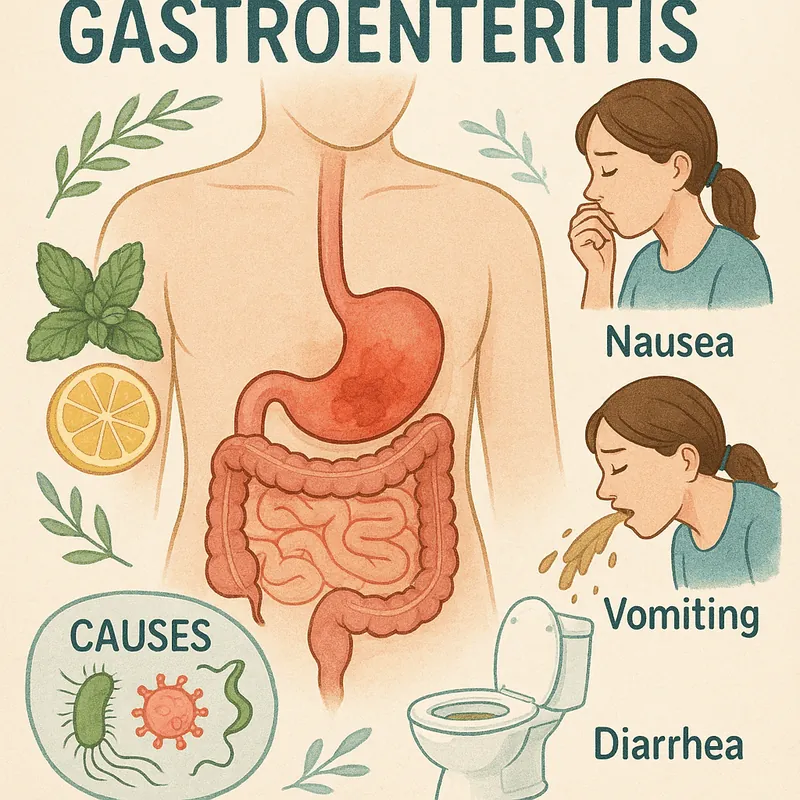
Norovirus (most common adult), rotavirus (children), adenovirus. Self-limited 1-3 days. Treatment: rehydration only. Highly contagious, frequent handwashing essential.
Giardia, Cryptosporidium, prolonged illness. Food poisoning toxins (S. aureus, B. cereus), rapid onset, short duration. Travelers' diarrhea, multiple causes.
Acute onset of GI symptoms. Pattern of vomiting vs diarrhea, presence of fever or blood help suggest cause.
Usually first symptom, especially in viral. May be projectile in norovirus. Typically lasts 24-48 hours. Vomiting BEFORE diarrhea suggests viral; concurrent suggests other causes.
Frequent watery stools. Viral: large volume, no blood. Bacterial: may be bloody (dysentery). Parasitic: often prolonged. Lasts 3-7 days typically.
Diffuse, crampy. Better after bowel movement temporarily. Severe focal pain suggests other diagnosis (appendicitis, ischemia).
38-38.5ยฐC typical. Body aches, headache, fatigue common. High fever (>39ยฐC) more suggests bacterial cause or severe disease.
Dry mouth, no tears, sunken eyes, decreased urination, dizziness when standing, confusion. Especially dangerous in children, elderly. IV fluids may be needed.
Visible blood or mucus in stools. Suggests invasive bacterial infection (Shigella, EHEC, Campylobacter) or amebiasis. Requires stool studies; sometimes antibiotics.
Suggests bacterial cause, possible bacteremia, more serious disease. Warrants medical evaluation. Stool culture may be indicated.
Most viral cases resolve in 3-7 days. Persistent diarrhea suggests parasitic infection (Giardia), inflammatory bowel disease, or other cause. Evaluation warranted.
Most cases diagnosed clinically. Acute onset diarrhea ยฑ vomiting, mild fever, exposure history. Testing reserved for severe, prolonged, immunocompromised, or red-flag cases.
Recent travel (travelers' diarrhea), food exposures (potlucks, restaurants), sick contacts, antibiotic use (C. difficile), childcare/school exposure (viral).
Vital signs (orthostatic BP), skin turgor, mucous membranes, urine output, weight loss. Most important clinical assessment.
Rules out surgical conditions, appendicitis (RLQ tenderness), ischemia, obstruction. Diffuse mild tenderness expected in gastroenteritis.
First-line for most uncomplicated cases. Rehydration + probiotics + supportive nutrition.
Rehydrate first, then gradually progress from clear liquids โ BRAT โ bland โ normal over 3-7 days.
Pedialyte, DripDrop, homemade (1L water + 6 tsp sugar + 1/2 tsp salt). Correct electrolyte balance. Better than sports drinks.
Bananas, rice, applesauce, toast. Easy to digest, low fiber. Provides energy and binding for diarrhea. Use first 24-48 hours.
Electrolyte-rich, hydrating, easily tolerated. Chicken broth, miso soup. Sip slowly when nausea improving.
Probiotic-rich; restores microbiome. Avoid initially if vomiting/severe diarrhea, introduce as recovering.
Ginger tea, fresh ginger in broth. Effective natural antiemetic. Sip slowly.
Temporary lactose intolerance common after viral gastroenteritis. Avoid milk, cheese for first few days. Yogurt/kefir OK as recovering.
Hard to digest, may worsen diarrhea. Reintroduce gradually as symptoms improve.
Irritate inflamed gut. Reintroduce gradually after recovery.
Diuretic effect worsens dehydration. Avoid during illness and 24-48 hours after.
High sugar can worsen diarrhea (osmotic load). Wrong electrolyte composition. Use ORS instead.
Probiotics + zinc have strongest evidence for shortening duration. Most important: hydration.
| Supplement | Mechanism & Evidence | Suggested Dose | Timing | Notes |
|---|---|---|---|---|
| Saccharomyces boulardii | Yeast probiotic. Strong meta-analysis evidence, shortens diarrhea ~1 day. Resistant to antibiotics. | 250-500mg, 2x/day | With or without food | Use throughout illness and 1-2 weeks after. |
| Lactobacillus rhamnosus GG | Best-studied bacterial probiotic for acute gastroenteritis. Reduces diarrhea duration. | 10 billion CFU, 2x/day | With food | Refrigerate. Continue 1 week after recovery. |
| Zinc (Children) | WHO recommends for diarrhea in children. Shortens illness, reduces severity. | 20mg/day for children >6 months; 10mg for <6 months | With food, 10-14 days | Especially important in resource-limited settings. |
| Bismuth Subsalicylate | Mild antimicrobial + anti-inflammatory. Effective for mild traveler's diarrhea. | 262-525mg every 30-60 min, up to 8 doses/day | Between meals | AVOID in children (Reye syndrome). Causes black tongue/stool, harmless. |
| Activated Charcoal | Adsorbs toxins. Useful for food poisoning early. Limited evidence in viral gastroenteritis. | 1-2g every 4-6 hours | Away from medications (2 hours) | Use briefly. Don't combine with medications, will adsorb them. |
| Ginger | Antiemetic. Reduces nausea effectively. | 1-2g/day as tea, capsules, or fresh | Throughout day | Well-tolerated. Can use freely. |
| L-Glutamine | Restores gut barrier function. Useful in post-infectious recovery. | 5-15g/day | Between meals | Especially useful if developing post-infectious IBS. |
| Vitamin D3 | Supports immune function. Universal deficiency. | 2,000-5,000 IU/day | With fat meal | Continue baseline supplementation. |
Most gastroenteritis resolves on its own with adequate hydration and rest. Probiotics shorten duration. Watch for red flags, severe dehydration, bloody diarrhea, high fever, prolonged symptoms, and seek medical care. After recovery, support microbiome restoration with fermented foods and probiotics for 2-4 weeks.