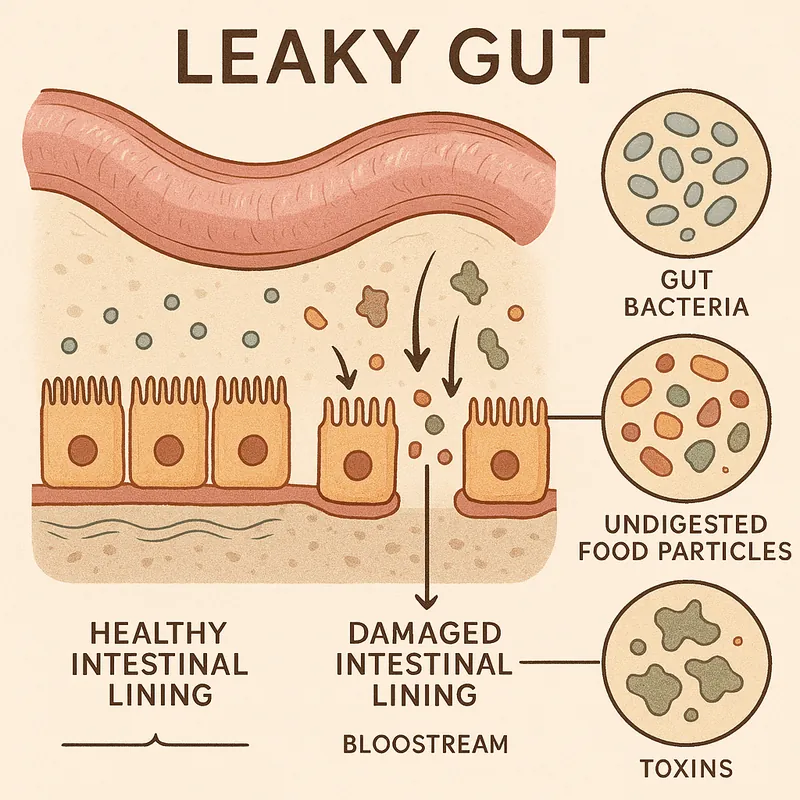
Increased intestinal permeability allows undigested food particles, toxins, and bacterial fragments to pass through the gut wall and into the bloodstream, triggering systemic inflammation, autoimmune conditions, and food sensitivities.
Last updated:
The intestinal lining is a single cell layer thick, but it's the most important barrier in your body. "Leaky gut" describes the breakdown of this barrier, allowing substances that should stay in your intestines to enter your bloodstream.
Healthy intestinal cells are connected by "tight junctions", protein complexes that control what passes between cells. When inflammation, pathogens, or dietary triggers damage these junctions, the spaces between cells widen, creating gaps.
Zonulin, a protein discovered by Dr. Alessio Fasano, is the primary regulator of tight junction permeability. Gluten and gut pathogens (including Candida and SIBO bacteria) trigger excessive zonulin release, opening tight junctions and initiating the leaky gut cascade.
Fasano's work established zonulin as the main physiological regulator of intestinal tight junctions, and proposed that when the zonulin pathway is deregulated in genetically susceptible people, autoimmune disorders can follow. That paper concerns autoimmune disease, and celiac in particular. It does not address SIBO or Candida.
โ on Fasano A. Leaky Gut and Autoimmune Diseases. Clin Rev Allergy Immunol. 2012;42(1):71โ781When gut permeability increases, the downstream effects reach every organ system, making leaky gut a central factor in many seemingly unrelated conditions.
Autoimmune Diseases
Food Allergies & Sensitivities
Depression & Anxiety
Joint Pain & Inflammation
Eczema & Skin Disorders
Brain Fog & Neuroinflammation
Chronic Fatigue Syndrome
Thyroid Disorders (Hashimoto's)
Nutrient Deficiencies
Because leaky gut triggers systemic immune activation, symptoms extend far beyond the digestive tract, making it one of the most underappreciated root causes of chronic disease.
The hallmark symptom of leaky gut. When undigested food proteins enter the bloodstream through the damaged gut wall, the immune system mounts IgG antibody responses. Over time, patients develop reactions to an ever-growing list of foods, often starting with gluten and dairy, expanding to dozens of foods. The sensitivities are a symptom of leaky gut, not primary food allergies.
Impaired intestinal barrier function disrupts normal digestive enzyme production and peristalsis. Food ferments and produces gas. Unlike SIBO (bloating 30โ90 min after meals), leaky gut bloating can be persistent and unpredictable, often triggered by many different foods seemingly at random.
Dr. Fasano's research demonstrates leaky gut is a prerequisite for autoimmune disease. When bacterial LPS fragments enter the bloodstream, the immune system may attack the body's own tissues (molecular mimicry). Linked to Hashimoto's, Rheumatoid Arthritis, Lupus, Type 1 Diabetes, and MS.
A permeable gut floods the bloodstream with antigens that prime toward allergic (Th2-dominant) responses. Seasonal allergies worsen, asthma becomes more reactive, and histamine intolerance develops, causing hives, itching, flushing, and headaches from previously tolerated foods.
Damaged intestinal villi become flattened and dysfunctional. Iron, B12, folate, zinc, fat-soluble vitamins (A, D, E, K), magnesium, and calcium are poorly absorbed even with a nutritious diet, causing deficiency symptoms despite adequate dietary intake.
Bacterial endotoxins (LPS) can penetrate the blood-brain barrier, triggering neuroinflammation. This directly causes brain fog, slow processing, memory issues, and cognitive fatigue. Microglial activation is now linked to leaky gut in Alzheimer's, Parkinson's, and depression.
LPS-driven inflammation suppresses serotonin synthesis, increases cortisol, and activates inflammatory cytokines (IL-6, TNF-ฮฑ) that cross the blood-brain barrier and cause depressive symptoms. Up to 35% of depression cases show elevated intestinal permeability markers.
Circulating immune complexes deposit in joints and tissues, triggering localized inflammation. Patients experience migratory joint pain, morning stiffness, and widespread muscle tenderness that can fulfill fibromyalgia criteria, and can resolve significantly with gut healing.
Circulating endotoxins trigger dermal inflammation manifesting as eczema, psoriasis, cystic acne, rosacea, and urticaria. Skin conditions that don't respond to topical treatments almost always have a gut root, particularly leaky gut, SIBO, or Candida.
When the liver is overwhelmed processing gut-derived endotoxins, it fails to properly clear excess estrogen and thyroid antibodies. Leaky gut is a key driver of Hashimoto's thyroiditis, estrogen dominance, PCOS, and adrenal dysregulation.
Leaky gut is now measurable and testable, not just theoretical.
Keep a detailed food and symptom diary for 2 weeks. Note every food eaten and symptoms (fatigue, brain fog, bloating, skin reactions, joint pain, mood changes) in the 2โ4 hours following. If you're reacting to many different food groups, not just one or two, this pattern of widespread food sensitivity strongly suggests leaky gut as the common thread.
Remove the 5 most common leaky gut triggers for 3โ4 weeks: gluten, dairy, alcohol, refined sugar, and processed foods. Significant improvement in energy, skin, brain fog, joint pain, or bloating during this elimination strongly suggests leaky gut. Reintroducing triggers one at a time confirms individual responses.
Score 1 for each: reactions to multiple foods, autoimmune diagnosis, treatment-resistant skin conditions, migratory joint pain, worsening allergies, brain fog, chronic fatigue, anxiety/depression, nutrient deficiencies despite good diet, history of NSAID or antibiotic use, high chronic stress. Score 6+ strongly indicates leaky gut.
Remove triggers, rebuild the gut lining, restore the microbiome
You cannot heal a leaky gut while continuing to expose it to the triggers that caused it. The "Remove" phase is the foundation of all healing.
The section above covers what to remove. This one covers what to add, which is the half most often left out.
These supplements directly target intestinal permeability, repairing tight junctions, soothing the gut lining, reducing inflammation, and restoring the mucosal barrier.
| Supplement | How It Heals the Gut Lining | Suggested Dose | Timing | Notes |
|---|---|---|---|---|
| L-Glutamine | The #1 leaky gut supplement. Primary fuel for enterocytes (gut lining cells), they cannot repair without adequate glutamine. Directly stimulates synthesis of tight junction proteins (Claudin, Occludin, ZO-1). Most evidence-backed supplement for intestinal permeability. | 5โ15g/day | Fasted morning; between meals | Powder in water; pharmaceutical-grade |
| Zinc L-Carnosine | The carnosine chelate adheres physically to the intestinal mucosa, reducing inflammation, inhibiting NF-kB, and directly accelerating mucosal cell turnover and tight junction protein expression. Also protective against H. pylori and NSAID-induced gut damage. | 75โ150mg/day (standardized zinc-carnosine) | With or between meals | A standardized zinc-carnosine form is the most researched form |
| Aloe Vera Juice | Acemannan (active polysaccharide) soothes gut wall inflammation, stimulates mucus production for a protective barrier, and supports tight junction integrity. One of the most gentle and effective daily gut lining soothers available. | 2โ4 oz/day | Morning fasted or before meals | Inner leaf fillet only; avoid whole leaf (contains aloin laxative) |
| Saccharomyces Boulardii | Restores microbiome diversity; competes with pathogenic organisms that damage the gut lining; produces short-chain fatty acids that fuel colonocyte repair; directly reduces intestinal permeability as measured by lactulose/mannitol testing. | 5โ10 billion CFU/day | Between meals | Safe to take during antimicrobial treatment |
| Digestive Enzymes | Replaces digestive enzymes damaged by gut inflammation. Complete food digestion prevents undigested food particles from irritating and further opening tight junctions. Reduces the antigen load that triggers immune responses in leaky gut. | 1โ2 capsules per meal | Start of each meal | Full-spectrum formula: protease, lipase, amylase, lactase |
| Milk Thistle (Silymarin) | Protects the liver, which is under enormous stress in leaky gut, processing constant endotoxin (LPS) influx from the damaged gut wall. Silymarin reduces hepatic inflammation, supports glutathione production, and accelerates liver regeneration. | 300โ600mg/day (80% silymarin) | With dinner | Particularly important when SIBO or Candida is concurrent |
| TUDCA | Improves bile flow, critical because bile emulsifies fats, supports fat-soluble vitamin absorption (severely impaired in leaky gut), and acts as an antimicrobial barrier in the small intestine. Also directly anti-inflammatory and liver-protective. | 250โ500mg/day | With fat-containing meals | Excellent synergy with Milk Thistle for liver and bile support If you have gallstones, or have never been checked for them, agree this with your clinician first: gallstones are common and usually silent, and deliberately stimulating gallbladder contraction when stones are present can trigger biliary colic or block a bile duct. |
| NAC (N-Acetyl Cysteine) | Replenishes glutathione, the master antioxidant depleted by chronic gut inflammation. Glutathione directly protects enterocytes from oxidative damage. NAC also disrupts biofilms of gut pathogens that perpetuate leaky gut. | 600โ1,200mg/day | Away from meals for biofilm action; or with meals for gut repair | The liver also clears LPS circulating from a permeable gut |
| Apple Cider Vinegar (ACV) | Restores stomach acid, insufficient HCl is a root driver of leaky gut (bacteria survive to the small intestine when acid is low). ACV's acetic acid also has anti-inflammatory effects on the gut lining and supports digestion of proteins. | 1โ2 tbsp in water before meals | 15 minutes before meals | Raw, unfiltered "mother" ACV; dilute well to protect teeth |
| Curcumin (Turmeric Extract) | Downregulates NF-kB, a central regulator of gut wall inflammation, and reduces inflammatory cytokines (IL-6, IL-1ฮฒ, TNF-ฮฑ) that contribute to tight junction breakdown. Trial evidence in humans for reducing intestinal permeability specifically is limited and mostly small.6 | 500โ1,500mg/day | With fat-containing meals | Must include piperine (5โ20mg) or be liposomal for absorption |
| Omega-3 Cod Liver Fish Oil | EPA and DHA are incorporated into cell membranes of enterocytes, improving their structural integrity. Omega-3s reduce the LPS-triggered inflammatory cascade and support the gut-brain axis. Cod liver oil also provides Vitamins A and D critical for mucosal integrity. | 2โ3g combined EPA+DHA/day | With meals | IFOS-certified for purity; enteric-coated reduces fishy aftertaste |
| Vitamin D3, test 25-OH-D first and set the dose with your clinician | Vitamin D receptors are present on every gut epithelial cell. D3 directly regulates E-cadherin and other tight junction proteins. Vitamin D deficiency is strongly correlated with increased intestinal permeability, autoimmune disease, and IBD. Correcting a deficiency may need a higher initial dose, which is a clinical decision. | Test 25-OH-D first and set the dose with your clinician | With fat-containing meal | Monitor serum 25-OH-D with your clinician. Dosing limits: the adult tolerable upper intake level is 4,000 IU/day. The Endocrine Society treats 30 ng/mL as sufficient and prefers 40–60 ng/mL; the Institute of Medicine sets sufficiency at 20 ng/mL. Anything above that needs a blood test and a clinician, not a self-directed dose. |
| Vitamin K2 (MK-7) | Works synergistically with Vitamin D3, directs calcium to bones rather than soft tissue. Also has direct anti-inflammatory effects in the gut. MK-7 form has the longest half-life, providing consistent activity from a single daily dose. | 200โ400 mcg/day (MK-7) | With fat-containing meal; same time as D3 | MK-7 is the superior form (menaquinone-7) vs. MK-4 for daily dosing If you take a blood thinner, agree any vitamin K supplement with the clinician managing it before you start or stop: vitamin K interferes with some anticoagulant medicines, and changing your intake can destabilise your monitoring results. Keeping intake consistent matters more than avoiding it. Not all blood thinners are affected the same way, which is why this is a conversation with your prescriber. |
| Magnesium Glycinate | Supports hundreds of enzymatic reactions involved in gut repair. Magnesium deficiency (extremely common in leaky gut patients) impairs enterocyte regeneration, reduces gut motility, and worsens inflammation. Glycinate form is best absorbed and gentlest on the gut. | 300โ500mg/day | Before bed | Best for sleep support and gut relaxation; does not cause loose stools at this dose. The upper intake level for supplemental magnesium is 350 mg/day; above that the usual effect is loose stools rather than harm, but it is worth knowing. |
| Magnesium Citrate | Same gut repair benefits as glycinate but with a gentle osmotic laxative effect useful for leaky gut patients with concurrent constipation (methane SIBO, sluggish motility). Improves stool frequency and transit time, reducing toxic load on the gut wall. | 200โ400mg/day | Before bed or with dinner | Use citrate form when constipation is a prominent symptom; reduce dose if stools become loose. The upper intake level for supplemental magnesium is 350 mg/day; above that the usual effect is loose stools rather than harm, but it is worth knowing. |
| Copper Bisglycinate | Copper is essential for lysyl oxidase, the enzyme that cross-links collagen and elastin in the intestinal wall. Deficiency (common when zinc is supplemented) impairs connective tissue repair of the gut wall. Bisglycinate form is well-tolerated and highly bioavailable. | 2โ4 mg/day | With meals; away from high-dose zinc | Essential when supplementing zinc >30mg/day; maintain zinc:copper ratio of ~10:1 |
| Activated Charcoal | Adsorbs bacterial endotoxins (LPS), mycotoxins, and other gut-derived toxins circulating from the leaky gut before they can enter systemic circulation. Provides significant symptom relief during active gut healing and die-off reactions. | 1,000โ2,000mg/day | Between meals; 2+ hours away from ALL supplements and medications | Rotate with bentonite clay (alternate days). Do not use long-term, can cause constipation. Use for 2โ4 week cycles. |
| Peppermint & Lemon Oil | Enteric-coated peppermint oil reduces gut spasms and inflammation in the small intestine. Lemon oil (food grade) has anti-inflammatory and antimicrobial properties that reduce pathogen burden on the gut lining. Both support healthy gut motility. | 0.2mL peppermint (enteric-coated) 2x/day | Before meals | Enteric-coated capsules only, plain peppermint oil dissolves in the stomach |
| Prokinetic, Ginger Root or 5-HTP | Restores gut motility impaired by intestinal inflammation. Proper motility prevents bacterial stagnation (which worsens leaky gut), supports complete food transit, and reduces fermentation load on the damaged intestinal wall. Critical for preventing SIBO relapse. | Ginger: 500โ1,000mg; 5-HTP: 50โ100mg | Before bed on empty stomach | Do not use 5-HTP with SSRI/SNRI medications. Ginger also has direct anti-inflammatory effects in the gut. |
The 4R Protocol is the gold-standard functional medicine framework for healing the gut, addressing all four phases systematically.
Eliminate dietary triggers (gluten, dairy, sugar, alcohol), infections (SIBO, Candida, parasites), NSAIDs, and other gut irritants.
Restore digestive capacity: Betaine HCl (stomach acid), digestive enzymes, bile acid support. Proper digestion prevents undigested food from irritating the gut lining.
Restore beneficial bacteria with high-quality, multi-strain probiotics and prebiotic foods. Healthy microbiome diversity protects gut barrier integrity.
Active gut lining repair: L-Glutamine, Zinc Carnosine, Collagen, Butyrate, DGL Licorice, Vitamins A & D. This phase runs concurrently with all others.
Leaky gut is the foundation of most chronic health conditions. Healing it transforms energy, mood, immunity, and digestion simultaneously.
Each numbered entry below is either a source you can follow or a note setting out what the evidence does and does not support. Both are numbered together so the markers in the text line up.
Last reviewed 26 August 2026. Supplement entries are cross-checked against the NIH National Center for Complementary and Integrative Health and the Linus Pauling Institute Micronutrient Information Center.8 This page is nutrition education, not medical advice, and it does not replace your doctor. Be clear about what is established here and what is not. Increased intestinal permeability is a real, measurable phenomenon, and it is found alongside a number of diseases. What is not established is that it causes them, or that "leaky gut syndrome" exists as a standalone diagnosis; in most conditions where both are present, the direction of cause is unresolved. Persistent digestive symptoms deserve a medical work-up rather than a supplement protocol, particularly if you have blood in the stool, unintentional weight loss, or symptoms that wake you at night.