Anxiety

The body's alarm response firing when there is no proportionate threat, often enough and strongly enough to interfere with life. Nutrition has two genuine levers here, and both of them are things to remove rather than add. Nutrition supports treatment for anxiety. It does not replace it.

A Medical Condition Caffeine and Alcohol Evidence-Based

Last updated:

🚨 If you are thinking about harming yourself, or feel unable to keep yourself safe, please get help now rather than reading on. Contact your local emergency number, a crisis line in your country, or go to your nearest emergency department. Separately, and just as important: do not assume new chest pain, breathlessness or a racing heart is anxiety. Panic attacks and cardiac events are not reliably distinguishable by how they feel, and treating a heart attack as a panic attack is one of the more dangerous mistakes available. New or severe chest symptoms are an emergency until a doctor says otherwise.

What Is Anxiety?

Fear is a response to a present threat. Anxiety is the same physical machinery running in anticipation of one, and it becomes a disorder when it persists, generalises, and starts costing you sleep, work and relationships.

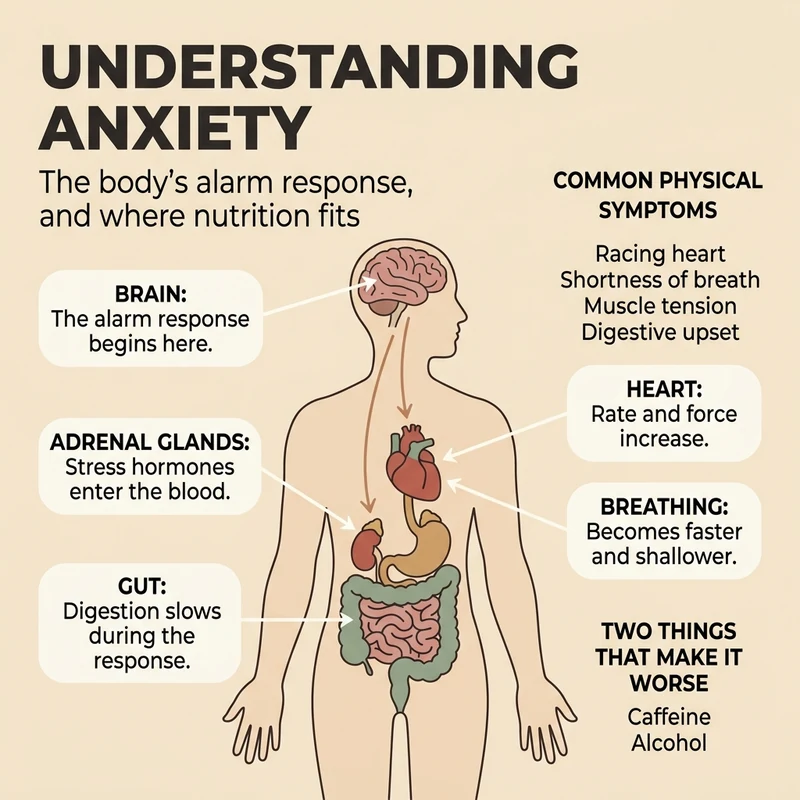
The physical symptoms are not imagined and not secondary. A racing heart, tight chest, shortness of breath, churning stomach and trembling are the measurable output of a real stress response: the brain signals, adrenal hormones enter the blood, the heart speeds up, breathing quickens and digestion slows. That is why anxiety feels physical, and why people so often present to a doctor convinced something is wrong with their heart.

Nutrition enters this picture mainly through two substances that act directly on the same system. Caffeine is a stimulant that produces the physical signature of the alarm response. Alcohol calms it briefly and then rebounds it harder. Neither is a footnote here; between them they explain a great deal of avoidable anxiety.
💡 Key Insight: In people with panic disorder, a caffeine challenge can provoke panic attacks in a substantial proportion of participants, while producing little effect in healthy controls2. Sensitivity to caffeine is not uniform, and if you are in that group the dose that is fine for a colleague is not fine for you.
Calm clinical illustration of a human figure showing the brain, adrenal glands, heart and digestive tract with arrows tracing the stress response from brain to body

☕ Caffeine is the first thing to test

A meta-analysis found caffeine intake associated with higher anxiety1. It is the one dietary change on this page that can produce a noticeable difference within days, and it costs nothing to try.

🍸 Alcohol repays with interest

It reduces anxiety for a few hours and raises it as it clears, typically overnight and into the next morning. The pattern of drinking to settle nerves and waking anxious is a loop, not a coincidence.

🚨 Two calming supplements harm livers

Kava and ashwagandha, both sold widely for anxiety, are both associated with liver injury56. The supplement section covers this properly, because it is the most likely harm on this page.

⚠️ Several conditions imitate anxiety closely, and each has its own treatment. An overactive thyroid produces palpitations, tremor, sweating and restlessness; see thyroid disorders. Heart rhythm disturbances produce episodic palpitations. Sleep apnea produces night-time waking with a racing heart. Low blood sugar produces trembling and dread. Caffeine and stimulant use produce all of it. These are worth excluding rather than assuming, particularly if anxiety has appeared suddenly in someone who never had it.

How Anxiety Presents

Frequently as a physical complaint. Many people are investigated for their heart or their stomach long before anxiety is discussed.

FeatureWhat it feels likeWorth knowing
Persistent worry that is hard to controlRunning ahead to what might go wrong, most daysThe cognitive core, though often not the presenting complaint
Racing heart, palpitations, chest tightnessSometimes in discrete attacks, sometimes constantNever assume this is anxiety the first time. See the warning above
Shortness of breath, a feeling of not getting enough airOften with tingling in hands or around the mouthOver-breathing explains the tingling, which is frightening and harmless
Digestive symptomsChurning, nausea, urgency, appetite changeThe gut is part of the stress response; see IBS, which frequently coexists
Muscle tension, jaw clenching, headachesEspecially neck, shoulders and jawFrequently the symptom people notice before they use the word anxiety
Difficulty falling asleepMind active at the moment the day stopsSee insomnia; the two feed each other
AvoidanceDeclining things because of how they might feelThe symptom that most shrinks a life, and the one therapy targets most directly
Panic attacksSudden intense fear peaking within minutes, with strong physical symptomsThey pass, they are not dangerous in themselves, and the fear of the next one is often the bigger problem
💡 A useful question to ask yourself before changing anything else: how much caffeine, and when? Count everything, coffee, tea, energy drinks, cola, pre-workout powders, some painkillers and some weight-loss products. People are routinely surprised by the total, and by how late the last one is.

How Anxiety Is Assessed

There is no test for anxiety. The tests exist to rule out what looks like it.

MeasureWhat it tells youWhat it misses
Clinical assessment and symptom questionnairesThe diagnosis, its type and its severityQuestionnaires screen and track rather than diagnose
Thyroid functionAn overactive thyroid, which imitates anxiety closely and is treatableSee thyroid disorders
ECG, and cardiac assessment where indicatedRhythm disturbances, and reassurance that carries weightA normal result at rest does not capture an intermittent arrhythmia
Full blood count and ferritinAnaemia, which causes palpitations and breathlessnessSee iron deficiency anaemia
GlucoseLow blood sugar episodes, which produce trembling, sweating and dreadRandom tests miss episodes; the timing of symptoms matters more
Caffeine, alcohol and substance historyThe most modifiable contributors on this listRarely quantified properly unless someone counts it out
Sleep history and apnea screeningNight-time waking that presents as anxietySee sleep apnea
Medication and supplement reviewStimulants, decongestants, some inhalers and thyroid over-replacement all provoke itA prescriber conversation, never a reason to stop something yourself

Holistic vs. Conventional Treatment for Anxiety

🌿 HOLISTIC
💊 CONVENTIONAL
🌿

Holistic / Functional Approach

Caffeine, alcohol, sleep, regular eating and activity. Alongside treatment, not instead of it

Biggest Dietary Lever
Caffeine reduction, associated with anxiety in meta-analysis1 and capable of provoking panic in susceptible people2
Second Lever
Alcohol, which reduces anxiety briefly and increases it as it clears, most noticeably the following morning
Timeline
Caffeine changes can be noticeable within days. Taper rather than stopping abruptly, since withdrawal causes headache and irritability
Limitation, stated plainly
No supplement has convincing evidence for treating an anxiety disorder, and the two most heavily marketed carry liver risk

Full Holistic Approach Includes

  • Counting and then reducing caffeine, tapering over a week or two rather than stopping overnight.
  • Reducing alcohol, particularly the evening drink used to unwind.
  • Eating regularly, since the trembling and dread of a long gap without food is hard to distinguish from anxiety itself.
  • Sleep, treated in its own right; see insomnia.
  • Physical activity, which has reasonable evidence and also discharges the physical side of the response.
  • Breathing practice, which addresses over-breathing directly and is free.
  • Correcting documented deficiencies, because they are deficiencies, not because they treat anxiety.
🌿 Worth knowing: removing caffeine and alcohol makes a real difference for some people and not much for others. It is worth doing first because it is cheap and quick to test, not because it is sufficient.

Diet for Anxiety

Two substances to remove, one habit to keep regular, and very little else with real support.

⚠️ Reduce caffeine gradually, not overnight. Stopping abruptly causes headache, fatigue and irritability for several days, which feels like the anxiety getting worse and leads people to conclude that caffeine was helping. Taper over one to two weeks instead. Count everything first: coffee, tea, energy drinks, cola, pre-workout powders, and some over-the-counter painkillers and weight-loss products.
ChangeEvidencePractical note
Reduce caffeineStrongest hereAssociated with anxiety in meta-analysis1, and provokes panic in susceptible people2. Taper. Nothing after early afternoon
Reduce alcoholConsistentThe rebound as it clears is the part people do not connect to the drink the night before
Eat regularlyPracticalLong gaps produce trembling, sweating and dread that are hard to tell apart from anxiety
Mediterranean-style patternAssociated, weaklyReasonable general advice; do not expect it to treat an anxiety disorder
Oily fish twice a weekModest and inconsistentFood first. The supplement evidence is weaker than the marketing3
NicotineConsistentWidely believed to calm; the calm is relief of withdrawal between cigarettes, and quitting lowers anxiety over time
Energy drinksWorth removing entirelyHigh caffeine, often with additional stimulants, and a common cause of palpitations in young adults
Restrictive dietsNot supported, and often counterproductiveThey add rules, vigilance and another thing to fail at, none of which helps anxiety

Evidence-Based Supplements

The two best-selling calming supplements are the two with documented liver injury. That is the headline here.

🚨 Kava and ashwagandha are both associated with liver injury, and both are sold specifically for anxiety. Kava has been linked to severe hepatotoxicity including liver failure, and has been restricted or withdrawn in several countries as a result5. Ashwagandha, currently among the most heavily marketed calming supplements, has an accumulating literature of liver injury cases6. Stop either immediately and seek medical advice if you develop nausea, unusual tiredness, abdominal pain, dark urine or yellowing of the eyes or skin. Avoid both entirely if you have liver disease, drink heavily, or take other medicines that affect the liver.
SupplementWhat it is actually forTypical rangeTimingNotes & cautions
Magnesium Correcting a dietary shortfall. Frequently sold for calm; the evidence for that is weak. 200 to 400 mg per day of elemental magnesium if intake from food is low Evening, with food A systematic review concluded the existing studies were of poor quality and could not support a recommendation for anxiety4. Citrate and glycinate are better tolerated than oxide. Can loosen stools. Reduce or avoid in reduced kidney function; see chronic kidney disease.
Omega-3 (EPA and DHA) Modest and inconsistent evidence for anxiety symptoms. Food first, oily fish twice weekly. Agree any supplement dose with your clinician With a fat-containing meal A systematic review found the evidence limited and heterogeneous3. Tell your clinician if you take an anticoagulant or antiplatelet, and before planned surgery.
Probiotics Sold on the gut-brain axis. The evidence is early and the certainty is low. No established dose or strain for anxiety As directed on the product A GRADE-assessed review of pre-, pro- and synbiotics for anxiety and depression symptoms found low certainty of evidence7. Generally well tolerated. Discuss first if you are immunocompromised or seriously unwell, where live organisms carry real risk.
Kava and ashwagandha Listed only so the risks are stated. Not recommended on this page. Not recommended See the warning above. Both are associated with liver injury56. Kava is additionally sedating and additive with alcohol and sedative medicines. Ashwagandha may affect thyroid hormone levels and is not for use in pregnancy.
🚨 What to avoid, specifically. Kava and ashwagandha, for the liver reasons above. Any calming product taken alongside a prescribed sedative, since the effects add up and the combination with alcohol can suppress breathing. Stopping a prescribed anxiety medicine to try a supplement, and in particular stopping a benzodiazepine abruptly, which can cause seizures. High-dose CBD products, which interact with several medicines and have their own liver signal. And treat any product promising to cure anxiety as a reason to distrust the seller.
💡 Where the real leverage is. Counting your caffeine and halving it. The evening drink. Sleep. Movement. Breathing. And therapy, which is the treatment with the best evidence of anything on this page and is not sold in a bottle.

References & Evidence Notes

Each numbered entry below is either a source you can follow or a note setting out what the evidence does and does not support. Both are numbered together so the markers in the text line up.

Last reviewed 2 September 2026. Supplement entries are cross-checked against the NIH National Center for Complementary and Integrative Health and the Linus Pauling Institute Micronutrient Information Center.8 This page is nutrition education, not medical advice, and it does not replace your doctor. Nutrition does not treat anxiety. Anxiety disorders have effective treatments, psychological therapy foremost among them, and nothing on this page has been shown to replace those. Nothing here is a reason to decline, delay or stop treatment, and no prescribed sedative should ever be stopped abruptly. What nutrition education can do is help you understand the evidence well enough to have a better conversation with the clinician who does treat you.

  1. Caffeine intake and anxiety: a meta-analysis. Front Psychol. 2024;15:1270246. PubMed 38362247. Higher caffeine intake was associated with higher anxiety. Largely observational, and reverse causation is plausible, since anxious and poorly rested people may drink more coffee. It is included because the association is consistent and the change is free to test.
  2. Vilarim MM, et al. Caffeine challenge test and panic disorder: a systematic literature review. Expert Rev Neurother. 2011;11(8):1185–1195. PubMed 21797659. Caffeine challenge provoked panic attacks in a substantial proportion of people with panic disorder while producing little effect in healthy controls, which is direct experimental evidence rather than association, and is the basis for the statement that sensitivity is not uniform.
  3. Efficacy and safety of omega-3 fatty acids supplementation for anxiety symptoms: a systematic review and dose-response meta-analysis. BMC Psychiatry. 2024;24(1):455. PubMed 38890670. Evidence limited and inconsistent across heterogeneous trials, which is why this page rates omega-3 as modest rather than recommended.
  4. Boyle NB, et al. The effects of magnesium supplementation on subjective anxiety and stress, a systematic review. Nutrients. 2017;9(5):429. PubMed 28445426. The authors concluded that existing evidence was suggestive but that the quality of the studies was poor, and that well-designed randomised trials were needed. Included because magnesium is sold for calm on evidence that does not support it.
  5. Review article: herbal and dietary supplement hepatotoxicity. Aliment Pharmacol Ther. 2013;37(1):3–17. PubMed 23121117, and the NIDDK LiverTox database, LiverTox. Kava is among the herbal products most consistently associated with severe liver injury, which led to regulatory restriction in several countries.
  6. Ashwagandha (Withania somnifera) associated liver injury: a scoping review of clinical characteristics. Cureus. 2026. PubMed 42367407. Case reports and series describing liver injury associated with ashwagandha. These are reports rather than trials, so they establish a signal rather than a rate, and that signal matters given how heavily the product is now marketed for anxiety.
  7. Pre-, pro- and synbiotics on anxiety and depression symptoms: a GRADE-assessed systematic review and meta-analysis. Ann Gen Psychiatry. 2026. PubMed 42010690. Certainty of evidence was low, which is the honest summary of the gut-brain supplement field at present.
  8. NIH National Center for Complementary and Integrative Health, nccih.nih.gov, and the Linus Pauling Institute Micronutrient Information Center, lpi.oregonstate.edu.