Inflammatory bowel disease that can affect any part of the GI tract in patchy lesions. Strongly linked to gut microbiome dysbiosis. Specific carbohydrate diet, low-FODMAP, exclusive enteral nutrition, and targeted probiotics modify disease course.
Last updated:
Crohn's disease is a chronic inflammatory bowel disease that can affect ANY part of the gastrointestinal tract, from mouth to anus, in patchy "skip lesions" with healthy tissue between affected segments. Unlike ulcerative colitis (which is continuous and limited to colon mucosa), Crohn's penetrates THROUGH the bowel wall (transmural), and is characteristically discontinuous.
Most commonly, Crohn's affects the terminal ileum and proximal colon (ileocolonic disease), but can involve esophagus, stomach, small bowel, colon, perianal area, or any combination. Transmural inflammation leads to characteristic complications: strictures (narrowing), fistulas (abnormal connections), abscesses, and perianal disease.
Like UC, Crohn's is driven by gut microbiome dysbiosis + intestinal barrier dysfunction + dysregulated immune response in genetically susceptible individuals. NOD2 gene mutations strongly associated. Smoking is a major risk factor (unlike UC where it's protective). Disease typically follows a relapsing-remitting pattern, often with progressive structural damage over time.
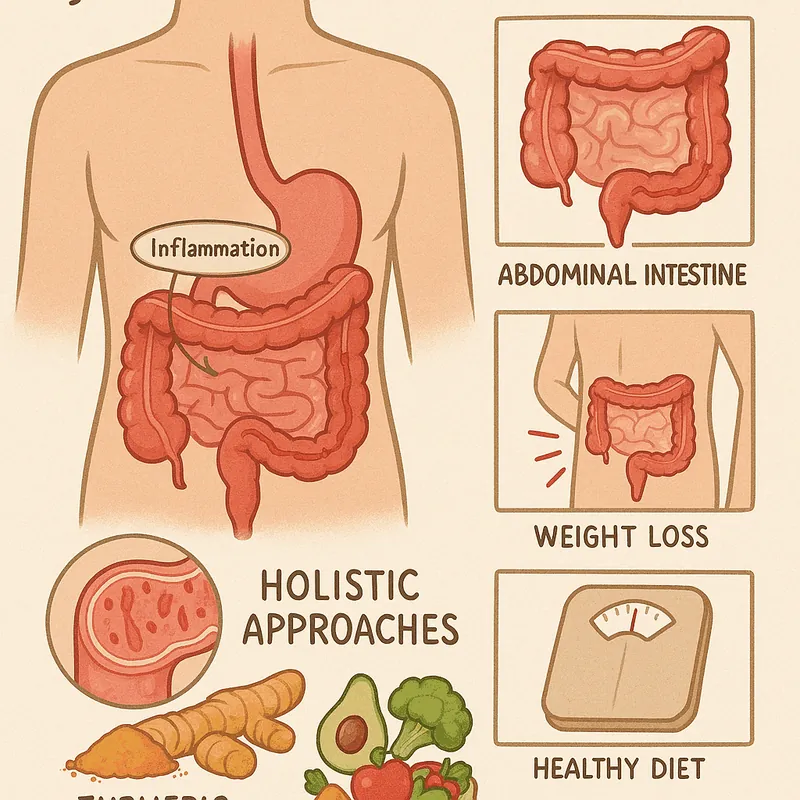
Most common location: terminal ileum + cecum/right colon. Causes RLQ pain (mimics appendicitis), diarrhea, B12 malabsorption, bile acid malabsorption (causing diarrhea via bile in colon). Often inflammatory + obstructive features.
Colon-only Crohn's may mimic UC initially. Perianal Crohn's = fissures, fistulas, abscesses around anus, present in ~25% of patients overall. Requires specific surgical AND medical management.
Symptoms vary widely by location and disease behavior. Crohn's symptoms develop more gradually than UC, often vague abdominal pain and fatigue for months or years before diagnosis.
Frequent loose stools, sometimes with blood (less than UC), urgency. Bile acid malabsorption from terminal ileum disease causes watery diarrhea. Steatorrhea (fat malabsorption) common in extensive small bowel disease.
Often colicky pain, especially after meals. RLQ pain with ileocolonic disease (mimics appendicitis). Pain with partial obstruction from strictures, eating triggers, vomiting may relieve.
From malabsorption + reduced intake + chronic inflammation increasing metabolic demand. Particularly severe in pediatric Crohn's, growth failure is a hallmark sign in children.
Fissures, fistulas, abscesses, skin tags around anus. Sometimes the presenting sign, anyone with recurrent or unusual perianal abscesses should be evaluated for Crohn's.
Systemic inflammation drives debilitating fatigue. Low-grade fevers and night sweats during active disease. Pre-diagnosis often misattributed to other causes.
Joint pain (~25%), often migrating peripheral arthritis paralleling disease activity. Osteoporosis common from malabsorption + chronic steroids + chronic inflammation.
Uveitis, episcleritis (eye); erythema nodosum, pyoderma gangrenosum (skin); primary sclerosing cholangitis (liver, less common than in UC). All reflect systemic immune dysregulation.
B12 (terminal ileum), iron (chronic blood loss), vitamin D, zinc, folate, fat-soluble vitamins all commonly low. Causes downstream symptoms beyond GI complaints.
First-line diagnostic. Visualizes terminal ileum (where Crohn's most often starts) and colon. Patchy inflammation with skip areas, deep ulcers ("cobblestoning"), aphthous ulcers. Biopsies show granulomas (pathognomonic when present).
Best non-invasive way to visualize small bowel disease, wall thickening, strictures, fistulas, abscesses. No radiation. Especially valuable in young patients needing repeated monitoring.
Swallowed camera capsule visualizes small bowel mucosa. Detects subtle Crohn's that other tests miss. Contraindicated if known stricture (risk of capsule impaction).
Specific Carbohydrate Diet (SCD), Crohn's Disease Exclusion Diet (CDED), Mediterranean diet, microbiome restoration, anti-inflammatory nutrients
Crohn's nutrition is highly individualized. CDED + partial EEN has the strongest evidence; SCD and Mediterranean also have supporting data. Trigger foods vary by patient.
Critical for repair and preventing protein-calorie malnutrition. Wild fatty fish for omega-3 anti-inflammatory benefit.
Easy to digest. Glycine, glutamine, collagen support mucosal healing. Especially valuable during flares.
Steamed/roasted carrots, zucchini, squash, potatoes (peeled). During remission, gradually expand to include more variety.
Olive oil, avocado, omega-3-rich fish. Maintain calorie density for weight maintenance. Coconut oil/MCT provides easily absorbed energy.
Carrageenan, carboxymethylcellulose, polysorbate-80 disrupt gut barrier and promote Crohn's-like inflammation in animal models. Eliminate ultra-processed foods.
Raw vegetables, popcorn, seeds, nuts can obstruct strictures. During flares, avoid raw cruciferous, corn, beans. Reintroduce gradually in remission.
Doubles Crohn's relapse rate and complication risk. Single most important modifiable risk factor. Smoking cessation alone significantly improves long-term outcomes.
Common but individual triggers: dairy, gluten, alcohol, caffeine. Test elimination/reintroduction systematically with food-symptom diary. FODMAP reduction helps some patients.
Crohn's causes widespread nutrient malabsorption. Repletion is essential. Use as adjuncts to medical therapy with gastroenterologist awareness.
| Supplement | Mechanism & Evidence | Suggested Dose | Timing | Notes |
|---|---|---|---|---|
| Vitamin B12 (Methylcobalamin) | Terminal ileum (where B12 is absorbed) is the most common Crohn's location. Deficiency very common, often severe. Causes anemia + neuropathy. | 1,000mcg sublingual daily, OR monthly IM injection | Any time | Often need lifelong supplementation. Test serum B12 and methylmalonic acid. |
| Iron (IV often required) | Common from chronic blood loss + malabsorption. Oral iron poorly tolerated in active Crohn's; IV (ferric carboxymaltose) better tolerated. | Per gastroenterologist | โ | IV iron 1-3 doses typically repletes. Test ferritin, transferrin saturation. |
| Vitamin D3 + K2 | Deficiency very common (90%+). Inversely associated with disease activity. Repletion improves remission rates and bone health. | D3: 4,000-10,000 IU/day; K2: 100-200mcg | With fat meal | Target 50-70 ng/mL. Critical for bone health (steroid users especially). |
| Curcumin | NF-ฮบB inhibitor, anti-inflammatory. Smaller evidence base in Crohn's vs UC, but emerging support. | 1-3g bioavailable form/day | With meals | Meriva, Theracurmin best absorbed. Avoid with anticoagulants. |
| Omega-3 EPA/DHA | Anti-inflammatory; modest evidence in Crohn's. Particularly helpful for joint symptoms. | 2-4g combined EPA+DHA/day | With fat meal | Triglyceride form, IFOS-certified. |
| VSL#3 / Visbiome | Multi-strain high-CFU probiotic. Some evidence for maintenance remission and post-op recurrence prevention. | 900 billion CFU/day | With meals | Most evidence for pouchitis (in IBD patients with pouches). |
| S. boulardii | Reduces post-op recurrence; helps with antibiotic-associated diarrhea and prevents C. diff (common in Crohn's). | 500mg 2x/day | With meals | Safe with immunosuppression; especially valuable during antibiotic courses. |
| Zinc, Magnesium, B-Complex | All commonly deficient in Crohn's. Active disease + diarrhea + malabsorption cause multi-nutrient depletion. | Per test results | Various | Check RBC zinc, RBC magnesium. Methylated B-complex if MTHFR variants. |
Modern Crohn's care combines early aggressive medical therapy + dietary intervention + microbiome support + smoking cessation. Patients diagnosed today have dramatically better long-term outcomes than 10-20 years ago.