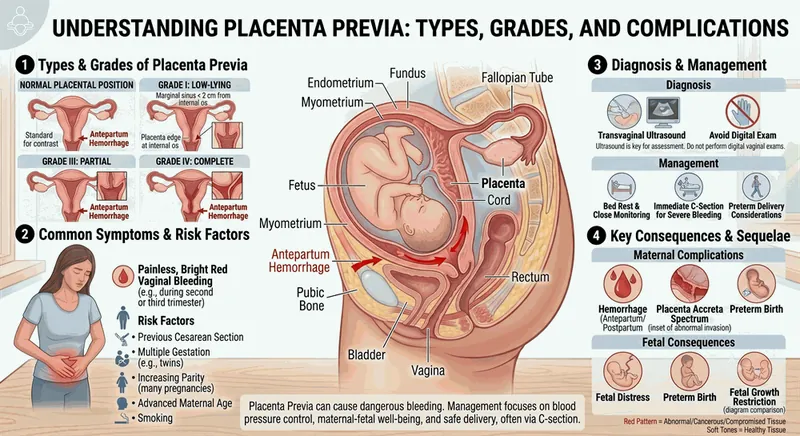
A pregnancy condition in which the placenta implants over or near the internal cervical os, blocking part or all of the birth canal. Affects roughly 1 in 200 pregnancies and is the leading cause of painless antepartum hemorrhage.
Last updated:
Placenta previa is the abnormal implantation of the placenta over or very close to the internal cervical os, the inner opening of the cervix, after 20 weeks of pregnancy. It is not a disease in the traditional sense but a position problem with serious consequences for bleeding and delivery.
In a typical pregnancy the placenta implants on the upper portion of the uterus, far from the cervix. In placenta previa, implantation occurs in the lower uterine segment, where the tissue is thinner, less able to contract effectively, and more vulnerable to bleeding as the cervix begins to remodel in the third trimester. Worldwide prevalence is approximately 1 in 200 pregnancies (0.3 to 0.5 percent), with higher rates in women with prior cesareans, prior uterine surgery, advanced maternal age, multiple gestation, smoking, and assisted reproduction.
Modern obstetric terminology classifies previa by the relationship of the placental edge to the internal os on transvaginal ultrasound. Each subtype carries different implications for surveillance, activity restriction, and mode of delivery:
"Placenta previa complicates approximately 1 in 200 pregnancies and remains a leading cause of painless antepartum hemorrhage. Approximately 90 percent of low-lying placentas identified at the 20-week anatomy scan resolve by term as the lower uterine segment elongates."
โ Society for Maternal-Fetal Medicine Consult Series, 2018The placenta completely covers the internal cervical os. The highest-risk subtype because every centimeter of cervical change in late pregnancy can shear placental vessels. Vaginal delivery is impossible. Planned cesarean is mandatory.
The placental edge reaches but does not cover the internal os. Higher bleeding risk than a normal placenta, but vaginal delivery is sometimes possible if the edge sits at least 2 cm away by term. Re-imaged in the third trimester to confirm position.
The placental edge sits within 2 cm of the internal os but does not touch it. The most common finding on 20-week ultrasounds, and the form most likely to migrate as the lower uterine segment grows. Approximately 90 percent resolve by term and allow planned vaginal birth.
Many women with placenta previa are asymptomatic until diagnosed by routine 20-week ultrasound. When symptoms appear, the hallmark is sudden, painless, bright-red vaginal bleeding in the second half of pregnancy. Every bleeding episode warrants immediate evaluation.
The hallmark symptom. Usually painless, sudden, and bright red rather than brown. Often occurs in the late second or third trimester as the lower uterine segment elongates and the cervix begins remodeling. The first bleed is typically self-limited; subsequent bleeds tend to be heavier.
Many women first present with bleeding after vaginal intercourse, a pelvic exam, or a digital cervical check. This is why digital cervical exams are contraindicated once previa is suspected, only transabdominal or transvaginal ultrasound is used to assess the cervix.
Some women experience a small initial "sentinel" bleed followed by progressively heavier episodes weeks later. Each bleed warrants in-person evaluation; cumulative blood loss can drive anemia and shape delivery planning even when individual bleeds seem small.
Approximately half of women with previa never bleed before scheduled cesarean. An asymptomatic course does not mean the diagnosis is wrong, it means surveillance and pelvic rest are working. Bleeding can still occur abruptly at any point in the third trimester.
Unlike placental abruption, in which the uterus becomes board-hard and exquisitely tender, the uterus in placenta previa stays soft and non-tender during a bleed. This contrast is one of the key clinical features distinguishing previa from abruption.
Because the placenta occupies the lower uterine segment, the fetus often has no room to settle head-down. Breech, transverse, or oblique lie is far more common in previa than in unaffected pregnancies and reinforces the need for cesarean delivery.
These signal significant blood loss and warrant emergency evaluation. A pregnancy heart rate that climbs more than 20 beats above baseline, a 10 to 20 mmHg systolic drop, or feeling faint when standing all suggest hemodynamic compromise even if external bleeding looks modest.
Iron-deficiency anemia from repeated small bleeds (or from a single large one) shows up as exhausting fatigue, paleness of the conjunctiva and palms, breathlessness on stairs, and a constant feeling of being cold. Anemia must be corrected aggressively before delivery to reduce surgical bleeding risk.
Living with the possibility of a sudden bleed, in many cases under activity restriction or hospital observation, is a real psychological burden. Anxiety, hypervigilance, and disrupted sleep are common and deserve direct support, not dismissal as "normal pregnancy nerves."
Regular, painful contractions before 37 weeks in a woman with previa are a delivery emergency. Contractions both threaten preterm birth and shear placental vessels, escalating bleeding risk. Tocolytics are sometimes used to buy steroid time before planned preterm delivery.
A noticeable change in fetal kick counts or unusually quiet days warrant a same-day visit. Significant maternal blood loss can compromise placental perfusion, and any decrease in fetal activity in a woman with previa is treated as urgent until proven otherwise.
Premature rupture of membranes in a woman with previa can trigger sudden, severe bleeding as the cervix opens against the placenta. Any gush or persistent leakage of clear fluid in the second half of pregnancy must be evaluated immediately on labor and delivery.
Diagnosis is imaging-based, not symptom-based. Most cases are identified incidentally on the routine 20-week anatomy ultrasound. Transvaginal ultrasound is the gold standard for confirmation and serial monitoring through pregnancy.
Placenta previa is never self-diagnosed at home, but these awareness habits help you and your provider catch problems early:
From the moment previa is suspected, log any spotting, color (bright red vs brown), volume estimate (panty liner, pad, soaked pad), activity at onset (rest, walking, intercourse), fetal movement, contractions, and any lightheadedness. A consistent diary is more useful at follow-up visits than memory and helps your team see patterns.
Pick the same active hour each day. Lie on your left side after a meal and count distinct movements. Standard guidance is 10 movements in 2 hours. Fewer movements than usual for two consecutive sessions is a same-day labor and delivery visit, especially with previa.
Once previa is confirmed: no intercourse, no tampons, no douching, no orgasm in many cases, no heavy lifting (typically over 10 to 15 lb), no high-impact exercise, no air travel after the third trimester begins. Confirm specifics with your obstetrician, requirements vary by subtype and bleeding history.
For placenta previa, holistic and conventional care are partners, not alternatives. Conventional obstetric management is non-negotiable. Holistic care optimizes maternal blood, nutrition, and resilience so that the obstetric plan works as smoothly as possible.
Build maternal blood reserves, support cervical and uterine tissue integrity, lower stress, alongside full obstetric care
Placenta previa is not random. It reflects something about how the placenta found a place to implant. Most root causes relate to scarring or compromise of the upper uterine endometrium that drives the embryo to implant lower than it otherwise would.
| Root Cause | How It Contributes to Placenta Previa | Pregnancy-Safe Holistic Support |
|---|---|---|
| Prior Cesarean Delivery (especially multiple) | Cesarean scar tissue in the upper uterus is hostile to embryo implantation, pushing the placenta to find healthier endometrium in the lower segment. Risk roughly doubles after one cesarean and climbs to 10x or more after three. | Address pre-conception by giving 12 to 18 months between cesarean and next pregnancy. Optimize collagen and tissue healing with vitamin C, zinc, protein, glycine, and bone broth before next conception. |
| Prior Uterine Surgery (D&C, Myomectomy, Hysteroscopy) | Any procedure that disrupts the endometrium, especially repeated dilation and curettage, can damage the basal layer and create areas where future implantation is impaired. | Pre-conception nutrition for uterine lining: pasture-raised animal protein, omega-3, vitamin E (food-form), iron, and 3+ months on a methylated B-complex before next pregnancy. |
| Advanced Maternal Age (35+) | Endometrial blood supply and receptivity decline modestly with age, particularly after 35 to 40. Embryos may implant in suboptimal locations, including the lower segment. | Pre-conception egg-quality protocol (CoQ10, omega-3, antioxidants), optimize thyroid and metabolic health, no smoking, ensure adequate vitamin D and methyl-B status. |
| Multiple Gestation (Twins, Triplets) | Two or more placentas need more surface area than a single uterus easily accommodates, increasing the chance one will reach the lower segment. | Higher protein needs (90 to 110 g/day), iron 30 to 60 mg/day proactively, additional folate (800 to 1000 mcg/day methylated), close prenatal partnership with MFM. |
| Smoking & Vaping | Carbon monoxide and nicotine reduce placental oxygen delivery, prompting compensatory placental growth and a larger placental footprint, more likely to reach the cervix. | Full cessation pre-conception and throughout pregnancy. Address dependency with behavioral support; supplement vitamin C, NAC (only outside pregnancy), and antioxidant-rich foods. |
| Assisted Reproduction (IVF / IUI) | Embryo transfer techniques, hormone-primed cycles, and laboratory-handled embryos are associated with a modest increase in previa, partly because of changes in endometrial receptivity. | Pre-cycle endometrial optimization (vitamin E from foods, L-arginine from food sources, beetroot, leafy greens), and address any underlying inflammation or thyroid issue before transfer. |
| Chronic Endometrial Inflammation / Endometritis | Low-grade chronic endometritis impairs the upper-segment lining and is increasingly recognized as a contributor to abnormal placentation. | Pre-conception gut and immune support, address vaginal microbiome with a women's probiotic, treat known chronic endometritis with appropriate antibiotics before conception. |
| Iron Deficiency & Anemia | Iron deficiency raises maternal cardiac output to compensate, which can drive the placenta to grow larger to meet fetal oxygen demands, increasing previa risk and worsening any bleed when it occurs. | Pre-conception ferritin greater than 50 ng/mL, well-sourced heme iron, vitamin C with plant iron, address heavy menstrual losses before conception. |
| Short Interpregnancy Interval | Conceiving within 6 to 12 months of a prior pregnancy (especially cesarean) leaves the uterus without time to heal fully, raising the risk of abnormal implantation. | Plan an 18 to 24 month interpregnancy interval where possible; use that time for tissue recovery, nutrient repletion, and breastfeeding support. |
| Endocrine Disruptors & Environmental Toxins | Phthalates, BPA, parabens, and certain pesticides disrupt early placental development and trophoblast invasion. The lower-segment placenta is one possible result. | Glass and stainless instead of plastic, fragrance-free personal care, organic produce where possible (EWG Dirty Dozen), filter drinking water, no microwaving in plastic. |
The placenta cannot move because of food, but food powerfully affects how much blood you build, how robust your tissue is, and how well you recover from any bleed or from surgery. The protocol below is pregnancy-safe and aligned with mainstream prenatal guidance.
The single most important nutritional goal in placenta previa is to enter delivery with a robust blood reserve. Women with previa often experience repeated small bleeds and face cesarean delivery, both of which lower hemoglobin further. Hemoglobin going into surgery is the single biggest predictor of how a previa cesarean recovery feels.
The framework is straightforward: anchor each meal with high-quality protein, eat heme iron several times a week, pair plant iron with vitamin C, get enough folate and B12 to make red blood cells, and avoid anything that interferes with iron absorption around iron-rich meals.
Every supplement below has been screened for pregnancy safety. Doses are conservative. Confirm everything with your obstetrician or maternal-fetal medicine team, especially if you have had a bleed, are on aspirin or heparin, or are scheduled for surgery within 2 weeks.
| Supplement | Role in Placenta Previa Recovery | Pregnancy-Safe Dose | Timing | Notes |
|---|---|---|---|---|
| Comprehensive Prenatal Multivitamin | Foundation. Provides methylfolate, methyl-B12, choline, iodine, vitamin D, zinc, and other building blocks for blood and placental function. Choose one with methylated folate (L-5-MTHF), not folic acid. | 1 serving per product label | With breakfast and lunch (split if 2 caps) | Verify it contains at least 600 to 800 mcg L-5-MTHF, 150 mcg iodine, 450 mg choline, and at least 18 mg iron. |
| Iron Bisglycinate (or Heme Iron) | Repletes red blood cells lost in bleeds and prepares hemoglobin for delivery. Bisglycinate is gentler on digestion than ferrous sulfate and less constipating. | 27 to 60 mg elemental iron/day per OB | Empty stomach with vitamin C OR with food if nausea; away from coffee, tea, calcium | Confirm dose with provider, especially if ferritin is greater than 100 ng/mL. Recheck CBC and ferritin every 4 to 6 weeks. IV iron may be used if oral does not reach target before delivery. |
| Methylated Folate (L-5-MTHF) | Required for red blood cell production and DNA synthesis. Heavy bleeding increases turnover and demand. Methylated form is essential for women with MTHFR variants. | 600 to 1000 mcg/day (combined with prenatal) | Morning with food | Pregnancy-safe and recommended. Do not exceed 1000 mcg/day without provider guidance. |
| Methyl-B12 (Methylcobalamin) | Works with folate to build red blood cells, supports fetal neurodevelopment, helps with fatigue. | 500 to 1000 mcg/day | Morning with food | Vegetarians, vegans, and women on metformin or PPIs are at particular risk for deficiency. |
| Vitamin D3 + K2 | Supports immune function, calcium handling, placental development, and reduces preeclampsia and preterm birth risk. Most pregnant women are deficient. | 2000 to 4000 IU D3 + 90 mcg MK-7 K2/day | With a fat-containing meal in the morning | Pregnancy-safe; targets 30 to 50 ng/mL 25-OH-D. Higher doses require provider supervision. |
| Vitamin C (Whole-Food or Buffered) | Boosts non-heme iron absorption dramatically, supports collagen for cervical and uterine tissue, antioxidant for any bleeding event. | 250 to 500 mg/day, food-form preferred | With iron-containing meals | Doses above 1000 mg are not needed and can cause GI upset. Whole-food vitamin C from camu camu or acerola is gentle. |
| Magnesium Glycinate | Calms uterine irritability, supports sleep, helps with constipation, addresses near-universal pregnancy deficiency. | 200 to 300 mg elemental Mg/day | Evening, 30 to 60 min before bed | Glycinate or bisglycinate are the safest pregnancy forms. Avoid magnesium citrate in late pregnancy due to laxative effect. |
| Choline (Choline Bitartrate) | Supports fetal brain development, placental function, and reduces preeclampsia risk. Most prenatals undersupply. | 450 to 550 mg/day total (food + supplement) | With breakfast and dinner | Aim for at least 3 to 4 eggs/week as a food source. Top up with bitartrate to reach target. |
| Low-Dose Omega-3 (DHA-Forward) | Supports fetal brain and eye development. Conservative dose only, higher doses can mildly increase bleeding risk. | 200 to 500 mg DHA/day (keep total EPA+DHA under 1 g) | With a fat-containing meal | Pregnancy caution: stay under 1 g/day total EPA+DHA, especially in third trimester. Stop 1 week before scheduled cesarean per OB. |
| Probiotic (Pregnancy-Specific) | Supports vaginal and gut microbiome, lowers UTI and bacterial vaginosis risk, may reduce gestational diabetes and preterm birth risk. | 10 to 25 billion CFU/day, multi-strain | Morning, with or without food | Choose pregnancy-labeled products. Lactobacillus rhamnosus and reuteri are well-studied in pregnancy. |
| Coenzyme Q10 (Ubiquinol) | Mitochondrial support for placenta and maternal cardiovascular system. Considered safe in pregnancy at modest doses. | 100 to 200 mg ubiquinol/day | Morning with a fat-containing meal | Stop 1 week before scheduled cesarean to avoid any theoretical surgical impact. |
| Calcium (if Dietary Intake Low) | Supports skeletal development, lowers preeclampsia risk, balances magnesium. Most needed if dairy and leafy greens are low. | 500 to 1000 mg/day in 2 divided doses | Away from iron by at least 2 hours | Pregnancy-safe. Calcium citrate is best absorbed. Do not exceed 2500 mg/day from all sources. |
| Zinc | Supports immune function, tissue repair, and fetal growth. Especially helpful when iron is also being supplemented at high doses. | 15 to 25 mg/day | With food (food prevents nausea) | Pregnancy-safe at these doses. Pair with 1 to 2 mg copper if using long-term to prevent imbalance. |
| Glycine (Food-Form Bone Broth or Powder) | Supports collagen, cervical and uterine tissue integrity, and overall connective tissue. Naturally elevated need in pregnancy. | 3 to 5 g/day from bone broth or supplement | Any time, with or without food | Pregnancy-safe at food-equivalent doses. Skip large doses if on glycine-containing IV medications. |
| Lactoferrin (Optional, Provider-Guided) | An iron-binding protein from milk that improves iron status and lowers inflammation. Useful when oral iron is not tolerated. | 100 to 200 mg/day | Empty stomach or with light meal | Confirm dairy tolerance. Often used as adjunct when oral iron causes constipation or nausea. |
| Nettle Leaf Tea (Mild) | Traditional pregnancy tea, provides modest plant iron, magnesium, calcium, and vitamin K2 cofactors. Generally considered safe second and third trimester at modest amounts. | 1 to 2 cups/day (steeped 5 to 10 min) | Any time | Confirm with OB or midwife. Avoid medicinal infusions (overnight-steeped, quart-style) without explicit guidance. |
| Magnesium Citrate / Constipation Aid (Short-Term) | Iron supplements often cause constipation, and straining is contraindicated with previa. Magnesium citrate or food-based gentle laxatives keep stool soft. | 200 to 400 mg as needed, short-term | Evening | Discontinue if loose stools. Long-term constipation is best addressed with fiber, water, magnesium glycinate, and prunes/kiwi. |
| Methylated B-Complex (If Prenatal Lacks) | Methylation support for women with MTHFR or MTRR variants, especially helpful for energy and mood through bedrest periods. | 1 capsule/day per label | Morning with food | Skip if prenatal already includes a full methylated B-complex to avoid stacking. |
Most women with placenta previa deliver healthy babies. The timelines below show what each approach looks like across pregnancy and postpartum recovery.
Anatomy ultrasound identifies previa or low-lying placenta. Begin blood-building nutrition, optimize ferritin, address sleep and stress, establish pelvic rest with partner support.
Most low-lying placentas migrate during this window. Continue iron and folate, hydrate aggressively, fetal kick counts daily from 28 weeks, written emergency plan in place.
Repeat transvaginal ultrasound confirms position. Final iron and ferritin push. Stop high-dose omega-3 1 week before any scheduled procedure. Hospital bag packed.
Scheduled cesarean for persistent previa, vaginal birth attempt if placental edge greater than 2 cm from os. Robust hemoglobin makes surgical recovery dramatically easier.
Faster recovery, reduced anemia, better breastfeeding stamina; aggressive iron repletion in first 12 weeks
Diagnosis on routine anatomy scan. Pelvic rest instructions. Counseling on warning signs. Often referred to MFM if previous cesarean or other risk factors present.
Watch and wait. Antenatal corticosteroids if any preterm risk emerges. Iron supplementation by routine prenatal vitamin only, often without aggressive ferritin tracking.
Repeat ultrasound. Inpatient admission for any bleeding episode. Type and screen on file. Placenta accreta screening if prior cesarean.
Scheduled cesarean at a hospital with hemorrhage capability. Crossmatched blood ready. Multidisciplinary team if accreta suspected.
Standard cesarean recovery; anemia often unaddressed beyond a single check; future pregnancy interval not consistently discussed
"Placenta previa cannot be moved by anything you do, but how strong your blood, tissue, and stress reserves are when delivery day arrives is almost entirely in your hands."
Explore related conditions below or revisit the Symptom Checker to map your full symptom picture across the library.