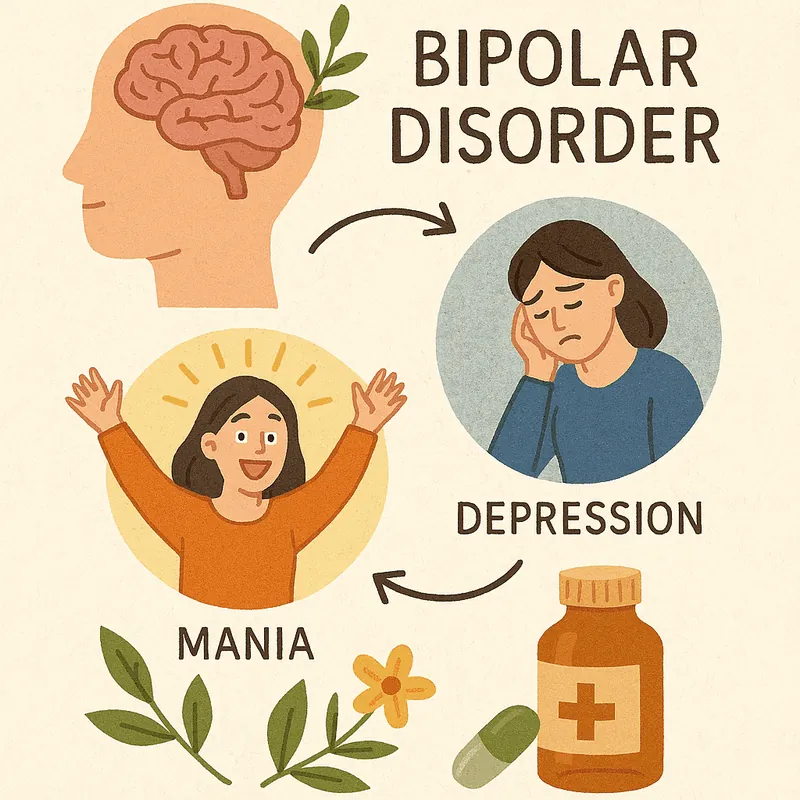
Bipolar disorder is a complex neuropsychiatric condition affecting 46 million people worldwide, characterized by cyclical episodes of mania (or hypomania1) and depression. Beyond genetics and neurotransmitter imbalance, emerging research reveals profound gut-brain axis dysregulation, chronic neuroinflammation, mitochondrial dysfunction, and nutritional deficiencies as core, addressable drivers of bipolar mood instability.
Last updated:
Bipolar disorder is a chronic mood disorder defined by the recurrent alternation between manic or hypomanic episodes, characterized by elevated or irritable mood, decreased need for sleep4, racing thoughts, and impulsive behavior, and depressive episodes involving profound sadness, anhedonia, fatigue, and cognitive impairment.
The neurobiological underpinnings are multifactorial: dysregulation of dopamine, serotonin, and glutamate neurotransmission; hypothalamic-pituitary-adrenal (HPA) axis hyperactivation; mitochondrial energy failure in neurons; and a bidirectional relationship with systemic and neuroinflammation. Circadian rhythm disruption is both a trigger and consequence of mood episodes.
The gut-brain axis connection is increasingly recognized as central to bipolar pathology. Patients with bipolar disorder show significantly altered gut microbiome composition, increased intestinal permeability ("leaky gut"), and elevated inflammatory cytokines (IL-6, TNF-Ξ±, CRP) during both manic and depressive phases, suggesting that gut-driven neuroinflammation actively destabilizes the bipolar brain.
Defined by at least one full manic episode lasting β₯7 days (or any duration if hospitalization is required). Mania in Bipolar I can include psychotic features, hallucinations or delusions, and is severe enough to cause marked functional impairment. Depressive episodes are common but not required for diagnosis. The most severe and recognizable form. Affects men and women equally.
Cyclothymia involves numerous hypomanic and depressive symptoms over β₯2 years that never meet full episode criteria, a chronic mood instability subtype. Rapid cycling (β₯4 mood episodes per year) occurs in 15β20% of bipolar patients, is more common in women, and is associated with thyroid dysfunction, antidepressant overuse, alcohol use, and severe nutritional deficiencies. Nutritional optimization significantly improves cycle frequency.
Bipolar disorder manifests across two distinct mood poles, each with characteristic symptoms, triggers, and neurobiological profiles. Understanding both poles is essential for recognizing and managing the condition.
Persistently elevated, expansive, or irritable mood lasting at least 4 days (hypomania) or 7 days (mania). Can feel euphoric, invincible, or unusually creative, or, particularly in adolescents and males, present as marked irritability, agitation, and hostility rather than euphoria.
One of the most diagnostically specific features: sleeping only 2β4 hours yet feeling rested and energized. Accompanied by racing, rapid thoughts (flight of ideas), rapid speech (pressured speech), increased goal-directed activity, and the subjective feeling that thoughts are moving faster than they can be expressed.
Excessive involvement in pleasurable activities with high potential for harm: spending sprees, sexual indiscretion, reckless driving, impulsive business decisions, substance use. Driven by hyperdopaminergic state, the reward system is dysregulated, removing normal risk-aversion. A single manic episode can cause lasting financial, legal, or relational damage.
Inflated self-esteem or grandiosity, believing one has special powers, connections, or missions. In full mania, psychotic features (delusions of grandeur, persecutory delusions, hallucinations) may emerge. The person typically lacks insight during the episode, a critical challenge in treatment adherence. Hospitalization is sometimes required for safety.
Persistent depressed mood and loss of interest or pleasure in all (or nearly all) activities (anhedonia) for most of the day, nearly every day. Bipolar depression is often deeper and more persistent than unipolar depression, and is associated with higher rates of suicidal ideation. It accounts for the majority of functional impairment in bipolar disorder.
Difficulty concentrating, forgetfulness, slowed thinking, and impaired executive function (planning, organizing, decision-making). Cognitive deficits often persist between episodes (euthymia) and represent a core feature, not just a symptom, driven by mitochondrial dysfunction, chronic inflammation, and cumulative neuroplastic changes.
Severe fatigue and loss of energy, often out of proportion to activity level. Psychomotor retardation (slowed movements, speech, and thinking) or, paradoxically, psychomotor agitation (restlessness, inability to sit still). Hypersomnia (sleeping 10β14 hours) is more common in bipolar depression than in unipolar depression.
Bipolar disorder carries the highest suicide risk of any psychiatric diagnosis, 20β30x higher than the general population. Risk is greatest during depressive episodes and mixed states (simultaneous manic energy + depressive despair). If you or someone you know is in crisis, contact a mental health professional or emergency services immediately.
The neurobiological drivers of bipolar disorder extend far beyond neurotransmitter imbalance, gut dysbiosis, neuroinflammation, and mitochondrial dysfunction form a triad that nutritional medicine can directly address.
Multiple studies show significantly altered gut microbiome composition in bipolar disorder, reduced Faecalibacterium prausnitzii (a key anti-inflammatory producer), decreased microbial diversity, and increased pathobiont species. These changes impair gut-derived serotonin and BDNF (brain-derived neurotrophic factor) synthesis, disrupt the enteric nervous system, and drive systemic inflammation that reaches the brain via the vagus nerve and bloodstream.
The brain consumes 20% of the body's energy despite being 2% of its mass. Neurons depend entirely on mitochondrial ATP production for synaptic function, ion gradient maintenance, and neurotransmitter synthesis. Bipolar patients show documented mitochondrial abnormalities in neural tissue, reduced complex I and IV activity, impaired oxidative phosphorylation, and increased mitochondrial DNA mutations. This directly impairs mood regulation circuits in the prefrontal cortex, amygdala, and hippocampus.
Bipolar disorder diagnosis is clinical, based on DSM-5 criteria and longitudinal mood tracking. Functional labs identify underlying nutritional deficiencies and inflammatory drivers that directly influence mood stability.
The most critical self-monitoring tool. Daily tracking of mood (β3 to +3 scale), sleep hours, energy level, medications, menstrual cycle, alcohol/substance use, and significant life events over months reveals mood patterns, cycle frequency, triggers, and early warning signs of emerging episodes. The NIMH Life Chart Method and smartphone apps (eMoods, Bearable) make this accessible.
The Mood Disorder Questionnaire (MDQ) is a validated 13-item self-report screen for bipolar spectrum disorders, sensitivity 0.73, specificity 0.90 for Bipolar I. The Young Mania Rating Scale (YMRS) quantifies manic symptom severity across 11 items. The PHQ-9 assesses depressive severity. These structured tools supplement clinical interview, bipolar is frequently misdiagnosed as unipolar depression when the hypomanic history is missed.
Formal cognitive testing (THINC-it, MATRICS) measures executive function, working memory, processing speed, and verbal learning, all commonly impaired in bipolar disorder even during euthymia. Establishing a cognitive baseline allows tracking of improvements with nutritional intervention and medication adjustments over time.
Omega-3 fatty acids, NAC, Magnesium, gut healing, circadian rhythm optimization, anti-inflammatory nutrition
Diet profoundly influences neuroinflammation, gut microbiome composition, mitochondrial function, and neurotransmitter synthesis, all of which directly modulate bipolar mood stability. The Mediterranean dietary pattern has the strongest evidence for mood disorder outcomes.
Wild salmon, sardines, mackerel, anchovies, and herring are the highest dietary sources of EPA and DHA. These omega-3s incorporate into neuronal membranes over weeks, improving membrane fluidity, enhancing receptor signaling, reducing neuroinflammation, and increasing BDNF synthesis. This is the single most impactful dietary change for bipolar mood outcomes.
Spinach, kale, and Swiss chard provide magnesium, folate, and antioxidants essential for neurotransmitter synthesis and neuroprotection. Colorful vegetables (especially cruciferous, broccoli, Brussels sprouts) provide sulforaphane, which activates Nrf2, the master antioxidant pathway, reducing oxidative neuroinflammation in the bipolar brain.
Blueberries, strawberries, dark cherries, pomegranate, and cacao (β₯85%) provide anthocyanins, resveratrol, and flavonoids that cross the blood-brain barrier and directly reduce neuroinflammatory signaling. Regular berry consumption is associated with increased BDNF and improved cognitive function, both depleted in bipolar disorder.
Protein provides amino acid precursors for all neurotransmitters: tryptophan (β serotonin β melatonin), tyrosine (β dopamine β norepinephrine), glutamate (β GABA). Stable blood glucose from regular protein intake prevents hypoglycemia-driven mood instability, a frequently overlooked trigger for mood episodes in both directions.
Alcohol is one of the most potent destabilizers in bipolar disorder, initially sedating but producing rebound excitatory states, disrupting circadian rhythms, depleting B vitamins, zinc, and magnesium, and dramatically impairing sleep architecture. Alcohol use disorder affects 30β50% of people with bipolar disorder and is the most common cause of medication non-response and rapid cycling. Complete avoidance is strongly recommended.
High glycemic load foods produce rapid blood glucose spikes and crashes, directly affecting mood stability, energy, and cognitive function. Ultra-processed foods (seed oils, emulsifiers, artificial flavors) disrupt the gut microbiome, increase intestinal permeability, and drive the inflammatory cascade that destabilizes mood in bipolar disorder. A diet characterized by ultra-processed foods is associated with 2x higher depression risk.
High caffeine intake disrupts sleep architecture, increases cortisol, and can trigger hypomanic states or anxiety in bipolar patients, especially in the vulnerable prodromal period before a manic episode. Limit to one cup of coffee before noon. Caffeine also interferes with lithium excretion, patients on lithium who dramatically change caffeine intake can alter their lithium levels dangerously.
Elevated anti-gliadin antibodies and markers of intestinal permeability are found at higher rates in bipolar patients than the general population. Non-celiac gluten sensitivity may contribute to gut-brain neuroinflammation in a subset. A 6-week strict elimination trial (with gluten challenge reintroduction) can determine individual sensitivity, some bipolar patients report significant mood stabilization upon gluten elimination.
The following supplements have clinical trial support for bipolar disorder, addressing omega-3 deficiency, oxidative stress, mitochondrial dysfunction, neuroinflammation, and neurotransmitter synthesis. All are adjunctive to psychiatric care.
| Supplement | Mechanism & Evidence | Suggested Dose | Timing | Notes |
|---|---|---|---|---|
| Omega-3 (EPA + DHA) | The most evidence-supported nutritional intervention for bipolar depression. EPA (not DHA) is the primary mood-active fraction, reducing neuroinflammatory cytokines, inhibiting phospholipase A2 (overactive in bipolar disorder), and restoring membrane omega-3:omega-6 balance. A 2003 Stoll et al. RCT showed omega-3 significantly improved both manic and depressive ratings. A 2019 Cochrane review concluded omega-3 reduces bipolar depressive symptoms as an adjunct to standard treatment. EPA-dominant formulas (EPA:DHA β₯ 2:1) are preferred. | per your prescriber total EPA + DHA (EPA-dominant) | With a fatty meal (fat-containing food triples absorption) | Use triglyceride-form fish oil (not ethyl ester) for superior bioavailability. Refrigerate after opening. Check Omega-3 Index after 3 months to confirm membrane incorporation (target >8%). Choose a product with third-party testing. |
| N-Acetyl Cysteine (NAC) | NAC is the most studied non-prescription supplement for bipolar disorder. As the rate-limiting precursor to glutathione (the brain's master antioxidant), NAC directly reduces mitochondrial oxidative stress, which is dramatically elevated in bipolar. The landmark Berk et al. 2008 double-blind placebo-controlled trial showed statistically significant improvements in bipolar depression, mania, and overall functioning. NAC also modulates glutamate transmission at the nucleus accumbens, relevant to the addiction comorbidities common in bipolar disorder. | per your prescriber | Away from meals (empty stomach for best absorption); morning and evening | May cause mild GI discomfort initially, start at per your prescriber and increase over 2 weeks. The specific formulation used in trials is NAC effervescent (Swisse, Now Foods). Take with Vitamin C to maintain NAC in reduced (active) form. Effects build over 8β12 weeks. |
| Magnesium Glycinate | Magnesium is the cofactor for over 300 enzymatic reactions including ATP production, glutamate-NMDA receptor gating, GABA synthesis, and HPA axis regulation. Intracellular magnesium depletion is common in bipolar patients and worsens with lithium use. Magnesium blocks hyperactive NMDA receptors, reducing the glutamate excitotoxicity that drives mania and neuronal damage in recurrent episodes. Multiple open trials and case series show mood-stabilizing effects. RBC magnesium (not serum) should be tested to detect intracellular depletion. | per your prescriber elemental magnesium/day (as glycinate) | With dinner; or split per your prescriber morning and per your prescriber evening | Glycinate is the best-tolerated and best-absorbed form. Avoid oxide (poorly absorbed, laxative) and citrate if stools are loose. Magnesium glycinate is calming, higher doses at night improve sleep quality, particularly valuable in hypomania when sleep is disrupted. |
| Lithium Orotate (Low-Dose) | Low-dose lithium orotate provides trace lithium levels without the therapeutic drug range required for prescription lithium carbonate. The orotate carrier facilitates superior membrane crossing. At these micro-doses, lithium exerts neuroprotective effects: inhibits GSK-3Ξ² (a kinase overactive in both bipolar disorder and Alzheimer's), increases BDNF synthesis, promotes neurogenesis in the hippocampus, and protects against glutamate excitotoxicity. Population-level studies show inverse correlation between lithium in drinking water and suicide/homicide rates. | per your prescriber elemental lithium/day (as orotate) | With food; evening preferred | Not equivalent to prescription lithium carbonate (which reaches blood levels of 0.8β1.2 mEq/L). Lithium orotate at these doses does not require blood monitoring. Must disclose use to psychiatrist, avoid concurrent use with NSAIDs (ibuprofen, naproxen) which reduce lithium clearance. |
| Methylfolate + Methylcobalamin | MTHFR gene polymorphisms (present in ~40% of the population) impair conversion of dietary folate to the active 5-methyltetrahydrofolate, leading to elevated homocysteine, an independent neurotoxin. Elevated homocysteine causes cerebrovascular microdamage, disrupts monoamine synthesis, and is associated with worse bipolar outcomes. Active methylfolate (5-MTHF) bypasses MTHFR, directly donating methyl groups for dopamine, serotonin, and norepinephrine synthesis. B12 as methylcobalamin supports this methylation cycle. | Methylfolate: per your prescriber; B12 (methylcobalamin): per your prescriber | Morning with breakfast | If starting methylfolate causes increased anxiety, irritability, or headache ("methyl-trapping"), reduce dose by 50% and increase gradually. Start doses low and increase monthly. Check homocysteine before and after supplementation, target <7 Β΅mol/L. |
| Vitamin D3 + K2 | Vitamin D receptors are densely expressed in the limbic system, hippocampus, prefrontal cortex, amygdala, and hypothalamus, the exact circuits dysregulated in bipolar disorder. Vitamin D activates transcription of BDNF, neuroprotective genes, and anti-inflammatory cytokines. Deficiency (extremely common: >70% of bipolar patients have levels below 30 ng/mL) is associated with more frequent mood episodes, greater depressive severity, cognitive impairment, and higher inflammation. K2 (MK-7) ensures calcium is directed to bone rather than soft tissue when taking higher D3 doses. | per your prescriber D3 + per your prescriber K2 (MK-7)/day | With the largest fat-containing meal of the day (fat-soluble vitamin) | Test 25(OH)D before supplementing, target maintenance level 40 to 60 ng/mL, the Endocrine Society's preferred range. Blood levels take 3 months to stabilize after dose change. Re-test at 3 months to ensure adequacy. Higher-body-weight individuals require higher doses (obesity sequesters Vitamin D in adipose tissue). If you take warfarin, agree any vitamin K supplement with the clinician managing your anticoagulation before starting or stopping it: vitamin K antagonises warfarin, and changing your intake destabilises the INR. Consistency matters more than avoidance. This does not apply in the same way to direct oral anticoagulants such as apixaban or rivaroxaban. |
| Zinc Picolinate | Zinc modulates NMDA glutamate receptor activity (allosteric inhibitor, reduces excitotoxicity), regulates BDNF synthesis, and serves as a cofactor for the conversion of tryptophan to serotonin and of dopamine precursors. Meta-analyses confirm significantly lower serum zinc in major depressive disorder, and emerging bipolar-specific data show similar depletion patterns in depressive phases. A randomized trial found zinc augmentation improved antidepressant response and reduced depression scores. Zinc deficiency also impairs T-cell immune function, driving the chronic inflammatory state seen in bipolar disorder. | per your prescriber elemental zinc/day (as picolinate) | With food (to prevent nausea) | Picolinate form is best absorbed. High-dose zinc (above per your prescriber) depletes copper, if supplementing long-term at higher doses, add per your prescriber copper. Do not take zinc within 2 hours of thyroid medication (interferes with absorption). Zinc and lithium compete for transport, monitor if on prescription lithium. |
| CoQ10 (Ubiquinol) | Coenzyme Q10 is the electron carrier in the mitochondrial electron transport chain, essential for neuronal ATP production. Mitochondrial dysfunction is a core feature of bipolar disorder, and reduced CoQ10 is associated with greater disease severity. CoQ10 also functions as a potent lipid-phase antioxidant, protecting neuronal membranes from oxidative damage during the inflammatory cascades of mood episodes. Most effective when combined with NAC (glutathione support) and omega-3 for comprehensive neuroprotection. | per your prescriber (ubiquinol form) | With a fat-containing meal, essential for absorption | Ubiquinol (pre-reduced form) is 3β4x more bioavailable than ubiquinone, especially for individuals over 40 or on statin medications (which deplete CoQ10). Store in a cool, dark place. Pairs synergistically with NAC and omega-3 for mitochondrial neuroprotection. |
Nutritional optimization cannot replace psychiatric medication for bipolar disorder, but it can significantly improve mood stability, cognitive function, and medication response. Addressing omega-3 deficiency, mitochondrial dysfunction, gut dysbiosis, and neuroinflammation creates a biological foundation where the brain is far more capable of achieving and sustaining balance.
Each numbered entry below is either a source you can follow or a note setting out what the evidence does and does not support. Both are numbered together so the markers in the text line up.
Last reviewed 27 August 2026. Supplement entries are cross-checked against the NIH National Center for Complementary and Integrative Health and the Linus Pauling Institute Micronutrient Information Center.8 This page already carries the two warnings that matter and they are repeated here because they are the whole safety picture. Never stop, reduce or change a mood stabiliser or antipsychotic without your prescriber: abrupt lithium discontinuation in particular causes rebound mania and raises suicide risk, and gradual, supervised change is a different thing from stopping. And antidepressants without a mood stabiliser can trigger mania or rapid cycling, which includes St John's wort, sold over the counter and frequently not mentioned to prescribers. Bipolar disorder carries the highest suicide risk of any psychiatric diagnosis; if you are having thoughts of harming yourself, contact emergency services or a crisis line now, which in the US is 988. Nutrition, sleep and routine genuinely support treatment. They are not treatment.