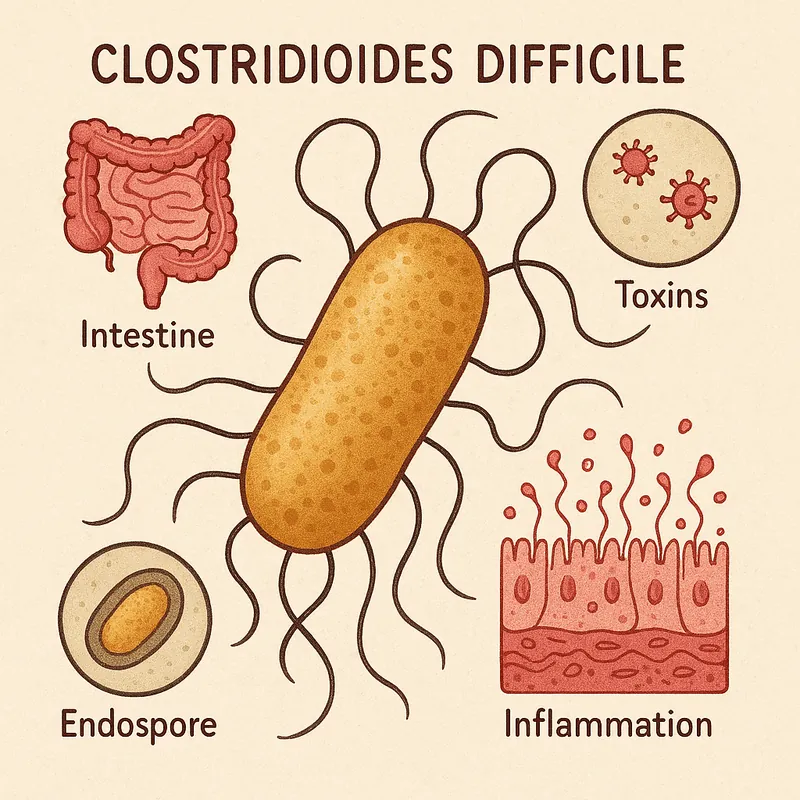
Clostridioides difficile (C. diff)

An opportunistic bacterial infection causing severe diarrhea, usually following antibiotic disruption of the gut microbiome. Recurrence is common. S. boulardii, fecal microbiota transplant, and microbiome restoration are mainstays of recovery.

Gut & Digestive Evidence-Based Root-Cause Focus

Last updated:

What Is C. difficile Infection?

Clostridioides difficile (formerly Clostridium difficile) is a spore-forming bacterium that causes severe colon inflammation (colitis) when it overgrows in a disrupted gut microbiome. C. difficile infection (CDI) typically follows antibiotic use, which eliminates protective gut bacteria and allows this opportunistic pathogen to proliferate.

C. difficile produces two main toxins (TcdA and TcdB) that damage colon cells, cause inflammation, and produce characteristic profuse watery diarrhea. The most severe form, pseudomembranous colitis, shows yellow-white plaques on the colon lining. Toxic megacolon and bowel perforation are life-threatening complications.

The major challenge with CDI is recurrence, ~20-30% of patients have at least one recurrence, and after one recurrence, the rate of further recurrence rises to ~40-65%. The disrupted microbiome remains vulnerable. This makes restoration of healthy microbiome diversity (probiotics, fecal microbiota transplant, dietary support) central to long-term recovery.

๐Ÿ’ก Key Insight: The best treatment for C. difficile is prevention, avoid unnecessary antibiotics. When antibiotics are required, take probiotics (S. boulardii) concurrently. For recurrent C. difficile, fecal microbiota transplantation (FMT) has >90% cure rate and is now a standard treatment.
C. difficile illustration

Severity of C. difficile Infection

๐ŸŒฑ Non-Severe

WBC <15,000, creatinine <1.5x baseline. Outpatient treatment. Oral fidaxomicin or vancomycin. Excellent prognosis with treatment.

๐ŸŒ— Severe

WBC โ‰ฅ15,000 OR creatinine โ‰ฅ1.5x baseline. Hospitalization usually. Oral vancomycin/fidaxomicin. Monitor for complications.

๐ŸŒ‘ Fulminant (Complicated)

Hypotension, shock, ileus, toxic megacolon, perforation. Combination antibiotics. ICU admission. Possible emergency colectomy. High mortality.

~462K
Annual US C. difficile cases
~29K
Annual US C. diff-related deaths
~20-30%
Recurrence rate after first episode
>90%
FMT cure rate for recurrent CDI

Symptoms of C. difficile Infection

Severity ranges from mild diarrhea to fulminant colitis. Critical to suspect in patients with recent antibiotic exposure.

๐Ÿ” Classic Symptoms

๐Ÿ’ฉ

Profuse Watery Diarrhea

3+ unformed stools per day, often 10-20. Foul-smelling, sometimes with distinctive odor. May contain mucus. Blood less common but possible.

๐Ÿ˜ฃ

Crampy Lower Abdominal Pain

Diffuse or lower abdominal crampy pain. May improve briefly after bowel movement. Severe sudden pain suggests complication (toxic megacolon, perforation).

๐ŸŒก๏ธ

Fever & Leukocytosis

38-39ยฐC. WBC often markedly elevated (often >15,000 with significant left shift). Higher WBC indicates more severe disease.

๐Ÿ“‹

Recent Antibiotic Exposure

Within 8 weeks (sometimes longer). Highest risk: clindamycin, fluoroquinolones, broad-spectrum penicillins, cephalosporins. Diarrhea during/after antibiotics โ†’ think C. diff.

โš ๏ธ Severe / Fulminant Red Flags

๐Ÿ˜ต

Hypotension & Shock

Low BP, rapid heart rate, signs of poor perfusion. Septic shock from severe CDI. ICU-level care. Aggressive fluid resuscitation needed.

๐ŸŽˆ

Toxic Megacolon

Massive dilation of colon >6cm with systemic toxicity. Imminent perforation risk. Stopping of diarrhea may paradoxically signal worsening (ileus). SURGICAL EMERGENCY.

๐Ÿ’ข

Peritonitis Signs

Diffuse abdominal pain, rigidity, rebound tenderness, free air on imaging. Indicates perforation. Emergency surgery, often colectomy.

๐Ÿฉธ

Lab Abnormalities

WBC >25,000 or <2,000, creatinine doubling, lactate elevation, albumin drop. All indicate severe disease and worse prognosis.

How C. difficile Is Diagnosed

๐Ÿ”ฌ Stool Testing

๐Ÿงช NAAT (PCR) for tcdB Gene

Highly sensitive but may detect colonization without disease. Combined with toxin test (two-step algorithm) for diagnostic clarity.

๐Ÿงช Toxin EIA (A and B)

Detects free toxin in stool. Confirms active infection vs colonization. Less sensitive than PCR but more specific.

๐Ÿงช GDH (Glutamate Dehydrogenase)

Highly sensitive screening test. Detects C. difficile presence but not toxin. Used in step-wise algorithms.

โš ๏ธ TEST ONLY DIARRHEA

Don't test formed stool, distinguishes colonization from disease. Don't repeat testing after treatment unless symptoms recur.

๐Ÿ” Severity & Workup

๐Ÿฉธ CBC & BMP

WBC count critical for severity classification. Creatinine for renal involvement. Lactate for sepsis/ischemia assessment.

๐Ÿฉธ Albumin, Lactate

Low albumin <3 indicates severe disease. Elevated lactate may indicate ischemic colitis, sepsis, toxic megacolon.

๐Ÿ“ก CT Abdomen (Severe Cases)

Colonic wall thickening ("accordion sign"), megacolon, ascites, perforation. Indicated for severe symptoms, abdominal pain, suspected complications.

๐Ÿ”ฌ Sigmoidoscopy / Colonoscopy

Rarely needed for diagnosis. Pseudomembranes (yellow-white plaques) are diagnostic when present. Reserve for diagnostic dilemma or alternative diagnoses.

Holistic vs. Conventional Treatment

๐ŸŒฟ HOLISTIC
๐Ÿ’Š CONVENTIONAL
๐ŸŒฟ

Holistic / Functional Approach

PARTNERS with conventional antibiotic treatment. Microbiome restoration is essential to prevent recurrence.

During Treatment
Probiotics (especially S. boulardii) + appropriate antibiotic + hydration
Prevention
Avoid unnecessary antibiotics; take probiotics with required antibiotic courses
Recurrent CDI
FMT (fecal microbiota transplant), >90% cure rate
Microbiome Restoration
Fiber, fermented foods, polyphenols, diverse plant-based diet
Comprehensive Strategy
  • Saccharomyces boulardii during treatment: 500mg 2-3x/day. Strong evidence reduces recurrence. Yeast probiotic resistant to antibiotics.
  • L. rhamnosus GG + L. acidophilus combination: also effective. 10-20 billion CFU multi-strain probiotic.
  • Aggressive hydration: oral rehydration solutions, electrolyte replacement
  • Stop unnecessary antibiotics: discontinue any non-essential antibiotic. Even when treating CDI itself, avoid additional unnecessary antibiotics.
  • Stop / minimize PPIs: proton pump inhibitors increase CDI risk significantly. Discontinue if possible.
  • Avoid loperamide: anti-diarrheals can cause toxin retention, increase risk of toxic megacolon
  • Microbiome restoration nutrition: diverse vegetables, fermented foods (yogurt, kefir, sauerkraut, kimchi), prebiotic fibers (onions, garlic, leeks, asparagus, bananas)
  • Bone broth: supports gut healing, hydration, easily tolerated
  • L-glutamine: 5-15g/day supports gut barrier repair
  • Vitamin D optimization: deficiency associated with CDI severity and recurrence
  • Fecal Microbiota Transplant (FMT): for recurrent CDI, single dose has >90% cure rate. Increasingly available via specialty centers.
  • Hand hygiene: SOAP AND WATER (alcohol sanitizers don't kill C. diff spores). Critical for preventing spread.
  • Environmental disinfection: bleach-based cleaners required for C. diff spores
  • Address comorbid conditions: IBD, immunocompromise, age, these increase risk
  • Long-term microbiome support: continue probiotics 2-3 months after treatment; diverse fiber intake; minimize future antibiotic exposure
โœ… FMT Is Game-Changing: For recurrent C. difficile, fecal microbiota transplantation has >90% cure rate vs ~30% for antibiotics alone. Now available in capsule form (Vowst), enema, or colonoscopy. If you have recurrent CDI, ask about FMT, it's a paradigm shift in treatment.

Diet for C. difficile

Hydration + easy digestion during acute illness; aggressive microbiome restoration during recovery.

โœ… Prioritize:

๐Ÿ’ง Aggressive Hydration

Oral rehydration solutions, water, broths. Replace lost fluids and electrolytes. Sip frequently throughout day.

๐Ÿฅฃ Bone Broth & Soups

Provide electrolytes, amino acids, gentle hydration. Easy to tolerate during illness. Add ginger for nausea.

๐ŸŒฑ Fermented Foods (As Tolerated)

Plain yogurt, kefir, sauerkraut, kimchi, miso. Restore microbiome diversity. Increase gradually during recovery.

๐Ÿฅฌ Prebiotic Foods (Recovery)

Onions, garlic, leeks, asparagus, bananas, oats. Feed beneficial bacteria. Add gradually as recovering.

๐Ÿฅš Adequate Protein

Eggs, fish, poultry. Support recovery. Easily digestible protein sources during illness.

โŒ Avoid:

๐Ÿ’Š Unnecessary Antibiotics

Single most important prevention. Don't use antibiotics for viral infections. Question every antibiotic prescription.

๐Ÿ’Š PPIs (When Possible)

Proton pump inhibitors increase CDI risk significantly. Discuss discontinuation with doctor. Try H2 blockers if reducing stomach acid needed.

๐Ÿ” Ultra-Processed Foods

Damage microbiome diversity. Emulsifiers and additives. Replace with whole foods during recovery.

๐Ÿฌ Refined Sugar

Feeds dysbiosis, suppresses beneficial bacteria. Limit during recovery to favor microbiome restoration.

๐Ÿฅƒ Alcohol

Disrupts microbiome, irritates gut. Avoid during illness and 2-4 weeks during recovery.

Evidence-Based Supplements

Probiotics (especially S. boulardii) have strongest evidence. Multi-faceted microbiome support for recovery.

SupplementMechanism & EvidenceSuggested DoseTimingNotes
Saccharomyces boulardiiBest-studied probiotic for C. difficile. Reduces recurrence ~50%. Resistant to antibiotics.500mg 2-3x/day during & 4-8 weeks after treatmentThroughout dayYeast, not affected by antibiotics. Can take during active antibiotic treatment.
L. rhamnosus GG + L. acidophilusMulti-strain probiotic. Reduces antibiotic-associated diarrhea and C. difficile risk.10-30 billion CFU multi-strain, 2x/day2 hours away from antibioticsContinue 2-3 months after treatment.
L-GlutamineRestores intestinal barrier function. Supports recovery of damaged gut lining.5-15g/dayBetween mealsEspecially helpful post-CDI to repair barrier dysfunction.
Vitamin D3Deficiency associated with CDI severity and recurrence. Immune modulator.5,000-10,000 IU/day (titrate to 50-80 ng/mL)With fat mealHigher doses initially to correct deficiency.
ZincSupports immune function and gut healing. Often deficient with diarrhea.15-30mg/dayWith food2-4 weeks during recovery. Don't exceed long-term.
Bovine Colostrum / Hyperimmune Bovine ColostrumProvides immunoglobulins against C. difficile toxins. Some evidence for refractory cases.20-60g/dayEmpty stomachLimited but interesting evidence. Discuss with specialist.
N-Acetyl Cysteine (NAC)Glutathione precursor; supports detoxification. Anti-inflammatory.600-1,200mg/dayEmpty stomachSupports recovery, well-tolerated.
Prebiotics (GOS, FOS, Inulin)Feed beneficial gut bacteria. Help restore healthy microbiome diversity.2-10g/day, gradually increaseWith or between mealsStart low, can worsen symptoms if gas/bloating develops.

Restore the Microbiome

C. difficile is a microbiome catastrophe. Beyond antibiotics, success depends on restoring microbiome diversity through probiotics, prebiotics, fermented foods, and minimizing further microbiome insults. For recurrent disease, fecal microbiota transplantation is curative in >90% of cases. Prevention through judicious antibiotic use is paramount.