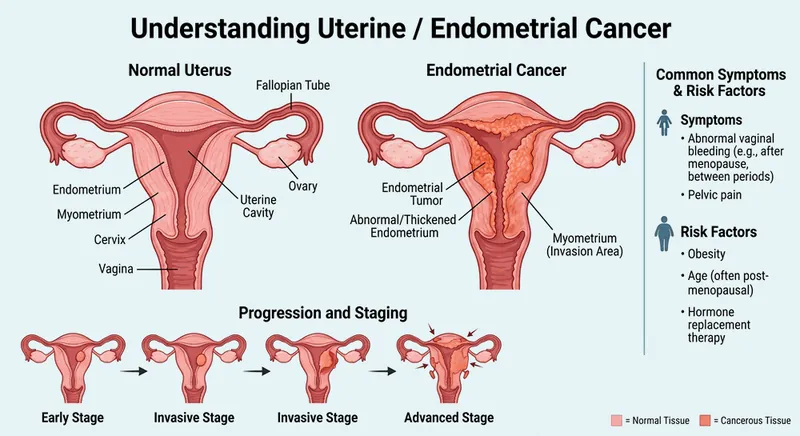
Uterine / Endometrial Cancer, Type I (Estrogen-Driven) & Type II

The most common gynecologic cancer in the United States, and one of the few where postmenopausal bleeding gives an early warning. Standard oncology care is the primary treatment, holistic nutrition and lifestyle support play a powerful complementary role in both treatment tolerance and recurrence prevention.

Most Common Gyn Cancer ~66,000 Cases / Year FIGO Stage Iโ€“IV PMB = Red Flag

Last updated:

What Is Uterine / Endometrial Cancer?

Uterine cancer is a malignancy arising in the uterus. The overwhelming majority (over 90 percent) arise specifically from the endometrium, the inner lining of the uterus, and the terms "endometrial cancer" and "uterine cancer" are often used interchangeably.

Uterine cancer is the most common gynecologic cancer in the United States, with approximately 66,000 new cases each year and rising incidence linked to the obesity epidemic. It is the fourth most common cancer in women overall. Two broad biological categories define the disease. Type I endometrial cancer (endometrioid histology, ~80 percent of cases) is estrogen-driven, low-grade, slower-growing, and often diagnosed at early stages with excellent prognosis. Type II endometrial cancer (non-endometrioid: serous, clear cell, carcinosarcoma, ~20 percent) is non-estrogen-dependent, high-grade, aggressive, and behaves more like high-grade ovarian cancer.

Staging follows the FIGO system, I (confined to uterus) through IV (distant metastasis). Postmenopausal bleeding is the hallmark presenting symptom, and any postmenopausal bleeding is endometrial cancer until proven otherwise, which is why earlier-stage detection is more common for this cancer than for ovarian or vaginal disease. The clinical subtypes and modern molecular classification are described below:

Uterine endometrial cancer, endometrium and myometrium anatomy

"Endometrial cancer is the most common gynecologic malignancy in high-income countries, and its incidence continues to rise in parallel with the obesity epidemic; the majority of cases are detected early because postmenopausal bleeding triggers prompt evaluation."

โ€” Lu & Broaddus, NEJM, Endometrial Cancer Review, 2020

๐Ÿ…ฐ๏ธ Type I, Endometrioid (~80%, estrogen-driven)

The classic, low-grade, estrogen-dependent endometrial cancer. Typically arises from atypical endometrial hyperplasia in a background of long-term unopposed estrogen exposure (obesity, anovulation, PCOS, tamoxifen, estrogen-only HRT). Most diagnosed at stage I with excellent prognosis.

  • โ†’Hallmarks: Postmenopausal bleeding, obesity, PCOS history, low-grade well-differentiated histology
  • โ†’Standard care: Total hysterectomy with bilateral salpingo-oophorectomy; adjuvant radiation/chemo for stage II+
  • โ†’Molecular: PTEN, PIK3CA, KRAS, CTNNB1 mutations; MMR-deficient subtype common
  • โ†’Holistic role: Estrogen-metabolism support, weight management, insulin sensitization to prevent recurrence

๐Ÿ…ฑ๏ธ Type II, Serous & Clear Cell (~15%, aggressive)

Non-endometrioid, high-grade, non-estrogen-driven cancers. Behave more like high-grade ovarian cancer with early peritoneal spread. Often arise in atrophic endometrium in older, thinner postmenopausal women. Higher recurrence risk even at early stage.

  • โ†’Hallmarks: Older postmenopausal women, no obesity link, high-grade aggressive histology
  • โ†’Standard care: Surgical staging + adjuvant platinum/taxane chemotherapy + radiation; HER2 testing for serous
  • โ†’Molecular: TP53 mutations universal in serous; HER2 amplification in ~30% of serous
  • โ†’Holistic role: Chemo tolerance, side-effect mitigation, recovery nutrition, careful supplement coordination

๐Ÿ…ฒ Carcinosarcoma & Uterine Sarcomas (~5%)

Rare, aggressive cancers arising from the muscle (leiomyosarcoma) or stromal layer (endometrial stromal sarcoma) of the uterus, or mixed epithelial-mesenchymal tumors (carcinosarcoma). Distinct biology and treatment from carcinomas, with generally poorer prognosis.

  • โ†’Hallmarks: Rapidly growing uterine mass, often initially mistaken for fibroid, may present with bleeding or pelvic pain
  • โ†’Standard care: Hysterectomy with staging; chemotherapy regimens differ by sarcoma subtype
  • โ†’Molecular: Variable; sarcoma-specific molecular profiling guides targeted-therapy options
  • โ†’Holistic role: Supportive care during multi-modal treatment, recovery nutrition, surveillance support

๐Ÿ…ณ Modern Molecular Classification (TCGA, 4 groups)

Modern pathology classifies endometrial cancer into 4 molecular groups regardless of histology, increasingly guiding treatment. POLE-ultramutated (excellent prognosis), MMR-deficient/MSI-high (immunotherapy-responsive), copy-number-low (intermediate), and copy-number-high/p53-mutated (aggressive, serous-like).

  • โ†’Hallmarks: Determined by molecular testing on the surgical specimen, not visible features
  • โ†’Standard care: Increasingly stratifies adjuvant therapy decisions; immunotherapy for MMR-deficient
  • โ†’Markers: MMR (MLH1/MSH2/MSH6/PMS2) IHC, POLE sequencing, p53 IHC, copy-number analysis
  • โ†’Holistic role: Tailor microbiome support, anti-inflammatory diet, and stress care to molecular profile and treatment plan

Uterine / Endometrial Cancer Statistics & Research

~66,000
new US cases per year (American Cancer Society, 2024)
~80%
are Type I endometrioid, estrogen-driven, low-grade
~75%
are diagnosed at FIGO stage I, when 5-year survival exceeds 90%
2โ€“4ร—
higher risk in women with obesity (BMI greater than 30)
3ร—
higher risk in women with PCOS due to chronic anovulation
40โ€“60%
lifetime risk in women with Lynch syndrome (hereditary)

How Uterine / Endometrial Cancer Presents

Unlike ovarian cancer, uterine cancer usually gives an early, unmistakable warning, postmenopausal bleeding. Approximately 90 percent of women with endometrial cancer present with abnormal bleeding, which is why most cases are detected at stage I. The full symptom pattern is below.

๐Ÿฉธ Bleeding & Gynecologic Symptoms

๐Ÿšจ

Postmenopausal Bleeding (PMB)

Any vaginal bleeding or spotting after 12 consecutive months without a period. The hallmark symptom, present in approximately 90 percent of endometrial cancers. Never normal, always warrants endometrial biopsy or pelvic ultrasound within 1 to 2 weeks. Even a single spot is enough to trigger workup.

๐Ÿฉธ

Heavy or Prolonged Bleeding (Premenopausal)

In premenopausal women, the warning sign is menorrhagia (heavy bleeding), menometrorrhagia (heavy plus irregular bleeding), or bleeding between cycles. PCOS, obesity, and tamoxifen use raise risk. Persistent heavy bleeding in a woman with PCOS at any age warrants endometrial sampling.

๐Ÿ’ง

Watery or Blood-Tinged Vaginal Discharge

A persistent thin, watery, or pink-tinged vaginal discharge in a postmenopausal woman is a less classic but real presentation, especially in serous (Type II) endometrial cancer. Any new persistent discharge after menopause warrants gynecologic evaluation.

๐Ÿ˜ฃ

Pelvic Pain or Pressure

Persistent pelvic pressure or dull pelvic pain may indicate a larger uterine tumor, hematometra (blood collection inside the uterus), or pelvic spread. More common in advanced disease, and a clear indication for imaging when paired with bleeding.

๐Ÿ’”

Pain with Intercourse (Dyspareunia)

New deep dyspareunia, particularly with postmenopausal spotting after intercourse, can reflect a friable endometrial or cervical lesion. Always warrants pelvic exam, ultrasound, and biopsy in postmenopausal women.

๐Ÿ”

Abnormal Pap Smear with Endometrial Cells

Endometrial cells appearing on a Pap smear in a postmenopausal woman is abnormal and warrants endometrial sampling, even without any bleeding history. While the Pap is not designed to detect endometrial cancer, this incidental finding has positive predictive value.

๐ŸŒ Systemic & Advanced-Stage Symptoms

๐Ÿšฝ

Urinary Frequency or Difficulty

A growing uterine mass can compress the bladder, causing urgency and frequency. Difficulty emptying the bladder or hesitancy suggests larger disease. Persistent urinary symptoms in a postmenopausal woman, especially with negative cultures, warrant pelvic imaging.

๐Ÿ’ฉ

Constipation or Bowel Changes

Pressure on the rectum from an enlarging mass can cause new constipation or changes in stool caliber. Less common than urinary symptoms but a real consideration in evaluating new bowel patterns in older women.

โš–๏ธ

Unintended Weight Loss

Loss of more than 5 percent of body weight without dietary or activity change can indicate advanced disease. Cancer-associated cachexia is uncommon at early stages but a real signal in advanced uterine cancer.

๐Ÿ˜ฉ

Fatigue & Weakness

Chronic anemia from prolonged bleeding can produce significant fatigue and weakness, sometimes preceding the recognition that the bleeding itself is abnormal. Iron-deficiency anemia in a postmenopausal woman is a uterine cancer red flag until proven otherwise.

๐Ÿฆต

Leg Swelling / Lymphedema

Unilateral leg swelling can indicate pelvic lymph-node involvement compressing venous return. After surgery and lymph-node dissection, lymphedema can also be a late complication. Either form warrants prompt evaluation.

๐Ÿ˜ฐ

Shortness of Breath & Cough

Lung metastases can cause shortness of breath, chronic cough, or pleural effusion. A late presentation reflecting stage IV disease, and a reminder that advanced uterine cancer can mimic primary lung pathology in initial workup.

โš ๏ธ The PMB Rule: Any postmenopausal bleeding, even a single spot, even on hormone replacement therapy, is endometrial cancer until proven otherwise. The workup is straightforward (transvaginal ultrasound plus endometrial biopsy), the test is well-tolerated, and the disease is highly curable when caught early. Do not wait.

How to Test for Uterine / Endometrial Cancer

Diagnosis is built from history (especially bleeding) plus pelvic ultrasound plus tissue. Endometrial sampling is the gold standard, performed in the office or operating room. Modern molecular profiling now guides much of the post-surgical treatment plan.

๐Ÿ  At-Home Screening & Risk Stratification

There is no population-wide screening test, but these tools identify women who should pursue prompt evaluation:

๐Ÿ“… Bleeding Diary & Pattern Tracking

Track all bleeding episodes for 3 to 6 months, noting timing, volume, duration, and any associated factors. For premenopausal women, flag heavy menstrual bleeding (more than 80 mL/cycle, soaking a pad per hour, or duration over 7 days) or bleeding between cycles. Any postmenopausal spotting is an immediate workup trigger.

๐Ÿงฌ Family-History & Lynch Syndrome Assessment

Map family history of uterine, colon, ovarian, pancreatic, urothelial, and brain cancers. Lynch syndrome (hereditary nonpolyposis colorectal cancer) confers a 40 to 60 percent lifetime endometrial cancer risk. Two or more affected relatives, especially under 50, warrants Lynch panel testing.

๐Ÿ“‹ Modifiable Risk Score

Tally risk factors: obesity (BMI greater than 30, 2 to 4x risk), diabetes, PCOS, anovulation, nulliparity, late menopause, estrogen-only HRT, and tamoxifen use. The higher the cumulative load, the lower the threshold for prompt evaluation of any bleeding, and the more aggressive lifestyle modification reduces risk.

๐Ÿ”ฌ Clinical & Lab Workup

๐Ÿ“ท Transvaginal Ultrasound (TVUS)

The first-line imaging study for abnormal bleeding. Measures endometrial stripe thickness, in postmenopausal women, a stripe greater than 4 mm warrants endometrial sampling. Also evaluates myometrial invasion, fibroids, and ovaries. Saline-infusion sonography adds detail for focal lesions like polyps.

๐Ÿ”ฌ Endometrial Biopsy (Office Pipelle)

The gold standard for diagnosis. A thin catheter sampled in the office, with sensitivity of approximately 90 percent for endometrial cancer. Brief mild cramping during the procedure. If biopsy is non-diagnostic or bleeding persists, proceed to hysteroscopy with dilation and curettage in the operating room.

๐Ÿงฌ Molecular Pathology & MMR Testing

Once cancer is confirmed, modern pathology includes MMR (MLH1/MSH2/MSH6/PMS2) immunohistochemistry on every endometrial cancer to screen for Lynch syndrome, p53 IHC, and increasingly POLE sequencing. The 4 TCGA molecular groups guide adjuvant therapy decisions.

๐Ÿ“ท Pelvic MRI & CT/PET Staging

Pelvic MRI is the best modality for assessing myometrial invasion depth and cervical involvement preoperatively. CT of the chest/abdomen/pelvis evaluates distant disease. PET-CT is reserved for high-grade disease or restaging. Final staging is surgical (FIGO).

๐Ÿ’‰ Hormone & Metabolic Labs

Fasting insulin, glucose, HbA1c (insulin resistance is the major modifiable driver), lipid panel, liver function. CA-125 may be checked for serous histology or advanced disease. HER2 testing is now standard for serous endometrial cancer.

๐Ÿงซ Baseline Nutrient & Inflammation Status

25-OH vitamin D, ferritin (often low from prolonged bleeding), albumin, hs-CRP, B12, magnesium, homocysteine. Important before surgery and any adjuvant therapy. Repeat midway through treatment and in survivorship.

Holistic vs. Conventional Treatment for Uterine / Endometrial Cancer

For uterine cancer, surgery is the cornerstone of treatment and is highly effective at early stages. Holistic nutrition and lifestyle care is complementary, designed to be used alongside surgery, radiation, chemotherapy, hormone therapy, and immunotherapy as recommended by your oncology team, not instead of them.

๐ŸŒฟ HOLISTIC (COMPLEMENTARY)
๐Ÿ’Š CONVENTIONAL ONCOLOGY
๐ŸŒฟ

Holistic / Supportive Approach (Alongside Oncology)

Insulin and estrogen are the two biggest modifiable drivers, hit them hard during survivorship to lower recurrence and secondary-cancer risk

Primary Role
Pre-surgical optimization, post-op recovery, estrogen-metabolism support, insulin sensitization, microbiome care, recurrence prevention
Duration
Continuous, from diagnosis through active treatment and into lifelong survivorship
Effect on Disease
Improves treatment tolerance, recovery, and modestly reduces recurrence in Type I disease through metabolic levers
Goal
Strong recovery, lower toxicity, and a lifestyle that reverses the metabolic drivers of recurrence
Protocol Includes (alongside oncology, with oncology approval)
  • Pre-surgical optimization, anti-inflammatory whole-food diet, protein 1.2 to 1.5 g/kg, vitamin D and ferritin correction, glycemic control
  • Post-op recovery, protein-anchored meals, gut motility support, gentle walking from day 1, scar massage at 6 to 8 weeks
  • If chemo or radiation is needed, ginger and peppermint for nausea, oral hydration, mucosal support, microbiome care
  • Estrogen-metabolism support, cruciferous vegetables, DIM, flax seeds, gut estrobolome care; limit endocrine-disruptor exposure
  • Insulin sensitization, low-glycemic eating, strength training, post-meal walks, address PCOS or diabetes if comorbid
  • Weight management to reduce recurrence and secondary-cancer risk, especially central adiposity
  • Pelvic-floor physical therapy after surgery and especially after radiation
  • Sleep, circadian rhythm, and mind-body work (meditation, yoga, counseling) for survivorship
โœ… Note on supplements during treatment: Several supplements (high-dose antioxidants, St John's Wort, grapefruit, some herbal extracts) interfere with chemotherapy and tamoxifen. Always disclose every supplement to your oncology team and pharmacist before and during treatment.

Root Causes of Uterine / Endometrial Cancer

Type I endometrial cancer is one of the most clearly "metabolic" cancers we have, with insulin resistance, obesity, and unopposed estrogen exposure as the dominant drivers. Type II is more genomically driven. Each row below points to a modifiable lever for prevention or recurrence reduction.

Root Cause How It Contributes to Uterine Cancer Holistic Solution (Complementary)
Obesity & Excess Adipose TissueAdipose tissue converts androgens to estrogen via aromatase, producing chronic unopposed estrogen exposure. BMI greater than 30 confers 2 to 4x risk; BMI greater than 40 confers 6x risk.Sustained 5 to 10% weight loss reduces recurrence risk; low-glycemic anti-inflammatory eating, strength training, sleep optimization, address sleep apnea
Insulin Resistance & Type 2 DiabetesHigh insulin and IGF-1 directly stimulate endometrial proliferation and inhibit apoptosis. Type 2 diabetes doubles endometrial cancer risk independent of obesity.Low-glycemic eating, strength training, post-meal walks, inositol, berberine; metformin reduces endometrial cancer risk in diabetics
Chronic Anovulation (PCOS)Without ovulation, no progesterone is produced to oppose the estrogen-driven proliferation of the endometrium. Years of unopposed estrogen drive hyperplasia and progression to cancer.Restore ovulation if reproductive-age (inositol, weight management); cyclical progesterone or progestin IUD if ovulation cannot be restored; treat PCOS root drivers
Unopposed Estrogen (HRT or Tamoxifen)Estrogen-only HRT (without progesterone) in women with a uterus increases endometrial cancer risk 8-fold over 5+ years. Tamoxifen (for breast cancer) has agonist effects on endometrium.If HRT, always combine estrogen with progesterone or progestin in women with a uterus; on tamoxifen, annual endometrial surveillance; report any bleeding immediately
Lynch Syndrome (Hereditary)Germline mutations in MMR genes (MLH1, MSH2, MSH6, PMS2) confer 40 to 60 percent lifetime endometrial cancer risk, often presenting before age 50.Genetic counseling; enhanced surveillance with annual endometrial biopsy from age 35; risk-reducing hysterectomy after childbearing; cascade testing of relatives
Cowden Syndrome (PTEN Mutations)Inherited PTEN mutations increase lifetime endometrial cancer risk to approximately 28 percent; also associated with breast, thyroid, and skin cancers.Multidisciplinary surveillance from age 30; consider risk-reducing hysterectomy after childbearing
Chronic Inflammation & Metabolic SyndromeElevated cytokines (TNF-ฮฑ, IL-6, CRP) and visceral fat drive endometrial proliferation. Metabolic syndrome (the cluster of central obesity, insulin resistance, dyslipidemia, hypertension) is a major recurrence risk.Anti-inflammatory diet, omega-3, curcumin, address gut dysbiosis, weight loss, blood pressure and lipid optimization
Gut Microbiome Dysbiosis (Estrobolome)The estrobolome regulates the recycling of estrogens via ฮฒ-glucuronidase activity. Dysbiosis raises circulating estrogen and inflammation.Diverse plant fiber (30+ plants per week), fermented foods, address SIBO/candida, targeted probiotics, minimize unnecessary antibiotics
Nulliparity & Reproductive HistoryEach completed pregnancy and prolonged breastfeeding reduces lifetime endometrial cancer risk because they suppress ovulation and increase progesterone exposure.Not all modifiable; for prevention, oral contraceptive use modestly reduces risk; for survivorship, focus on the other levers in this table
Endocrine-Disrupting ChemicalsBPA, phthalates, parabens, and persistent pesticides have estrogenic activity and concentrate in fatty tissues. Long-term exposure modestly increases hormone-sensitive cancer risk.Glass/stainless instead of plastic, fragrance-free personal care, EWG Dirty Dozen guidance, filter drinking water, choose organic when possible

Uterine / Endometrial Cancer Diet Guide

For endometrial cancer, food is one of the highest-leverage tools in survivorship. The two biggest modifiable drivers, insulin resistance and unopposed estrogen, both respond directly to dietary change.

๐Ÿฅ—

The Insulin-First, Estrogen-Detox Eating Pattern

Type I endometrial cancer is one of the most metabolically driven cancers we know. The diet that supports recovery and reduces recurrence works on two levers at once: insulin restoration (the same eating pattern that helps PCOS and type 2 diabetes) and favorable estrogen metabolism (cruciferous vegetables, fiber, gut microbiome, liver-detox support).

During active treatment, the priority is protein adequacy (1.2 to 1.5 g/kg per day) and calorie sufficiency to protect lean mass. In survivorship, the priority shifts to low-glycemic, plant-forward, anti-inflammatory eating with a Mediterranean-DASH overlay.

During Active Treatment:

  • 1Protein priority, 1.2 to 1.5 g/kg per day, protect muscle
  • 2Calorie adequacy, do not under-eat through chemo/radiation
  • 3Frequent small meals, 5 to 6 per day if appetite is impaired
  • 4Hydration, 2 to 3 liters daily, especially around treatment

Survivorship & Recurrence Prevention:

  • ๐ŸฅฆCruciferous vegetables daily, indole-3-carbinol favors 2-hydroxy estrogen metabolites
  • ๐ŸžLow glycemic load, insulin and IGF-1 reduction is the single biggest recurrence lever
  • ๐ŸŒฑ30+ different plants per week, fiber and polyphenol diversity for estrobolome
  • ๐ŸšถDaily movement, post-meal walks plus strength training 2 to 3x/week
๐Ÿ’ก Sustained 5 to 10 percent weight loss is associated with measurable reduction in endometrial cancer recurrence risk, the single most powerful lifestyle lever for Type I survivors.
โš ๏ธ These foods drive insulin, inflammation, and unfavorable estrogen metabolism, three of the central drivers of Type I endometrial cancer.
  • โœ—Refined sugar & sugar-sweetened beverages: Sharply raise insulin and IGF-1, both of which directly stimulate endometrial proliferation. Soda, juice, candy, baked goods.
  • โœ—Refined flour: White bread, white pasta, pastries, crackers. Acts metabolically like sugar.
  • โœ—Industrial seed oils: Soybean, canola, corn, cottonseed, sunflower, safflower. Pro-inflammatory omega-6 load.
  • โœ—Conventional dairy in large amounts: Concentrated source of IGF-1 and growth signals; the link with hormone-sensitive cancers is debated, modest intake is reasonable, large daily intake is not.
  • โœ—Processed & cured meats: Bacon, deli meats, hot dogs. Group 1 carcinogen and pro-inflammatory.
  • โœ—Alcohol: Raises circulating estrogen and impairs DNA repair. Limit during survivorship, abstain during active treatment.
  • โœ—Excess red meat (over 350 g/wk): Modest increase in cancer recurrence risk in observational data. Favor pastured poultry and fish.
  • โœ—Trans fats & deep-fried foods: Pro-inflammatory and pro-oxidative; minimize entirely.
  • โœ—Raw/undercooked foods during neutropenia: Raw sushi, soft cheeses, sprouts, rare meat. Infection risk during chemo.
๐Ÿ’ก These foods lower insulin, support favorable estrogen metabolism, and feed the gut microbiome, the three pillars of Type I endometrial cancer survivorship.
  • โœ“Cruciferous vegetables daily: Broccoli, cauliflower, Brussels sprouts, kale, cabbage, bok choy, watercress. Indole-3-carbinol and DIM favor protective 2-hydroxyestrone over harmful 16-hydroxyestrone.
  • โœ“Quality proteins: Wild salmon and sardines, pastured eggs, organic poultry, grass-fed beef in moderation, lentils, organic tofu, plain Greek yogurt if tolerated.
  • โœ“Ground flax seeds (1 to 2 tbsp daily): Lignans bind excess estrogens for elimination; soluble fiber improves estrobolome function and glycemic control.
  • โœ“Berries & colorful fruits: Anthocyanins and polyphenols. Low glycemic, anti-inflammatory; pair with protein or fat.
  • โœ“Healthy fats: Extra-virgin olive oil, avocado, walnuts, almonds, pumpkin seeds, chia seeds.
  • โœ“Fermented foods: Kimchi, sauerkraut, plain kefir if tolerated, miso, natto. Support microbiome and estrogen metabolism.
  • โœ“Slow carbs: Sweet potato, butternut squash, lentils, chickpeas, quinoa, steel-cut oats. Steady energy without insulin spikes.
  • โœ“Green tea & matcha: EGCG supports favorable estrogen metabolism and reduces oxidative stress. 2 to 3 cups daily.
  • โœ“Spices: Turmeric (with pepper), cinnamon (blood sugar), ginger, rosemary, garlic.

Key Supplements for Uterine / Endometrial Cancer Recovery

Supportive supplements during and after cancer treatment must be coordinated with the oncology team, especially given the hormone-sensitive nature of Type I disease. The list below highlights the most evidence-based supportive options; always confirm with your oncologist before adding any.

Supplement Role in Uterine Cancer Recovery Suggested Dose Timing Notes
Vitamin D3 (with K2)Low 25-OH-D is associated with worse endometrial cancer outcomes. Supports immune function, calcium balance, and bone health, especially after surgical menopause and aromatase-inhibitor therapy.2000 to 5000 IU D3 + 100 to 200 mcg MK-7 K2 per dayWith a fat-containing meal, morningTest 25-OH-D first, target 50 to 80 ng/mL. Discuss with oncologist before/during treatment.
Omega-3 EPA/DHAReduces systemic inflammation, supports lean body mass, may improve chemo and radiation tolerance, and helps post-treatment joint and mood symptoms.2 to 4 g combined EPA+DHA per dayWith mealsIFOS-certified for purity. Discuss with oncologist; hold before surgery per surgical team protocol.
DIM (Diindolylmethane) / I3CCruciferous-derived; supports favorable estrogen metabolism (raises 2-hydroxyestrone:16-hydroxyestrone ratio). Useful in Type I (estrogen-driven) survivorship.100 to 200 mg DIM per day (survivorship)With a fat-containing mealDiscuss with oncologist before/during treatment. Food sources (cruciferous vegetables) always first choice. Avoid during tamoxifen without specialist input.
Curcumin (Turmeric Extract)Potent anti-inflammatory; some preclinical evidence of anti-tumor effect in endometrial models. Useful in survivorship for inflammation and joint symptoms.500 to 1000 mg curcumin per dayWith a fat-containing mealDiscuss with oncologist before/during treatment; some formulations may interfere with specific chemo agents.
BerberineActivates AMPK; lowers insulin, IGF-1, and HbA1c, the three biggest modifiable drivers of Type I endometrial cancer recurrence. Particularly useful in survivors with obesity or insulin resistance.500 mg 2 to 3x per day (1500 mg/day total) in survivorshipWith mealsDiscuss with oncologist before/during treatment. Can lower blood sugar; monitor if diabetic.
Myo-Inositol + D-Chiro-InositolRestores insulin sensitivity at the cellular level. Useful for PCOS survivors of endometrial cancer to address the underlying metabolic driver.4 g myo + 100 mg D-chiro per daySplit, half AM and half PM, with or without food3 to 6 months for full effect. Maintain the 40:1 ratio.
Magnesium GlycinateSupports nerve repair (chemo-induced neuropathy), sleep, muscle relaxation, insulin signaling. Frequently depleted during treatment.300 to 400 mg elemental magnesium per dayEvening, 30 to 60 min before bedGlycinate is best tolerated. Adjust if loose stools occur.
B-Complex (Methylated)Supports energy, neurotransmitter synthesis, and methylation pathways. Helpful for chemo-related fatigue and post-treatment recovery.1 capsule per day per product labelMorning with foodMethylated forms (L-methylfolate, methylcobalamin) preferred. Discuss high-dose individual folate with oncologist.
Probiotic (Multi-Strain)Supports estrobolome and gut recovery during/after antibiotics and chemo; helps reduce chemo-related diarrhea and mucositis in clinical studies.25 to 50 billion CFU per day, multi-strainEmpty stomach or with light mealAvoid during severe neutropenia without oncology approval. Resume in recovery phase.
Iron (only if documented deficiency)Iron-deficiency anemia is common from prolonged bleeding. Supplement only when iron studies confirm true deficiency.25 to 65 mg elemental iron per day if deficientEmpty stomach with vitamin C; or oral every other dayConfirm with ferritin and iron studies. Discuss with oncologist before/during treatment.
Calcium-D-GlucarateInhibits ฮฒ-glucuronidase, supporting estrogen elimination via the liver and gut. Useful in Type I survivorship as part of a broader estrogen-clearance strategy.500 to 1500 mg per dayWith mealsDiscuss with oncologist; theoretical interactions with hormonal therapies should be reviewed.
Coenzyme Q10 (Ubiquinol)Mitochondrial cofactor; may support energy, reduce chemo fatigue, and protect cardiac function during chemotherapy.100 to 300 mg ubiquinol per dayWith a fat-containing meal, morningDiscuss with oncologist; if on warfarin, may interact.
MelatoninStrong circadian regulator. Clinical trials in advanced cancer suggest improved sleep, fewer chemo side effects, and possible survival benefit.3 to 20 mg at bedtime (oncology-supervised for higher doses)30 to 60 min before sleepStart low (3 mg) and titrate. Discuss higher doses with integrative oncology.
Ginger Capsules / TeaRCT-supported for chemo-induced nausea, particularly delayed nausea. Well-tolerated; complements anti-emetic medications.500 to 1500 mg per day in divided dosesBefore and during chemo days; with mealsStop 1 week before surgery (mild antiplatelet effect). Coordinate with oncology pharmacist.
L-GlutamineSupports intestinal lining repair; may reduce chemo and radiation-related mucositis and diarrhea.5 to 10 g 2 to 3 times dailyBetween meals, mixed in waterDiscuss with oncologist. Generally well-tolerated in endometrial cancer protocols.
Vitamin C (Oral, Dietary)Supports collagen, immune function, and post-surgical wound healing. Oral dietary intake is supportive; high-dose IV is a separate, oncology-supervised intervention.500 to 1000 mg per day (oral)Divided doses with mealsAvoid high-dose oral antioxidants during specific chemo cycles without oncology guidance.
SeleniumTrace mineral important for thyroid and glutathione peroxidase; supports chemo tolerance at modest doses.100 to 200 mcg per dayWith food, morningDo not exceed 400 mcg/day. Brazil nuts are a natural source.
ResveratrolPolyphenol with anti-inflammatory and possible anti-estrogenic effects. Some preclinical data of interest in hormone-sensitive cancers.500 to 1000 mg per day (survivorship)Morning with foodDiscuss with oncologist before/during treatment; possible interactions and uncertain optimal dosing.

Healing Timeline: Conventional vs. Holistic

Standard oncology delivers the tumor-directed treatment. Holistic support runs in parallel from diagnosis through survivorship to optimize tolerance, recovery, and long-term outcomes, especially the metabolic drivers of recurrence.

๐ŸŒฟ Holistic Supportive Care
Pre-Surgical (Weeks 0โ€“4)

Nutritional optimization, correct vitamin D and ferritin, anti-inflammatory diet, glycemic control, build muscle with protein and resistance work, smoking cessation if needed.

Post-Op Recovery (Weeks 1โ€“8)

Protein-anchored meals, gut motility support, gentle walking from day 1, scar tissue work at 6 to 8 weeks, pelvic-floor PT, sleep prioritization.

Adjuvant Therapy (Months 2โ€“6)

If chemo or radiation, supportive nutrition, ginger for nausea, hydration, microbiome care, oncology-approved supportive supplements, mind-body work.

Survivorship (Year 1+)

Insulin-first, estrogen-detox eating pattern; weight management; strength training; gut and estrobolome care; address surgical-menopause symptoms; ongoing surveillance.

Long-Term Outlook

Better treatment tolerance, faster recovery, durable metabolic improvement; sustained 5 to 10% weight loss associated with reduced recurrence risk in Type I disease.

๐Ÿ’Š Conventional Oncology Treatment
Diagnosis & Staging (Weeks 0โ€“4)

Pelvic ultrasound, endometrial biopsy, MRI for myometrial invasion, CT for advanced workup, MMR/molecular pathology, multidisciplinary tumor-board planning.

Surgery (Week 4โ€“8)

Total hysterectomy with bilateral salpingo-oophorectomy and lymph-node staging. Often minimally invasive (laparoscopic or robotic); 1 to 2 day hospital stay.

Adjuvant Therapy (Months 2โ€“6)

Risk-stratified, vaginal brachytherapy for intermediate-risk; pelvic radiation + chemo for high-risk; HER2 therapy for serous; immunotherapy for MMR-deficient recurrent.

Surveillance (Years 1โ€“5)

Office visits every 3 to 6 months for 2 years, then every 6 to 12 months. Pelvic exam, symptom review; imaging only if symptomatic or per protocol.

Long-Term Outlook

Stage I 90%+ five-year survival; Stage III ~55%; Stage IV ~17%. Type II histology generally has poorer outcomes than Type I at the same stage.

"Endometrial cancer is the cancer most clearly tied to the modern metabolic environment. Surgery cures the disease present today; sustained metabolic recovery is what reduces the disease tomorrow."

Ready to Address Your Uterine / Endometrial Cancer at the Root?

Holistic nutrition support is most powerful when integrated with your oncology team's plan.