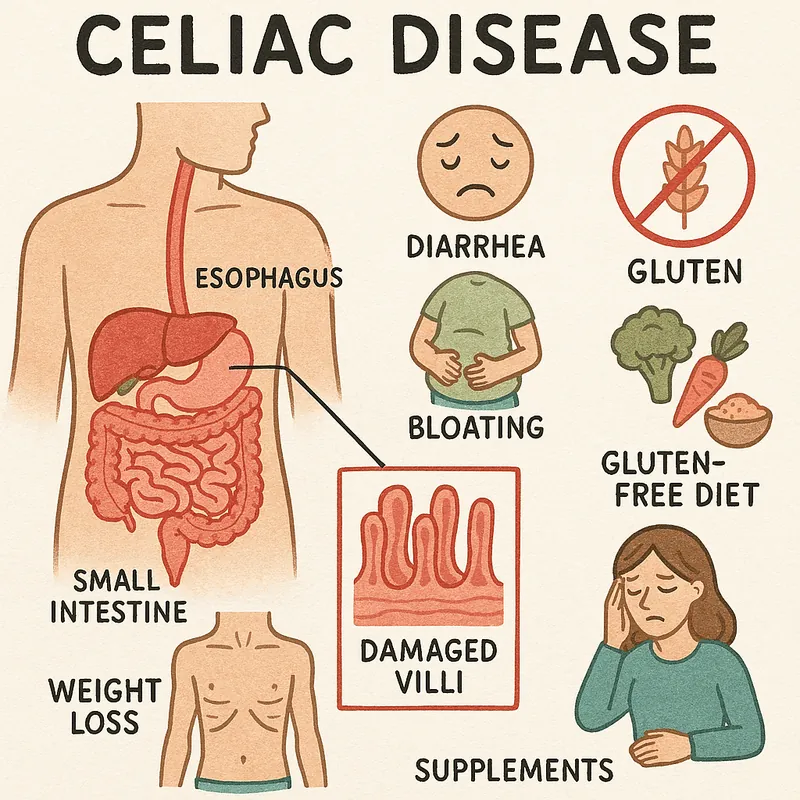
An autoimmune reaction to gluten causing small intestine villous atrophy. Affects ~1% of the population, often undiagnosed for years. Strict gluten-free diet is the only proven treatment; gut healing supports recovery from years of malabsorption.
Last updated:
Celiac disease is a chronic autoimmune disorder triggered by gluten (a protein in wheat, barley, and rye) in genetically susceptible individuals. When gluten is consumed, the immune system mounts an attack on the small intestine's villi (finger-like projections that absorb nutrients), leading to villous atrophy, malabsorption, and a cascade of nutritional deficiencies.
Approximately 1% of the global population has celiac, but ~80% remain undiagnosed. Symptoms vary dramatically, from classic GI complaints to subtle, "silent" presentations dominated by fatigue, anemia, infertility, neurological symptoms, or skin rash (dermatitis herpetiformis). Many adults are diagnosed only after years or decades of vague symptoms.
Two specific genes, HLA-DQ2 and HLA-DQ8, are necessary (but not sufficient) for celiac. ~30% of the population carries these genes but only ~3% of carriers actually develop celiac. The trigger is the interplay between genetics, gluten exposure, gut microbiome, and intestinal permeability (leaky gut).
GI-dominant: chronic diarrhea, weight loss, abdominal pain, malabsorption. Most often diagnosed in children. Now actually a minority of adult diagnoses.
NCGS, distinct from celiac. Symptoms with gluten but no antibodies, no villous atrophy. Mechanism: possibly FODMAP, ATIs (amylase trypsin inhibitors), or leaky gut. Affects up to 6% of population. Doesn't carry same long-term risks but warrants gluten avoidance for symptom control.
Symptoms span multiple body systems. Most adults present with "silent" or "extra-intestinal" symptoms, making celiac one of the most misdiagnosed conditions in medicine.
Frequent loose stools, foul-smelling, sometimes greasy (steatorrhea, fat malabsorption). Paradoxically, some celiac patients have predominant constipation. Symptoms often misdiagnosed as IBS for years.
Severe bloating after meals containing gluten. Cramping or pain. Often dismissed as "just sensitive stomach." Improvement on gluten-free diet is the first clue.
From malabsorption of nutrients across damaged intestine. Despite normal or increased appetite. Sometimes the opposite, weight gain, from compensatory eating.
Particularly common in children. May also reflect concurrent gastritis. Often improves dramatically within weeks of gluten elimination.
Iron is absorbed in the duodenum, exactly where celiac damage is worst. Persistent or recurrent iron-deficiency anemia (especially in adults without obvious blood loss) is a classic silent celiac presentation.
Vitamin D and calcium malabsorption causes bone loss, even in young patients. Unexplained low bone density in younger adults should prompt celiac testing.
Intensely itchy blistering rash, typically on elbows, knees, buttocks, scalp. Pathognomonic for celiac, diagnostic by itself. Often diagnosed by dermatologists before GI symptoms appear.
Gluten ataxia, peripheral neuropathy, chronic migraines, cognitive impairment all linked to celiac. The gut-brain axis explains why a small intestine condition causes neurological symptoms.
First-line screening. Sensitivity and specificity ~95%. Must be tested WHILE ON GLUTEN, false negatives if already gluten-free. Always check total IgA simultaneously (5% of celiac patients have IgA deficiency, causing false negative tTG-IgA).
Highly specific (~99%). Often used to confirm positive tTG-IgA. More technically demanding to perform; not all labs offer.
Useful in IgA-deficient patients (DGP-IgG works). Also for young children. Less specific than tTG/EMA in adults but adds sensitivity in tricky cases.
Strict gluten-free + gut healing + nutrient repletion + microbiome restoration + screening for cross-reactivities
Going gluten-free isn't just removing bread. Hidden gluten is everywhere, sauces, soups, medications, supplements, even some cosmetics and dental products.
Plain meat, poultry, fish, eggs are naturally gluten-free. Watch for processed/marinated/breaded versions which often contain gluten.
All fresh vegetables and fruits are naturally gluten-free. Avoid pre-cut/seasoned varieties which may have added wheat ingredients.
Rice, quinoa, buckwheat, millet, amaranth, sorghum, teff, corn (if not cross-contaminated). Oats ONLY if certified gluten-free.
Beans, lentils, chickpeas (whole), nuts, seeds, olive oil, avocado, coconut oil. Watch for shared facilities or cross-contamination on labels.
Includes durum, semolina, spelt, kamut, einkorn, triticale, malt (from barley). Bulgur, couscous, farro. ALL forms of wheat must be avoided.
Soy sauce (use tamari instead), Worcestershire, gravy, salad dressings, marinades, soup bases, bouillon cubes. Read every label carefully.
Many pills use wheat starch as binder. Verify with pharmacist or manufacturer. Supplement excipients may contain gluten. Stick to GF-certified brands.
Most beer is brewed from barley. Use GF-certified beer, hard cider, wine, or distilled spirits (distillation removes gluten, but flavored varieties may have post-distillation additions).
Celiac causes widespread malabsorption, almost all patients need targeted nutrient repletion in addition to gluten elimination. Use GF-certified supplements.
| Supplement | Mechanism & Evidence | Suggested Dose | Timing | Notes |
|---|---|---|---|---|
| Iron (Bisglycinate) | Iron is absorbed in duodenum, exactly where celiac damage is. Bisglycinate form well-absorbed without GI upset. | 25-50mg elemental iron/day if deficient | Empty stomach + Vitamin C, away from coffee/tea/dairy/calcium | Test ferritin, transferrin saturation. Recheck every 3 months. |
| Vitamin D3 + K2 | Vitamin D malabsorbed at damaged villi. Critical for bone recovery and immune regulation. K2 directs calcium to bones. | D3: 4,000-10,000 IU/day; K2: 100-200mcg | With fat meal | Test 25(OH)D; target 50-70 ng/mL. Critical for bone recovery. |
| Vitamin B12 (Methylcobalamin) | Frequently low at celiac diagnosis. Sublingual form bypasses absorption issue. | 1,000-2,000mcg/day sublingual | Any time | Test serum B12 and methylmalonic acid (more sensitive marker). |
| L-Glutamine | Primary fuel for intestinal cells. Accelerates villi regeneration. Substantial evidence in intestinal healing. | 5-10g/day | Between meals, mixed in water | Tasteless. Avoid if cancer history or severe liver disease. |
| Folate (Methylfolate) | Frequently low. Methylated form better absorbed especially in MTHFR variants common in celiac patients. | 400-800mcg/day | Morning with B-complex | Avoid synthetic folic acid; use 5-MTHF (methylfolate). |
| Magnesium Glycinate | Frequently deficient. Critical for hundreds of enzymatic reactions. Supports recovery from chronic deficiency state. | 300-400mg elemental/night | Before bed | Glycinate form best absorbed and most calming. |
| Zinc-Carnosine | Heals intestinal mucosa, supports villi regeneration. Strong evidence in gastric and intestinal healing. | 75mg 2x/day | Empty stomach | 4-8 week courses. Particularly helpful in first months of recovery. |
| Probiotic (Multi-Strain) | Celiac patients have significant dysbiosis. Specific strains (L. plantarum, B. longum) support gut healing. | 25-50 billion CFU multi-strain | With meals | Verify gluten-free certification. Include fermented foods for ongoing support. |
| Digestive Enzymes | Damaged villi can't produce digestive enzymes properly. Brush-border enzyme deficiencies common (especially lactase). | Per product label, with meals | Start of meal | Useful especially first 3-6 months. AN-PEP enzymes may help with accidental gluten exposure (but NOT replacement for GF diet). |
Celiac is one of the few autoimmune diseases with a clearly identified trigger. Eliminate gluten strictly, heal the damaged intestine with targeted nutrients, replete deficiencies, and the villi can fully regenerate within 1-2 years.