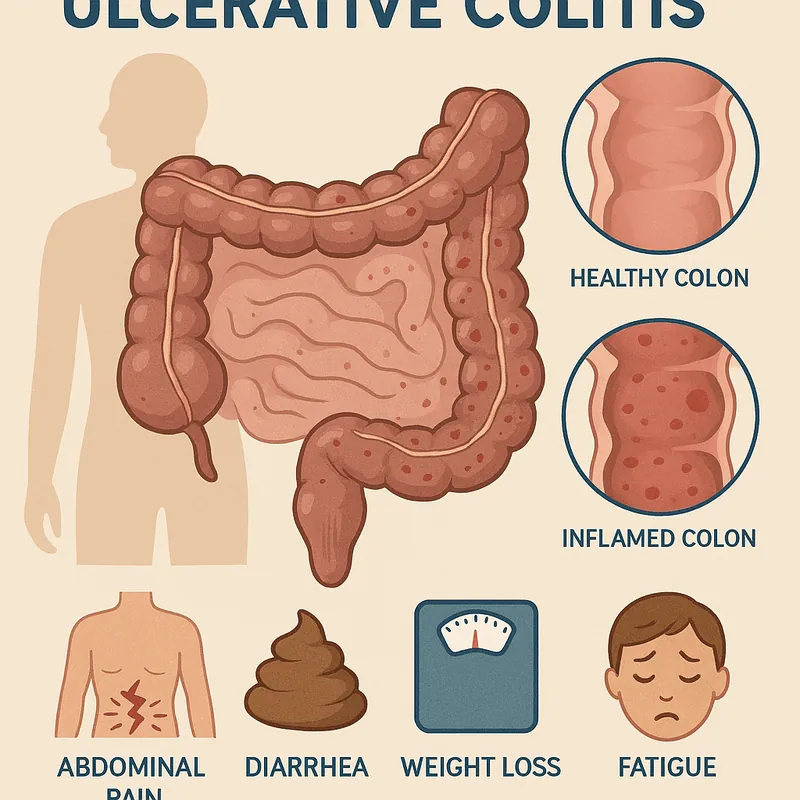
Ulcerative Colitis

Inflammatory bowel disease affecting the colon and rectum continuously. Driven by gut dysbiosis, leaky gut, and dysregulated immune response. Anti-inflammatory diet (specific carbohydrate diet, IBD-AID), curcumin, omega-3, and Saccharomyces boulardii support remission.

Gut & Digestive Evidence-Based Root-Cause Focus

Last updated:

What Is Ulcerative Colitis?

Ulcerative Colitis (UC) is a chronic inflammatory bowel disease that causes continuous inflammation and ulcers in the innermost lining (mucosa) of the colon and rectum. Unlike Crohn's disease, UC affects ONLY the colon, never skipping segments, never extending beyond the mucosa, and inflammation always starts at the rectum and extends proximally without interruption.

UC is driven by a complex interplay: genetic susceptibility (over 200 genes identified), gut microbiome dysbiosis, intestinal barrier dysfunction (leaky gut), and dysregulated immune response. The bacterial-immune dialogue at the colonic mucosa goes awry, the immune system attacks the colon as if it were a foreign invader, while the gut microbiome composition shifts toward inflammatory species.

UC typically follows a relapsing-remitting course: periods of active inflammation (flares) alternate with remission. Nutrition, stress, sleep, and microbiome health profoundly influence both flare frequency and severity. While there's no "cure" short of colectomy, sustained deep remission is achievable with combined medical + lifestyle/nutritional approach.

โš ๏ธ Long-standing UC (8+ years), especially with extensive colon involvement, increases colorectal cancer risk significantly. Annual surveillance colonoscopy with biopsies starting 8 years after diagnosis is standard. Inflammation control reduces cancer risk.
Ulcerative Colitis illustration

UC Classified by Extent

๐ŸŒฑ Proctitis / Proctosigmoiditis

Inflammation limited to rectum (proctitis) or rectum + sigmoid (proctosigmoiditis). Most common at diagnosis. Often responsive to topical (rectal) therapies. Lower colon cancer risk than extensive disease.

๐ŸŒ— Left-Sided Colitis

Inflammation extends from rectum to the splenic flexure (descending colon). Symptoms more pronounced. Requires combination of topical and systemic therapy.

๐ŸŒ‘ Pancolitis (Extensive Colitis)

Inflammation extends past splenic flexure, often affecting entire colon. Higher risk of complications (toxic megacolon, perforation, dysplasia, colorectal cancer). More aggressive therapy required.

~1M
US adults with UC
15-30
Peak age of diagnosis (and 50-70 second peak)
~30%
Require eventual colectomy
2-3x
Increased colorectal cancer risk in long-standing pancolitis

Symptoms of Ulcerative Colitis

Symptoms vary by severity (mild, moderate, severe, fulminant) and extent. Bloody diarrhea is the hallmark. Extra-intestinal manifestations also occur in ~30% of patients.

๐ŸŒฟ Intestinal Symptoms

๐Ÿฉธ

Bloody Diarrhea (Hallmark)

Frequent loose stools with visible blood and/or mucus. Number of bowel movements correlates with severity, <4/day mild; 4-6 moderate; >6 with systemic symptoms severe. Often nocturnal stools wake patient.

๐Ÿ˜ฐ

Urgency & Tenesmus

Tenesmus = painful, ineffective urge to defecate. Sudden, urgent need to use bathroom (sometimes can't make it). Profoundly impacts quality of life; common to confine activities near bathroom access.

๐Ÿ’ข

Abdominal Cramping

Especially in left lower quadrant (sigmoid colon). Cramps often precede or accompany bowel movements. Relieved (transiently) by defecation.

๐Ÿ˜ฃ

Weight Loss & Reduced Appetite

From malabsorption, inflammation, and reduced intake during flares. Significant weight loss indicates active disease or severe flare.

๐ŸŒ Extra-Intestinal Manifestations

๐Ÿฆด

Arthritis & Joint Pain

Peripheral arthritis (large joints, parallels disease activity) OR axial spondyloarthritis (spine, independent of disease activity). Affects ~20% of UC patients.

๐Ÿ‘๏ธ

Eye Inflammation (Uveitis, Episcleritis)

Painful red eye, vision changes, light sensitivity. Requires urgent ophthalmology evaluation, uveitis can damage vision permanently.

๐ŸŒน

Skin Lesions

Erythema nodosum (painful red shins) and pyoderma gangrenosum (ulcerating skin lesions), both reflect systemic inflammation tied to UC activity.

๐Ÿ’›

Primary Sclerosing Cholangitis (PSC)

Liver/bile duct inflammation, occurs in ~5% of UC patients. Causes elevated alkaline phosphatase, fatigue, pruritus. Increases cancer risk significantly.

How to Diagnose & Monitor UC

๐Ÿฉบ Diagnosis

๐Ÿ”ฌ Colonoscopy with Biopsy (Gold Standard)

Direct visualization of continuous mucosal inflammation starting at the rectum. Biopsies show characteristic chronic inflammation, crypt abscesses, distorted crypt architecture. Distinguishes UC from Crohn's and other colitis types.

๐Ÿงฌ Fecal Calprotectin

Non-invasive marker of gut inflammation. Helps distinguish IBD from IBS; monitors flare vs remission. <50 ยตg/g normal; >250 suggests active inflammation.

๐Ÿฉธ CBC, CRP, ESR, Iron Studies

Anemia (chronic blood loss), elevated CRP/ESR (systemic inflammation), low albumin (severe disease). Help assess severity and chronicity.

๐Ÿ“Š Monitoring & Cancer Surveillance

๐Ÿ“… Routine Disease Activity Monitoring

Quarterly to annual fecal calprotectin during active disease/medication changes. CRP and CBC. Clinical assessment via Mayo or Truelove-Witts scoring systems.

๐ŸŽฏ Surveillance Colonoscopy

Starting 8 years after diagnosis (or earlier if PSC), every 1-3 years depending on risk factors. Multiple random biopsies to detect dysplasia. Cancer prevention is critical.

๐Ÿงช Stool Studies for Infection

During flares, rule out C. difficile (common in IBD), CMV, parasites. Infection mimics flares and changes treatment significantly.

๐Ÿ”ฌ Nutritional & Liver Workup

Vitamin D, B12, iron, folate, zinc, magnesium often deficient. Liver enzymes annually to screen for PSC. DEXA scan if on chronic steroids.

Holistic vs. Conventional Treatment for UC

๐ŸŒฟ HOLISTIC
๐Ÿ’Š CONVENTIONAL
๐ŸŒฟ

Holistic / Functional Approach

Anti-inflammatory diet (SCD, IBD-AID, Mediterranean) + microbiome restoration + curcumin + omega-3 + stress management

Specific Carbohydrate Diet
SCD shows ~80% clinical response in pediatric UC; growing adult evidence
Curcumin
~50% reduction in relapse rates as add-on to mesalamine maintenance (Holt & Ravindra studies)
Timeline
Symptom improvement 4-8 weeks; deep remission 3-6 months when combined with conventional
Advantage
Reduces flares, allows lower medication doses, addresses upstream gut dysbiosis
Full Holistic Protocol Includes
  • Specific Carbohydrate Diet (SCD) or IBD-AID, eliminate complex carbs, refined sugars, processed foods that feed dysbiotic bacteria. Strong pediatric and emerging adult evidence.
  • Mediterranean diet for maintenance, anti-inflammatory polyphenols, omega-3, fiber from tolerated sources
  • Curcumin (turmeric extract) 1-3g/day bioavailable form, landmark trial showed 50% relapse reduction
  • Omega-3 EPA/DHA 2-4g/day, anti-inflammatory, modest evidence for maintenance
  • Vitamin D3 4,000-10,000 IU/day, deficiency strongly associated with UC severity; repletion improves outcomes
  • Saccharomyces boulardii + targeted probiotics, VSL#3/Visbiome has strongest UC evidence; useful for maintaining remission
  • Boswellia serrata 350mg 3x/day, anti-inflammatory comparable to mesalamine in some trials
  • L-Glutamine + butyrate, fuel for colonocytes; butyrate enemas have specific UC evidence
  • Address food triggers, common triggers: dairy, gluten, alcohol, carbonated drinks, raw cruciferous vegetables during flares
  • Stress management, chronic stress is documented trigger; mindfulness-based interventions reduce flare frequency
โœ… Critical: Holistic approaches work BEST alongside (not instead of) conventional therapy for moderate-severe UC. Discuss any supplement changes with your gastroenterologist, some interact with immunosuppressants.

Diet for Managing Ulcerative Colitis

The "right" UC diet varies by individual and disease phase. During flares: gentle, easy to digest. During remission: focus on anti-inflammatory, microbiome-supportive foods.

โœ… Generally Beneficial:

๐ŸŸ Omega-3-Rich Fish

Salmon, sardines, mackerel. EPA/DHA reduce inflammation. 3x/week minimum during stable phases.

๐Ÿฅ— Cooked Vegetables (Well-Tolerated Phase)

Steamed or roasted carrots, zucchini, squash. During flares: cooked, peeled, low-fiber. During remission: gradually expand variety.

๐Ÿต Bone Broth, Green Tea, Turmeric

Anti-inflammatory liquids and herbs. Bone broth supports mucosal healing. Green tea (decaf during flares) is anti-inflammatory.

๐Ÿฅ‘ Healthy Fats & Quality Proteins

Olive oil, avocado, eggs, fish, well-cooked chicken. Maintain nutrition during flares with easy-to-digest options.

โŒ Common Triggers:

๐Ÿž Refined Carbs, Sugars, Processed Foods

Feed dysbiotic bacteria, promote inflammation. Carrageenan, emulsifiers, artificial sweeteners disrupt gut barrier.

๐Ÿฅ› Dairy (Especially During Flares)

~70% of IBD patients have lactose intolerance during flares. Casein may also trigger inflammation. Test elimination.

๐ŸŒถ๏ธ Spicy, Fried, Alcohol, Caffeine

All can trigger flares or worsen symptoms during flares. Alcohol particularly worsens prognosis long-term.

๐ŸŒฝ Raw Cruciferous & High-Insoluble Fiber During Flares

Raw cabbage, broccoli, kale, popcorn, seeds, nuts can mechanically irritate inflamed mucosa during flares. Reintroduce gradually in remission.

Evidence-Based Supplements for UC

These supplements have RCT-level evidence in UC. Use as adjuncts to medical therapy, with gastroenterologist awareness.

SupplementMechanism & EvidenceSuggested DoseTimingNotes
Curcumin (Turmeric Extract)NF-ฮบB inhibition, broad anti-inflammatory. Holt & Ravindra studies: 50% reduction in UC relapse as add-on to mesalamine maintenance.1-3g/day bioavailable formWith meals, dividedMeriva, Theracurmin, BCM-95 forms best absorbed. Avoid with anticoagulants.
Boswellia SerrataInhibits 5-lipoxygenase, reducing leukotriene-mediated inflammation. Some trials show efficacy comparable to mesalamine in mild-moderate UC.350mg 3x/dayWith mealsStandardized to โ‰ฅ65% boswellic acids. AKBA-enriched products may be more potent.
Omega-3 EPA/DHAAnti-inflammatory eicosanoid production. Mixed clinical evidence; modest benefit in maintenance. Best results with high doses.2-4g combined EPA+DHA/dayWith fat mealIFOS-certified triglyceride form best absorbed.
Vitamin D3Strong inverse association between vitamin D and UC severity. Repletion reduces relapse rates. Target 50-70 ng/mL.4,000-10,000 IU/day to reach targetWith fat mealTest 25(OH)D every 3-6 months. Always pair with K2.
VSL#3 / Visbiome (High-Strength Probiotic)Strongest probiotic evidence in UC. Multiple RCTs support efficacy in inducing and maintaining remission, especially in pouchitis.900 billion CFU/day during active disease; 450 billion maintenanceWith mealsRefrigerated formulations preferred for viability.
S. boulardiiSpecifically helpful during antibiotic courses and to prevent/treat C. diff (common complication in IBD).500mg 2x/dayWith mealsSafe with immunosuppression but discuss with gastroenterologist.
Iron (IV preferred in active UC)Oral iron worsens UC inflammation in many patients. IV iron (iron sucrose, ferric carboxymaltose) repletes deficiency without GI side effects.Per gastroenterologistโ€”IV iron 1-3 doses typically repletes deficit. Avoid oral iron during flares.
L-Glutamine + ButyratePrimary fuel for colonocytes (especially butyrate). Butyrate enemas have specific UC evidence for distal disease.Glutamine 5-10g/day oral; butyrate 4g/enemaBetween meals; enemas at bedtimeButyrate enemas require compounding pharmacy. Distinct from oral butyrate supplements.

Deep, Sustained Remission Is Achievable

UC is a lifelong condition, but the combination of medical therapy + targeted nutrition + microbiome support + lifestyle can achieve and maintain deep remission for many patients. The earlier and more comprehensive the approach, the better the long-term outcomes.