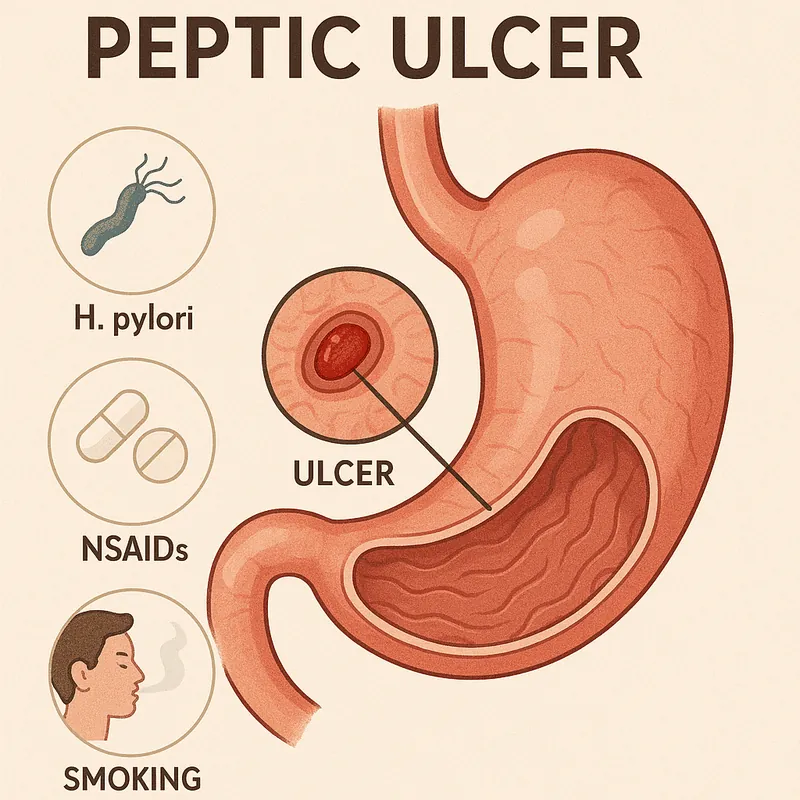
Erosions in the stomach or duodenal lining penetrating the muscularis mucosa. ~90% caused by H. pylori or NSAIDs. Mastic gum, zinc-carnosine, DGL, and cabbage juice support healing alongside conventional H. pylori eradication.
Last updated:
Peptic Ulcer Disease (PUD) is the formation of open sores (ulcers) in the lining of the stomach (gastric ulcer) or the first part of the small intestine (duodenal ulcer). Unlike gastritis (surface inflammation), ulcers penetrate THROUGH the mucosa into the muscle layer below, making them deeper, more painful, and more dangerous.
~90% of peptic ulcers are caused by either H. pylori infection or NSAIDs. Less common causes: Zollinger-Ellison syndrome (gastrin-secreting tumor), severe physiological stress (ICU patients), Crohn's disease, certain cancers. Lifestyle factors (smoking, alcohol, chronic stress) impair healing but rarely cause ulcers alone.
Untreated ulcers can bleed (sometimes massively), perforate the stomach/duodenum (medical emergency), or obstruct the gastric outlet. Modern medicine has made PUD highly curable, yet H. pylori-positive ulcers recur in 60-80% of patients within a year if H. pylori isn't eradicated.
Most common type (~80% of PUD). Located in the first part of the small intestine. Classic pain: 2-3 hours after meals, often relieved by eating. Strongly associated with H. pylori (~95%). Very rarely cancerous.
Severe stress ulcers in ICU patients (mechanical ventilation, burns, head injury). Or chronic refractory ulcers that don't heal, investigate for Zollinger-Ellison, malignancy, hidden NSAID use, or H. pylori resistance.
Classic textbook symptoms vary by ulcer location. ~30% of ulcers (especially NSAID-induced) are silent until complications arise. Vague upper abdominal pain in NSAID users always warrants evaluation.
Classic ulcer pain: gnawing, burning, or aching in the upper central abdomen. Duodenal ulcer pain typically wakes patients at 1-3 AM (acid peak). Gastric ulcer pain often worsens with food.
Duodenal ulcer pain occurs 2-3 hours AFTER meals (when food has left the stomach) and is RELIEVED by eating. Patients often wake at night with hunger-like pain. Antacids transiently help.
Gastric ulcer pain WORSENS shortly after eating. Leads to weight loss because patients avoid food. Distinguishes from duodenal ulcers, which are relieved by food.
Particularly when ulcers are near the pyloric channel (causing functional obstruction). Vomiting that relieves pain is characteristic.
Bright red OR "coffee ground" emesis. Indicates active bleeding ulcer. MEDICAL EMERGENCY. Call 911 or go to ER immediately.
Digested blood from upper GI source. Sticky, foul-smelling, jet-black. EMERGENCY. Distinguish from iron supplements (which darken stool but aren't tarry/foul-smelling).
Sudden, severe, "knife-like" pain with rigid abdomen = perforation. Surgical emergency. Mortality rises dramatically with delay. Call 911.
Especially with gastric ulcer pain. Patients avoid eating because of pain. Significant weight loss demands endoscopy to rule out malignancy.
Gold standard. Directly visualizes ulcer location, size, presence of bleeding. Biopsies confirm H. pylori, rule out cancer (especially gastric ulcers), check for premalignant changes. Allows therapeutic intervention if bleeding.
X-ray after drinking barium contrast. Less accurate than endoscopy; misses 20% of ulcers. Used when endoscopy unavailable or contraindicated. No biopsy capability, endoscopy still required for confirmation.
Mastic gum, zinc-carnosine, DGL, cabbage juice, glutamine, mucosal healing nutrients
Despite old "bland diet" advice, the diet for ulcer healing emphasizes anti-inflammatory, anti-microbial foods. The goal: support mucosal healing while not irritating the ulcer.
Stanford studies showed cabbage juice (1 quart/day) heals peptic ulcers dramatically. Contains glutamine and S-methylmethionine. Drink fresh, divided 4x daily.
Sulforaphane inhibits H. pylori and protects gastric mucosa. ยฝ cup of fresh sprouts daily provides significant sulforaphane.
Methylglyoxal directly inhibits H. pylori. 1 tsp 2-3x/day soothes and heals. Standard honey doesn't have the same effect.
Glutamine, glycine, and collagen support mucosal repair. Easy to digest during acute phase. Add ginger and turmeric for anti-inflammatory benefit.
Ibuprofen, aspirin, naproxen are direct ulcerogens. Switch to acetaminophen or address inflammation through curcumin, omega-3, and dietary anti-inflammatories.
Doubles ulcer risk; quadruples bleeding/perforation risk; halves healing rate. Single most important modifiable risk factor in PUD patients.
Direct mucosal irritant. Impairs ulcer healing and increases bleeding risk. Complete avoidance during healing phase; minimal/none long-term.
Stimulate acid secretion and directly irritate. Avoid during acute phase; gradually reintroduce as ulcer heals. Decaf still problematic, both forms stimulate acid.
These supplements support ulcer healing, target H. pylori, and address downstream complications of long-term PPI use.
| Supplement | Mechanism & Evidence | Suggested Dose | Timing | Notes |
|---|---|---|---|---|
| Mastic Gum | Inhibits H. pylori in vitro and in vivo; promotes gastric mucosal healing. Doesn't develop resistance. Greek RCT evidence. | 500-1,000mg 2x/day | Empty stomach | 4-8 week courses; can repeat. |
| Zinc-Carnosine | Approved ulcer drug in Japan. Coats ulcer crater, promotes healing, H. pylori inhibition. | 75mg 2x/day | Empty stomach | Take separately from antibiotics & iron. |
| DGL Licorice | Stimulates mucus secretion and prostaglandin synthesis. Soothes inflammation. No BP effect (vs regular licorice). | 380-760mg chewable, 2-3x/day | 20 min before meals | MUST be chewable for action in stomach. |
| L-Glutamine | Primary fuel for GI cells. Accelerates mucosal regeneration. Especially helpful with leaky gut secondary to PUD. | 5g 2x/day | Between meals, in water | Tasteless. Avoid if cancer, severe liver disease. |
| S. boulardii + L. reuteri | Probiotics improve H. pylori eradication and reduce antibiotic GI side effects. | 250-500mg S. boulardii + L. reuteri per label | Throughout abx course + 2 weeks after | S. boulardii is safe with antibiotics (yeast, not bacteria). |
| Vitamin C | Concentrates in gastric mucosa; supports healing and inhibits H. pylori. Low gastric vitamin C is associated with H. pylori and gastric cancer. | 500-1,000mg/day | With meals (less acidic forms like Ester-C if sensitive) | Don't take large doses on empty stomach during active ulcer. |
| Vitamin E + Selenium | Antioxidant duo concentrates in gastric tissue. May reduce H. pylori-induced damage and accelerate healing. | 200-400 IU E + 100-200mcg selenium daily | With fat meal | Selenium dose should not exceed 200mcg/day chronically. |
| Vitamin B12 (post-PPI/eradication) | PPIs & H. pylori both impair B12 absorption. Test serum B12, methylmalonic acid; supplement if deficient. | 1,000mcg/day sublingual | Any time | Sublingual bypasses gastric absorption issue. |
Modern medicine has made peptic ulcers highly treatable. Combine root-cause treatment (H. pylori, NSAID elimination) with mucosal-healing nutrition for best outcomes and prevention of recurrence.