Insomnia, Chronic Sleep Disturbance + Circadian Dysregulation

The most common sleep disorder worldwide, affecting 30 percent of US adults short-term and 10 percent chronically, yet rarely investigated past a sleeping-pill prescription. Reversible at the circadian and nervous-system root for most people.

4 Subtypes 30% Short-Term 10% Chronic Reversible at the Root

Last updated:

What Is Insomnia?

Insomnia is the persistent difficulty initiating or maintaining sleep, or waking earlier than intended, despite adequate opportunity, resulting in daytime impairment. It is not "being a light sleeper", it is a clinical, treatable disorder.

Clinically, insomnia is defined by the DSM-5 and ICSD-3 criteria as a sleep disturbance occurring at least three nights per week for at least three months, accompanied by daytime consequences such as fatigue, mood disturbance, cognitive impairment, or functional decline. Roughly 30 percent of US adults report short-term insomnia symptoms in any given year, and approximately 10 percent meet criteria for chronic insomnia disorder. The condition is more common in women, in shift workers, in people over 60, and in anyone with chronic pain, anxiety, depression, or trauma history.

There are four distinct clinical subtypes based on which part of the night is disrupted. Each subtype points to different underlying drivers and benefits from a tailored treatment focus (see below):

Insomnia, circadian dysregulation and the cortisol-melatonin axis

"Cognitive Behavioral Therapy for Insomnia (CBT-I) is recommended as the first-line treatment for chronic insomnia in adults, ahead of any pharmacotherapy, by every major sleep medicine society."

โ€” American College of Physicians Clinical Practice Guideline, 2016

๐Ÿ…ฐ๏ธ Sleep-Onset Insomnia (most common)

Difficulty falling asleep, defined as taking more than 30 minutes to initiate sleep on at least three nights per week. Usually driven by elevated evening cortisol, a delayed circadian phase ("night-owl drift"), or anxiety. Responds best to circadian-resetting strategies and nervous-system downregulation.

  • โ†’Hallmarks: Lying awake racing thoughts, mind "switches on" at lights-out, often tired by day but wired by night
  • โ†’Primary lever: Phase-advance the circadian clock, morning sunlight, evening light reduction, consistent wake time
  • โ†’Labs: Salivary cortisol slope, evening DLMO (dim-light melatonin onset), HRV trends
  • โ†’Key supports: Magnesium glycinate, L-theanine, low-dose melatonin (0.3 mg), glycine, breathwork

๐Ÿ…ฑ๏ธ Sleep-Maintenance Insomnia

Frequent or prolonged awakenings during the night, often between 1 and 4 AM, with difficulty returning to sleep. Strongly tied to nocturnal hypoglycemia, cortisol surges, alcohol metabolism, perimenopause, and sleep-disordered breathing. The most common pattern in midlife women.

  • โ†’Hallmarks: Falls asleep easily, wakes at 2 to 4 AM, lies awake 30+ minutes, often anxious or hot
  • โ†’Watch-out: Screen for sleep apnea, perimenopause, and blood-sugar dips before adding sleep aids
  • โ†’Labs: Fasting insulin, A1c, sex hormones, TSH, ferritin, CGM trends overnight
  • โ†’Key supports: Protein-fat bedtime snack, magnesium, glycine, ashwagandha, progesterone if indicated

๐Ÿ…ฒ Early-Morning Awakening

Waking 1 to 3 hours earlier than intended and unable to fall back asleep, despite adequate prior sleep duration. Strongly associated with depression, advanced sleep-phase tendency (older adults), and elevated CRH/cortisol rhythm in trauma or anxiety disorders.

  • โ†’Hallmarks: 3 to 5 AM wakeups, rumination, often co-occurs with low mood
  • โ†’Primary lever: Screen and treat underlying depression, balance cortisol rhythm, evening light therapy
  • โ†’Labs: Morning + evening cortisol, ferritin, vitamin D, thyroid panel, depression screen
  • โ†’Key supports: Omega-3, vitamin D, adaptogens (rhodiola, ashwagandha), CBT-I, evening bright light

๐Ÿ…ณ Mixed / Nonrestorative Insomnia

A combination pattern, or a sleep duration that looks adequate on paper but does not feel restorative on waking. Often involves fragmented architecture, suppressed deep sleep, or undiagnosed sleep apnea or restless legs syndrome. The pattern most often missed in primary care.

  • โ†’Hallmarks: "Slept 8 hours, feel like 4", morning grogginess, daytime fatigue despite full nights
  • โ†’Primary lever: Rule out OSA, RLS, periodic limb movement; investigate sleep architecture (Oura, sleep study)
  • โ†’Labs: Ferritin (less than 75 ng/mL drives RLS), B12, magnesium RBC, home sleep test (WatchPAT/STOP-BANG)
  • โ†’Key supports: Iron if deficient, magnesium, glycine, address breathing (myofunctional, nasal strips, CPAP if OSA)

Insomnia Statistics & Research

30%
of US adults report short-term insomnia symptoms annually (CDC, 2023)
10%
meet diagnostic criteria for chronic insomnia disorder
1.5โ€“2ร—
higher rate of insomnia in women than in men across the lifespan
2โ€“3ร—
higher risk of depression, anxiety, and dementia in chronic insomnia
45%
higher cardiovascular event risk in adults sleeping less than 6 hours
70โ€“80%
remission rates with CBT-I, comparable to or exceeding sleeping pills

How Insomnia Presents

Insomnia is rarely a single complaint. The classic pattern combines nighttime disturbance (delayed onset, awakenings, or early waking), daytime impairment (fatigue, fog, mood), and physiological dysregulation (cortisol, blood sugar, breathing). It is a full-system disorder, not just a "sleeping" problem.

๐ŸŒ™ Nighttime Sleep Symptoms

โฑ๏ธ

Prolonged Sleep Latency (Difficulty Falling Asleep)

Taking more than 30 minutes to fall asleep on at least three nights per week. Often described as "my body is tired but my mind is racing." Driven by elevated evening cortisol, delayed melatonin onset, screen exposure, and sympathetic over-activation.

๐Ÿ”

Frequent Nighttime Awakenings

Waking three or more times per night, often unable to identify a cause. Each awakening tied to spikes in cortisol, drops in blood sugar, alcohol metabolism, hormonal shifts (perimenopause), or breathing interruptions (sleep apnea). Sleep architecture fragments and deep sleep collapses.

๐ŸŒ…

Early-Morning Waking (3 to 5 AM)

Waking 1 to 3 hours before the desired wake time, with full alertness and inability to return to sleep. Strongly associated with depression, cortisol-rhythm disruption, and the advanced sleep-phase tendency that emerges with age. Often accompanied by rumination and anxiety.

๐Ÿฅต

Night Sweats & Hot Flashes

Sudden waking drenched in sweat, often around 2 to 4 AM. Common in perimenopause, low progesterone, hyperthyroidism, blood-sugar crashes, and alcohol use. The thermoregulatory disturbance itself disrupts deep sleep, even when not fully awakening.

๐Ÿ˜ฎโ€๐Ÿ’จ

Loud Snoring, Gasping, or Choking

Witnessed apneas, loud or choking snoring, dry mouth on waking, and morning headaches are red flags for obstructive sleep apnea, present in roughly 25 percent of "insomnia" cases. Frequently missed because women present atypically with insomnia rather than daytime sleepiness.

๐Ÿฆต

Restless Legs & Periodic Limb Movements

An uncomfortable urge to move the legs that emerges at rest in the evening, relieved temporarily by movement. Drives sleep-onset and maintenance insomnia. Strongly tied to ferritin under 75 ng/mL, magnesium deficiency, and certain medications (SSRIs, antihistamines).

๐ŸŒž Daytime & Systemic Symptoms

๐Ÿ˜ฉ

Chronic Daytime Fatigue & Brain Fog

Persistent tiredness despite time in bed, with reduced word recall, mental speed, and short-term memory. Driven by suppressed deep and REM sleep, glymphatic-clearance impairment, and elevated daytime adenosine. Often misattributed to "just being busy."

๐Ÿ˜Ÿ

Anxiety, Irritability & Mood Lability

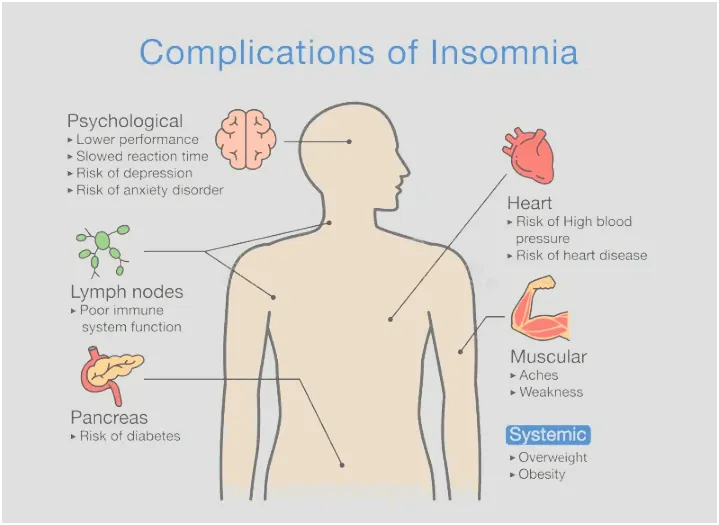
Insomnia and anxiety form a bidirectional loop. One sleepless night raises next-day amygdala reactivity by 60 percent. Chronic insomnia is associated with a 2 to 3 fold increase in lifetime risk of generalized anxiety, depression, and PTSD.

๐Ÿฉ

Increased Cravings & Weight Gain

Sleep loss raises ghrelin and lowers leptin, driving hunger, especially for refined carbs and fats. One week of 5-hour nights raises insulin resistance to pre-diabetic levels in healthy adults. Cravings, weight gain, and metabolic dysregulation follow.

๐Ÿค•

Morning Headaches & Jaw Tension

Tension headaches on waking and jaw soreness suggest nighttime bruxism, often a sign of disordered breathing or fragmented sleep. Should prompt a screen for OSA before being treated as a separate "headache" issue.

โค๏ธ

Palpitations & Resting Heart Rate Elevation

Sympathetic over-activation raises resting heart rate, lowers HRV, and triggers nighttime palpitations. Wearables (Oura, Whoop, Apple Watch) typically show resting HR creeping 5 to 10 bpm above personal baseline and HRV trending downward.

๐Ÿค’

Reduced Immunity & Frequent Illness

Sleep restriction to under 6 hours per night cuts natural killer cell activity by approximately 70 percent and triples the risk of catching a common cold after exposure. Chronic insomnia is associated with poorer vaccine response and slower recovery from infection.

โš ๏ธ Pattern to watch for: Difficulty initiating or maintaining sleep + daytime fatigue or cognitive impairment + 3+ nights per week for 3+ months is the diagnostic threshold for chronic insomnia disorder. Loud snoring, witnessed apneas, restless legs, or 2 to 4 AM wakeups are mandatory rule-outs before pursuing any pharmacological "sleep aid."

How to Test for Insomnia

Insomnia is a clinical diagnosis supported by tracking and targeted labs. The goal is not just to confirm the disorder but to identify the underlying drivers, sleep apnea, restless legs, perimenopause, blood sugar, cortisol, ferritin, that determine the treatment plan.

๐Ÿ  At-Home Screening

These are not diagnostic on their own, but strong patterns can guide your next steps before investing in formal testing:

๐Ÿ““ Sleep Diary (2 weeks minimum)

Track bedtime, lights-out time, estimated sleep latency, number of awakenings, wake time, total sleep time, and daytime function each day for 14 days. This is the single most useful data point any sleep specialist will ask for. Free templates from the American Academy of Sleep Medicine work well.

โŒš Wearable Tracking (Oura, Whoop, Apple Watch)

Wearables are imperfect for absolute sleep-stage data but excellent for trend tracking, resting heart rate, HRV, breathing rate, and skin temperature shifts. A rising resting HR, falling HRV, and elevated nighttime breathing rate strongly suggest sympathetic over-activation or sleep-disordered breathing.

๐Ÿ“‹ STOP-BANG & Insomnia Severity Index (ISI)

The STOP-BANG questionnaire screens for OSA risk (snoring, tired, observed apnea, BP, BMI, age, neck, sex), a score of 3 or more warrants a sleep study. The Insomnia Severity Index (7 items) scores severity, 15+ indicates moderate to severe insomnia and supports a formal CBT-I referral. Both are free online.

๐Ÿ”ฌ Lab & Clinical Tests

๐ŸŒก๏ธ Cortisol Rhythm (4-Point Salivary)

Salivary cortisol measured at waking, +30 min, midday, and bedtime. A flattened or inverted curve, especially elevated evening cortisol, is the single most informative test for sleep-onset insomnia. Conventional single-blood-draw morning cortisol misses this entirely. DUTCH testing offers a more detailed metabolite picture.

๐Ÿฆ‹ Thyroid Panel

TSH, free T4, free T3, reverse T3, and TPO antibodies. Hyperthyroidism classically presents with insomnia, palpitations, and night sweats. Subclinical hypothyroidism and Hashimoto's also disrupt sleep via fatigue-arousal patterns. TSH alone is insufficient.

๐Ÿฉธ Iron, Ferritin & CBC

Ferritin under 75 ng/mL is the leading driver of restless legs syndrome and a major contributor to fragmented sleep, even when hemoglobin is normal. Always pair with full iron studies (serum iron, TIBC, transferrin saturation) and B12 to catch deficiencies that perpetuate insomnia.

๐Ÿž Metabolic / Blood Sugar Panel

Fasting glucose, fasting insulin, HOMA-IR, HbA1c, and where available a 7 to 14 day continuous glucose monitor. Nocturnal hypoglycemia, especially after high-glycemic dinners or alcohol, is a major hidden driver of 2 to 4 AM awakenings. CGMs catch what fasting labs miss.

โšง๏ธ Sex Hormone & Reproductive Panel (women)

Day 21 progesterone, estradiol, FSH, LH, DHEA-S. Low progesterone in luteal phase and through perimenopause is a defining cause of mid-life sleep-maintenance insomnia. DUTCH testing also captures cortisol metabolites and sex-hormone metabolites in a single sample.

๐Ÿ˜ด Home Sleep Apnea Test (HSAT) or Polysomnography

A home sleep test (WatchPAT, ApneaLink) is the right first step for STOP-BANG-positive patients. An in-lab polysomnography is the gold standard for complex cases, periodic limb movement disorder, REM behavior disorder, or atypical presentations. Up to 25 percent of "insomnia" patients have undiagnosed OSA.

Holistic vs. Conventional Treatment for Insomnia

Toggle between the two approaches to compare treatments, outcomes, and what each looks like in practice.

๐ŸŒฟ HOLISTIC
๐Ÿ’Š CONVENTIONAL
๐ŸŒฟ

Holistic / Functional Approach

Reset the circadian clock, downregulate the nervous system, and address the metabolic and hormonal drivers underneath

Primary Treatment
CBT-I + circadian-anchoring routine (morning light, fixed wake time) + targeted nutrition + magnesium/glycine/L-theanine
Duration
2 to 6 weeks for noticeable improvement; 8 to 12 weeks for durable resolution
Effect on Underlying Disorder
Treats the root, long-term remission possible without ongoing medication
Daytime Outcome
Stable energy, sharper cognition, restored HRV, normalized cravings
Protocol Includes
  • CBT-I (Cognitive Behavioral Therapy for Insomnia), the first-line treatment per every major sleep society, 5 to 8 sessions, 70 to 80 percent remission rates
  • Fixed wake time 7 days a week, even on weekends, anchors the circadian phase faster than any supplement
  • 10 to 20 minutes of outdoor light within 30 minutes of waking, the single most powerful circadian zeitgeber
  • Evening light hygiene, dim lights after sunset, no screens or blue-light glasses 90 minutes before bed
  • Cool, dark, quiet bedroom (65 to 68ยฐF / 18 to 20ยฐC), bed used only for sleep and intimacy
  • Protein-anchored dinner finished 3 hours before bed, avoid alcohol within 4 hours of bed
  • Targeted supplements, magnesium glycinate, L-theanine, glycine, low-dose melatonin (0.3 mg), ashwagandha
  • Address underlying drivers, OSA (CPAP if positive), ferritin/RLS, perimenopausal progesterone, depression
โœ… Side effects: First 1 to 2 weeks of CBT-I include intentional mild sleep restriction that can transiently increase daytime tiredness, by week 3 sleep efficiency improves dramatically. No tolerance, dependence, or rebound on discontinuation. Mild loose stools possible with magnesium citrate (use glycinate instead).

Root Causes of Insomnia

Insomnia is rarely caused by a single thing. It is a stack of circadian, nervous-system, metabolic, hormonal, and environmental drivers, and the relative contribution differs by subtype and life stage.

Root Cause How It Contributes to Insomnia Holistic Solution
Circadian MisalignmentInconsistent wake times, late-night screen exposure, and limited morning daylight delay the circadian phase. Melatonin onset shifts later, cortisol stays elevated at bedtime, and sleep onset slides past midnight.Fixed wake time 7 days a week, 10 to 20 minutes of outdoor light within 30 minutes of waking, dim lights and screen-off 90 minutes before bed
Chronic Stress / HPA-Axis DysregulationSustained sympathetic activation keeps evening cortisol elevated, blocks melatonin release, and shrinks the window of opportunity for deep sleep. Anxiety and trauma history compound this directly.Breathwork (4-7-8, box-breathing), vagal-tone work, daylight exposure, journaling, magnesium, ashwagandha, somatic therapy, CBT-I
Nocturnal HypoglycemiaSharp drops in blood sugar 3 to 4 hours after a carb-heavy dinner trigger a counter-regulatory cortisol-and-adrenaline surge that wakes the brain. The classic 2 to 4 AM "wired awake" pattern.Protein-anchored dinners with healthy fat and complex carbs, optional bedtime snack (e.g., almond butter on apple), CGM if available, low-glycemic eating
Obstructive Sleep Apnea (OSA)Repeated airway collapse triggers micro-arousals, sympathetic surges, and fragmented sleep. In women OSA frequently presents as insomnia rather than daytime sleepiness, so it is often missed.Home sleep apnea test if STOP-BANG positive, CPAP or oral appliance, myofunctional therapy, nasal breathing work, weight optimization, lateral sleep position
Perimenopause & Low ProgesteroneProgesterone is naturally calming and pro-GABA. Declining luteal-phase progesterone in the 30s and 40s, and the steep drop in perimenopause, is a leading cause of new-onset sleep-maintenance insomnia in women.Cycle support (B6, magnesium, vitex), bioidentical progesterone if clinically indicated, stable blood sugar, cooler sleep environment
Iron / Ferritin Deficiency (RLS)Ferritin under 75 ng/mL impairs dopamine production in the basal ganglia, triggering restless legs syndrome and periodic limb movements that fragment sleep architecture, even when overt awakenings are not perceived.Iron bisglycinate or heme iron with vitamin C, address the cause (heavy menses, low stomach acid, gut bleeding), retest ferritin every 3 months until consistently above 75 ng/mL
Alcohol & Late CaffeineAlcohol shortens sleep latency but blocks REM, raises cortisol, drops glucose, and causes rebound awakening 3 to 4 hours later. Caffeine has a 6 to 9 hour half-life; afternoon coffee blocks adenosine signaling at bedtime.Cut caffeine after noon, limit alcohol to occasional with food and stop at least 4 hours before bed, swap evening alcohol for herbal tea (chamomile, passionflower)
Magnesium & Glycine DeficiencyMagnesium is required for GABA receptor function, NMDA modulation, and parasympathetic tone. Glycine is a calming neurotransmitter that lowers core body temperature, the gateway to deep sleep.Magnesium glycinate 300 to 400 mg in the evening, glycine 3 g before bed, magnesium-rich foods (pumpkin seeds, dark leafy greens, almonds, dark chocolate)
Bedroom EnvironmentA bedroom too warm, too bright, too noisy, or used for work and screens conditions the brain against sleep. Core body temperature must drop ~1ยฐF for deep sleep to occur, room temperature directly affects this.Bedroom 65 to 68ยฐF (18 to 20ยฐC), blackout curtains or sleep mask, white-noise or earplugs as needed, bed used only for sleep and intimacy, no screens in the bedroom
Anxiety, Depression & RuminationInsomnia is bidirectionally linked with mood disorders. Untreated anxiety drives sleep-onset insomnia, untreated depression drives early-morning waking. Each worsens the other if not addressed.CBT-I (also effective for anxiety), screen and treat underlying mood disorder, journaling, EMDR or trauma-focused therapy if indicated, omega-3, vitamin D, exercise

Insomnia Diet Guide

Food does not directly induce sleep, but it powerfully shapes the conditions for sleep, stable blood sugar overnight, neurotransmitter precursors, and the absence of stimulants and disruptors.

๐ŸŒ™

What Is the Circadian-First Eating Pattern?

Most "sleep diet" advice focuses on cutting caffeine. That is the floor, not the ceiling. The actual goal is circadian and metabolic stability overnight, no glucose crashes, no cortisol surges, no late-night fuel that the body has to digest instead of repair.

The framework is simple, anchor every meal with protein and healthy fat, finish dinner 3 hours before bed, get most calories earlier in the day, and use evening foods that supply tryptophan, magnesium, and glycine, the nutrient precursors of serotonin, melatonin, and GABA.

The 4 Anchors of Every Day:

  • 1Protein 25 to 40 g at each meal, stabilizes blood sugar and supplies tryptophan
  • 2Half the plate non-starchy vegetables, fiber and magnesium
  • 3Healthy fat at each meal, olive oil, avocado, nuts, wild fish, slows the glucose curve
  • 4Slow carbs from whole foods, sweet potato, oats, lentils, kept smaller at dinner

Timing & Meal Pattern:

  • โฑEat within an 10 to 12 hour window, finish all eating at least 3 hours before bed
  • ๐ŸŒ…Largest meal at lunch or early dinner, insulin sensitivity is highest in the day
  • ๐ŸŒ™Optional small bedtime snack only if waking hungry, almond butter + apple, or kiwi + walnuts
  • ๐Ÿšถ10 to 15 minute walk after dinner, blunts the post-meal glucose curve before sleep
๐Ÿ’ก Cut caffeine after noon (half-life is 6 to 9 hours). Cut alcohol within 4 hours of bed. These two changes resolve a significant percentage of "insomnia" cases on their own.
โš ๏ธ These foods spike cortisol, crash blood sugar overnight, or directly disrupt neurotransmitter balance. The first three rows below are non-negotiable.
  • โœ—Caffeine after noon: Coffee, black tea, green tea, energy drinks, dark chocolate. The 6 to 9 hour half-life means a 2 PM coffee is still active at bedtime.
  • โœ—Alcohol within 4 hours of bed: Shortens sleep latency but blocks REM, raises cortisol, drops blood sugar, and causes rebound awakening 3 to 4 hours later.
  • โœ—Refined sugar and refined flour: Soda, candy, pastries, white bread, white pasta. Drive the post-dinner glucose-cortisol roller coaster that wakes you at 3 AM.
  • โœ—Large late dinners: Eating within 2 to 3 hours of bed raises core temperature, diverts blood flow to digestion, and delays melatonin release.
  • โœ—Spicy, acidic, or fried foods at dinner: Trigger reflux and core-temperature rise that disrupt sleep onset.
  • โœ—High-tyramine foods at night: Aged cheese, cured meats, soy sauce, fermented soy. Stimulate norepinephrine in sensitive individuals.
  • โœ—Excess fluids after 7 PM: Drives nocturia (waking to urinate), fragmenting sleep architecture even when the awakening feels brief.
  • โœ—Industrial seed oils: Soybean, canola, corn, cottonseed, sunflower, safflower. Drive systemic inflammation that worsens sleep quality.
  • โœ—Energy drinks and "pre-workout" formulas: Often contain 200 to 400 mg caffeine plus stimulants. Single biggest underestimated insomnia driver in adolescents and young adults.
๐Ÿ’ก Foods that supply sleep-supporting nutrients, tryptophan, magnesium, glycine, melatonin precursors, and stabilize overnight blood sugar.
  • โœ“Tryptophan-rich proteins: Turkey, chicken, salmon, sardines, pastured eggs, pumpkin seeds, plain Greek yogurt. Precursors to serotonin and melatonin.
  • โœ“Magnesium-rich foods: Pumpkin seeds, dark chocolate (85%+), spinach, Swiss chard, almonds, black beans, avocado. Required for GABA and parasympathetic tone.
  • โœ“Glycine sources: Bone broth, slow-cooked meats, gelatin, collagen peptides. Glycine lowers core temperature and supports deep sleep onset.
  • โœ“Tart cherries / cherry juice: Naturally rich in melatonin and anthocyanins. 1 cup in the evening modestly improves sleep duration and quality in RCTs.
  • โœ“Kiwifruit: 2 kiwis an hour before bed improved sleep onset and total sleep time by 15 to 30 percent in a Taipei Medical University trial.
  • โœ“Slow carbs at dinner (small portion): Sweet potato, quinoa, lentils, steel-cut oats. Help tryptophan cross the blood-brain barrier when paired with protein.
  • โœ“Calming herbal teas: Chamomile, passionflower, lemon balm, valerian. Pair with a bedtime ritual to cue parasympathetic dominance.
  • โœ“Anti-inflammatory fats: Extra-virgin olive oil, avocado, wild salmon, sardines, walnuts, flax. Lower systemic inflammation that disturbs sleep.
  • โœ“Bedtime snack (if waking hungry): Almond butter on apple, kiwi with a handful of walnuts, Greek yogurt with cinnamon. Combination of protein and slow carb prevents nocturnal hypoglycemia.

Key Supplements for Insomnia Recovery

Supplements are accelerators, not replacements for circadian work and CBT-I. The list below combines the most evidence-backed sleep interventions with foundational nutrients commonly depleted in chronic insomnia.

Supplement Role in Insomnia Recovery Suggested Dose Timing Notes
Magnesium GlycinateRequired for GABA receptor function, NMDA modulation, parasympathetic tone, and progesterone synthesis. Magnesium deficiency is one of the most common drivers of insomnia, anxiety, and restless legs.300 to 400 mg elemental magnesium per dayEvening, 30 to 60 min before bedGlycinate is the most absorbable and calming form. Citrate causes loose stools; oxide is poorly absorbed.
GlycineCalming amino acid that lowers core body temperature, the physiological gateway to deep sleep. RCTs show improved sleep quality, faster onset, and reduced daytime fatigue.3 g per day30 to 60 min before bedSlightly sweet powder, mixes in water. Very safe even at higher doses.
L-TheanineAmino acid from green tea that raises alpha brainwave activity and modulates GABA, glutamate, and dopamine. Calms without sedation, especially helpful for "tired but wired" sleep-onset insomnia.200 to 400 mg per dayEvening or 30 min before bedNon-sedating and can be used during the day for anxiety. No tolerance or dependence.
Melatonin (low-dose)The body's natural circadian signal. Low doses act as a chronobiotic that shifts the circadian phase; high doses over-suppress endogenous production and lose effect over time.0.3 to 0.5 mg per day30 to 60 min before bed (sleep-onset) or 5 to 7 hours before bed (phase advance)Most OTC products are 3 to 10 mg, far too high. Lower doses outperform higher doses for chronic insomnia.
Ashwagandha (KSM-66)Adaptogen that lowers cortisol, supports thyroid balance, and improves sleep quality. RCTs in chronic insomnia show 30 to 70 percent improvements in sleep onset and total sleep time.300 to 600 mg per dayWith dinner or before bedAvoid in hyperthyroidism. Do not combine with thyroid medication without supervision. 8 to 12 weeks for full effect.
Apigenin (from Chamomile)Flavonoid that binds GABA-A receptors. Calming, mildly sedating, helpful for sleep onset and reducing nighttime anxiety.50 mg per day, or 2 to 3 cups of chamomile teaEvening, 30 to 60 min before bedAvoid if allergic to ragweed/daisy family. Pairs well with magnesium and glycine.
PhosphatidylserinePhospholipid that blunts the evening cortisol surge, particularly useful for sleep-onset insomnia and chronically stressed "wired-but-tired" patterns.100 to 300 mg per dayLate afternoon or eveningBest in chronically elevated evening cortisol. Sourced from sunflower lecithin (avoid soy-derived if sensitive).
5-HTP (5-hydroxytryptophan)Direct serotonin precursor that converts to melatonin overnight. Supports both mood and sleep continuity.50 to 200 mg per dayEvening, 30 to 60 min before bedDo not combine with SSRIs, SNRIs, or MAOIs (serotonin syndrome risk). Start low.
GABAThe primary inhibitory neurotransmitter. Some controversy about blood-brain barrier crossing but PharmaGABA (fermented form) shows EEG and subjective benefit.100 to 200 mg per day30 min before bedPharmaGABA preferred over synthetic. Avoid combining with prescription sedatives.
Iron Bisglycinate (if ferritin under 75)Restoring ferritin above 75 ng/mL resolves restless legs syndrome in most cases and improves sleep architecture. Often the single most overlooked driver of fragmented sleep in women.25 to 50 mg elemental iron per dayEmpty stomach, with vitamin C; every other day improves absorptionTest ferritin first, retest every 3 months. Stop when ferritin is consistently above 75 ng/mL.
Vitamin D3 (with K2)Vitamin D receptors are present throughout sleep-regulating brain regions. Low vitamin D is associated with poorer sleep quality, longer onset, and reduced sleep efficiency.2000 to 5000 IU D3 + 100 to 200 mcg MK-7 K2 per dayWith a fat-containing meal, morning preferredTest 25-OH-D first; retest after 3 months. Target 50 to 80 ng/mL.
Omega-3 EPA/DHAReduces systemic inflammation, supports mood and HRV, and modulates the autonomic balance that allows sleep onset. EPA is especially helpful for the depression-insomnia overlap.2 g combined EPA+DHA per dayWith mealsChoose IFOS-certified for purity. Avoid evening dose if it causes reflux.
Tart Cherry ExtractNatural source of melatonin and anthocyanins. Modest but real RCT-validated improvements in sleep duration and quality.500 mg standardized extract, or 8 to 12 oz tart cherry juiceEvening, 1 to 2 hours before bedJuice contains natural sugars, choose unsweetened or use the extract.
Valerian RootTraditional sedative herb that modulates GABA. Less consistent in trials than magnesium or glycine but helpful for some, especially short-term.300 to 600 mg standardized extract per day30 to 60 min before bedSmells unpleasant. Effect builds over 2 to 4 weeks. Some people experience paradoxical stimulation.
PassionflowerAnxiolytic herb with mild sedative effect. RCT data shows comparable benefit to oxazepam for generalized anxiety, useful when insomnia is anxiety-driven.500 to 800 mg dried herb or equivalent extract30 to 60 min before bedOften combined with valerian and lemon balm in commercial sleep formulas.
Methylated B-ComplexSupports neurotransmitter synthesis (serotonin, GABA, melatonin) and methylation. B6 specifically supports progesterone production, helpful in cyclical or perimenopausal insomnia.1 capsule per day per product labelMorning with foodAvoid evening dosing, can be activating in some. Look for methylated B12 and L-methylfolate.
Lemon BalmMild GABA-ergic herb that reduces nighttime anxiety and improves sleep quality, especially in stress-driven insomnia and perimenopause.300 to 600 mg standardized extract or teaEvening, 30 to 60 min before bedGentle and well tolerated. Pairs well with magnesium, chamomile, and passionflower.
InositolSupports anxiety, panic, and insomnia tied to perimenopause, PCOS, and OCD-spectrum rumination. Helpful for racing-thought sleep-onset insomnia.2 to 4 g myo-inositol per dayEvening or split AM/PMPowder form mixes in water. Safe in pregnancy and lactation per current evidence.

Healing Timeline: Conventional vs. Holistic

Understanding what to expect from each approach helps set realistic expectations and make informed choices.

๐ŸŒฟ Holistic Protocol
Week 1โ€“2

Caffeine, alcohol, and screen changes show immediate effect. Begin foundational supplements (magnesium, glycine, low-dose melatonin). Initiate fixed wake time and morning daylight.

Week 3โ€“6

CBT-I sleep restriction phase consolidates sleep. Sleep latency drops, awakenings reduce. Daytime energy steadier. Anxiety and rumination ease.

Month 2โ€“3

Sleep efficiency rises above 85 percent. HRV improves. Mood, cravings, and cognitive performance recover. CBT-I gains become durable.

Month 3โ€“6

Underlying drivers addressed, ferritin restored, OSA treated, perimenopause supported, depression managed. Sleep architecture normalizes on objective testing.

Long-Term Outlook

Sustainable remission, no tolerance or dependence; resilience to future stress-driven sleep disruption

๐Ÿ’Š Conventional Treatment
Night 1โ€“14

Pill shortens sleep latency and lengthens time in bed. Morning grogginess, memory gaps, and "hangover" effects common. Daytime fatigue often unchanged or worse.

Week 2โ€“8

Tolerance develops in many. Same dose less effective. Underlying circadian, hormonal, and metabolic drivers unaddressed.

Month 3โ€“12

Dependence emerges. Symptoms return as dose wears off. Memory consolidation impaired. Falls and accidents more frequent.

On Discontinuation

Rebound insomnia often worse than baseline. Withdrawal symptoms with benzodiazepines (anxiety, tremor, seizure risk). May require weeks to months to taper.

Long-Term Outlook

Increased risk of dementia, falls, and motor-vehicle accidents; underlying insomnia disorder unchanged

"Sleep is not a passive state. It is the most powerful active intervention we have for brain health, metabolic repair, and emotional regulation, and it cannot be replaced by a pill."

Ready to Address Your Insomnia at the Root?

Explore related conditions below or revisit the Symptom Checker to map your full symptom picture across the library.