Hepatocellular carcinoma develops most often on a background of cirrhosis, hepatitis B/C, or NAFLD. Prevention focuses on addressing the underlying liver disease through nutrition, alcohol cessation, and viral suppression.
Last updated:
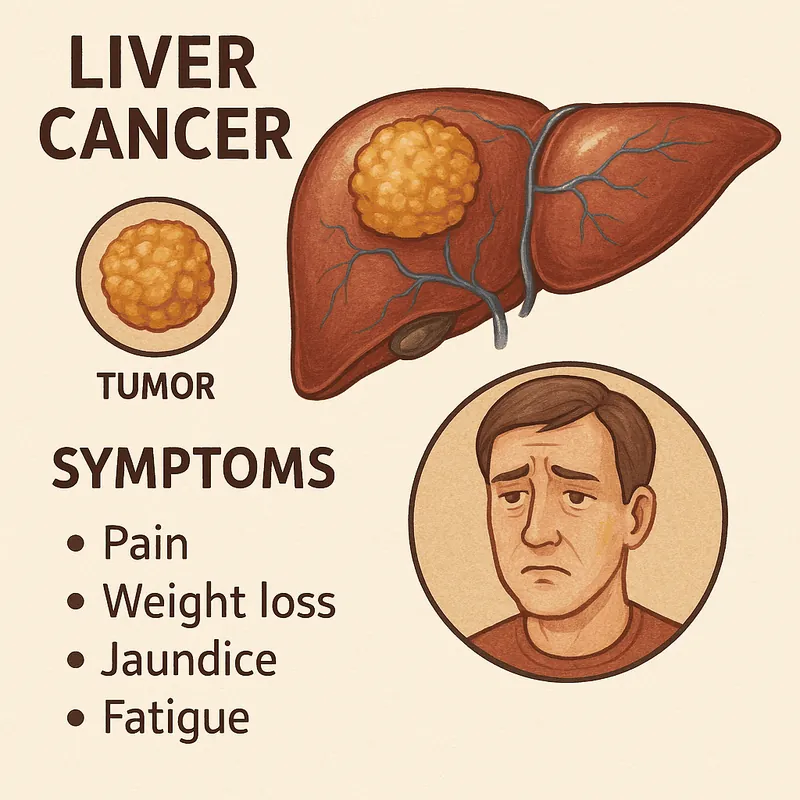
Primary liver cancer arises from cells within the liver. The dominant form (~80-90%) is hepatocellular carcinoma (HCC), arising from hepatocytes. Cholangiocarcinoma (~10-15%) arises from bile duct cells. The liver is also a common site for METASTATIC cancers from colon, breast, lung, and pancreas, these are not "liver cancer" but metastatic disease.
HCC almost always develops on a background of chronic liver disease, cirrhosis (any cause), chronic hepatitis B or C, NAFLD/NASH, hemochromatosis, or aflatoxin exposure. The risk in cirrhotic patients is ~2-5% per year. This is why HCC surveillance every 6 months in cirrhotics is non-negotiable, early detection is the only path to cure.
Globally, HCC is the 6th most common cancer and 3rd leading cause of cancer death. Geographic distribution reflects hepatitis B prevalence (high in Asia, Africa) and emerging NAFLD-related cases in Western countries. Universal HBV vaccination is the most powerful primary prevention.
Single tumor <2cm, OR up to 3 tumors <3cm. Preserved liver function (Child-Pugh A). Curative options: surgical resection, ablation, transplant. 5-year survival 50-70%.
Vascular invasion, metastases, or severe symptoms. Systemic therapy (atezolizumab + bevacizumab; lenvatinib; sorafenib). Terminal stage: best supportive care.
Early HCC is usually asymptomatic, found only by surveillance imaging in cirrhotics. Once symptoms develop, disease is typically advanced.
Dull aching in right upper quadrant. May radiate to right shoulder. Caused by liver capsule stretching as tumor grows. Sometimes sudden severe pain if tumor ruptures.
Yellow eyes/skin, dark urine, pale stools. May indicate biliary obstruction by tumor, or progression of underlying cirrhosis.
Rapid increase in abdominal fluid in previously stable cirrhotic patient. May indicate HCC growth, portal vein thrombosis from tumor.
Palpable liver mass on examination. Sometimes patient feels a "knot" in upper right abdomen. May be the first physical finding.
Significant unintentional weight loss. Muscle wasting (sarcopenia). Loss of appetite. Often advanced disease.
Disproportionate to activity. May be the dominant symptom. Combined with weight loss, suggests advanced disease.
Recurrent low-grade fevers without infection. Tumor cytokines. Sometimes the presenting feature.
Tumors may secrete insulin-like factors (hypoglycemia) or erythropoietin (high red cell count). Paraneoplastic syndromes diagnostic clue.
Every 6 months in cirrhotics or chronic HBV. AFP >20 ng/mL warrants further workup. Early detection is the only path to cure.
Liver-specific protocols with arterial, portal, delayed phases. Classic HCC: arterial hyperenhancement + washout. LI-RADS scoring system.
Hepatocyte-specific contrast, highest sensitivity for small HCCs. Used when CT findings unclear.
In cirrhotic patients, imaging features often diagnose without biopsy. Biopsy reserved for atypical features, non-cirrhotic livers, or to guide systemic therapy.
PREVENTION (treat underlying liver disease) + SUPPORTIVE during conventional treatment
Mediterranean diet + coffee + adequate protein + ZERO alcohol. Same principles as cirrhosis/NAFLD/viral hepatitis with added cancer-specific considerations.
Reduces HCC risk by ~40% in cirrhotic patients. Most evidence-based dietary intervention for liver cancer prevention. Both regular and decaf.
Sarcopenia is the strongest modifiable predictor of mortality in liver disease. Eggs, fish, poultry, legumes, dairy.
Broccoli, cauliflower, kale, garlic, onions. Support liver detoxification. May reduce HCC risk.
Wild salmon, sardines. Omega-3 reduces hepatic inflammation, supports muscle preservation.
Cirrhotic patients: bedtime carb+protein snack prevents overnight muscle catabolism. Yogurt with berries, cottage cheese.
Even small amounts accelerate cirrhosis and HCC risk. Complete abstinence required. No safe amount in liver disease.
Properly store grains, nuts, corn. Discard moldy peanuts/corn. Aflatoxin B1 is potent liver carcinogen, especially synergistic with HBV.
Vibrio vulnificus infection (from raw oysters) potentially fatal in cirrhotic patients. AVOID absolutely.
Drives hepatic steatosis. Worsens NAFLD-related HCC risk. Eliminate sodas, sweets, HFCS.
High-dose green tea extract, kava, comfrey, chaparral, germander, pennyroyal, and many "liver cleanses." Show every supplement to your hepatologist.
CAUTION: Liver cancer + cirrhosis = highest-risk patient for hepatotoxic supplements. Discuss every supplement with hepatologist. Below: relatively safer options with evidence.
| Supplement | Mechanism & Evidence | Suggested Dose | Timing | Notes |
|---|---|---|---|---|
| Vitamin D3 | Deficiency near-universal in cirrhosis; associated with worse HCC outcomes. | 2,000-5,000 IU/day (titrate to 50-80 ng/mL) | With fat meal | Test baseline. Pair with K2 200mcg. |
| Omega-3 (EPA/DHA) | Anti-inflammatory; reduces hepatic inflammation. May slow HCC progression in lab studies. | 2,000-3,000mg EPA+DHA/day | With fat meal | CAUTION with bleeding risk or before procedures. |
| BCAAs (Branched-Chain Amino Acids) | Best-studied supplement in cirrhosis. Supports muscle. May reduce HCC recurrence after curative treatment. | 12-15g/day divided | Between meals + bedtime | Particularly helpful for sarcopenia. Evidence specifically in HCC survivors. |
| Milk Thistle (Silymarin) | Hepatoprotective in lab studies. Modest evidence in cirrhosis. Generally safe. | 600-900mg/day standardized | Divided with meals | Choose phosphatidylcholine-bound forms. |
| Curcumin (Bioavailable) | Anti-inflammatory, anti-cancer effects in lab studies. Generally safe in cirrhotic patients. | 500-1,500mg/day (Meriva or liposomal) | With fat meal | Discuss timing around systemic therapy. |
| Selenium | Antioxidant cofactor; deficient in cirrhosis. Modestly may reduce HCC risk. | 100-200mcg/day | With food | Don't exceed 400mcg long-term. |
| Coffee (Food, Not Supplement) | 2-3+ cups/day reduces HCC by ~40%. Mechanisms: anti-inflammatory, reduces hepatic stellate cell activation. | 2-3+ cups/day | Throughout day | Most evidence-based dietary intervention. |
| Vitamin K | Reduced synthesis in liver disease. May have direct anti-tumor effect in HCC (lab evidence). | 1-10mg/day (K2 MK-7 form) | With fat meal | Adjust dose with anticoagulants under physician supervision. |
Liver cancer is largely preventable through HBV vaccination, HCV cure, alcohol abstinence, and NAFLD reversal. For cirrhotic patients, ultrasound + AFP every 6 months is non-negotiable, early HCC is curable; late HCC mostly is not. Coffee is the most evidence-based dietary intervention.