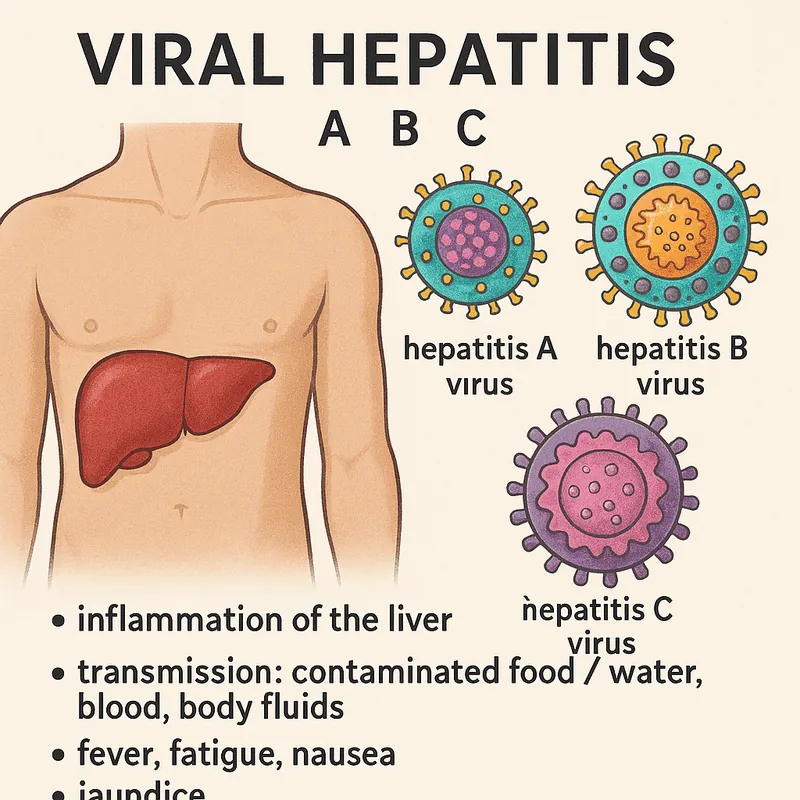
Viral Hepatitis (A, B, C)

Liver inflammation from hepatitis A (acute, food-borne), B (often chronic), or C (often chronic, now curable with antivirals). Nutrition supports liver regeneration: milk thistle, NAC, alpha-lipoic acid, and adequate protein.

Liver Evidence-Based Root-Cause Focus

Last updated:

What Is Viral Hepatitis?

Viral hepatitis is liver inflammation caused by one of five distinct hepatitis viruses (A, B, C, D, E). The three most important globally are hepatitis A (acute, foodborne, self-limiting), hepatitis B (can cause acute and chronic infection, vaccine preventable), and hepatitis C (often chronic, but now curable with direct-acting antivirals).

Acute viral hepatitis presents with jaundice, fatigue, nausea, and elevated liver enzymes. Most cases of hepatitis A and many cases of hepatitis B resolve spontaneously. Hepatitis C is asymptomatic in ~80% during acute infection but progresses to chronic infection in ~70-85% of those infected.

Chronic hepatitis B and C are leading causes of cirrhosis and hepatocellular carcinoma globally, together accounting for ~70% of liver cancer cases. Modern antiviral therapy has dramatically changed prognosis: hepatitis C is now curable in >95% of patients with 8-12 weeks of oral DAAs; hepatitis B can be suppressed (though rarely cured) with long-term antivirals.

๐Ÿ’ก Key Insight: Hepatitis C is curable. If you have any risk factors (born 1945-1965, IV drug history, blood transfusion before 1992, tattoos in unregulated settings), get tested. A simple antibody test followed by RNA confirmation, then 8-12 weeks of DAAs (Mavyret, Epclusa, Harvoni) cures the infection.
Viral Hepatitis illustration

The Three Major Hepatitis Viruses

๐Ÿฝ๏ธ Hepatitis A (HAV)

Fecal-oral transmission (contaminated food/water, poor sanitation). Acute illness, no chronic form. Self-limiting in >99%. Vaccine preventable. Common in travelers to endemic areas. Lifelong immunity after infection.

๐Ÿ’‰ Hepatitis B (HBV)

Blood/sexual/perinatal transmission. ~5% of adults progress to chronic infection (much higher in children/infants). Chronic HBV increases cirrhosis and liver cancer risk. Vaccine preventable. Treatable with antivirals (tenofovir, entecavir).

๐Ÿฉธ Hepatitis C (HCV)

Bloodborne (mainly IV drug use, pre-1992 transfusions). ~70-85% become chronic. NO vaccine yet. CURABLE in >95% with 8-12 weeks of oral DAAs (Mavyret, Epclusa). Major cause of liver cancer historically.

~296M
Living with chronic Hep B globally
~58M
Living with chronic Hep C globally
>95%
Hep C cure rate with modern DAAs
~1.1M
Annual deaths from viral hepatitis worldwide

Symptoms of Viral Hepatitis

Acute hepatitis has characteristic prodrome followed by jaundice. Chronic infections are often asymptomatic until advanced liver disease develops.

๐Ÿ”ฅ Acute Hepatitis

๐Ÿ˜ด

Profound Fatigue

Often the earliest and most prominent symptom. Severe, disabling. Lasts weeks to months. May persist after biochemical recovery.

๐ŸŸก

Jaundice

Yellow eyes/skin (sclera first), dark cola-colored urine, pale clay-colored stools. Develops as bilirubin rises. May or may not appear in all cases.

๐Ÿคข

Anorexia, Nausea, Vomiting

Severe loss of appetite, particularly aversion to fatty foods and cigarettes (in smokers). Nausea and vomiting common. Weight loss.

๐Ÿ˜ฃ

Right Upper Quadrant Discomfort

Dull ache from inflamed liver stretching its capsule. Not the sharp pain of biliary disease. Hepatomegaly often palpable.

๐Ÿ•ฐ๏ธ Chronic Hepatitis B/C

๐Ÿ˜ถ

Often Asymptomatic for Decades

The dangerous reality of chronic HBV and HCV, many patients have NO symptoms until they develop cirrhosis or liver cancer 20-40 years after infection. This is why screening is critical.

๐Ÿ˜ด

Chronic Fatigue

The most common symptom when present. Disproportionate to liver enzyme levels. Significantly impacts quality of life.

๐Ÿฆด

Joint Pain (Arthralgia)

Common with chronic HCV. Polyarthralgia involving small joints. Sometimes precedes other symptoms. May be mistaken for early rheumatoid arthritis.

โš ๏ธ

Signs of Advanced Disease (Cirrhosis)

Late presentation: ascites, jaundice, varices, hepatic encephalopathy, palmar erythema, spider angiomas. Indicates progression to cirrhosis, emergent evaluation needed.

How to Diagnose Viral Hepatitis

๐Ÿงช Serologic Diagnosis

๐Ÿฉธ Hepatitis A

Anti-HAV IgM, positive in acute infection. Anti-HAV IgG, positive after recovery or vaccination (immunity). Total Anti-HAV, combination.

๐Ÿฉธ Hepatitis B Panel

HBsAg: active infection (acute or chronic). Anti-HBs: immunity (recovery or vaccine). Anti-HBc IgM: recent infection. Anti-HBc IgG: past or chronic. HBeAg + HBV DNA: viral replication/activity.

๐Ÿฉธ Hepatitis C

Anti-HCV antibody: screening test (positive = ever exposed). HCV RNA (PCR): confirms active infection (positive = currently infected). HCV genotype: guides treatment selection.

๐Ÿ“Š Disease Assessment

๐Ÿฉธ Liver Function Tests

AST, ALT (acute: often >1,000; chronic: mildly elevated or normal). Alkaline phosphatase, bilirubin, albumin, INR (synthetic function markers).

๐Ÿ“ก FibroScan (Transient Elastography)

Non-invasive measurement of liver stiffness, stages fibrosis. Replaces biopsy in most cases. Critical for chronic HBV/HCV staging.

๐Ÿงฎ FIB-4 & APRI Scores

Blood-based non-invasive fibrosis scores. Use AST, ALT, platelet count, age. Free, accessible, useful first-line.

๐Ÿ“ก Ultrasound + AFP (HCC Screening)

Every 6 months for cirrhotic patients or chronic HBV, surveillance for hepatocellular carcinoma. Alpha-fetoprotein blood test paired with imaging.

Holistic vs. Conventional Treatment

๐ŸŒฟ HOLISTIC
๐Ÿ’Š CONVENTIONAL
๐ŸŒฟ

Holistic / Functional Approach

SUPPORTIVE for acute hepatitis; COMPLEMENTARY for chronic. Hep C should be CURED with DAAs first.

Acute Hepatitis A/B
Supportive, rest, hydration, nutrition; most resolve spontaneously
Chronic Hepatitis B
Antiviral therapy + lifestyle to slow fibrosis. Holistic complements, doesn't replace.
Chronic Hepatitis C
GET CURED with DAAs first (8-12 weeks). Then liver-supportive nutrition for healing.
Liver Regeneration
Antioxidants, milk thistle, NAC support hepatocyte recovery
Liver-Supportive Strategy
  • Strict alcohol abstinence, non-negotiable. Even moderate drinking accelerates fibrosis dramatically.
  • Avoid hepatotoxic drugs, limit acetaminophen (<2g/day), avoid unnecessary medications, check drug interactions
  • Adequate protein, 1-1.5g/kg/day for hepatocyte regeneration (unless severe encephalopathy)
  • Mediterranean diet, anti-inflammatory, antioxidant-rich, supports liver health
  • Milk thistle (silymarin) 600-900mg/day, hepatoprotective antioxidant; modest evidence but well-tolerated
  • NAC 600-1,800mg/day, glutathione precursor; protects hepatocytes
  • Alpha-lipoic acid 300-600mg/day, universal antioxidant; regenerates other antioxidants
  • Vitamin D optimization, deficiency common; aim 50-80 ng/mL. Improves antiviral response.
  • Selenium 200mcg/day, antioxidant cofactor; deficient in liver disease
  • Coffee 2-3 cups/day, strongly associated with reduced fibrosis progression
  • Vaccinate against HAV + HBV if not already immune, prevents super-infection
  • HCC surveillance, every 6 months if cirrhotic or chronic HBV. Non-negotiable.
โœ… Important: If you have hepatitis C, the most "natural" thing you can do is GET CURED. Modern DAAs are 95%+ effective with minimal side effects. Don't pursue holistic-only approaches for chronic HCV when cure is available. After cure, use holistic strategies for liver healing.

Diet for Liver Healing

Anti-inflammatory, antioxidant-rich diet supports hepatocyte regeneration and slows fibrosis progression. Absolute alcohol abstinence is non-negotiable.

โœ… Prioritize:

๐Ÿฅฌ Cruciferous & Sulfur-Rich Vegetables

Broccoli, Brussels sprouts, kale, garlic, onions. Support liver Phase II detoxification (glutathione conjugation, sulfation).

โ˜• Coffee (2-3 cups/day)

Consistently shown to slow fibrosis progression in chronic hepatitis B and C. Reduces liver cancer risk. Black coffee preferred.

๐ŸŸ Fatty Fish (Wild Salmon, Sardines)

Omega-3 EPA/DHA reduce hepatic inflammation. 2-3 servings per week. Avoid farmed if possible.

๐Ÿซ Berries & Colorful Plants

Polyphenol and flavonoid-rich. Anti-inflammatory and antioxidant. Aim for diverse colors daily.

๐Ÿฅš Adequate Protein (1-1.5g/kg)

Eggs, fish, poultry, legumes. Liver regeneration requires amino acids. Don't restrict protein unless severe hepatic encephalopathy.

โŒ Strictly Avoid:

๐Ÿšซ Alcohol (ZERO tolerance)

Even small amounts accelerate fibrosis dramatically in viral hepatitis. Alcohol + virus = synergistic liver damage. Complete abstinence required.

๐Ÿฌ Refined Sugar & Fructose

Drive hepatic steatosis on top of viral hepatitis. Doubly hard on the liver. Eliminate sodas, juices, sweets, HFCS.

๐Ÿ” Industrial Seed Oils & Trans Fats

Pro-inflammatory. Worsen oxidative stress in liver. Eliminate canola, corn, soybean oils; replace with olive, avocado, coconut.

๐Ÿ’Š Acetaminophen (Caution)

Limit to <2g/day in chronic liver disease. Avoid combining with alcohol ever. Don't exceed labeled doses. Check OTC combination products.

๐Ÿฃ Raw Shellfish (in HAV areas)

Oysters and clams can transmit hepatitis A. Avoid raw shellfish from waters of unknown safety. Get vaccinated.

Evidence-Based Supplements

Liver-supportive supplements complement but don't replace antiviral therapy. For HCV, prioritize getting cured with DAAs.

SupplementMechanism & EvidenceSuggested DoseTimingNotes
Milk Thistle (Silymarin)Antioxidant, anti-fibrotic, hepatocyte membrane stabilizer. Modest but consistent evidence in chronic hepatitis.600-900mg/day (standardized to 80% silymarin)Divided doses with mealsBest-studied herb for liver. Choose phosphatidylcholine-bound forms for bioavailability.
N-Acetyl Cysteine (NAC)Glutathione precursor, replenishes liver's master antioxidant depleted in viral hepatitis.600-1,800mg/dayDivided dosesAlso protects against acetaminophen toxicity.
Alpha-Lipoic AcidUniversal antioxidant; regenerates other antioxidants (vitamin C, E, glutathione). Reduces oxidative liver damage.300-600mg/dayEmpty stomachR-form better absorbed. May lower blood sugar.
Vitamin D3Deficiency strongly correlates with chronic hepatitis severity. Improves antiviral response, reduces inflammation.2,000-5,000 IU/day (titrate to 50-80 ng/mL)With fat mealTest baseline level. Pair with K2 200mcg.
SeleniumCofactor for glutathione peroxidase. Deficient in chronic liver disease. May reduce HCC risk.200mcg/dayWith foodDon't exceed 400mcg/day long-term.
Vitamin E (Mixed Tocopherols)Antioxidant; some evidence for reducing fibrosis in chronic hepatitis (especially with steatosis).400-800 IU/dayWith fat mealUse mixed tocopherols, not alpha-tocopherol alone.
Glycyrrhizin (Licorice Root)Anti-inflammatory, antiviral effects. Used IV in Japan for chronic hepatitis. Reduces ALT levels.150-300mg/day (DGL preferred for safety)With mealsCaution: raises blood pressure, lowers potassium. DGL safer for long-term use.
Curcumin (Turmeric)Anti-inflammatory, antifibrotic, hepatoprotective. Reduces oxidative stress in liver.500-1,500mg/day (with piperine or liposomal)With fat mealStandard curcumin poorly absorbed, choose bioavailable forms.

Get Tested. Get Treated. Get Cured.

Hepatitis C is curable. Hepatitis B is treatable. Hepatitis A is preventable. Don't let chronic viral hepatitis silently destroy your liver, get screened, address risk factors, and access modern antiviral therapy. Holistic strategies complement, never replace, evidence-based antiviral treatment.