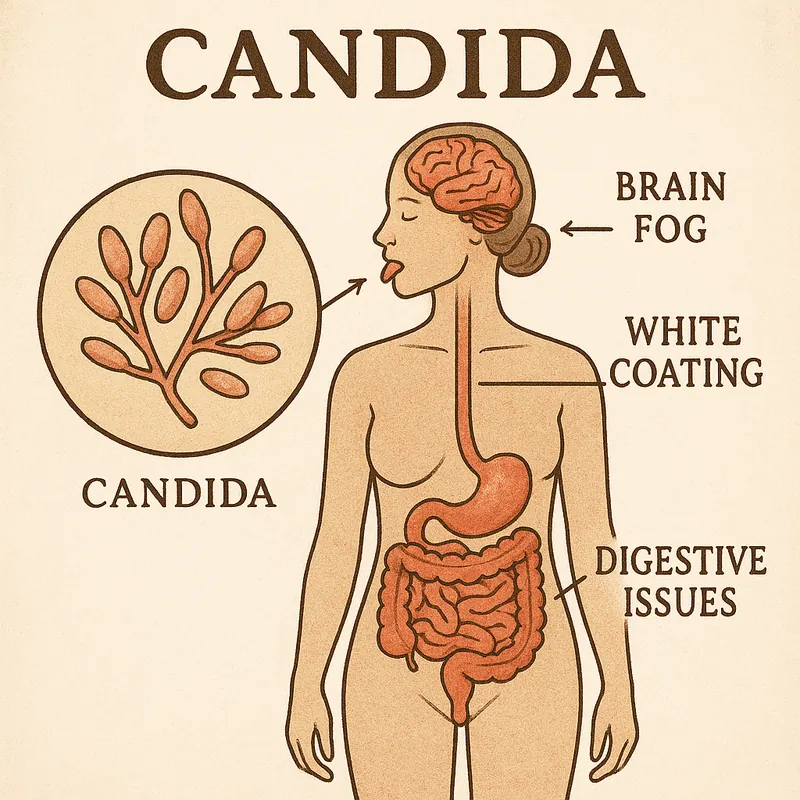
Candida albicans is a normal resident of your gut, until it's not.1 When it overgrows, it produces 79 known toxins, forms protective biofilms, and disrupts virtually every system in your body.
Last updated:
Candida albicans is a dimorphic fungus, it switches between a harmless yeast form and an aggressive, hyphal (root-like) form that invades tissue and evades the immune system.
In a healthy gut, Candida is kept in check by beneficial bacteria, stomach acid, and a competent immune system. When these defenses break down, through antibiotic overuse, high-sugar diets, chronic stress, or immune suppression, Candida shifts into its invasive form.
It can affect the gut, vaginal tract, oral cavity (thrush), skin, nails, sinuses, and in severe cases, the bloodstream (candidemia, the 4th most common hospital-acquired bloodstream infection).
An estimated 75% of women will have at least one episode of vulvovaginal candidiasis, and 40 to 45% will have two or more.
— on CDC. Sexually Transmitted Infections Treatment Guidelines, Vulvovaginal CandidiasisCandida develops resistance to azole antifungals rapidly. C. auris (emerging species) shows near-total resistance to all three antifungal classes.
In laboratory work, biofilm-embedded Candida withstands drug concentrations orders of magnitude above those that kill free-floating cells, commonly reported in the hundreds to over a thousand-fold, and beyond what is safely achievable in a person. This is measured in the lab, and it is the reason biofilm infections on catheters and implanted devices are so hard to clear.7
Prescribing antifungals without addressing diet, antibiotics history, immune suppression, or microbiome guarantees recurrence.
Candida produces 79 known toxins that affect every organ system. Symptoms are frequently dismissed or misattributed, making Candida one of the most underdiagnosed conditions in modern healthcare.
A white, creamy coating on the tongue, inner cheeks, or throat is one of the most visible signs of systemic Candida overgrowth. The coating may be thick, patchy, or cottage cheese-like. It can cause a burning sensation and altered taste. In severe cases it spreads to the esophagus causing pain when swallowing.
Candida organisms signal the brain to crave their primary fuel source, sugar. These cravings are biochemical, not willpower failures. Patients describe uncontrollable urges for sugar, bread, alcohol, or refined carbs. The cravings worsen if you don't eat frequently, as Candida essentially creates a state of hypoglycemic urgency.
Candida in the gut ferments sugars and carbohydrates, producing COโ and other gases that cause significant bloating, belching, and flatulence. Unlike SIBO, Candida bloating often appears more in the lower abdomen and may be accompanied by alternating constipation and diarrhea.
Thickened, yellowed, or brittle toenails and fingernails indicate systemic fungal overgrowth. Athlete's foot, jock itch, ringworm, and recurring skin rashes in warm, moist areas (under breasts, groin, armpits) are all common Candida manifestations. These external signs mirror internal gut overgrowth.
Candida toxins circulating in the bloodstream trigger immune reactions that manifest on the skin. Eczema patches, persistent acne (especially cystic or hormonal), psoriasis flares, and unexplained hives are common. The gut-skin axis means skin health almost always reflects gut health, clear the gut, clear the skin.
Frequent vaginal yeast infections (3+ per year), recurrent UTIs, repeated sinus infections, and chronic ear infections all suggest systemic immune suppression caused by Candida's gliotoxin, a mycotoxin that directly suppresses the immune system's ability to control pathogen growth.
Acetaldehyde, Candida's primary neurotoxic byproduct, crosses the blood-brain barrier and disrupts neurotransmitter production. Patients experience profound mental cloudiness, slow thinking, difficulty concentrating, poor memory, and a feeling of being "drunk" or disconnected. This is sometimes called "Candida brain" and is often misdiagnosed as depression, ADHD, or early dementia.
Candida hijacks the body's energy metabolism. It produces acetaldehyde and ethanol as fermentation byproducts, the same compounds found in alcohol. Fermentation products including acetaldehyde have been proposed as an explanation for fatigue, and auto-brewery syndrome, in which gut organisms produce enough alcohol to cause intoxication, is a documented but very rare condition described in individual case reports. There is no evidence that this mechanism explains fatigue in the general population, and no established link between Candida and fibromyalgia or chronic fatigue syndrome.5
Candida disrupts serotonin and dopamine production in the gut, directly affecting mood stability. The blood sugar swings caused by Candida's sugar-craving signals create an emotional rollercoaster, highs after sugar intake, crashes and irritability 1โ2 hours later. Many patients with treatment-resistant depression have undiagnosed Candida overgrowth.
Candida can deposit in joint tissue and produce inflammatory mycotoxins that cause arthritis-like pain, stiffness, and swelling. Often mistaken for fibromyalgia or rheumatoid arthritis. The pain typically migrates and doesn't follow a predictable anatomical pattern, which is a distinguishing feature.
Candida hyphae physically pierce the intestinal wall, creating leaky gut. This allows undigested food proteins to enter the bloodstream where the immune system mounts an attack, creating IgG-mediated food sensitivities to an ever-growing list of foods. The food sensitivities are a symptom of the Candida and leaky gut, not the root cause.
Candida produces a form of estrogen, contributing to estrogen dominance in women. Symptoms include worsening PMS, heavy periods, endometriosis, PCOS, low libido, and thyroid dysfunction. Candida also impairs liver detoxification of excess hormones, amplifying hormonal imbalance.
No single test is 100% definitive for gut Candida. A combination of symptoms, at-home screening, and lab testing builds the clearest picture.
THIS TEST DOES NOT WORK, AND HERE IS WHY. You may have seen it: spit into a glass of water on waking and watch for strings or cloudy specks. Watch for 15โ30 minutes. Signs of Candida: Strings or "legs" dropping down from the saliva, cloudy specks sinking to the bottom, or a cloudy layer forming. A healthy result is saliva that floats on the surface and disperses. Saliva does this in nearly everyone. It is ordinary mucin behaving normally in water, and what you see varies with hydration, time of day and how long you watch. It has never been validated against any laboratory measure of Candida, and a positive result tells you nothing. We describe it here only because it circulates so widely, and because starting a restrictive diet on the strength of it is a real cost for no information.4
Score 1 point for each present: white tongue, intense sugar cravings, recurring yeast infections, brain fog, unexplained fatigue, skin fungal infections (nails, athlete's foot), mood instability, multiple food sensitivities, worsening symptoms after eating sugar or refined carbs, prior antibiotic use (especially repeated courses). Score 5+ means these symptoms are worth investigating. It does not diagnose Candida overgrowth, and every symptom on this list has more common explanations, including diabetes, thyroid disease, iron deficiency, coeliac disease, sleep apnoea and depression. Use the score as a reason to get tested for those, not as a result.3
Eat a high-sugar or high-carbohydrate meal and note your symptoms 1โ3 hours later. Candida patients typically experience a brief energy spike followed by significant brain fog, mood crash, fatigue, or bloating as Candida rapidly ferments the sugar. If you notice dramatic symptom worsening after sweets, alcohol, or refined carbs specifically, Candida overgrowth is likely.
Antifungal botanicals, biofilm busters, diet elimination, microbiome restoration
Candida thrives on sugar. Eliminating its fuel source is the foundation of any successful protocol, without this, no antifungal (herbal or pharmaceutical) will produce lasting results.
Biofilms are why Candida is so hard to treat, and why most single-course treatments fail.
Biofilms are structured communities of Candida encased in a self-secreted polysaccharide matrix (extracellular polymeric substance). This "slime layer" physically blocks antifungal drugs from reaching the organisms inside, requiring, in laboratory testing, up to roughly 1,000 times the concentration needed for free-floating cells.7
Candida biofilms form on the intestinal mucosa, dental surfaces, medical devices (catheters, implants), and anywhere Candida has colonized. Once established, they're extremely difficult to eradicate without targeted biofilm-busting agents.
Take biofilm disruptors 30โ60 minutes BEFORE antifungal agents to maximize penetration:
As Candida dies, it releases up to 79 known toxins, including acetaldehyde, gliotoxin, and uric acid. This "die-off" can temporarily worsen symptoms.
Candida treatment requires a layered approach: break biofilms first, then apply antifungals, while addressing symptoms and gut lining repair simultaneously.
| Supplement | Role in Candida Recovery | Suggested Dose | Timing | Notes |
|---|---|---|---|---|
| NAC (N-Acetyl Cysteine) | Studied as a biofilm disruptor. Breaks down the polysaccharide matrix of Candida biofilms in laboratory work. Biofilm-grown Candida is far less susceptible to antifungals than free-floating cells, with resistance commonly reported up to around 1,000-fold, but no trial has shown that taking NAC by mouth makes antifungal treatment more effective in people, and no multiplier of that kind has been demonstrated.7 Also replenishes glutathione for liver and immune support. | 600โ1,200mg/day | 30โ60 min BEFORE antifungal dose on empty stomach | Take before Oregano, Caprylic acid, or Berberine, sequence matters |
| Oregano Oil | Carvacrol and thymol, the active compounds in oregano oil, disrupt Candida's cell membrane and inhibit the transition from yeast to invasive hyphal form. One of the most potent natural antifungals with broad-spectrum activity. | 100โ200mg/day (standardized to 70%+ carvacrol) | With meals; enteric-coated capsules | Enteric coating essential for delivery to the gut (not the stomach) |
| Allicin (Garlic Extract) | Allicin is directly antifungal, it disrupts Candida's cell wall synthesis and inhibits its morphological switch to the invasive hyphal form. Raw garlic contains allicin, but stabilized allicin extract provides therapeutic concentrations without the stomach upset. | 450โ900mg/day | With meals | Use stabilized allicin (Allimax/Allimed), regular garlic capsules are insufficient |
| Berberine | Inhibits Candida biofilm formation, disrupts cell wall integrity, and prevents Candida from switching to its virulent hyphal form. Also regulates blood sugar, reducing the fuel supply for Candida growth. Synergistic with Oregano Oil and Caprylic acid. | 500mg 2โ3x/day | With meals | Monitor blood sugar; can lower glucose levels.9 Berberine inhibits CYP3A4 and P-glycoprotein, so it can raise blood levels of many prescription medicines, and it lowers blood sugar on its own. Check with your prescriber before starting it, particularly alongside glucose-lowering medication, an anticoagulant, an immunosuppressant, or any drug with a narrow safe range. Not for use in pregnancy or breastfeeding. |
| Black Walnut Extract | Juglone targets Candida and fungal organisms alongside bacteria and parasites. Essential when Candida is accompanied by parasite co-infection (very common). Often combined with Clove. | 500โ1,000mg/day | With meals | Use alongside Clove for broader antifungal coverage |
| Clove Extract | Eugenol disrupts Candida cell membranes and inhibits biofilm formation. Particularly active against Candida spores and eggs. Often paired with Black Walnut. | 500mg/day | With meals | Can be combined in one formula with Black Walnut |
| Ceylon Cinnamon | Cinnamaldehyde inhibits Candida growth and biofilm formation. Also regulates blood sugar, a key Candida driver. Ceylon cinnamon contains compounds that interfere with Candida's ergosterol synthesis (the same target as pharmaceutical antifungals). | 1โ2g/day | With meals or in morning drink | Must be Ceylon cinnamon ONLY, Cassia contains high coumarin (liver toxic at these doses) |
| Saccharomyces Boulardii | A beneficial probiotic yeast that directly competes with Candida for intestinal receptor sites, reduces Candida virulence factors, and produces caprylic acid as a metabolite. Unlike bacterial probiotics, S. boulardii is not killed by antifungal herbs. | 5โ10 billion CFU/day | Between meals; 2+ hours from antifungals | One of the few interventions that can be taken simultaneously during antifungal treatment |
| Milk Thistle (Silymarin) | The liver must process the 79 toxins released as Candida dies, including acetaldehyde, gliotoxin, and uric acid. Silymarin protects hepatocytes (liver cells), and is widely used for liver support. Its human trial evidence is limited, and the "phase I and phase II detoxification" framing describes real enzyme systems but has not been shown to clear mycotoxins in people. | 300โ600mg/day (standardized to 80% silymarin) | With dinner or before bed | Essential during active antifungal phase; consider extending use for 1โ2 months post-treatment |
| TUDCA (Tauroursodeoxycholic Acid) | A bile acid supplement that improves bile flow, directly supports liver health, and helps emulsify and excrete mycotoxins through the biliary pathway. TUDCA also has anti-inflammatory effects in the gut and reduces endoplasmic reticulum stress caused by Candida toxins. | 250โ500mg/day | With fat-containing meals | Highly synergistic with Milk Thistle for comprehensive liver support during die-off If you have gallstones, or have never been checked for them, agree this with your clinician first: gallstones are common and usually silent, and deliberately stimulating gallbladder contraction when stones are present can trigger biliary colic or block a bile duct. |
| L-Glutamine | Candida hyphae physically damage the intestinal lining, causing leaky gut. L-Glutamine provides the primary building blocks for repairing enterocytes (gut lining cells) and restoring tight junction integrity broken by Candida invasion. | 5โ10g/day | Fasted, morning or between meals | Powder form in water; important to start gut repair alongside antifungal treatment |
| Aloe Vera Juice | Soothes the gut lining irritated by Candida. Contains acemannan, a polysaccharide with direct antifungal activity against Candida. Also supports mucus production that provides a protective barrier against further Candida invasion. | 2โ4 oz/day | Morning fasted or before meals | Inner leaf fillet only, avoid whole leaf products containing aloin (a laxative) |
| Apple Cider Vinegar (ACV) | Malic acid and acetic acid in raw ACV have documented antifungal properties against Candida. ACV also creates an acidic environment in the gut that is hostile to Candida growth, and it helps restore stomach acid, preventing further overgrowth in the upper GI tract. | 1โ2 tbsp in water/day | Before meals | Raw, unfiltered with "mother." Dilute well. Avoid if you have acid reflux or esophageal Candida. |
| Digestive Enzymes | Supports complete digestion so undigested sugars and starches don't feed Candida lower in the GI tract. Protease enzymes in particular have been shown to directly degrade Candida cell wall components and biofilm matrix proteins. | 1โ2 capsules per meal | At the start of each meal | Ensure formula includes protease, this enzyme has direct anti-Candida activity beyond digestion support |
| Peppermint & Lemon Oil | Enteric-coated peppermint oil has antispasmodic effects that relieve Candida-associated gut cramping. Both peppermint and lemon essential oil compounds have demonstrated antifungal activity against Candida albicans in research settings, disrupting cell membranes. | 0.2mL peppermint oil (enteric-coated) 2โ3x/day | 30 min before meals | Must be food-grade, enteric-coated capsules for gut delivery |
| Prokinetic, Ginger Root or 5-HTP | Restores gut motility impaired by Candida toxins. Ginger stimulates the MMC and has direct antifungal properties (gingerols and shogaols inhibit Candida). 5-HTP enhances serotonin-driven peristalsis and improves sleep quality during recovery. | Ginger: 500โ1,000mg; 5-HTP: 50โ100mg | Before bed on empty stomach | Do not combine 5-HTP with SSRI/SNRI medications |
| Curcumin (Turmeric Extract) | Directly antifungal against Candida, inhibits hyphae formation (the invasive form). Also a powerful anti-inflammatory that reduces the systemic and gut inflammation caused by Candida toxins. The liver clears microbial metabolites through glutathione-dependent pathways. | 500โ1,500mg/day | With fat-containing meals | Must include piperine or be liposomal, curcumin has very poor bioavailability without absorption enhancers |
| Omega-3 Cod Liver Fish Oil | EPA and DHA reduce the systemic inflammation from Candida mycotoxins. Omega-3s also modify cell membrane composition, making host cells more resistant to Candida invasion. Cod liver oil additionally provides Vitamins A and D, both of which support mucosal immunity against Candida. | 2โ3g combined EPA+DHA/day | With meals | Choose IFOS-certified; enteric-coated reduces fishy aftertaste. Monitor Vitamin A/D intake from other sources. |
The Candida protocol requires precision, the right antifungals, the right biofilm busters, the right diet, in the right order. Book a call to get a personalized plan.
Each numbered entry below is either a source you can follow or a note setting out what the evidence does and does not support. Both are numbered together so the markers in the text line up.
Last reviewed 27 August 2026. Supplement entries are cross-checked against the NIH National Center for Complementary and Integrative Health and the Linus Pauling Institute Micronutrient Information Center.10 This page needs a clearer boundary than most, so here it is plainly. Candida infections are real, diagnosable and treatable: oral thrush, vaginal thrush, esophageal candidiasis and invasive candidiasis are all well-defined conditions with established treatments. What is not an established diagnosis is the broader idea that a chronic systemic Candida overgrowth explains fatigue, brain fog, mood problems and food sensitivities in otherwise healthy people. That framework has been examined and is not accepted in mainstream practice, and the tests commonly sold to confirm it do not measure what they claim to. We keep this page because the questions people arrive with are genuine, and because the diet it describes, less added sugar and refined starch, more vegetables and fermented foods, is sensible eating whose merits do not depend on the theory. But it is education about a contested idea, not a diagnosis, and if your symptoms are real and persistent they deserve a real workup rather than a restrictive diet.