Cholecystitis

Inflammation of the gallbladder, usually from gallstone obstruction of the cystic duct. Acute cholecystitis often requires surgery. After cholecystectomy, ox bile, taurine, and digestive enzymes support fat digestion.

Liver Evidence-Based Root-Cause Focus

Last updated:

What Is Cholecystitis?

Cholecystitis is inflammation of the gallbladder. The most common form is acute calculous cholecystitis, a gallstone obstructs the cystic duct (which drains the gallbladder), trapping bile and causing inflammation, bacterial infection, and severe right upper quadrant pain. ~95% of cases are caused by gallstones.

Acute cholecystitis is a medical emergency. Without treatment, it can progress to gallbladder gangrene, perforation, abscess, or sepsis. Standard treatment is hospitalization, IV antibiotics, and cholecystectomy (gallbladder removal), typically within 72 hours of presentation for best outcomes.

Chronic cholecystitis is the chronic inflammatory pattern from repeated subclinical attacks, often associated with gallstones. Acalculous cholecystitis (~5%) occurs without stones, usually in critically ill patients (sepsis, burns, prolonged fasting) and carries higher mortality.
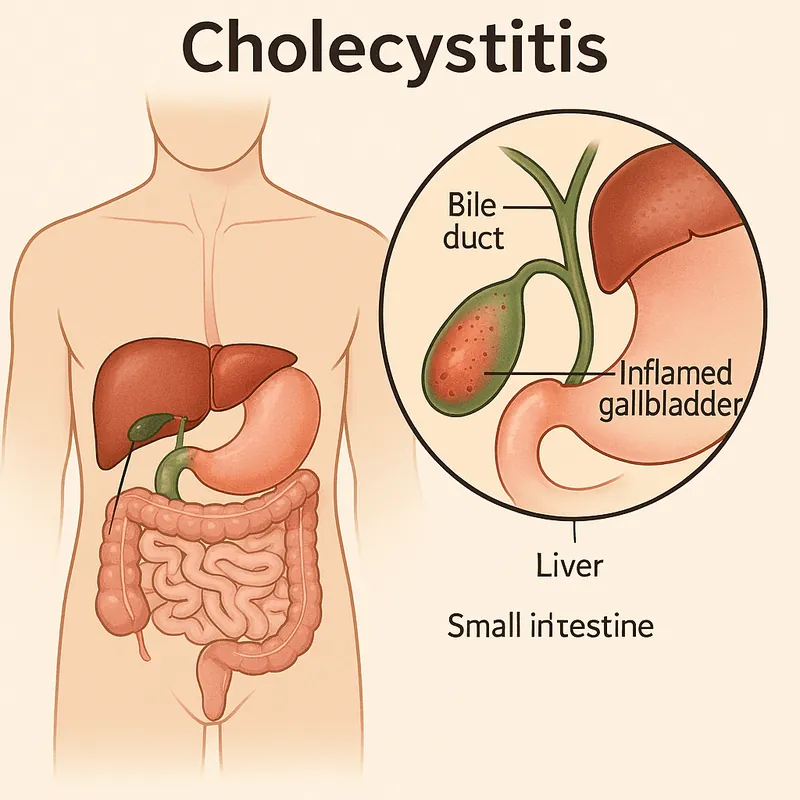
โš ๏ธ Sudden severe RUQ pain lasting more than 6 hours, especially with fever, must be evaluated urgently. Cholecystitis is a surgical emergency, delays increase complication and mortality rates significantly.
Cholecystitis illustration

Types of Cholecystitis

๐ŸŒฑ Acute Calculous (~95%)

Gallstone obstructs cystic duct. Most common form. RUQ pain >6 hours, fever, Murphy's sign positive. Requires urgent cholecystectomy. Excellent prognosis with prompt treatment.

๐ŸŒ— Chronic Cholecystitis

Recurrent subclinical inflammation, usually from intermittent gallstone impaction. Wall thickening, fibrosis on imaging. Symptoms intermittent, biliary colic recurring over time. Eventually requires cholecystectomy.

๐ŸŒ‘ Acalculous Cholecystitis (~5%)

No gallstones present. Usually in critically ill patients, sepsis, burns, post-surgery, prolonged TPN. High mortality (15-30%). Treatment: percutaneous drainage or cholecystectomy if stable.

~95%
Of cases caused by gallstones
~20%
Of gallstone patients develop cholecystitis
~700K
Annual US cholecystectomies (most for cholecystitis)
15-30%
Mortality from untreated acalculous cholecystitis

Symptoms of Cholecystitis

The hallmark is persistent severe RUQ pain (unlike simple biliary colic which resolves within hours). Fever and systemic symptoms indicate infection.

๐Ÿ”ฅ Acute Cholecystitis (Emergency)

๐Ÿ˜–

Persistent Severe RUQ Pain

Constant pain in right upper quadrant lasting >6 hours (distinguishes from simple biliary colic). May radiate to right shoulder or back. Often triggered by fatty meal. Worsens with breathing.

๐ŸŒก๏ธ

Fever & Chills

Low to moderate fever (101-103ยฐF). Sometimes with shaking chills. Indicates bacterial infection of trapped bile.

๐Ÿคข

Nausea & Vomiting

Persistent, often severe. Vomiting may transiently relieve pressure but doesn't resolve the obstruction. Inability to keep food down common.

๐Ÿฉบ

Murphy's Sign (Clinical Diagnosis)

Examiner palpates RUQ while patient breathes in deeply. Patient catches breath due to pain when inflamed gallbladder contacts examining hand. Highly specific for cholecystitis.

โš ๏ธ Complications & Red Flags

๐ŸŸก

Jaundice (Yellow Skin/Eyes)

Yellow sclera, dark urine, pale stools. Suggests stone has moved into common bile duct (choledocholithiasis) or Mirizzi syndrome. Higher complication risk; may need ERCP before surgery.

โš ๏ธ

Severe Systemic Illness (Sepsis)

High fever, rapid heart rate, low blood pressure, confusion. Indicates progression to severe complication, gangrenous cholecystitis, perforation, ascending cholangitis. SURGICAL EMERGENCY.

๐Ÿ’ข

Diffuse Abdominal Pain (Peritonitis)

Spreading pain with rigid abdomen suggests gallbladder perforation with peritonitis. Mortality climbs sharply with delay. Immediate surgical intervention required.

๐Ÿ˜ด

Confusion or Altered Mental Status

Particularly in elderly. May be the dominant presentation in older patients (silent cholecystitis with sepsis). Don't assume confusion in an elderly patient is benign, investigate.

How to Diagnose Cholecystitis

๐Ÿฉป Imaging

๐Ÿ“ก Abdominal Ultrasound

First-line imaging. Findings: gallstones, gallbladder wall thickening (>4mm), pericholecystic fluid, sonographic Murphy's sign. Highly accurate (~95% sensitivity). Cheap, no radiation, no contrast.

๐ŸŽฏ HIDA Scan (Hepatobiliary Iminodiacetic Acid)

Nuclear imaging. Failure of gallbladder visualization = cystic duct obstruction = acute cholecystitis. Used when ultrasound is equivocal. Highest sensitivity but slower test.

๐Ÿ“ก CT Abdomen (When Indicated)

Not first-line but useful when complications suspected (gangrene, perforation, abscess) or alternative diagnoses considered. Better visualization of surrounding structures.

๐Ÿฉธ Lab Workup

๐Ÿงช CBC, CRP, Procalcitonin

Leukocytosis with left shift. Elevated CRP. Procalcitonin distinguishes bacterial from viral inflammation. Helps assess severity.

๐Ÿฉธ Liver Function Tests

AST, ALT, alkaline phosphatase, bilirubin, GGT. Significant elevation suggests common bile duct stone or cholangitis (more serious than uncomplicated cholecystitis).

๐Ÿฉธ Lipase & Amylase

Rule out concurrent gallstone pancreatitis. Important distinction as gallstone pancreatitis requires different timing of cholecystectomy.

๐Ÿฉธ Blood Cultures (If Septic)

In severely ill patients with fever and systemic symptoms. Common organisms: E. coli, Klebsiella, Enterococcus. Guides antibiotic choice.

Holistic vs. Conventional Treatment

๐ŸŒฟ HOLISTIC
๐Ÿ’Š CONVENTIONAL
๐ŸŒฟ

Holistic / Functional Approach

For PREVENTION + POST-OPERATIVE recovery. Acute cholecystitis requires conventional emergency care.

Acute Cholecystitis
REQUIRES emergency care, antibiotics + cholecystectomy. Holistic alone is INSUFFICIENT and DANGEROUS.
Prevention
Bile-supportive nutrition prevents gallstones and chronic cholecystitis
Post-Cholecystectomy
Ox bile, taurine, digestive enzymes restore fat digestion; lifestyle prevents post-cholecystectomy syndrome
Chronic Symptoms
Anti-inflammatory diet + bile support + addressing risk factors
Holistic Roles in Cholecystitis Management
  • Acute cholecystitis = ER visit. There is NO holistic treatment for active cholecystitis with infection. Antibiotics + surgical evaluation are essential.
  • Prevention via bile-supportive nutrition: see Gallstones page, same principles apply
  • Healthy fats at regular meals, stimulate gallbladder emptying, prevent stasis. Olive oil, avocado, nuts.
  • High fiber, low refined carb diet, reduces cholesterol gallstone formation
  • Bitter foods, arugula, dandelion, beets, artichoke. Stimulate bile flow.
  • Taurine 500-1,500mg/day, bile acid conjugation
  • Vitamin C 500-1,000mg/day, supports bile acid synthesis
  • Coffee 2-3 cups/day, paradoxically reduces gallstone risk
  • Regular exercise + maintain healthy weight, both prevent stones
  • Post-op: ox bile, digestive enzymes, taurine, MCT oil for ongoing fat digestion support
โœ… Critical: Do NOT attempt to treat acute cholecystitis with home remedies, "gallbladder cleanses," or holistic approaches alone. Delays in treatment can be fatal. Holistic role is in PREVENTION and POST-OPERATIVE recovery.

Diet for Cholecystitis Prevention & Recovery

Diet plays no role in acute attack management. Pre-attack: prevention via bile-supportive nutrition. Post-cholecystectomy: support fat digestion in the absence of a gallbladder.

โœ… Pre/Post-Op Bile Support:

๐Ÿซ’ Healthy Fats at Regular Meals

Olive oil, avocado, nuts, fatty fish. Stimulate gallbladder emptying (pre-op) and continuous bile flow (post-op). Mediterranean diet pattern protective.

๐ŸŒพ High Fiber (30-40g/day)

Beans, vegetables, whole grains. Binds bile acids, lowers cholesterol pool, reduces stone formation. Helps post-cholecystectomy diarrhea by binding excess bile in colon.

๐Ÿฅ— Bitter Greens & Beets

Arugula, dandelion, endive, radicchio, beets. Stimulate bile production and flow. Include daily.

โ˜• Coffee (2-3 cups/day)

Consistently associated with reduced gallstone risk. Stimulates bile flow. Drink black or with minimal cream.

โŒ Limit or Avoid:

๐Ÿž Refined Carbs & Sugar

Drive insulin resistance, major risk factor for gallstone formation. Reduce or eliminate, especially during recovery phase.

๐Ÿ” Large Fatty Meals (Post-Op)

Without gallbladder, bile flows continuously rather than in concentrated boluses. Large fatty meals overwhelm digestion. Smaller, more frequent meals work better.

๐Ÿ“‰ Very Low-Fat Diets

Counterintuitively HARMFUL pre-op, cause gallbladder stasis, increasing stone formation. Eat adequate healthy fats at regular meals.

โšก Rapid Weight Loss

>1.5kg/week from very low-calorie diets dramatically increases stone formation. Aim for steady 0.5-1kg/week loss.

Evidence-Based Supplements

For prevention and post-cholecystectomy support. No supplement treats acute cholecystitis.

SupplementMechanism & EvidenceSuggested DoseTimingNotes
Ox Bile (Bile Salts)Direct bile acid replacement after cholecystectomy. Improves fat digestion and fat-soluble vitamin absorption.125-500mg per fat-containing mealWith mealsStart low, titrate to symptom relief. Avoid if active biliary obstruction.
Digestive Enzymes (with Lipase)Particularly valuable post-cholecystectomy. Lipase-rich blends improve fat digestion.Per product labelWith each mealChoose products with at least 6,000 USP units lipase.
TaurineBile acid conjugation amino acid. Supports cholesterol-to-bile conversion. May reduce stone formation.500-1,500mg/dayEmpty stomach or with mealsEspecially helpful if low meat intake.
Artichoke Leaf ExtractCynarin stimulates bile production. Supports gallbladder function pre-op; aids fat digestion post-op.320-640mg/dayWith mealsAvoid if active biliary obstruction.
PhosphatidylcholineComponent of bile emulsifying cholesterol. Sunflower lecithin best source.1,200-2,400mg/dayWith mealsSynergistic with taurine.
Vitamin CCofactor for cholesterol 7ฮฑ-hydroxylase. Deficiency increases gallstone risk.500-1,000mg/dayWith mealsLiposomal forms easier on stomach.
Fat-Soluble Vitamins (A, D, E, K)Post-cholecystectomy, fat malabsorption can lead to deficiencies. Test and supplement.Per blood levelsWith fat mealAnnual testing recommended after gallbladder removal.
MCT OilMedium-chain triglycerides absorb without bile. Useful post-cholecystectomy when fat malabsorption is severe.1-2 tablespoons/dayWith food, dividedStart low to avoid GI side effects.

Acute Cholecystitis Is a Surgical Emergency

Don't try to manage acute cholecystitis at home. Get evaluated urgently. Prevention through bile-supportive nutrition and lifestyle is the proper holistic role, and post-cholecystectomy, the same nutritional strategies support recovery and prevent post-cholecystectomy syndrome.