Vulvodynia, Chronic Vulvar Pain + Neural Sensitization

Chronic vulvar pain lasting 3+ months without an identifiable cause, affecting 8 to 16 percent of women at some point in their lives. Long dismissed as "in your head", now understood as a real neuro-immune-pelvic floor disorder, and treatable when addressed at every layer.

4 Distinct Subtypes 8โ€“16% Lifetime Prevalence ~7 Years Diagnostic Delay Reversible with Layered Care

Last updated:

What Is Vulvodynia?

Vulvodynia is chronic vulvar pain or discomfort, burning, stinging, rawness, or stabbing, lasting at least 3 months, with no identifiable infectious, inflammatory, neoplastic, or hormonal cause on standard workup.

The 2015 ISSVD-NVA-IPPS consensus terminology defines vulvodynia as pain of the vulva that is idiopathic by definition, meaning every visible cause must be ruled out first. Underneath that "idiopathic" label are real, identifiable contributors: pelvic floor dysfunction, central sensitization of pain neurons, mast cell activation, low estrogen states, gut and vaginal microbiome imbalance, and a long history of chronic vulvar irritation. Prevalence is high, 8 to 16 percent of women experience it at some point, but the average diagnostic delay is 7 years, and most women see 5+ providers before being correctly diagnosed.

Vulvodynia is sub-classified by location, timing, and trigger pattern. The subtype identifies the treatment focus:
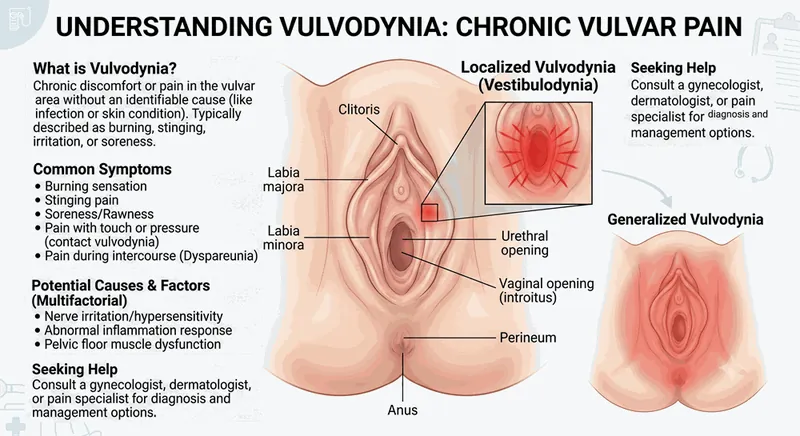
Vulvodynia, chronic vulvar pain and neural sensitization

"Vulvodynia is not a diagnosis of last resort, it is a real condition with measurable peripheral and central nervous system changes. Treating it requires addressing the nerves, the pelvic floor, the hormones, and the inflammation simultaneously."

โ€” Andrew Goldstein, MD, When Sex Hurts

๐Ÿ…ฐ๏ธ Provoked Vestibulodynia (PVD), most common

Sharp, burning pain localized to the vestibule (the area just inside the labia minora at the vaginal opening), triggered only by touch, tampon insertion, penetration, gynecologic exam, or tight clothing. Approximately 60 percent of all vulvodynia cases.

  • โ†’Hallmarks: Provoked, localized, pain-free at baseline, positive Q-tip test at the vestibule
  • โ†’Primary lever: Pelvic floor PT, topical hormones, mast cell stabilization, nerve modulation
  • โ†’Sub-types: Primary (since first sexual experience) vs Secondary (after a period of pain-free function)
  • โ†’Key supports: Topical estradiol/testosterone, calcium citrate (if oxalate-driven), quercetin, magnesium

๐Ÿ…ฑ๏ธ Generalized Vulvodynia (GVD)

Diffuse, often unprovoked burning, rawness, or aching of the entire vulvar area, sometimes including the perineum and inner thighs. Pain is often constant or near-constant, present even without touch. Approximately 20 to 30 percent of cases.

  • โ†’Hallmarks: Diffuse, often unprovoked, "always there", waxing and waning intensity
  • โ†’Primary lever: Central pain pathway treatment, nerve health, systemic inflammation, sleep/stress
  • โ†’Watch-out: Often co-occurs with other central sensitization conditions (IC, IBS, fibromyalgia)
  • โ†’Key supports: Magnesium glycinate, alpha-lipoic acid, B12 methyl, palmitoylethanolamide (PEA), curcumin

๐Ÿ…ฒ Mixed Vulvodynia

Combination of localized provoked symptoms AND a baseline of generalized burning or rawness. Often represents a progression from PVD to GVD when the condition has been untreated for years and central sensitization has set in.

  • โ†’Hallmarks: Both spot-pain at the vestibule AND background burning across the whole vulva
  • โ†’Primary lever: Layered protocol, address local triggers AND central nervous system simultaneously
  • โ†’Watch-out: Longest history, often the most discouraged patients, needs patient progress framing
  • โ†’Key supports: Combine PVD and GVD nutrient protocols; aggressive pelvic floor PT; sleep restoration

๐Ÿ…ณ Hormone-Mediated / Atrophic Vulvodynia

Burning, dryness, and rawness driven by low estrogen at the vulvar tissue, common in postmenopause, postpartum, breastfeeding, and after years of hormonal contraceptives. Often misdiagnosed as primary vulvodynia.

  • โ†’Hallmarks: Burning + dryness + thinning/pale vestibular tissue on exam; often onset around hormone change
  • โ†’Primary lever: Restore local hormones (topical estradiol +/- testosterone), DHEA, vaginal moisturizers
  • โ†’Watch-out: Postpartum and OCP-associated forms reverse with hormone restoration
  • โ†’Key supports: Topical estradiol cream, vitamin D, omega-3, hyaluronic acid vaginal moisturizers

Vulvodynia Statistics & Research

8โ€“16%
lifetime prevalence in women (Reed et al., Harvard)
~7 yrs
average diagnostic delay from symptom onset
~60%
classified as Provoked Vestibulodynia subtype
5+
healthcare providers seen on average before correct diagnosis
~50%
have co-occurring IC, IBS, or fibromyalgia (central sensitization)
~80%
improve significantly with multidisciplinary care

How Vulvodynia Presents

Vulvodynia presents as a pattern of vulvar sensory abnormalities plus the downstream consequences on pelvic floor, intimacy, mood, and quality of life. The diagnosis lives in the combination, not in any single symptom.

๐Ÿ”ฅ Vulvar & Sensory Symptoms

๐Ÿ”ฅ

Burning Sensation at the Vulva

The hallmark symptom. Often described as "battery acid", "sunburn", or "raw burn" at the vulva, vestibule, or perineum. Worse after sitting, exercise, or fitted clothing. Provoked forms feel like burning only on touch; generalized forms feel like a persistent low-grade burn.

๐Ÿ“

Sharp Stabbing or "Knife" Pain on Touch

In provoked vestibulodynia, light contact, a Q-tip, a finger, a tampon, a speculum, triggers a sudden, sharp, knife-like pain at specific points around the vestibule. Pain is often greater than the stimulus would predict (allodynia, the hallmark of nerve sensitization).

๐Ÿฅต

Rawness or "Open Wound" Sensation

A constant feeling of being chafed or worn, as if the tissue is irritated even when no contact is happening. Often worsens with menses, after sex, with sitting on hard surfaces, or in heat. Examination usually shows normal-appearing tissue, a key clue.

๐Ÿœ

Itching, Tingling & Pins-and-Needles

Non-burning sensory abnormalities, itching that does not respond to antifungals, tingling, "crawling skin", and electric-shock sensations are common, especially in generalized vulvodynia. Reflect involvement of small nerve fibers and abnormal nerve firing.

๐Ÿ˜–

Pain with Sitting or Tight Clothing

Many women report needing to sit on a special cushion, avoiding jeans, and avoiding certain chairs at work. Long drives, flights, bicycle riding, and tight underwear become unbearable. This is often the first symptom that affects daily functioning.

๐Ÿ’”

Dyspareunia (Painful Sex)

Provoked vulvodynia often makes vaginal penetration impossible or excruciating. Even women who can tolerate penetration often experience hours to days of post-coital burning and discomfort. Sex avoidance and partner-relationship strain are nearly universal consequences.

๐Ÿฉบ Pelvic Floor, Systemic & Quality-of-Life Symptoms

๐Ÿ’ช

Pelvic Floor Muscle Tightness & Spasm

Hypertonic, guarded pelvic floor muscles (levator ani, obturator internus) are present in over 80 percent of vulvodynia cases. The muscle tension both contributes to and is reinforced by the pain. Pelvic floor PT addressing this is one of the most effective single interventions.

๐Ÿšฝ

Urinary Urgency, Frequency & Painful Urination

Pelvic floor dysfunction and shared nerve pathways often produce IC-like symptoms, urinary urgency, frequency, burning with urination, and post-void discomfort without infection. Many women are misdiagnosed with chronic UTIs for years.

๐Ÿ’ฉ

Constipation & Painful Bowel Movements

Tight pelvic floor often produces difficulty emptying, the sensation of incomplete evacuation, and painful defecation. IBS-like symptoms are extremely common given shared neural sensitization. Treating the pelvic floor often improves the gut.

๐Ÿ˜Ÿ

Anxiety, Depression & Pain Catastrophizing

Living with chronic genital pain produces high rates of anxiety and depression, made worse by years of dismissal from providers. The brain-pelvis pain loop is real, but treating mood improves pain AND treating pain improves mood. Mental health support is part of recovery, not a sign of weakness.

๐Ÿ˜ด

Sleep Disturbance & Fatigue

Chronic pain disrupts sleep architecture, reducing the deep and REM stages where the nervous system desensitizes. Poor sleep then amplifies pain perception the next day. Sleep restoration is a non-negotiable part of any vulvodynia recovery plan.

๐Ÿ™…

Avoidance, Intimacy Loss & Identity Strain

Avoidance of sexual activity, romantic relationships, certain clothing, certain workouts, and even gynecologic care is common. Many women describe losing a sense of their body and womanhood. These are real consequences that require their own care, often with a trauma-informed sex therapist.

โš ๏ธ Pattern to watch for: Vulvar burning or rawness lasting > 3 months + normal exam + multiple negative yeast/UTI cultures + pelvic floor tightness is vulvodynia until proven otherwise. The most important diagnostic step is taking it seriously and stopping the years-long misdiagnosis cycle.

How to Test for Vulvodynia

Vulvodynia is a clinical diagnosis of exclusion, made when chronic vulvar pain persists 3+ months with no identifiable cause. The workup is mostly about ruling things out, not in. The right "tests" identify subtype and contributing layers.

๐Ÿ  At-Home Screening

Vulvodynia requires in-person specialist evaluation, but these at-home steps clarify whether you have it and prepare you for a more useful visit:

๐Ÿ“‹ The 3-Month Rule + Symptom Checklist

Score 1 point for each: vulvar burning > 3 months, sharp pain on touch at the vestibule, pain with intercourse or tampon insertion, pain with sitting or tight clothing, multiple negative yeast/UTI cultures, pelvic floor tightness or constipation, co-occurring IBS / IC / fibromyalgia, history of recurrent yeast/BV/UTI treatments. Score of 3+ warrants specialist evaluation.

๐Ÿ““ Pain Diary & Trigger Tracking

Track for 2 to 4 weeks: pain location (vestibule vs full vulva), severity (0 to 10), triggers (touch, sex, sitting, foods, stress, cycle day), relievers, and discharge changes. This pattern is more diagnostically useful than any single exam day, and lets a specialist quickly identify your subtype.

๐Ÿชž Self-Inspection & Sensitivity Mapping

Using a hand mirror in good light, identify whether tissue looks normal (typical for vulvodynia) or shows redness, fissures, white patches, or atrophic thinning (suggesting lichen sclerosus, lichen planus, eczema, or atrophic vaginitis, separate diagnoses). Gentle Q-tip self-touch at the vestibule that produces sharp pain supports provoked vestibulodynia.

๐Ÿ”ฌ Clinical & Specialist Tests

๐Ÿฉบ Q-Tip (Cotton-Swab) Test

The single most important bedside test for provoked vestibulodynia. A moistened cotton swab is gently touched at the 1, 3, 5, 7, 9, and 11 o'clock positions around the vestibule. Sharp pain at any position confirms allodynia and localizes the affected nerves. Should be performed by a vulvodynia-aware specialist.

๐Ÿงซ Microbiology & Infection Rule-Out

Vaginal pH, wet mount, yeast culture (NOT just KOH, culture for atypical Candida species), NAAT for chlamydia, gonorrhea, M. genitalium, trichomonas. HSV serology and culture if blistering ever occurs. Multiple negative workups are typical and support vulvodynia, not the reverse.

๐Ÿ”ฌ Vulvar Dermatology Exam

Detailed inspection (ideally with a colposcope and biopsy as needed) to rule out lichen sclerosus, lichen planus, lichen simplex chronicus, vulvar eczema, plasma cell vulvitis, and atrophic changes. These look similar to patients but are distinct dermatologic conditions with specific treatments.

๐Ÿ’ช Pelvic Floor Muscle Assessment

External and internal palpation by a pelvic floor PT or trained provider identifies hypertonic muscles, trigger points, and asymmetric tone. Surface EMG biofeedback may quantify resting tone. This finding is present in 80+ percent of vulvodynia cases and changes the treatment plan dramatically.

๐Ÿฆ‹ Hormonal & Endocrine Panel

Estradiol, free testosterone, DHEA-S, SHBG, especially in women on OCPs, postpartum, breastfeeding, or postmenopausal. Hormone-mediated vulvodynia is highly treatable but easily missed. Free-testosterone-to-SHBG ratio is the most informative for OCP-induced atrophy.

๐Ÿฉป Specialty Imaging & Nerve Studies

Pelvic MRI is rarely needed but useful if pudendal neuralgia or pelvic congestion syndrome is suspected. Pudendal nerve block (diagnostic and therapeutic) can be both confirming and treating. Quantitative sensory testing identifies central sensitization. These are tertiary tests, not first-line.

Holistic vs. Conventional Treatment for Vulvodynia

Toggle between the two approaches to compare treatments, outcomes, and what each looks like in practice. Vulvodynia responds best to layered, multidisciplinary care that addresses every contributing system.

๐ŸŒฟ HOLISTIC
๐Ÿ’Š CONVENTIONAL
๐ŸŒฟ

Holistic / Multidisciplinary Approach

Address every contributing layer simultaneously, pelvic floor, hormones, mast cells, gut, nerves, and nervous system

Primary Treatment
Pelvic floor PT + topical hormones + anti-inflammatory nutrition + mast-cell stabilization + nervous system desensitization
Duration
3 to 6 months for noticeable change; 9 to 18 months for substantial recovery in chronic cases
Effect on Underlying Disorder
Addresses every layer, sustained improvement and often full remission possible
Sexual Function
Gradual restoration of pain-free intimacy for most; partner-inclusive sex therapy supports the process
Protocol Includes
  • Pelvic floor physical therapy with internal manual release, dilator program, and home practice
  • Topical estradiol/testosterone compounded cream applied to the vestibule nightly for atrophic / OCP-induced cases
  • Anti-inflammatory diet emphasizing colorful vegetables, wild fish, bone broth; trial low-oxalate diet for 3 months
  • Mast cell stabilization, quercetin, vitamin C, low-histamine eating trial if symptoms flare with histamine foods
  • Nerve-supportive nutrients, B12 methyl, alpha-lipoic acid, magnesium glycinate, palmitoylethanolamide (PEA)
  • Pain education and graded exposure to reverse central sensitization (the "neuroscience of pain" model)
  • Trauma-informed sex therapy and partner education when appropriate
  • Sleep optimization (7 to 9 hours), daily walking, breathwork for vagal tone
  • Cotton underwear only; eliminate fragranced products, panty liners, dyes, harsh soaps from vulvar contact
  • Discontinue or change OCPs if hormone-mediated component is identified (with planning)
โœ… Side effects: Mild local irritation in first week of topical hormones; transient soreness as pelvic floor PT releases trigger points; emotional challenges as long-held patterns shift, often the hardest and most important part.

Root Causes of Vulvodynia

Vulvodynia is rarely caused by one thing. It is a stack of triggers, neural sensitization, pelvic floor dysfunction, hormonal change, microbiome disruption, mast cell activation, and stress, layered over time. Each woman's stack is different, and unwinding it requires identifying her specific contributors.

Root Cause How It Contributes to Vulvodynia Holistic Solution
Pelvic Floor HypertonicityChronic muscle guarding of levator ani, obturator internus, and pubococcygeus produces and amplifies vulvar pain via referred pain and altered nerve mechanics. Present in 80%+ of vulvodynia cases.Pelvic floor physical therapy with manual release, dilators, biofeedback, posture and breathing work, magnesium glycinate at bedtime
Central Pain SensitizationThe nervous system has "learned" pain. Even after the original trigger resolves, the spinal cord and brain continue to amplify normal sensation as pain. Hallmark of generalized and mixed vulvodynia.Pain neuroscience education, graded exposure, sleep, magnesium, alpha-lipoic acid, PEA, mindfulness-based therapies, vagal tone work
OCP-Induced Vulvar AtrophyLong-term combined oral contraceptives lower free testosterone and thin vestibular tissue, producing PVD in susceptible women. Often missed because providers do not connect the pill to the pain.Trial discontinuation of OCPs (with alternative contraception plan), topical estradiol/testosterone cream to the vestibule, may take 6 to 12 months to recover
Postpartum & Breastfeeding Hormonal ShiftLow estrogen during breastfeeding produces vulvar/vaginal atrophy that often presents as new-onset vulvodynia. Resolves with hormonal recovery but can persist if pelvic floor PT not added.Topical estradiol cream while breastfeeding, perineal scar work, pelvic floor PT, hyaluronic acid moisturizers, gentle return to intimacy
Recurrent Vulvovaginal Candidiasis & Microbiome DisruptionRepeated yeast / BV / UTI episodes (and repeated antifungal/antibiotic treatments) sensitize tissue and disrupt the protective Lactobacillus flora, lowering the threshold for pain.Address root cause of recurrent infections (gut dysbiosis, sugar, estrogen, sex hygiene), Lactobacillus suppositories, low-sugar nutrition
Mast Cell Activation in Vestibular TissueBiopsies of provoked vestibulodynia show increased mast cells and inflammatory mediators in the vestibule, even without visible inflammation. Histamine release reinforces local burning.Quercetin, vitamin C, low-histamine diet trial, address gut histamine (DAO support), reduce stress (mast cells respond to cortisol)
Oxalate SensitivityIn some women (estimated 10 to 25 percent of PVD cases), elevated urinary oxalates produce vestibular irritation. Low-oxalate diet and calcium citrate reduce symptoms in this subgroup.3-month trial of low-oxalate diet (avoid spinach, almonds, beets, chocolate), 500 to 1000 mg calcium citrate with high-oxalate foods, retest symptoms
Pudendal Nerve Entrapment or IrritationThe pudendal nerve runs through Alcock's canal in the pelvis and supplies the vulva. Compression from sitting, cycling, surgery, or pelvic floor tension produces a distinct "neuralgic" vulvodynia subtype.Pelvic floor PT trained in pudendal release, cushion modification, postural and movement retraining, possible diagnostic pudendal nerve block
Trauma History (Physical or Sexual)Prior trauma, even unconnected to the current pain, primes the nervous system to interpret pelvic sensation as threatening, amplifying any peripheral input into pain.Trauma-informed sex therapy, somatic experiencing, EMDR, slow return to consensual touch with partner support, body-up nervous system work
Chronic Stress & HPA-Axis DysregulationSustained sympathetic activation maintains pelvic floor tone, mast cell reactivity, and central sensitization. Stress and pain are bidirectional and self-reinforcing.Daily breathwork, daylight exposure, magnesium glycinate, adaptogens (ashwagandha, rhodiola), boundaries around overwork, vagal tone exercises

Vulvodynia Diet Guide

No single "vulvodynia diet" exists, but several food patterns reliably reduce burning, vulvar irritation, and pelvic floor tension. The right pattern for you depends on which layers (oxalate, histamine, sugar, inflammation, microbiome) are most contributing.

๐ŸŒฟ

What Is the Anti-Irritant, Nerve-Supportive Eating Pattern?

For vulvodynia, food is doing four jobs at once: lowering systemic inflammation, supporting nerve regeneration, calming mast cells, and feeding the vaginal microbiome. The exact protocol depends on whether your version is oxalate-sensitive, histamine-sensitive, both, or neither.

Start with a 60-day anti-inflammatory baseline (the framework below). If symptoms have not shifted by 8 weeks, add a 3-month low-oxalate trial. If symptoms flare with fermented foods, leftovers, or wine, add a 3-month low-histamine trial. This stepwise approach prevents over-restriction.

The 4 Anchors of Every Meal:

  • 1Protein 25 to 40 g (wild fish, pastured eggs, grass-fed meat) for nerve and tissue repair
  • 2Half the plate as anti-inflammatory vegetables (cruciferous, leafy if low-oxalate tolerated)
  • 3Healthy fats from olive oil, avocado, wild fish to resolve inflammation and support nerve myelin
  • 42 to 3 L water/day, dilutes urinary oxalates and irritants reaching the vestibule

Trial Sequence:

  • 1๏ธโƒฃWeeks 1-8: Anti-inflammatory baseline (remove sugar, alcohol, seed oils)
  • 2๏ธโƒฃWeeks 9-20: Add low-oxalate trial if needed; calcium citrate with meals
  • 3๏ธโƒฃWeeks 21-32: Add low-histamine trial if needed
  • 4๏ธโƒฃReintroduce systematically once stable, identify your true triggers
๐Ÿ’ก Most women do not need full low-oxalate or low-histamine forever. Once stabilized on a broader protocol, reintroductions are common.
โš ๏ธ These foods drive inflammation, irritate vulvar tissue via urine, or activate mast cells. The first three are non-negotiable.
  • โœ—Refined sugar: Soda, juice, candy, baked goods; feeds candida overgrowth and drives inflammation
  • โœ—Alcohol: Direct mucosal irritant, depletes B vitamins, disrupts sleep that recovery depends on
  • โœ—Industrial seed oils: Soybean, canola, corn, sunflower, safflower drive systemic inflammation
  • โœ—High-oxalate foods (3-month trial): Spinach, Swiss chard, almonds, beets, sweet potato, chocolate, soy, black tea (in oxalate-sensitive subtype)
  • โœ—High-histamine foods (trial): Aged cheese, cured meats, fermented foods, wine, leftover meat, tomatoes (only in histamine-sensitive subtype)
  • โœ—Artificial sweeteners: Aspartame, sucralose, saccharin can disrupt microbiome and irritate sensitive tissue via urine
  • โœ—Excess caffeine: Bladder irritant, often a flare trigger for co-existing IC; limit to 1 cup or trial elimination
  • โœ—Spicy / acidic foods if they flare you: Citrus, vinegar, hot sauces, tomatoes can irritate via urine in some women
  • โœ—Conventional dairy: Inflammatory for many; A1 casein irritates; trial removal for 30 to 60 days
๐Ÿ’ก Foods that reduce inflammation, support nerve repair, calm mast cells, and feed a healthy vaginal microbiome.
  • โœ“Quality proteins: Wild salmon, sardines, pastured eggs, grass-fed beef, pastured poultry, bone broth daily
  • โœ“Low-oxalate vegetables: Cauliflower, broccoli, zucchini, cucumber, bell pepper, mushrooms, romaine lettuce, cabbage
  • โœ“Healthy fats: Extra-virgin olive oil, avocado, coconut oil; for omega-3, wild salmon, sardines, mackerel
  • โœ“Quercetin-rich foods: Onions, capers, apples (peel), red leaf lettuce, dill, natural mast-cell stabilizers
  • โœ“Low-mercury wild fish: Salmon, sardines, anchovies, mackerel for nerve-protective omega-3 EPA/DHA
  • โœ“B12 & methylation-rich foods: Pastured eggs, grass-fed beef, liver, sardines, for nerve repair
  • โœ“Hydrating, alkalinizing foods: Cucumber, watermelon (small portions), zucchini, celery, lower urinary irritant load
  • โœ“Anti-inflammatory spices: Turmeric, ginger, parsley, fresh basil if histamine tolerated
  • โœ“Prebiotic fibers (if tolerated): Asparagus, onion, garlic, leeks, jicama, feed healthy gut and vaginal Lactobacilli

Key Supplements for Vulvodynia Recovery

Supplements support the four key drivers of vulvodynia, nerve health, mast cell stability, hormone balance, and pelvic floor relaxation. Start one at a time so you can identify what is helping (or not).

Supplement Role in Vulvodynia Recovery Suggested Dose Timing Notes
Magnesium GlycinateRelaxes the pelvic floor, supports GABA synthesis, dampens nerve excitability, improves sleep quality. The single most useful supplement for hypertonic pelvic floor.300 to 400 mg elemental per dayEvening, 30 to 60 min before bedGlycinate is most absorbable and calming. Avoid magnesium oxide (poorly absorbed, laxative).
Alpha-Lipoic Acid (ALA)Universal antioxidant with strong RCT evidence in neuropathic pain. Supports nerve regeneration and reduces oxidative damage to small fibers.600 to 1200 mg per day, R-ALA preferred30 minutes before meals on an empty stomachCan lower blood sugar; monitor if diabetic. Often takes 8 to 12 weeks for full effect.
Palmitoylethanolamide (PEA)Endogenous fatty acid amide with RCT evidence in pelvic pain, neuropathic pain, and mast cell activation. One of the most under-recognized vulvodynia interventions.600 to 1200 mg per day, micronized or ultramicronizedWith meals, split twice dailyExcellent safety profile. Effects build over 8 to 12 weeks. Especially helpful in generalized vulvodynia.
QuercetinMast cell stabilizer that reduces histamine release in vestibular tissue. Synergistic with bromelain and vitamin C.500 mg twice dailyBetween mealsLook for quercetin dihydrate or phytosome forms for better absorption.
Vitamin B12 (Methylcobalamin)Essential for myelin repair and small-fiber nerve regeneration. Many women with vulvodynia have low-normal B12 that benefits from methylation-ready supplementation.1000 to 5000 mcg methylcobalamin per dayMorning, sublingual preferredTest B12 and MMA first if possible. Use methylcobalamin (not cyanocobalamin).
Methylated B-ComplexCo-factors for nerve health, neurotransmitter balance, and methylation. Especially important if MTHFR variants are present.1 capsule per day per product labelMorning with foodChoose with L-methylfolate (not folic acid) and methylcobalamin.
Omega-3 EPA/DHAAnti-inflammatory, supports nerve membrane health, and dampens central pain amplification.2 g combined EPA+DHA per dayWith mealsChoose IFOS-certified. Higher EPA ratio supports mood and pain.
Calcium CitrateBinds oxalates in the gut, reducing the load that reaches the urinary tract and vulvar tissue in oxalate-sensitive subtype.500 to 1000 mg with high-oxalate mealsWith meals containing oxalatesOnly useful if oxalate-sensitivity is suspected or proven. Use citrate, not carbonate.
Vitamin D3 (with K2)Modulates immune and mast cell function, supports nerve health. Deficiency is common in chronic pain populations.2000 to 5000 IU D3 + 100 to 200 mcg MK-7 K2 per dayWith a fat-containing mealTest 25-OH-D, target 50 to 80 ng/mL.
L-TheanineAmino acid from green tea that increases GABA and reduces sympathetic over-drive, indirectly relaxing the pelvic floor.200 to 400 mg per day, can splitDaytime for calm focus or before bedNon-sedating. Helpful for high-anxiety patterns.
Curcumin (Turmeric Extract)Reduces NF-kB-mediated inflammation, mast cell activation, and central pain sensitization.500 to 1000 mg curcumin per dayWith a fat-containing mealMust include piperine or be liposomal for absorption.
Topical Estradiol/Testosterone Cream (Rx)For hormone-mediated vulvodynia (postmenopausal, postpartum, OCP-induced atrophy). Restores tissue thickness and reduces vestibular pain.Compounded per providerApplied to vestibule nightlyRequires prescription from a vulvodynia-aware provider. Highly effective for the right subtype.
ZincSupports tissue healing, immune modulation, and skin repair. Often low in chronic pain populations.15 to 30 mg per dayWith meals (food prevents nausea)Add 1 to 2 mg copper if using long-term at higher doses.
Lactobacillus crispatus + rhamnosus (Vaginal)Restores protective vaginal flora, especially valuable after recurrent yeast or BV treatments.Vaginal suppository, 2x/week long-termAt bedtimeLook for L. crispatus CTV-05 or rhamnosus GR-1 strains with RCT data.
Vitamin CCo-factor for collagen synthesis, mast cell stabilization, and adrenal recovery in chronic stress states.500 to 1000 mg twice dailySplit with foodLiposomal absorbs better at higher doses without GI upset.
Acetyl-L-CarnitineImproves nerve mitochondrial function and small-fiber neuropathy in RCT data. Useful in generalized vulvodynia subtype.1000 to 2000 mg per dayMorning, empty stomachEffects build over 8 to 12 weeks. Often used with alpha-lipoic acid.
AshwagandhaAdaptogen that lowers cortisol, supports sleep, and indirectly reduces pelvic floor tension and central pain sensitization.300 to 600 mg standardized extract per dayEveningAvoid in autoimmune thyroid (Hashimoto's) without supervision.

Healing Timeline: Conventional vs. Holistic

Understanding what to expect from each approach helps set realistic expectations and make informed choices.

๐ŸŒฟ Multidisciplinary Protocol
Weeks 1โ€“4 (Stabilize)

Eliminate irritants (fragrance, dyes, harsh soap, OCP if relevant), begin magnesium and PEA, start pelvic floor PT, anti-inflammatory baseline diet.

Month 1โ€“3 (Layer)

Topical hormones if atrophic, add B12, ALA, quercetin, trial low-oxalate or low-histamine if pattern suggests. First clear pain reductions appear.

Month 3โ€“6 (Desensitize)

Pain neuroscience education, dilator program advances, gentle return to intimacy in PVD, sleep and nervous system work intensified.

Month 6โ€“18 (Integrate)

Reintroductions of restricted foods. Pelvic floor PT moves to maintenance. Pain often 70%+ reduced. Many achieve pain-free intimacy.

Long-Term Outlook

Sustained remission achievable for most when layered protocol is maintained

๐Ÿ’Š Conventional Treatment
Week 1โ€“4

Topical lidocaine offered. TCA or gabapentin started; doses titrated up over weeks. Side effects begin to appear.

Month 1โ€“3

30 to 50% report some pain reduction from medications. Many discontinue due to side effects (sedation, weight gain, fog).

Year 1โ€“2

Medication trial-and-error continues. Some referred to pain management or psychiatry. Vestibulectomy raised in refractory cases.

On Discontinuation

Symptoms typically return. Underlying pelvic floor, hormonal, mast cell drivers remain unaddressed. Many describe being "stuck".

Long-Term Outlook

Chronic medication dependence; high rates of intimacy avoidance, depression, anxiety

"Vulvodynia is not a mystery, it is the predictable result of pelvic floor tension, hormone changes, mast cells, and a sensitized nervous system stacking up over time. Treat the stack, and the pain unwinds."

Ready to Address Your Vulvodynia at the Root?

Explore related conditions below or revisit the Symptom Checker to map your full symptom picture across the library.