Menopause begins 12 months after the final menstrual period (average age 51). The post-reproductive phase that follows lasts 30+ years and is shaped fundamentally by the sustained low-estrogen state. Nutrition, movement, and targeted support determine whether these decades are marked by decline or by vitality.
Menopause is the permanent cessation of menstruation, retrospectively diagnosed after 12 consecutive months without a period. The average age in the US is 51 (range 45–55). The remaining 30+ years of post-reproductive life are referred to as postmenopause.
After menopause, ovarian estrogen production drops to ~10% of premenopausal levels and stays there. The adrenal glands and adipose tissue continue producing small amounts of estrogen (estrone, primarily), but the dominant hormonal state is one of estrogen deficiency. Progesterone is essentially absent without external supplementation.
This sustained low-estrogen state drives most of the long-term changes — bone density loss, cardiovascular shifts, urogenital atrophy, body composition changes, and accelerated brain aging. The good news: each of these is significantly modifiable by nutrition, exercise, and targeted support.
The first 1–3 years after the final menstrual period. Vasomotor symptoms typically peak in intensity and frequency here. Sleep, mood, and cognitive symptoms often most disruptive. Highest leverage period for intervention.
10+ years post-menopause. Vasomotor symptoms uncommon. Long-term health risks (osteoporosis, atherosclerosis, neurodegeneration) become primary clinical concerns. Maintenance of muscle, bone, and brain health is the focus.
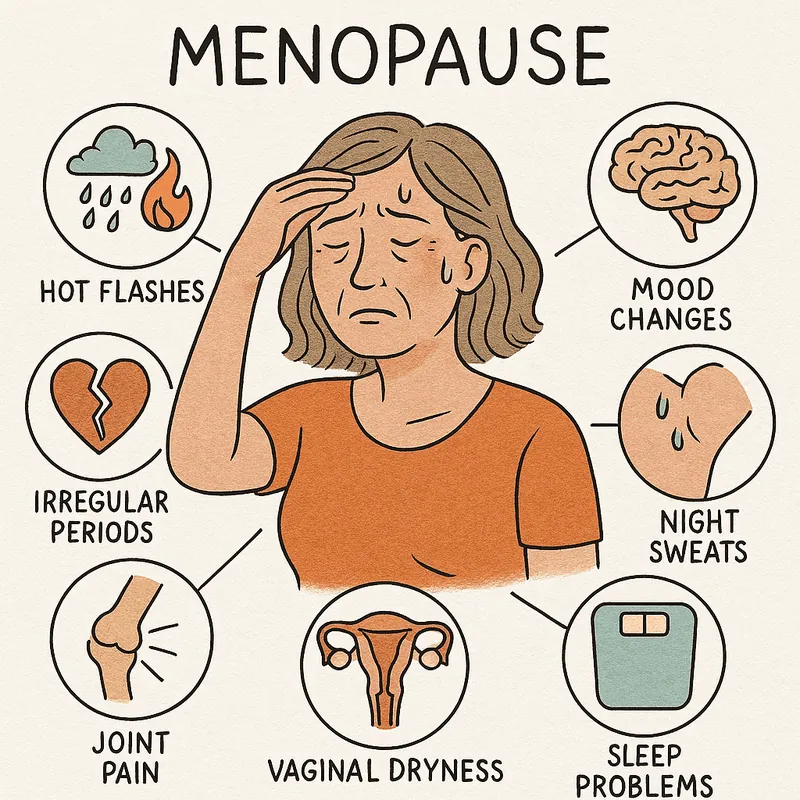
Menopausal symptoms cluster into four physiological categories. Acute symptoms (vasomotor, psychological) often resolve within years; structural symptoms (genitourinary, long-term health) typically progress without intervention.
Affect ~75% of postmenopausal women. Average duration is 7.4 years from final period but can persist indefinitely. Severity ranges from brief warmth to drenching, disabling episodes occurring 10+ times daily. Driven by hypothalamic thermoregulatory dysfunction in the sustained low-estrogen state.
Drenching nocturnal vasomotor episodes that shatter sleep continuity. Often the most disruptive symptom in early postmenopause. Cascading effects on daytime fatigue, mood, cognition, and metabolic health.
Persistent or intermittent flushing of the face, neck, and upper chest. May continue between full hot flashes. Triggered by alcohol, caffeine, spicy food, and emotional stress.
Pounding, racing, or skipped heartbeats — often during hot flashes or at rest. Should be evaluated when frequent to rule out atrial fibrillation, which becomes more common in postmenopause.
Estrogen-deficient vaginal tissue thins, loses elasticity, and produces less lubrication. Causes dryness, burning, itching, and discomfort. Affects 50–70% of postmenopausal women — and progresses without treatment, unlike vasomotor symptoms.
Thinning epithelium plus narrowed/shortened vaginal canal causes friction pain. Often leads to avoidance, which compounds tissue atrophy. Local estrogen treatment is highly effective — even with breast cancer history (discuss with oncologist).
Estrogen-receptor-rich bladder and urethral tissues become less elastic and more reactive. Urgency, leaking with cough/sneeze, and frequent nighttime urination. Pelvic floor PT plus vaginal estrogen often dramatically helps.
Loss of vaginal Lactobacillus allows pathogen colonization. UTIs that recur every few months in postmenopausal women are typically estrogen-driven. Vaginal estrogen reduces recurrence by 60–80% — usually more effective than chronic antibiotics.
Difficulty falling asleep, frequent awakening (especially 2–4 AM), and unrefreshing sleep. Driven by night sweats, absent progesterone (a GABAergic sleep modulator), and cortisol dysregulation. Cumulative sleep loss drives most downstream symptoms.
Word-finding difficulty, slower processing, reduced multitasking. Reflects estrogen's loss of role in cerebral glucose metabolism, cholinergic signaling, and synaptic plasticity. Most symptoms improve in late postmenopause; some persist as the new baseline.
Increased vulnerability to depression — particularly in women with prior depressive history or those who experienced PMS/PMDD. Often improves several years post-menopause as the nervous system adapts to the new hormonal milieu.
Estrogen modulates the HPA axis; in its absence, cortisol responses to stress are exaggerated and prolonged. Patience, frustration tolerance, and emotional resilience are reduced — frequently the symptom that strains relationships most.
Bone density loss accelerates to 2–5%/year in the first 5–7 years post-menopause. 1 in 2 women will have an osteoporosis-related fracture after age 50 — and hip fractures carry a 25% 1-year mortality rate. DEXA scan + intervention is non-negotiable.
Heart disease becomes the #1 killer of postmenopausal women — surpassing all cancers combined. LDL particle size shifts toward smaller, more atherogenic particles. Arterial stiffness, blood pressure, and metabolic syndrome risk all climb.
Muscle mass declines ~3–8% per decade after 30, accelerating after menopause. This drives insulin resistance, weight gain in the abdominal area, and physical frailty. Strength training is the single most impactful intervention in postmenopause.
Women account for 2/3 of Alzheimer's cases. The hormonal transition itself reshapes brain glucose metabolism — and the postmenopausal years are when neurodegenerative trajectories diverge. Lifestyle (sleep, exercise, diet, social engagement) is the most powerful modifier.
Menopause is retrospectively diagnosed after 12 consecutive months without menstruation in the absence of other causes (hysterectomy, contraception, pregnancy). No lab confirmation needed when this criterion is met.
After hysterectomy (without ovary removal), FSH >30 mIU/mL on two separate occasions confirms menopause. Otherwise rarely needed.
Strength training, phytoestrogens, gut/liver detox, blood sugar control, sleep optimization, adaptogens
Postmenopausal nutrition focuses on three goals: managing acute symptoms, protecting against long-term disease, and preserving muscle/bone mass.
Higher than the standard RDA — postmenopausal women have reduced muscle protein synthesis efficiency. Distribute 30–40g per meal. Prioritize leucine-rich sources (fish, eggs, chicken, dairy, whey).
Olive oil, fatty fish, legumes, vegetables, whole grains, nuts, moderate cheese. The most extensively studied diet for postmenopausal cardiovascular protection, bone density, and cognitive health.
Dairy (if tolerated), sardines/canned salmon with bones, leafy greens (kale, collards), tahini, almonds, fortified plant milks. Aim for 1,200mg/day from food before reaching for supplements.
Feeds the gut microbiome (estrobolome), supports cholesterol metabolism, stabilizes blood sugar, and reduces postmenopausal cancer risk. Mostly vegetables, legumes, whole grains, fruit, ground flaxseed.
Postmenopausal breast cancer risk rises measurably even with 1 drink/day. Triggers vasomotor symptoms, disrupts sleep, and accelerates bone loss. The single highest-impact thing to reduce.
Drive postmenopausal weight gain (especially abdominal), insulin resistance, and inflammation. Trigger hot flashes via blood sugar swings. Replace with whole grains, legumes, fruit.
Strongly linked to postmenopausal weight gain, cardiovascular disease, and cancer. The combination of refined carbs + industrial seed oils + additives drives inflammation and microbiome dysfunction.
Increases urinary calcium loss (worsening bone density) and blood pressure (rising in postmenopause). Stay under 2,300mg/day; lower if blood pressure is elevated.
The postmenopausal supplement priorities shift toward bone, brain, cardiovascular, and muscle protection alongside vasomotor symptom management.
| Supplement | Mechanism & Evidence | Suggested Dose | Timing | Notes |
|---|---|---|---|---|
| Vitamin D3 + K2 | Both required for bone formation and calcium homeostasis. K2 (MK-7) prevents calcium from depositing in arteries — critical when supplementing calcium. 80%+ of postmenopausal women are vitamin D deficient. Strong evidence for fracture risk reduction with adequate D status. | D3: 4,000–5,000 IU/day; K2 MK-7: 200mcg/day | With largest fat meal | Test 25(OH)D; aim 50–70 ng/mL. Critical foundation supplement. |
| Magnesium Glycinate | Essential for bone mineralization (60% of body magnesium is in bone), neurotransmitter function, sleep, and blood pressure regulation. RBC magnesium is the accurate test — serum is misleading. Supplementation improves sleep and may reduce hot flash frequency. | 400mg elemental/night | Before bed | Glycinate or threonate forms. Avoid magnesium oxide (poorly absorbed). |
| Omega-3 EPA/DHA | Anti-inflammatory; supports cardiovascular health, brain function, mood, and may modestly reduce hot flashes. Most postmenopausal women benefit from supplementation given low fish intake. | 2g combined EPA+DHA/day | With meal containing fat | Triglyceride form best absorbed. IFOS-certified for purity. Especially important if not eating fatty fish 3x/week. |
| Creatine Monohydrate | Strong emerging evidence for postmenopausal women: increases muscle mass and strength in response to resistance training, supports bone density at common fracture sites, may improve cognitive function. Safe long-term. | 5g/day | Any time (consistency matters more than timing) | Monohydrate is the most-studied form. Combine with resistance training for maximum benefit. |
| Collagen Peptides | Hydrolyzed collagen provides amino acids (glycine, proline, hydroxyproline) for connective tissue, skin, joints, and bone matrix. Studies show improved skin elasticity, bone mineral density (with calcium), and joint pain reduction in postmenopausal women. | 10–20g/day | Any time; with vitamin C for collagen synthesis | Type I & III for skin/bone; Type II for joints. Tasteless — easily added to coffee or smoothies. |
| Black Cohosh | Non-hormonal vasomotor symptom relief via serotonin and opioid receptor modulation. 26–60% hot flash reduction in meta-analyses. A reasonable first-line for women avoiding hormone therapy. | 40mg/day (standardized to 2.5% triterpene glycosides) | With breakfast | Effect builds over 4–8 weeks. Use quality brands. Discontinue if LFTs abnormal. |
| CoQ10 (Ubiquinol) | Mitochondrial cofactor; cellular energy production. Levels decline with age. Particularly important on statin therapy (statins deplete CoQ10). Supports cardiovascular and cognitive function. | 100–200mg/day (ubiquinol form) | With meal containing fat | Ubiquinol form better absorbed than ubiquinone, especially after 50. |
| B-Complex (Methylated) | B12, folate (methylfolate), and B6 (P5P) support cognition, energy, mood, and homocysteine metabolism (a CV risk factor). Postmenopausal B12 absorption declines; supplementation often needed. | 50mg B-complex/day with methylated forms | Morning with breakfast | Methylated forms important for ~40% with MTHFR variants. Test B12 and homocysteine annually. |
| Probiotic (Targeted Strains) | Postmenopausal microbiome shifts toward less diversity and more pro-inflammatory species. Specific strains (Lactobacillus reuteri, L. acidophilus, Bifidobacterium lactis) have been studied for bone density, vaginal health, and mood support. | Multi-strain 10–50 billion CFU/day | Empty stomach or with small meal | Rotate strains every few months. Eat fermented foods for synergy. Look for refrigerated or shelf-stable third-party-tested brands. |
The next 30+ years of your life can be marked by vitality, strength, and clarity — or by accelerated decline. The interventions that shape that trajectory are within your reach: protein, resistance training, sleep, social connection, and targeted nutrition.