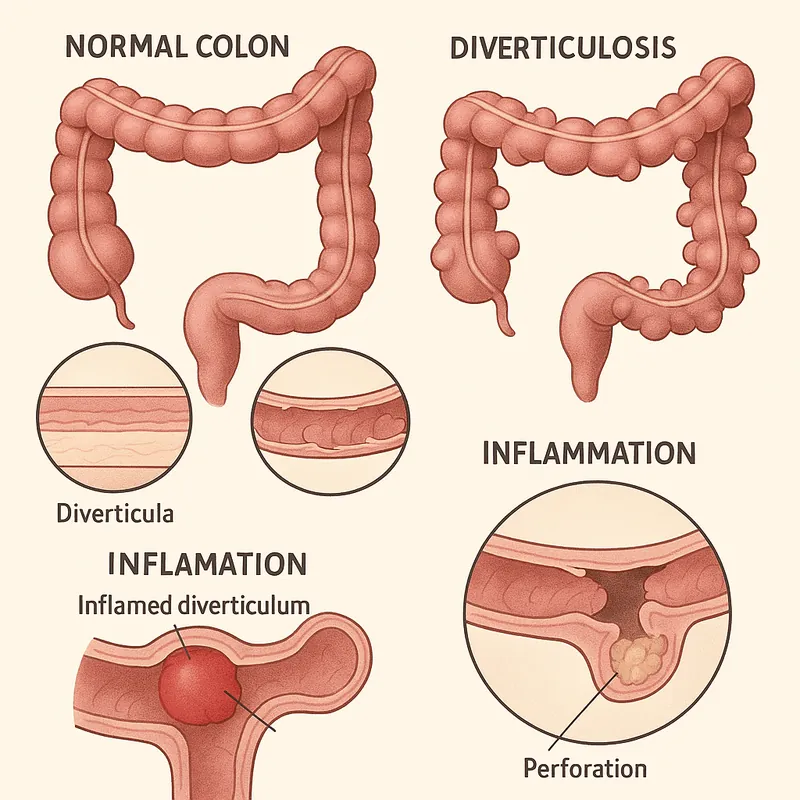
Pouches (diverticula) in the colon wall, often asymptomatic but can become inflamed (diverticulitis). Driven by chronic low fiber intake and gut dysbiosis. High-fiber, plant-forward diet plus targeted probiotics reduce recurrence dramatically.
Last updated:
Diverticular disease refers to the spectrum of conditions involving diverticula, small pouches that bulge outward through weak spots in the colon wall. The pouches form when increased pressure inside the colon pushes the inner lining through gaps in the outer muscle layer. Most often affects the sigmoid colon (lower left).
The condition exists on a spectrum: Diverticulosis (presence of pouches without symptoms, affects ~50% of adults over 60, mostly silent), Symptomatic Uncomplicated Diverticular Disease (SUDD) (chronic abdominal symptoms attributed to diverticula), and Diverticulitis (acute inflammation/infection of pouches, can be uncomplicated or complicated by abscess, perforation, fistula, obstruction).
Strongly tied to Western dietary patterns, low fiber, high refined carbohydrates, high red meat consumption. Chronic constipation, gut microbiome dysbiosis, and increased intra-colonic pressure all contribute. Diet, fiber, microbiome health, and lifestyle are the major modifiable drivers.
Diverticula present but no symptoms. ~50% of adults over 60. Most never progress. Discovered incidentally on colonoscopy. Lifestyle/dietary modifications prevent progression.
Acute inflammation/infection of pouches. Severe LLQ pain, fever, leukocytosis. Uncomplicated (~75%): outpatient antibiotics. Complicated (~25%): abscess, perforation, fistula, obstruction, may need surgery.
Symptoms vary dramatically by stage. Asymptomatic diverticulosis is silent; SUDD has chronic IBS-like symptoms; acute diverticulitis is unmistakable.
Vague, intermittent or constant pain in LLQ (where sigmoid colon sits). Often dull, sometimes crampy. May be triggered or worsened by certain foods.
Persistent abdominal bloating, especially after meals. Reflects altered colonic motility and microbiome dysbiosis. Often misdiagnosed as IBS.
Constipation predominant for most. Some experience alternating constipation/diarrhea. Sense of incomplete evacuation common.
Diverticular bleeding (when an artery in a pouch erodes), painless but can be substantial. Maroon/bright red blood. Usually self-limiting but requires evaluation.
Persistent severe pain, often described as "appendicitis on the wrong side." Tender to palpation. May radiate to back or groin. Worsens with movement.
Low-grade or high fever indicating infection. Sometimes with chills, sweats. Combined with LLQ pain in someone over 40, must rule out diverticulitis.
Systemic inflammation suppresses appetite. Vomiting in setting of LLQ pain raises concern for complicated diverticulitis (abscess, obstruction).
Rigid abdomen, severe diffuse pain, fever, rapid heart rate, suggests perforation with peritonitis. EMERGENCY. Call 911. Mortality rises sharply with delay.
Gold standard for diagnosing acute diverticulitis. Shows pericolonic inflammation, abscess, perforation, fistula. Stages severity. Essential for surgical planning if complications present.
Leukocytosis with left shift, elevated CRP support diagnosis. Procalcitonin helps distinguish bacterial from viral inflammation. Trended to monitor treatment response.
Risk of perforation. Colonoscopy is performed 6-8 weeks AFTER resolution to confirm diagnosis and rule out colon cancer (which can mimic diverticulitis).
High-fiber plant-forward diet, microbiome restoration, anti-inflammatory nutrients, lifestyle
Diet varies dramatically by phase. Acute attack: liquid/low-residue. Recovery: gradual fiber reintroduction. Long-term: high-fiber, plant-forward.
15-30g fiber per cup. Single best source of soluble + insoluble fiber. Inversely associated with diverticulitis risk in cohort studies.
All vegetables provide fiber, polyphenols, and microbiome support. Aim for 5+ servings/day. Don't avoid any vegetables, old restrictions disproven.
Oats, quinoa, barley, brown rice. Insoluble fiber bulks stool, soluble fiber feeds microbiome. Refined grains (white bread, white rice) lack this benefit.
Despite old advice, these are FINE, possibly protective. Don't avoid almonds, walnuts, chia, flax, popcorn, strawberries, raspberries unless an active flare occurs.
Acute phase: clear liquids (broth, herbal tea, gelatin) for 1-3 days, then low-residue (white bread, plain pasta, peeled potatoes, well-cooked carrots). Gradually reintroduce fiber.
High red meat consumption increases diverticulitis risk significantly (Cao et al. 2018: 58% increased risk in highest vs lowest intake). Replace with fish, poultry, plant proteins.
Alcohol consumption associated with increased diverticulitis risk. Sugary drinks disrupt microbiome. Replace with water, herbal teas, sparkling water.
Both significantly increase diverticulitis and bleeding risk. NSAIDs reduce mucosal blood flow; opioids slow colonic motility. Use alternatives when possible.
These supplements support fiber intake, microbiome health, and reduce recurrence risk.
| Supplement | Mechanism & Evidence | Suggested Dose | Timing | Notes |
|---|---|---|---|---|
| Psyllium Husk (Soluble Fiber) | Bulks and softens stool, reduces intracolonic pressure, feeds microbiome. Strong evidence for symptom reduction in SUDD and prevention of recurrence. | 5-15g/day in water | Throughout day with adequate water | Start low to assess tolerance. Increase gradually over weeks. Need adequate water to avoid obstruction. |
| Probiotic (esp. L. casei) | Lactobacillus casei has specific diverticular disease evidence. Reduces symptom recurrence in SUDD. Multi-strain probiotics generally helpful for microbiome diversity. | 10-50 billion CFU/day | With meals | L. casei strain Shirota (Yakult) most studied. Eat fermented foods alongside. |
| Magnesium Citrate | For constipation that drives diverticular formation. Mild osmotic laxative effect plus muscle relaxation. | 200-400mg/day | Evening | Citrate form for laxative effect (vs glycinate for sleep/calm). Helps maintain regular bowel movements. |
| Curcumin (Turmeric) | Anti-inflammatory; may reduce SUDD symptoms and prevent flare recurrence. Useful in chronic management. | 500-1,000mg bioavailable form 2x/day | With meals | Meriva, Theracurmin, BCM-95 forms best absorbed. |
| Omega-3 EPA/DHA | Anti-inflammatory; may help reduce inflammation in SUDD. Cardiovascular benefits also. | 2-3g combined EPA+DHA/day | With fat meal | Triglyceride form. IFOS-certified. |
| Vitamin D3 | Inverse association between vitamin D and diverticulitis risk. Repletion supports immune regulation and may reduce flare frequency. | 2,000-5,000 IU/day | With fat meal | Test 25(OH)D; target 50-70 ng/mL. |
| Glutamine | Primary fuel for colonocytes. Supports intestinal barrier function. Useful in recovery from diverticulitis episodes. | 5-10g/day | Between meals | Especially helpful in recovery phase. Avoid if cancer history or severe liver disease. |
| Acacia Fiber (Prebiotic) | Soluble fiber that feeds beneficial bacteria without much gas production. Gentler than other prebiotics. Useful for maintaining microbiome health. | 5-15g/day | Mixed in water/smoothies | Well-tolerated even with sensitive guts. Tasteless. |
Once you have diverticula, they don't go away, but you can prevent inflammation, bleeding, and complications through diet, microbiome support, and lifestyle. Most people with diverticulosis never have a symptomatic episode if they eat well.