Stomach Cancer

Gastric adenocarcinoma is closely linked to H. pylori infection (~60-90% of cases), chronic gastritis, smoked/salted foods, and low vegetable intake. Mediterranean-style eating, H. pylori eradication, and antioxidant-rich nutrition dramatically reduce risk.

Cancer Evidence-Based Root-Cause Focus

Last updated:

What Is Stomach Cancer?

Gastric (stomach) cancer most often arises as adenocarcinoma from the cells lining the stomach. Globally, it is the 5th most common cancer and a leading cause of cancer death, particularly in East Asia, Eastern Europe, and South America. Incidence has declined dramatically in Western countries due to refrigeration and reduced H. pylori prevalence.

Two distinct subtypes: Intestinal-type, older patients, distal stomach, strongly linked to H. pylori infection and dietary factors (salt, smoked foods). Diffuse-type, younger patients, often hereditary (CDH1 mutations), poorly differentiated, worse prognosis. Cardia adenocarcinomas (upper stomach near esophagus) are increasingly common in Western populations and linked to GERD/Barrett's.

H. pylori infection is responsible for ~60-90% of non-cardia gastric cancers. Chronic infection causes gastritis โ†’ atrophic gastritis โ†’ intestinal metaplasia โ†’ dysplasia โ†’ cancer. The good news: eradicating H. pylori reduces cancer risk significantly, especially when done early.
๐Ÿ’ก Key Insight: H. pylori is a Group 1 carcinogen. If you have a family history of stomach cancer, or symptoms of chronic gastritis (recurrent dyspepsia, ulcers), get tested for H. pylori. Eradication reduces gastric cancer risk significantly. Endoscopic surveillance is recommended for patients with atrophic gastritis or intestinal metaplasia.
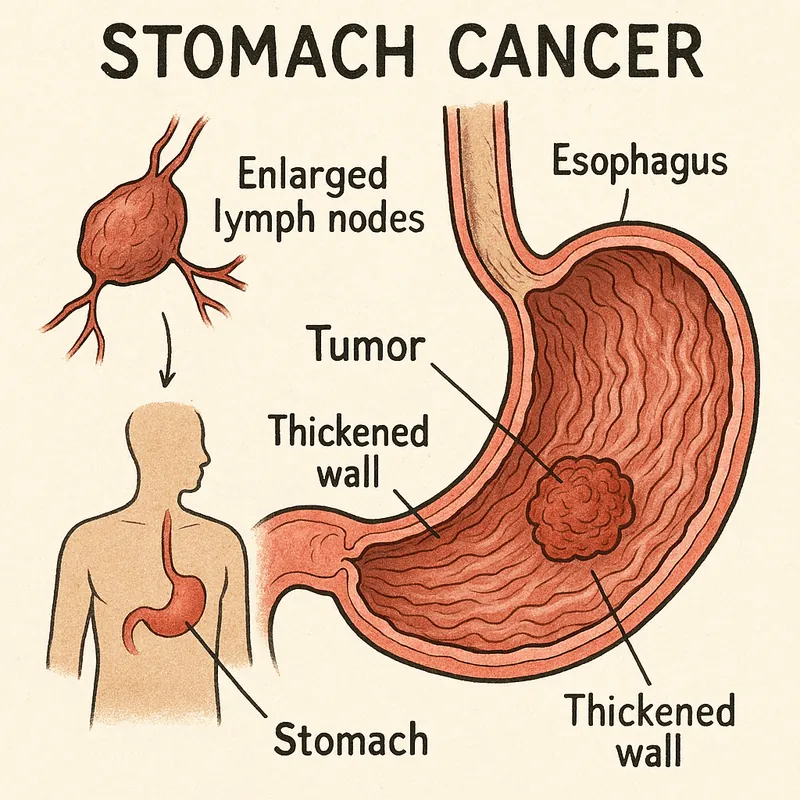
Stomach Cancer illustration

Types of Gastric Cancer

๐ŸŒฑ Intestinal-Type Adenocarcinoma

Most common in older patients. Distal stomach. Linked to H. pylori, salt, smoked foods, low vegetables. Develops over years through gastritis โ†’ metaplasia โ†’ dysplasia โ†’ cancer.

๐ŸŒ— Diffuse-Type / Signet Ring

Younger patients, women more commonly. Linitis plastica ("leather bottle stomach"). CDH1 hereditary mutation common. Worse prognosis. Hereditary diffuse gastric cancer syndrome warrants prophylactic gastrectomy.

๐ŸŒ‘ Cardia / GE Junction

Upper stomach near esophagus. Increasingly common in Western countries. Linked to GERD, Barrett's esophagus, obesity. Often grouped with esophageal cancer for treatment.

~27K
Annual US new diagnoses
~60-90%
Of non-cardia cases caused by H. pylori
~36%
Overall 5-year US survival
5th
Most common cancer globally

Symptoms of Stomach Cancer

Early-stage cancer often asymptomatic or mimics common dyspepsia. Persistent symptoms in patients >55 or with alarm features warrant endoscopy.

๐Ÿ” Early / Common Symptoms

๐Ÿ˜–

Persistent Indigestion / Dyspepsia

Upper abdominal discomfort, burning, fullness, bloating. Often dismissed as GERD or "stress." Persistent or worsening symptoms in older adults warrant endoscopy.

๐Ÿฝ๏ธ

Early Satiety

Feeling full quickly with small meals. Reduced eating capacity. May indicate tumor narrowing or rigid stomach (linitis plastica). Often combined with weight loss.

๐Ÿคข

Nausea, Loss of Appetite

Persistent reduced appetite, food aversion. May develop aversion to specific foods (especially meat). Vague but persistent nausea.

โš–๏ธ

Unexplained Weight Loss

10+ pounds without trying. Combined with dyspepsia or early satiety, raises concern significantly. Always investigate in adults >55.

โš ๏ธ Alarm Features (Urgent Endoscopy)

๐Ÿฉธ

GI Bleeding / Anemia

Hematemesis (vomiting blood), melena (black tarry stools), or unexplained iron-deficiency anemia in older men or postmenopausal women. URGENT endoscopy required.

๐Ÿฆด

Vomiting (Especially of Undigested Food)

May indicate gastric outlet obstruction by tumor. Eating food and vomiting hours later. Severe weight loss often accompanies.

๐Ÿ˜–

Dysphagia (Difficulty Swallowing)

Solids stick or feel like they "get stuck." May indicate tumor at gastroesophageal junction or cardia. URGENT evaluation.

๐Ÿ’ช

Palpable Mass / Lymph Nodes

Epigastric mass. Left supraclavicular lymph node (Virchow's node), classic sign of metastatic gastric cancer. Umbilical nodule (Sister Mary Joseph). Late findings.

How Stomach Cancer Is Diagnosed

๐Ÿ”ฌ Diagnosis & Staging

๐Ÿ”ฌ Upper Endoscopy + Biopsy

PRIMARY diagnostic test. Direct visualization + multiple biopsies of suspicious lesions, ulcers, mass. Should sample edges and base of ulcers.

๐Ÿ“ก Endoscopic Ultrasound (EUS)

Determines T-stage (depth of invasion) and N-stage (regional nodes). Critical for staging and treatment planning. Can biopsy enlarged lymph nodes.

๐Ÿ“ก CT Chest/Abdomen/Pelvis

Standard staging, evaluates for liver, lung, peritoneal metastases. Sometimes PET-CT for further evaluation.

๐Ÿ”ฌ Diagnostic Laparoscopy

For locally advanced disease before surgery, detects small peritoneal metastases not visible on imaging. Peritoneal washings.

๐Ÿงฌ H. pylori & Molecular Testing

๐Ÿฆ  H. pylori Testing

Urea breath test, stool antigen, biopsy testing. EVERY gastric cancer patient should be tested. Eradication for those positive (treat family members too).

๐Ÿงฌ HER2 Testing

~15-20% of gastric cancers are HER2-positive. Determines eligibility for trastuzumab (Herceptin), significant survival benefit when added to chemo.

๐Ÿงฌ PD-L1 (CPS)

Combined positive score. CPS โ‰ฅ5 (some indications โ‰ฅ1) makes patients eligible for immunotherapy (pembrolizumab, nivolumab) addition to chemo.

๐Ÿงฌ MSI, EBV, Claudin 18.2

Microsatellite instability (immunotherapy responders), EBV-positive (better prognosis), Claudin 18.2 (new target, zolbetuximab).

Holistic vs. Conventional Treatment

๐ŸŒฟ HOLISTIC
๐Ÿ’Š CONVENTIONAL
๐ŸŒฟ

Holistic / Integrative Approach

PRIMARY PREVENTION is extremely effective, H. pylori eradication, Mediterranean diet, lifestyle factors

Primary Prevention
H. pylori eradication can reduce gastric cancer risk significantly, especially when done early
Dietary Prevention
Mediterranean diet, high vegetable/fruit, low salt/smoked foods cuts risk dramatically
Surveillance
Atrophic gastritis, intestinal metaplasia, family history โ†’ endoscopic surveillance
Post-Gastrectomy
B12, iron, calcium, fat-soluble vitamin replacement; small frequent meals essential
Comprehensive Prevention & Support
  • H. pylori test and treat, single most important primary prevention. Test family members.
  • Mediterranean / plant-rich diet, 5-7+ servings vegetables and fruits daily. Inverse association with gastric cancer.
  • Fresh vs preserved foods, refrigeration (a major reason gastric cancer rates fell in West). Choose fresh foods over preserved.
  • Allium vegetables daily, garlic, onions, leeks, shallots. Strong inverse association with gastric cancer.
  • Limit salt, <5g/day. High salt damages stomach lining, promotes H. pylori, increases cancer risk.
  • Limit preserved, smoked, salted foods, bacon, sausage, pickled vegetables, salted fish. Major risk factor in Asian populations.
  • Quit smoking, doubles gastric cancer risk; quit at any age helps
  • Vitamin C from food, citrus, peppers, berries. Inverse association with gastric cancer.
  • Green tea (regular consumption), EGCG and other polyphenols. Modest protective association.
  • Limit alcohol, heavy alcohol increases risk, especially with smoking
  • Maintain healthy weight, obesity increases cardia adenocarcinoma risk
  • Treat GERD, chronic reflux + Barrett's increases cardia/GEJ cancer risk
  • Endoscopic surveillance for atrophic gastritis, intestinal metaplasia, pernicious anemia, family history (CDH1 carriers)
  • Post-gastrectomy nutrition: B12 lifelong (injections), iron, calcium, vitamin D, small frequent meals to prevent dumping syndrome
โœ… Stomach Cancer Is Largely Preventable: Gastric cancer rates dropped dramatically in Western countries due to refrigeration, reduced H. pylori, and increased vegetable intake. The same prevention works individually, test/treat H. pylori, eat Mediterranean, avoid smoked/salted foods, don't smoke.

Diet for Stomach Cancer

Mediterranean, fresh foods, low salt, no smoked/preserved meats. Post-gastrectomy: small frequent meals + lifelong nutrient replacement.

โœ… Prioritize (Prevention):

๐Ÿฅฌ Fresh Vegetables & Fruits

5-7+ servings daily. Strong inverse association with gastric cancer. Citrus, leafy greens, cruciferous especially protective.

๐Ÿง„ Allium Vegetables Daily

Garlic, onions, leeks, shallots, scallions. Organosulfur compounds may reduce gastric cancer risk significantly.

๐Ÿต Green Tea

2-3 cups/day. Long-term consumption associated with reduced gastric cancer in Asian populations.

๐Ÿ… Vitamin C-Rich Foods

Citrus, bell peppers, berries, kiwi. Inhibits formation of carcinogenic N-nitroso compounds in stomach.

๐Ÿฝ๏ธ Post-Gastrectomy: Small Frequent Meals

5-6 small meals/day. Chew thoroughly. Liquids between (not with) meals. Lie down briefly after eating. Prevents dumping syndrome.

โŒ Strictly Limit:

๐Ÿฅ“ Smoked, Cured, Salted Foods

Bacon, sausage, ham, salted fish, pickled vegetables. Nitrates/nitrites and salt damage stomach lining. WHO classifies processed meats as Group 1 carcinogens.

๐Ÿง‚ Excessive Salt

<5g/day. Asian high-salt populations have highest gastric cancer rates. Damages mucosa, promotes H. pylori colonization.

๐Ÿšญ Tobacco

Doubles gastric cancer risk. Synergistic with H. pylori and alcohol. Continuing to smoke after diagnosis worsens treatment response.

๐Ÿท Heavy Alcohol

Especially when combined with smoking. Damages stomach lining. Limit to <1 drink/day.

๐Ÿ” Ultra-Processed Foods

Strong association with multiple cancers. Replace with whole foods. Especially limit instant noodles, processed meats, packaged snacks.

Evidence-Based Supplements

Post-gastrectomy: lifelong B12, iron, calcium, vitamin D. For prevention: focus on food-based nutrients first.

SupplementMechanism & EvidenceSuggested DoseTimingNotes
Vitamin B12 (Post-Gastrectomy)Required after gastrectomy (loss of intrinsic factor). Without replacement, severe deficiency develops.1,000mcg IM monthly OR 1,000-2,000mcg sublingual dailyIM monthly or daily sublingualLIFELONG after total gastrectomy. Check B12 levels regularly.
Iron (Post-Gastrectomy)Reduced absorption after gastrectomy. Often need supplementation; sometimes IV iron.Per blood testsWith vitamin C, away from calciumTest ferritin regularly. Anemia common.
Calcium + Vitamin D3Reduced absorption after gastrectomy. Bone loss common. Test and replace.Calcium 1,000-1,200mg + Vitamin D 2,000-5,000 IU/dayWith meals (calcium); with fat (D)DEXA scan to monitor bone density. Pair D with K2 200mcg.
Multivitamin (Post-Gastrectomy)Multiple micronutrient deficiencies common. Address fat-soluble vitamins (A, D, E, K).1 quality multivitamin dailyWith foodChoose one with adequate B-complex.
Pancreatic Enzymes (If Indicated)Post-gastrectomy, especially after Whipple-related procedures, enzyme insufficiency common.Per oncology teamWith mealsDiscuss with surgical team and oncology nutritionist.
Omega-3 (EPA/DHA)Anti-inflammatory; supports muscle preservation during chemo/recovery.2,000-3,000mg EPA+DHA/dayWith fat mealDiscuss with oncologist.
ProbioticsModulate gut microbiome; may improve chemo tolerance, reduce H. pylori colonization (multi-strain).10-30 billion CFU/day, multi-strainWith or without foodEspecially after antibiotics for H. pylori eradication.
Vitamin C (Food-Based)Inhibits N-nitroso compound formation in stomach. Prefer food sources.500-1,000mg/day OR via dietWith mealsCitrus, peppers, berries, preferred over supplements.

Test & Treat H. pylori

Gastric cancer is largely preventable. Get tested for H. pylori, especially if you have family history, recurrent dyspepsia, or are from a high-risk population. Eat fresh, Mediterranean-style, low-salt, with abundant vegetables and fruits. Avoid smoked and preserved meats. After diagnosis, treatment at a high-volume center matters significantly.