Asthma

Chronic inflammatory airway disease causing wheezing, breathlessness, and chest tightness. Increasingly linked to gut microbiome dysbiosis ("gut-lung axis"). Vitamin D, omega-3, magnesium, and identifying food sensitivities (especially dairy and gluten) reduce flare frequency.

Respiratory Evidence-Based Root-Cause Focus

Last updated:

What Is Asthma?

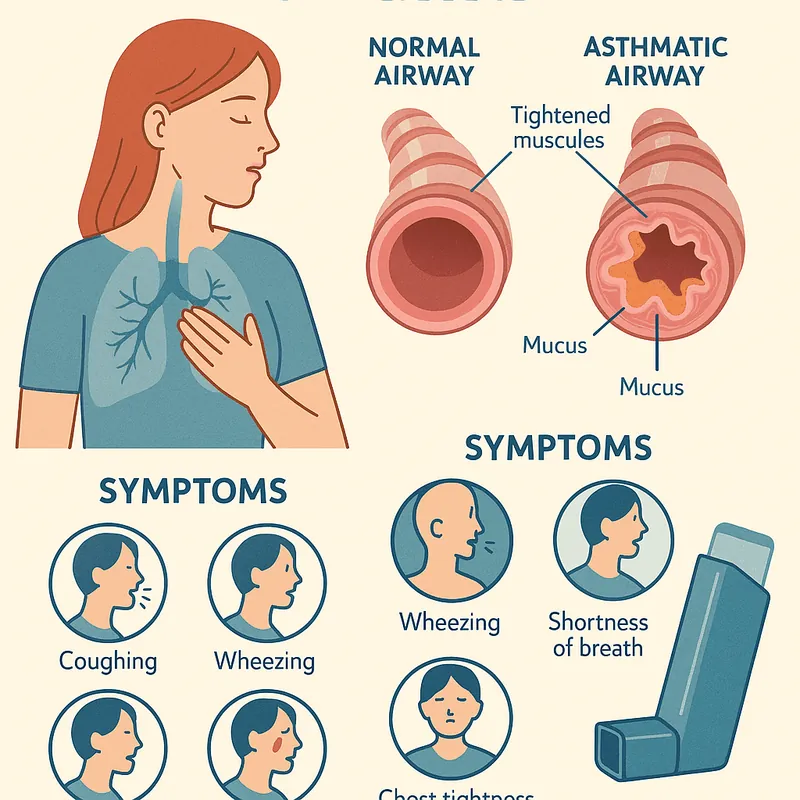
Asthma is a chronic inflammatory disease of the airways causing reversible bronchoconstriction, mucus hypersecretion, and airway hyperresponsiveness. Hallmark symptoms, wheezing, breathlessness, chest tightness, cough, result from narrowed, inflamed airways and twitchy smooth muscle.

Modern understanding identifies multiple asthma "phenotypes": allergic/eosinophilic (Th2-high, ~50%), non-allergic, exercise-induced, aspirin-exacerbated, and obesity-associated. Each responds differently to treatment, biologics target specific Th2 pathways, while obesity-related asthma improves dramatically with weight loss.

The gut-lung axis is increasingly recognized as central to asthma. Early-life antibiotic exposure, dysbiosis, and impaired short-chain fatty acid production correlate with asthma development. Vitamin D deficiency, omega-3 deficiency, and food sensitivities (especially dairy in some patients) contribute to inflammation.

โš ๏ธ NEVER discontinue prescribed asthma controllers (inhaled corticosteroids) without medical guidance, even when feeling better. Uncontrolled asthma can be fatal. Use holistic approaches IN ADDITION to controllers; aim to reduce reliance on rescue inhalers, not replace controllers.
Asthma illustration

Major Asthma Phenotypes

๐ŸŒฑ Allergic/Eosinophilic (~50%)

Th2-driven. Triggered by allergens (dust mites, pollen, pet dander). Elevated IgE, eosinophils. Responds well to inhaled steroids; severe cases benefit from biologics (omalizumab, mepolizumab, dupilumab).

๐ŸŒ— Non-Allergic / Exercise-Induced

Adult-onset. Triggered by infection, cold air, exercise, stress, irritants. Often less responsive to steroids. Vagal/autonomic factors. Breathing retraining (Buteyko) often helpful.

๐ŸŒ‘ Obesity-Associated

Adult-onset, often in women. Driven by metabolic inflammation, mechanical restriction. Less Th2-eosinophilic. Often responds dramatically to weight loss (10% weight loss โ†’ significant improvement).

~25M
US adults & children with asthma
~1 in 12
US adults affected
~3,500
Annual US asthma deaths
~$80B
Annual US asthma cost

Symptoms of Asthma

Symptoms wax and wane and are often worse at night/early morning. Recognize warning signs of exacerbation early, they can progress to life-threatening attacks.

๐ŸŒฌ๏ธ Typical Daily Symptoms

๐ŸŒฌ๏ธ

Wheezing

High-pitched whistling sound during breathing (usually exhalation). Caused by airflow through narrowed bronchi. May be subtle or loudly audible.

๐Ÿ˜ฎโ€๐Ÿ’จ

Shortness of Breath

Sensation of inability to breathe deeply. Worsens with exertion, exposure to triggers. Difficulty completing sentences in severe attacks.

๐Ÿคง

Chronic Cough

Often the only symptom in "cough-variant asthma." Worse at night, with exercise, or after viral infections. Sometimes productive of clear mucus.

๐Ÿ’ช

Chest Tightness

Sensation of band around chest. Caused by bronchial smooth muscle constriction. May be mistaken for cardiac chest pain.

โš ๏ธ Severe Attack (Emergency)

๐Ÿšจ

Inability to Complete Sentences

Single words between breaths. Sign of severe airflow obstruction. Use rescue inhaler immediately; call 911 if no response.

๐Ÿ’จ

Use of Accessory Muscles

Visible neck/chest muscles working hard with each breath. Tripod position (leaning forward, hands on knees). Indicates respiratory distress.

๐Ÿ”ต

Cyanosis (Blue Lips/Fingers)

Bluish tinge of lips, fingertips. Sign of hypoxia. LIFE-THREATENING, call 911 immediately.

๐Ÿคซ

Silent Chest

PARADOXICAL: in severe attack, wheezing may disappear as airflow is too low to produce sound. Most ominous sign. 911 immediately.

How to Diagnose Asthma

๐Ÿซ Pulmonary Function Testing

๐Ÿ“Š Spirometry (Gold Standard)

Measures FEV1 (forced expiratory volume) and FVC. Asthma: FEV1/FVC ratio <0.70 with โ‰ฅ12% improvement after bronchodilator. The defining test for asthma diagnosis.

๐Ÿ’จ Peak Flow Monitoring

Daily home monitoring of peak expiratory flow. Track personal best, recognize drops indicating impending exacerbation. Useful for self-management plans.

๐Ÿ”ฌ Methacholine Challenge

Used when spirometry normal but asthma suspected. Inhalation of methacholine triggers bronchoconstriction in asthmatics. Negative test rules out asthma.

๐Ÿซ FeNO (Exhaled Nitric Oxide)

Marker of eosinophilic airway inflammation. Elevated FeNO predicts steroid-responsive asthma. Useful for phenotyping and treatment selection.

๐Ÿฉธ Phenotyping & Trigger ID

๐Ÿฉธ CBC with Eosinophil Count

Eosinophil count โ‰ฅ300 indicates eosinophilic phenotype. Important for biologic therapy selection. Total IgE level also informative.

๐ŸŒพ Allergy Testing

Skin prick tests or specific IgE blood tests. Identify triggers: dust mites, pet dander, cockroaches, molds, pollens, foods. Guides avoidance and treatment.

๐Ÿฉธ Vitamin D Level

Low vitamin D (<30) correlates with worse asthma control and more exacerbations. Target 50-80 ng/mL.

๐Ÿ“‹ Asthma Control Tools (ACT, ACQ)

Validated questionnaires for assessing control over preceding weeks. Score <20 indicates uncontrolled asthma. Track over time.

Holistic vs. Conventional Treatment

๐ŸŒฟ HOLISTIC
๐Ÿ’Š CONVENTIONAL
๐ŸŒฟ

Holistic / Functional Approach

Reduce inflammation, address gut-lung axis, identify triggers. ALWAYS used WITH (not instead of) controllers.

Trigger Avoidance
Identify and reduce exposure, dust mites, mold, pet dander, foods (esp. dairy in some)
Anti-Inflammatory
Mediterranean diet, omega-3, vitamin D, reduce baseline inflammation
Breathing Retraining
Buteyko method, diaphragmatic breathing, reduces hyperventilation, improves CO2 tolerance
Gut-Lung Axis
Probiotics, fiber, fermented foods, modulate immune response systemically
Comprehensive Holistic Strategy
  • Identify triggers: dust mite encasings, HEPA filter, remove pets if allergic, mold remediation
  • Eliminate dairy 4-week trial, many asthmatics improve. Casein and milk proteins can be inflammatory.
  • Test for food sensitivities, wheat, eggs, soy, peanuts. Elimination-reintroduction protocol.
  • Vitamin D 5,000 IU/day, to level 50-80 ng/mL. Reduces exacerbations 26%.
  • Omega-3 EPA/DHA 2,000-3,000mg/day, anti-inflammatory; resolves bronchial inflammation
  • Magnesium 400-600mg/day, bronchodilator. IV magnesium is ER asthma treatment.
  • Mediterranean diet, vegetables, fruits, fish, olive oil. Children with high-Med diet have 78% less asthma.
  • Address obesity, even 10% weight loss dramatically improves asthma control in obese phenotype
  • Buteyko breathing retraining, reduces rescue inhaler use 90% in some trials; improves CO2 tolerance
  • Salt pipe/halotherapy, limited but some evidence; well-tolerated
  • Steam inhalation with eucalyptus, symptomatic relief during exacerbations
  • Avoid food additives, sulfites (wine, dried fruits), MSG, artificial colorings trigger flares in sensitive patients
  • Stop smoking + avoid secondhand smoke, non-negotiable. Vaping also harmful.
  • Annual flu vaccine + COVID-19 boosters, viral infections are major triggers
โœ… Critical Safety Note: NEVER stop your controller inhaler without medical supervision, even when feeling perfectly fine. Asthma deaths often occur in patients who felt well and discontinued controllers. Use holistic approaches to add benefit, not replace life-saving medications.

Diet for Asthma Control

Anti-inflammatory eating pattern + identifying personal trigger foods. Mediterranean diet associated with 78% lower asthma rates in children.

โœ… Prioritize:

๐ŸŸ Fatty Fish (2-3x/week)

Wild salmon, sardines, mackerel, herring. EPA/DHA reduce airway inflammation. Anti-leukotriene effect.

๐Ÿฅฌ Colorful Fruits & Vegetables

5-7+ servings daily. High intake of apples, tomatoes, leafy greens specifically associated with better lung function and lower asthma rates.

๐Ÿซ Berries & Quercetin-Rich Foods

Apples, onions, capers, red grapes. Quercetin is a natural antihistamine and mast cell stabilizer.

๐Ÿฅ„ Honey (Local Raw)

Cough suppressant. Local honey may help with seasonal allergies (limited evidence). 1-2 tsp/day. Not for children under 1.

๐ŸŒถ๏ธ Ginger & Turmeric

Anti-inflammatory. Ginger relaxes bronchial smooth muscle. Curcumin reduces airway inflammation in small trials.

โŒ Limit or Trial Eliminate:

๐Ÿฅ› Dairy (4-Week Trial)

Eliminate completely for 4 weeks, then reintroduce. Many asthmatics see significant mucus reduction. Casein and whey can be inflammatory.

๐Ÿท Sulfites & Food Additives

Wine, beer, dried fruits, restaurant salad bars, processed foods. Sulfites trigger bronchospasm in ~10% of asthmatics. MSG also problematic.

๐ŸŒพ Refined Grains & Sugar

Pro-inflammatory. High glycemic load increases asthma risk. White bread, pastries, sodas, sweets.

๐Ÿ” Processed/Fast Food

Trans fats, seed oils, additives. Children with high fast-food intake have 39% more severe asthma. Eliminate.

๐ŸŒฐ Known Allergens

Eggs, peanuts, tree nuts, soy, wheat, if allergic. Anaphylaxis can present with asthma-like symptoms. Carry epinephrine if at risk.

Evidence-Based Supplements

Best evidence for vitamin D, omega-3, magnesium. Use alongside (not instead of) prescribed controllers.

SupplementMechanism & EvidenceSuggested DoseTimingNotes
Vitamin D3Reduces asthma exacerbations 26% in deficient patients. Modulates immune response, reduces inflammation.2,000-5,000 IU/day (titrate to 50-80 ng/mL)With fat mealTest baseline. Pair with K2 200mcg.
Omega-3 (EPA/DHA)Anti-inflammatory; reduces leukotrienes. May reduce exercise-induced bronchoconstriction.2,000-3,000mg EPA+DHA/dayWith fat mealHigher doses for active disease. Test omega-3 index.
MagnesiumBronchodilator. Smooth muscle relaxant. IV magnesium is ER treatment for severe attacks.400-600mg/dayEveningGlycinate or malate. May reduce rescue inhaler use.
QuercetinNatural antihistamine, mast cell stabilizer. Reduces allergic inflammation.500-1,000mg/dayEmpty stomach (15 min before meals)Often combined with bromelain for absorption.
N-Acetyl Cysteine (NAC)Mucolytic, thins thick mucus. Glutathione precursor. Useful for asthma with thick secretions.600-1,800mg/dayDivided dosesSulfur smell. May reduce exacerbations.
Vitamin CAntioxidant. May reduce exercise-induced bronchoconstriction. Antihistamine effects.500-2,000mg/dayDivided dosesLiposomal forms easier on stomach.
Probiotics (Lactobacillus, Bifidobacterium)Modulate gut-lung axis. Reduce asthma severity, especially in children.10-30 billion CFU/day, multi-strainWith or without foodL. rhamnosus GG, L. paracasei show best evidence.
Boswellia (Frankincense)5-lipoxygenase inhibitor, reduces leukotrienes (same target as Singulair). Anti-inflammatory.300-400mg, 3x/day (standardized to 60% boswellic acids)With mealsWell-tolerated. Helpful for chronic inflammation.

Better Control Is Possible

Asthma is highly modifiable. Address triggers, optimize nutrition, correct deficiencies, and add evidence-based supplements, while continuing your prescribed controller. Many patients reduce rescue inhaler use by 50%+ with comprehensive holistic care. Never discontinue prescribed asthma medications without medical guidance.