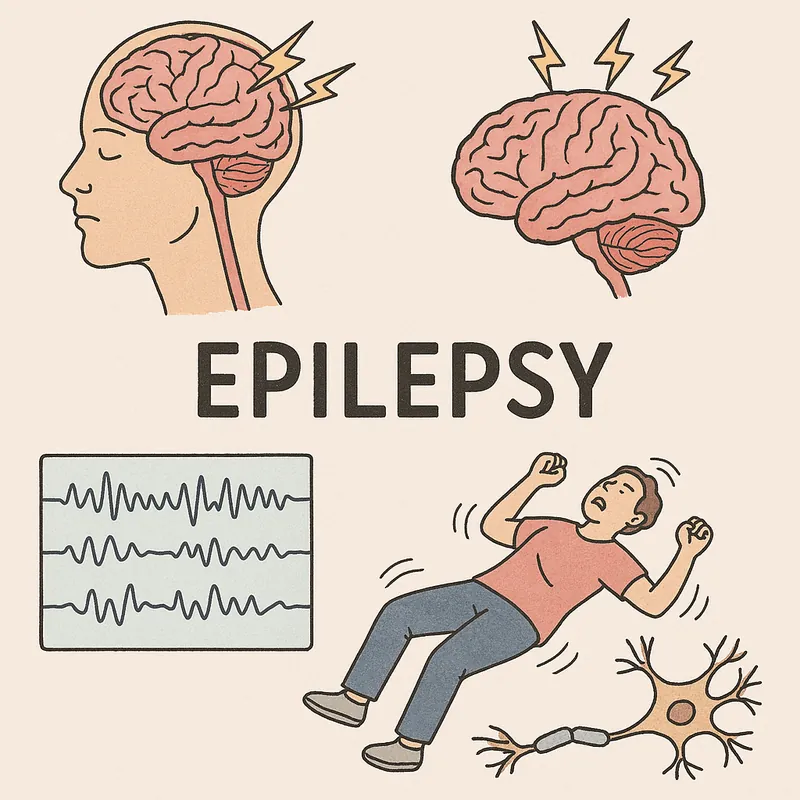
Epilepsy

A neurological disorder of recurrent seizures from abnormal brain electrical activity. The ketogenic diet has decades of evidence for drug-resistant epilepsy, particularly in children. Magnesium, taurine, and B6 also support neuronal stability.

Neurological Evidence-Based Root-Cause Focus

Last updated:

What Is Epilepsy?

Epilepsy is a neurological disorder characterized by recurrent unprovoked seizures, sudden, uncontrolled electrical disturbances in the brain. Diagnosis requires either two or more unprovoked seizures (more than 24 hours apart), one unprovoked seizure with high risk of recurrence, or epilepsy syndrome diagnosis.

Seizures are classified by onset: Focal (begin in one brain region, formerly called partial) and Generalized (involve both hemispheres from start). Focal seizures may have impaired awareness or remain alert. Generalized include tonic-clonic ("grand mal"), absence ("petit mal"), myoclonic, atonic, and tonic types. Many patients have multiple seizure types.

Causes range from structural (stroke, tumor, traumatic brain injury, cortical malformation, mesial temporal sclerosis) to genetic (channelopathies, syndromes like Dravet) to metabolic, immune (autoimmune encephalitis), and infectious. About 30% remain "unknown etiology." With proper treatment, ~70% of patients become seizure-free; the remaining 30% have drug-resistant epilepsy and may benefit from epilepsy surgery, neurostimulation, or dietary therapy.

๐Ÿ’ก Ketogenic Diet Evidence: The classic ketogenic diet has nearly 100 years of evidence for drug-resistant epilepsy, particularly in children. ~50% achieve >50% seizure reduction; ~10-15% become seizure-free. Modified Atkins diet and low glycemic index diet are less restrictive alternatives with similar efficacy.
Epilepsy illustration

Major Seizure Types

๐ŸŒฑ Focal Seizures

Begin in one brain region. May be aware (formerly "simple partial") or have impaired awareness (formerly "complex partial"). May progress to bilateral tonic-clonic. Most common in adults.

๐ŸŒ— Generalized Tonic-Clonic

"Grand mal." Loss of consciousness, stiffening (tonic) then jerking (clonic) of all limbs, then post-ictal confusion. May have aura, tongue biting, urinary incontinence.

๐ŸŒ‘ Absence / Myoclonic / Atonic

Absence: brief staring (children). Myoclonic: sudden brief jerks. Atonic: sudden loss of muscle tone ("drop attacks"). Often part of generalized epilepsy syndromes.

~3.4M
US adults & children with epilepsy
~1 in 26
Lifetime risk of developing epilepsy
~70%
Become seizure-free with proper treatment
~30%
Have drug-resistant epilepsy

Symptoms of Seizures

Manifestations depend on brain region involved. Recognize warning signs for safety planning and accurate diagnosis.

๐Ÿง  Seizure Manifestations

๐Ÿ˜ต

Loss of Consciousness or Awareness

Generalized seizures: complete loss of consciousness. Focal seizures with impaired awareness: appear awake but unresponsive. Absence seizures: brief staring spell, often missed.

๐Ÿ’ช

Convulsions / Motor Activity

Stiffening + rhythmic jerking (tonic-clonic). Single body part (focal motor). Sudden brief jerks (myoclonic). Sudden loss of tone (atonic).

๐Ÿ‘๏ธ

Sensory / Aura Symptoms

Strange smells/tastes, dรฉjร  vu, fear, rising abdominal sensation, visual disturbances. Often precede generalized seizure ("aura"). May be sole symptom of focal seizure.

๐Ÿ˜ถ

Automatisms

Lip smacking, chewing, fumbling with clothes, repetitive movements. Common in temporal lobe seizures with impaired awareness. Patient unaware.

โš ๏ธ Post-Ictal & Emergency

๐Ÿ˜ด

Post-Ictal Confusion / Fatigue

After tonic-clonic seizure: confusion, headache, muscle soreness, profound fatigue for hours. Slowly returns to baseline. Memory loss for event.

๐Ÿšจ

Status Epilepticus (EMERGENCY)

Seizure >5 minutes OR repeated seizures without recovery between. CALL 911 IMMEDIATELY. Brain damage possible. Mortality >10%.

๐Ÿค•

Injuries from Seizure

Falls, tongue biting, head trauma. Drowning risk if in water. Burns from cooking. Important safety planning.

๐Ÿšซ

SUDEP (Sudden Unexpected Death)

Rare but serious complication. Most common in poorly controlled tonic-clonic seizures. Risk reduced by good seizure control, nocturnal monitoring.

How Epilepsy Is Diagnosed

๐Ÿง  Neurological Workup

๐Ÿ“‹ Detailed History

CRITICAL, most diagnostic test. Witness account of event (video recording very helpful). Aura, postictal state, frequency, triggers, family history.

๐Ÿง  EEG (Electroencephalogram)

Routine EEG (20-40 min); sleep-deprived EEG; ambulatory or video-EEG monitoring. Identifies epileptiform discharges, seizure type, localizes onset.

๐Ÿ“ก Brain MRI (High-Resolution Epilepsy Protocol)

Looks for structural causes, mesial temporal sclerosis, cortical malformations, tumors, strokes, vascular malformations. 3T MRI with epilepsy protocol.

๐Ÿงฌ Genetic Testing (Selected)

For pediatric epilepsy, family history, treatment-resistant cases. Identifies channelopathies and syndromes affecting treatment choice.

๐Ÿ”ฌ Additional Workup

๐Ÿฉธ Metabolic Workup

Glucose, sodium, calcium, magnesium, BUN, liver function. Rules out metabolic causes (hypoglycemia, electrolyte abnormalities) of provoked seizures.

๐Ÿฉธ Autoimmune Encephalitis Panel

For new-onset epilepsy with cognitive/psychiatric symptoms. NMDA, LGI1, CASPR2 antibodies. Increasingly recognized cause of "drug-resistant" epilepsy.

๐Ÿ”ฌ Lumbar Puncture (Selected)

For first seizure with fever, immunocompromised, autoimmune encephalitis suspicion. Rules out infection.

๐Ÿ“ก Long-Term Video EEG (Pre-Surgical)

For drug-resistant epilepsy considering surgery. Captures seizures, precisely localizes onset zone. Days to weeks of monitoring.

Holistic vs. Conventional Treatment

๐ŸŒฟ HOLISTIC
๐Ÿ’Š CONVENTIONAL
๐ŸŒฟ

Holistic / Functional Approach

Ketogenic diet has STRONG evidence for drug-resistant epilepsy. Lifestyle modulates seizure threshold.

Ketogenic Diet
~50% achieve >50% seizure reduction; ~10-15% seizure-free. Strong evidence in drug-resistant pediatric epilepsy.
Variants
Classic keto, MAD (Modified Atkins), Low Glycemic Index, MCT-based, similar efficacy with less restriction
Trigger Avoidance
Sleep, stress, alcohol, missed meals, dehydration, photic stimulation, identify and address personal triggers
Adjunctive
Magnesium, B vitamins, omega-3, never replace antiseizure medications
Comprehensive Strategy
  • Antiseizure medications are foundation, holistic approaches complement, never replace prescribed medications
  • Ketogenic diet, strong evidence for drug-resistant epilepsy, especially in children. Initiated and monitored by epilepsy team with experienced dietitian. Variants for adults: Modified Atkins (less restrictive), Low Glycemic Index.
  • Identify and avoid triggers: sleep deprivation, stress, alcohol/withdrawal, missed meals, dehydration, hyperventilation, flashing lights (in photosensitive epilepsy), fever, certain medications
  • Sleep optimization, sleep deprivation is major trigger. 7-9 hours nightly. Treat sleep apnea aggressively (very common in adults with epilepsy).
  • Stress management, meditation, yoga, CBT. Stress lowers seizure threshold.
  • Limit / avoid alcohol, both intake and withdrawal can trigger seizures
  • Address sleep apnea, improves seizure control significantly in patients with both
  • Regular meals, avoid hypoglycemia, low blood sugar lowers seizure threshold
  • Magnesium 400-600mg/day, stabilizes neuronal membranes, may reduce seizure frequency
  • Omega-3 (EPA/DHA), neuroprotective, anti-inflammatory; modest evidence for seizure reduction
  • Vitamin D optimization, deficiency may worsen seizure control; many antiseizure meds reduce D levels
  • Vitamin B6 (pyridoxine), required in some inborn errors. Pyridoxine-dependent epilepsy responsive only to B6.
  • Taurine, inhibitory neurotransmitter; limited but some evidence for adjunctive use
  • L-Carnitine, especially with valproic acid (depletes carnitine)
  • Folate (with caution), many antiseizure meds reduce folate. Critical for women of childbearing age.
  • Bone health monitoring, many antiseizure meds increase fracture risk. Vitamin D, calcium, weight-bearing exercise.
  • Safety planning: seizure first aid education for family/coworkers, medical ID bracelet, avoid driving/swimming alone until controlled
โœ… Ketogenic Diet Is Evidence-Based: The ketogenic diet has nearly 100 years of evidence for drug-resistant epilepsy. It must be initiated with medical supervision. Modified Atkins Diet (MAD) and Low Glycemic Index Treatment (LGIT) are less restrictive alternatives with similar efficacy in many patients. Discuss with epilepsy team.

Diet for Epilepsy

Classic ketogenic diet for drug-resistant epilepsy under medical supervision. Otherwise: avoid hypoglycemia, address deficiencies, anti-inflammatory pattern.

โœ… Prioritize:

๐Ÿฅ‘ Healthy Fats (Especially Keto Diet)

Olive oil, avocado, nuts, fatty fish, coconut/MCT oil. If on ketogenic diet, 70-80% calories from fat. Supervised by epilepsy team.

๐ŸŸ Fatty Fish (2-3x/week)

Wild salmon, sardines, mackerel. Omega-3 EPA/DHA. Neuroprotective, anti-inflammatory.

๐Ÿฅฌ Leafy Greens & Vegetables

Magnesium, folate, vitamins. Especially important when on antiseizure medications that deplete nutrients.

๐Ÿฝ๏ธ Regular Meals

Avoid skipping meals, hypoglycemia can trigger seizures. Stable blood sugar important except in ketogenic protocols.

๐Ÿ’ง Adequate Hydration

Dehydration is a seizure trigger. 2-3 L water daily. Increase in hot weather or with exercise.

โŒ Avoid / Limit:

๐Ÿท Alcohol

Both intoxication and withdrawal trigger seizures. Many antiseizure meds interact. Best to avoid entirely; if drinking, limit strictly.

๐Ÿฌ Refined Sugar (Blood Sugar Swings)

Reactive hypoglycemia after sugar spikes can trigger seizures. Especially destabilizing. Eliminate sugary drinks and sweets.

โญ๏ธ Skipping Meals / Fasting

Hypoglycemia is seizure trigger. Don't skip breakfast. If trying intermittent fasting, discuss with epilepsy team, may worsen seizures (different from supervised ketogenic).

๐Ÿ’Š Stimulants (Excess)

Excess caffeine, energy drinks can lower seizure threshold. Moderate intake usually okay; avoid stimulant abuse.

๐ŸŒฟ Certain Herbal Supplements

Ginkgo, evening primrose, star anise, ephedra can lower seizure threshold or interact with antiseizure meds. Always check with neurologist.

Evidence-Based Supplements

Many antiseizure medications deplete nutrients. Discuss all supplements with epilepsy team, some interact with medications.

SupplementMechanism & EvidenceSuggested DoseTimingNotes
MagnesiumStabilizes neuronal membranes. Often deficient. May reduce seizure threshold when deficient.400-600mg/dayEveningGlycinate or malate forms. Evidence stronger for deficient patients.
Vitamin D3Many antiseizure medications reduce D levels. Universal deficiency. Supports brain health.2,000-5,000 IU/day (titrate to 50-80 ng/mL)With fat mealTest baseline and annually. Higher doses often needed.
Folate (with caution)Antiseizure meds (especially valproate, phenytoin) reduce folate. Critical for women of childbearing age, prevents birth defects.400-1,000mcg methylfolate/dayWith foodHigher doses (4-5mg) for women planning pregnancy. Discuss with neurologist.
Vitamin B6 (Pyridoxine)Cofactor for GABA synthesis. Required treatment for pyridoxine-dependent epilepsy. Antiseizure meds may deplete.50-200mg/dayWith foodHIGH doses (>500mg/day) can cause neuropathy, stay below.
Omega-3 (EPA/DHA)Neuroprotective, anti-inflammatory. Modest evidence for seizure reduction. Supports brain health.2,000-3,000mg EPA+DHA/dayWith fat mealMay interact with anticoagulants. Discuss with team.
L-CarnitineEspecially important with valproic acid (depletes carnitine). May reduce valproate side effects.500-2,000mg/dayEmpty stomachAcetyl-L-carnitine for brain effects. Especially with valproate.
TaurineInhibitory neurotransmitter. Limited but some evidence for seizure reduction.500-1,500mg/dayEmpty stomachGenerally well-tolerated. Adjunctive role.
Vitamin K (for Bone Health)Many antiseizure meds increase fracture risk via bone metabolism effects. K2 supports bone health.K2 MK-7 200mcg/dayWith fat mealPair with vitamin D. DEXA scan to monitor bone density.

Comprehensive Care Improves Outcomes

~70% of epilepsy patients become seizure-free with proper treatment. For drug-resistant epilepsy (~30%), comprehensive epilepsy center evaluation may identify surgical or dietary therapy options. Ketogenic diet under medical supervision has strong evidence. Never stop medications abruptly. Address sleep, stress, and triggers as part of comprehensive care.