The one habit that decides how well every other habit works. Short sleep changes what you crave, how your body handles sugar, how your blood pressure behaves overnight and how clearly you think the next day. This page covers both halves: what going without actually costs, and the evening that reliably gets it back.
Last updated:
Sleep is not downtime. It is when blood pressure is meant to fall, appetite hormones reset, glucose handling recovers and the brain clears the day. Take it away and each of those goes in the wrong direction quickly, and mostly without you noticing that sleep is the cause.
A short night raises hunger and steers it toward fast carbohydrates. People eat more, later and choose worse, and they report being hungrier rather than simply having more waking hours to eat in1.
Insulin sensitivity falls after even a few short nights in otherwise healthy people2. If you are working on blood sugar, sleep is not a side issue sitting next to the diet; it is part of it.
Blood pressure is supposed to dip overnight. Short and broken sleep blunts that dip, and the pattern is associated with cardiovascular risk over years rather than days.
Attention, working memory and emotional control all degrade. The effect on mood is two-way: poor sleep worsens low mood, and low mood breaks sleep, which is why treating one often moves the other.
Short sleep is associated with catching more of what is going around6 and with a weaker antibody response to vaccination7.
Reaction time and risk judgment fall measurably, which is why drowsy driving is treated as a road-safety problem rather than a personal failing. The people most affected are usually the least able to judge it.
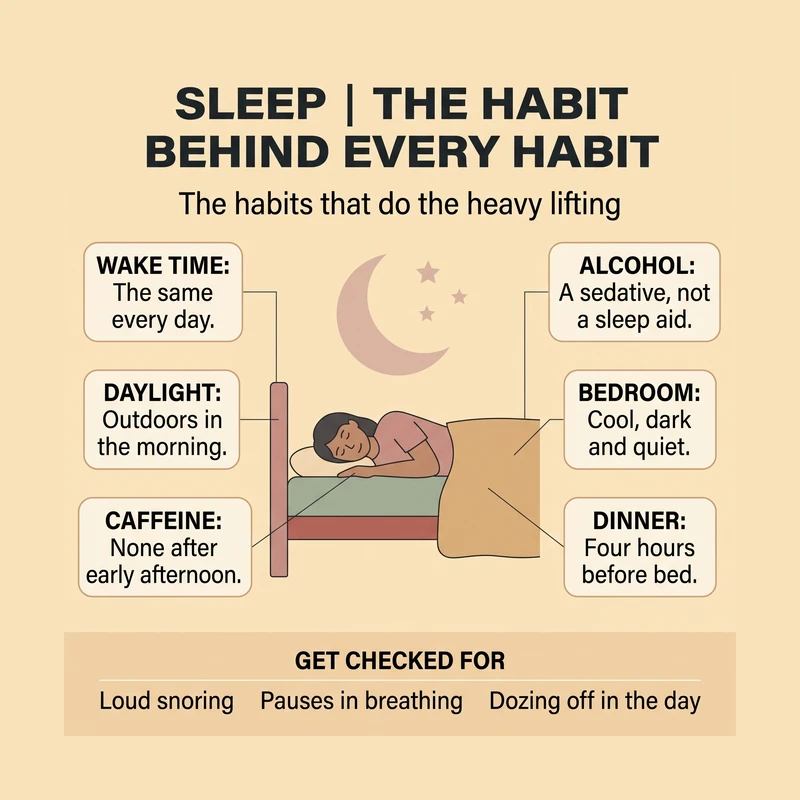
Sleep advice is a long list, and most of the list barely matters. These five carry nearly all of the result, and they are in the order worth attempting.
The change most worth making first. The body clock is set by when you get up and see light, not by when you go to bed. A steady wake time drags bedtime into place on its own; sleeping in on Sunday undoes most of the week.
Outdoor light within an hour of waking anchors the clock, and even an overcast morning is far brighter than indoor lighting. In the evening the aim is dimmer rooms rather than blue-light gadgetry.
Caffeine has a long half-life, so an afternoon coffee is still working at bedtime. It often lets you fall asleep and still flattens the deep sleep that makes you feel rested. Early afternoon is the usual sensible limit.
It shortens the time to fall asleep and wrecks the second half of the night, with lighter, broken sleep and early waking. A drink in the evening is one of the most common reasons for waking at three in the morning.
Body temperature has to fall for sleep to begin, which is why both a cooler room and a hot bath an hour or two earlier help. Bed is for sleeping. Waking briefly in the night is normal, so do not leap up at every stir. But if you have been awake and frustrated for fifteen or twenty minutes, get up and do something dull in low light until you feel sleepy, rather than lying there building an association between your bed and being awake3.
This is a nutrition library, and the overlap here is larger than most people expect. It runs in both directions: what you eat changes how you sleep, and how you sleep changes what you eat tomorrow.
Helps
Hurts
The same day as anyone else's, with four decisions moved.
Outdoors within the hour if you can manage it, even briefly, even in poor weather. A glass of water as well: you lose fluid through breathing all night, and mild dehydration shows up as fatigue and poor concentration before it shows up as thirst. Warm water with a squeeze of fresh lemon is a pleasant way to make it a habit, and the habit is the point.
Not because it stops you from falling asleep, but because it thins the sleep you do get.
Then lights down rather than screens off. Dimmer is the goal, not stricter.
Predictability is the active ingredient. The specific activity matters much less than doing the same one nightly.
Habits fix ordinary bad sleep. They do not fix a disorder, and months spent perfecting a bedtime routine is a common way to delay a diagnosis that would have helped in two weeks.
Loud snoring, someone witnessing you stop breathing, waking unrefreshed after a full night, morning headaches or daytime sleepiness that does not match how long you were in bed. It is common, it is treatable and it is frequently missed.
Read the Sleep Apnea guide →Trouble falling or staying asleep most nights for months, with daytime consequences, despite a reasonable routine. The first-line treatment is a structured behavioral program, not a sleeping pill and not a supplement.
Read the Insomnia guide →Pick the fixed wake time and hold it for two weeks before adding anything else. It is the change with the largest effect and the one everything else depends on.
Each numbered entry below is either a source you can follow or a note setting out what the evidence does and does not support. Both are numbered together so the markers in the text line up.
Last reviewed October 20, 2026. This page is nutrition education, not medical advice, and it does not replace your doctor. Habits improve ordinary poor sleep. They do not treat a sleep disorder, and months spent perfecting a bedtime routine is a common way to delay a diagnosis that would have helped in two weeks. If a partner has seen you stop breathing, or you fall asleep in the day without meaning to, that is a clinical matter and this page is not the right tool for it.