A fully plant-based way of eating built on whole foods only, no mock meats, no refined oils, no processed vegan junk. Drawn from the whole-food plant-based clinical research tradition of Dr. Michael Greger, Dr. Caldwell Esselstyn, Dr. John McDougall, and Dr. T. Colin Campbell.
Sources: Gallup, 2023; The Vegan Society, 2023. Self-reported adherence varies widely across surveys; figures are approximate.
Vegan eating excludes all animal products. "Whole-food plant-based" (WFPB) goes further: it also excludes refined oils, refined sugars, refined grains, and ultra-processed plant foods. The defining boundary is processing, not the source.
The word vegan was coined by Donald Watson in 1944 to distinguish strict plant-only eating from vegetarianism. The modern whole-food plant-based clinical movement grew out of decades of research by T. Colin Campbell (The China Study), Caldwell Esselstyn (Cleveland Clinic, reversing coronary artery disease), Dean Ornish (the Ornish Reversal Program), John McDougall (starch-based approach), and Michael Greger (How Not to Die, NutritionFacts.org).
The clinical case for WFPB rests on observational and interventional data showing reversal markers in coronary artery disease, improvement in type 2 diabetes, and reduced risk of several chronic diseases. The Ornish trial remains the only diet-and-lifestyle program shown to halt and partially reverse coronary atherosclerosis in randomized trials.
Soaked legumes, intact whole grains, all vegetables, fruits, nuts, seeds, sea vegetables, ferments, herbs. No added oils or refined flours.
Oreos, vegan ice cream, mock meats, vegan donuts, French fries. Technically vegan, nutritionally similar to the Standard American Diet.
If it looks like its original plant form (or close to it), eat it. Whole grains in the husk, dried beans you soak yourself, fresh produce. Skip flours, oils, and protein isolates wherever possible.
Legumes are the WFPB protein base. Soaked overnight, cooked with kombu, paired with whole grains or vegetables, they provide complete amino acid profiles plus fiber and minerals.
No single plant covers every need. Greger's "Daily Dozen", beans, berries, cruciferous, greens, other vegetables, whole grains, nuts/seeds, flax, herbs/spices, water, exercise, B12, captures the rotation.
Beyond Meat, Impossible Burger, vegan "chicken nuggets", ultra-processed isolate-based foods. Use whole soy (edamame, tempeh, plain tofu, miso) and whole-bean preparations instead.
Lentils, chickpeas, black beans, mung, adzuki, navy, kidney, white beans. Soaked, cooked with kombu, used daily.
Brown rice, millet, quinoa, buckwheat, oats, barley, farro. Soaked or sprouted before cooking.
Leafy greens, cruciferous, alliums, root vegetables, gourds, peppers, mushrooms, herbs. Aim for 7+ cups daily.
Berries daily for polyphenols, plus citrus, apples, pears, stone fruits, melons in season.
Soaked almonds, walnuts (omega-3), pecans, brazil nuts, pumpkin seeds, sunflower, hemp, ground flax (1 tbsp daily). Nori, wakame, dulse, arame, kelp for iodine and minerals.
Sauerkraut, kimchi, miso, tempeh, natto, fermented pickles. Microbiome support without dairy.
Beyond, Impossible, vegan chicken, hot dogs, sausages. Ultra-processed, oil-heavy, isolate-based.
WFPB physicians (Esselstyn, McDougall) recommend zero added oil, including olive oil. Use whole-fat sources (avocado, olives, nuts, seeds).
Sugar, HFCS, agave, syrups in vegan baked goods and "natural" sweeteners. Use dates, mashed banana, or small amounts of pure maple.
White bread, white pasta, refined-flour vegan baked goods, packaged crackers.
Vegan ice cream, vegan cheese, vegan candy. Almost always seed-oil based and ultra-processed.
Soy protein isolate, pea protein concentrate. Whole-food beans and seeds provide protein in a slower, more complete matrix.
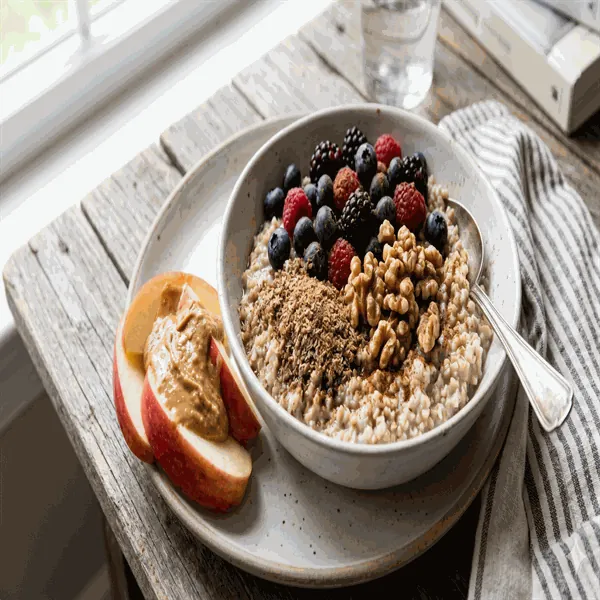
Steel-cut oats soaked overnight, simmered in water; topped with 1 cup berries, 2 tbsp ground flax, 2 tbsp soaked walnuts, 1 tsp cinnamon. Side: Β½ cup pumpkin-seed-tofu scramble OR 2 tbsp peanut butter on a sliced apple. Add B12 sublingual.
Soaked oats Β· berries Β· ground flax Β· soaked walnuts Β· cinnamon. Whole-food carbohydrate, plant omega-3 ALA, and polyphenols, plus the daily B12 sublingual that makes the rest of the day's plant-only eating safe.
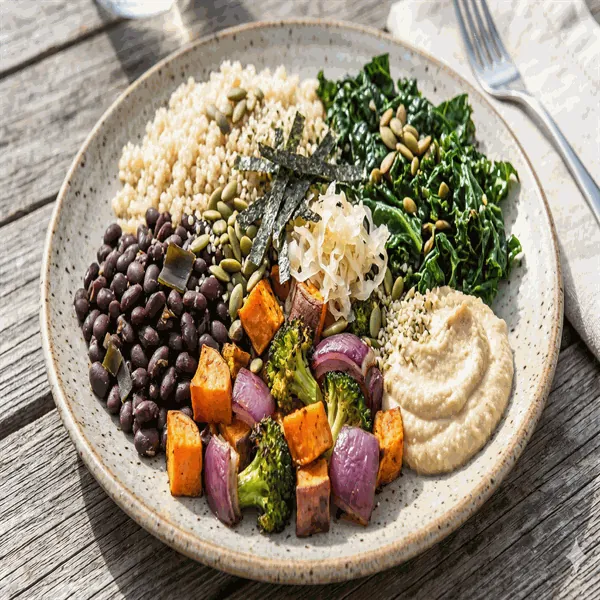
1 cup cooked quinoa Β· 1 cup black beans (soaked overnight, cooked with kombu and cumin) Β· 2 cups roasted vegetables (sweet potato, broccoli, red onion) Β· 1 cup massaged kale with lemon Β· ΒΌ cup hummus Β· pumpkin seeds, hemp hearts, sauerkraut, nori strips. Whole-food tahini-lemon dressing, no oil needed.
Quinoa Β· soaked black beans Β· roasted vegetables Β· massaged kale Β· hummus Β· pumpkin seeds + hemp hearts Β· sauerkraut + nori. A complete WFPB plate, protein, fiber, polyphenols, minerals, and live cultures in one bowl.
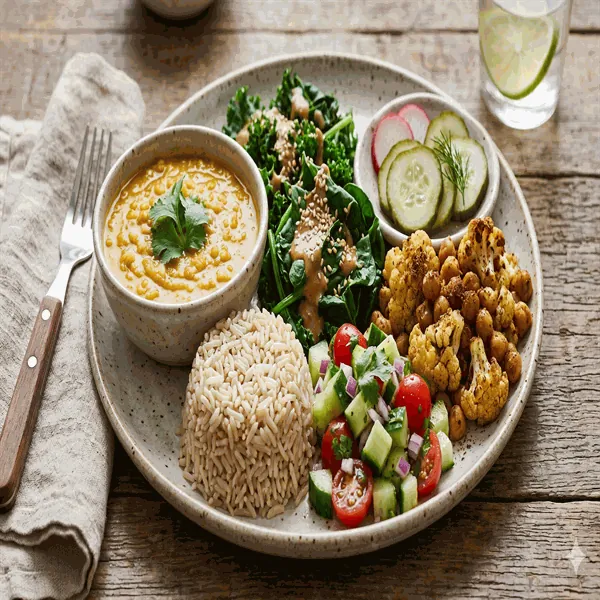
Red lentil dal (soaked, simmered with turmeric, ginger, garlic) Β· ΒΎ cup soaked brown basmati rice Β· steamed greens with miso-tahini Β· cucumber-tomato salad with lime Β· roasted cauliflower & chickpeas with garam masala Β· raw fermented pickle.
Red lentil dal Β· soaked brown basmati rice Β· steamed greens with miso-tahini Β· cucumber-tomato salad Β· roasted cauliflower & chickpeas Β· fermented pickle. Warm, well-spiced, easy to digest before the overnight repair window.
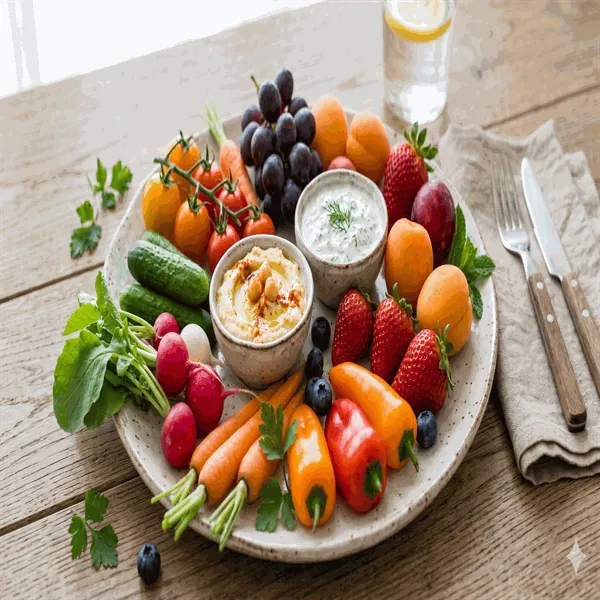
Chamomile tea, optional: 2 dates with 1 tbsp tahini and a sprinkle of sea salt. Stop eating ~3 hours before bed.
The most dangerous mistake. B12 deficiency causes irreversible neurological damage over time. Supplement methylcobalamin 1,000β2,500 mcg, 2β3x/week.
Easy and tasty, but ultra-processed. Use as occasional treats, not daily protein sources.
Flax and chia provide ALA, which converts poorly. Use an algae-based EPA/DHA supplement (250β500 mg combined daily).
White pasta, white bread, vegan crackers. Replace with intact whole grains.
Test annually. Pair plant iron with vitamin C. Use pumpkin seeds and sprouted grains for zinc. Sea vegetables or supplement for iodine.
Without dairy, both can fall short. Calcium-rich greens (collards, bok choy, kale), fortified plant milks, and a D3 supplement (vegan lichen-derived) cover the gap.
| Supplement | Why | Typical Dose | Notes |
|---|---|---|---|
| Vitamin B12 (REQUIRED) | No reliable plant source. Deficiency causes irreversible neurological damage over years. | 1,000β2,500 mcg methyl- or hydroxocobalamin sublingual, 2β3x/week | Test serum B12, MMA, homocysteine annually. Hydroxocobalamin preferred for long-term coverage. |
| Vitamin D3 (vegan, lichen-derived) | Without fatty fish or pastured eggs, intake is essentially zero. | 2,000β5,000 IU daily; titrate to blood level | Pair with K2 MK-7 100β200 mcg. Target 50β80 ng/mL. |
| Algae EPA/DHA | Plant ALA converts poorly. Direct EPA/DHA from algae is the cleanest fix. | 250β500 mg combined daily | IFOS-certified or third-party-tested. Pregnant women should aim higher. |
| Iodine (or daily sea vegetable) | Iodized salt removed; no fish or dairy. | 150 mcg supplement OR ΒΌ sheet nori daily | Hashimoto's: consult a clinician before any iodine. |
| Iron (if ferritin low) | Non-heme iron absorbs ~5Γ less efficiently. | 25β50 mg elemental bisglycinate + vitamin C on empty stomach | Only supplement if ferritin is low. |
| Zinc | Plant zinc binds to phytates; absorption can be low. | 15β25 mg zinc picolinate/bisglycinate | Take with food. Watch copper balance long term. |
| Selenium | 2 Brazil nuts daily covers most adults. | 1β2 Brazil nuts/day | Whole-food coverage is the simplest route. |
| Choline | Eggs are the richest source; vegans tend to fall short. | Sunflower lecithin 1 tbsp/day OR alpha-GPC 300 mg | Especially important during pregnancy. |
| Calcium (only if intake is low) | Best from whole foods (collards, bok choy, fortified plant milk, tahini). | 500 mg from supplement if dietary intake < 800 mg | Don't take with iron, they compete for absorption. |
| Magnesium Glycinate | Plant diets supply magnesium, but phytates from grains and legumes can blunt absorption; the glycine form is gentle on the gut and supports sleep, muscle relaxation, and stress regulation | 300β500 mg elemental, at bedtime (or split AM/PM) | Glycinate is best-tolerated. Soaking and sprouting grains/legumes also liberates more dietary magnesium. |
| Zinc L-Carnosine | Plant zinc binds to phytates and absorbs less efficiently than animal-derived zinc; the carnosine-bound form delivers zinc directly to the gut mucosa and supports barrier repair | 75β150 mg/day (delivers ~16β33 mg elemental zinc) | Take with food. After 8β12 weeks, drop to once daily to avoid copper depletion. Pair with 2 mg copper if used long term. |
Esselstyn/Ornish data: angiographic stabilization or partial reversal in motivated patients.
Reduced HbA1c and frequent insulin/medication reductions in WFPB trials.
Reliable BP drops and LDL reductions, especially without added oil and salt.
Lowest land, water, and emissions footprint of common eating patterns.
Very high fiber intake supports robust short-chain fatty acid production.
Not optional. If you won't take B12, do not go vegan.
Possible but requires expert pediatric nutrition input, protein, calorie density, omega-3, B12, iron, zinc, iodine, vitamin D, calcium all must be deliberately covered.
High-stakes for choline, B12, omega-3, iron, vitamin D, iodine. Work closely with a knowledgeable practitioner.
High-FODMAP legumes and cruciferous can aggravate symptoms. Heal the gut first.
Vegan rules can rationalize restrictive eating. Work with a clinician.
Possible (Patrik Baboumian, Scott Jurek), but protein, calorie density, and recovery require careful planning.
WFPB has perhaps the strongest cardiovascular outcomes evidence of any popular eating pattern, but only when done with care. Cover the B12 and omega-3 bases, build meals around whole beans and grains, and let the variety of plants do the work.