A traditional Japanese-influenced way of eating built around whole grains, seasonal local vegetables, beans, sea vegetables, miso soup, and fermented foods, balanced according to yin-yang principles. Established by Sagen Ishizuka and refined by George Ohsawa, Michio & Aveline Kushi, and the macrobiotic community over the past century.
Sources: No major US survey; estimates from Kushi Institute and macrobiotic associations. Self-reported adherence varies widely across surveys; figures are approximate.
Macrobiotics ("macro" = large, "bios" = life) is a way of eating and living developed in early-20th-century Japan that uses traditional Asian dietary wisdom and yin-yang philosophy to create a daily plate emphasizing whole grains, seasonal local vegetables, beans, sea vegetables, fermented foods, and small amounts of fish.
The lineage runs from Dr. Sagen Ishizuka (1850โ1909, Japanese physician who treated chronic illness with traditional diet), to George Ohsawa (1893โ1966, who synthesized the modern macrobiotic philosophy after personally healing from tuberculosis as a teenager), to Michio and Aveline Kushi (1926โ2014; 1923โ2001), who brought macrobiotics to the United States in 1949 and founded the Kushi Institute and educational network that taught the approach to clinicians, chefs, and families across the West.
At its core, the practice is less a list of forbidden foods than a way of choosing the most appropriate foods for your climate, season, body, and current health condition. The plate is intentionally simple: cook clean food well, eat seasonally, chew thoroughly, and pay attention to how the body responds.
Standard Macrobiotic Diet (SMD) as taught by the Kushi Institute: whole grains, vegetables, beans, sea vegetables, soups, occasional fish, fermented foods, fruits in season. Flexible, individualized, balanced.
Ohsawa's early "Diet #7", brown rice only for short periods, was an austerity prescription, not a long-term eating pattern. Long-term use led to documented deficiencies and is no longer recommended.
Brown rice, millet, barley, oats, buckwheat, making up ~50% of the plate by volume. Properly soaked and cooked. The Kushi tradition treats grain as a daily anchor.
5โ10% beans (azuki, chickpea, black soybean, lentil) cooked with sea vegetables (kombu, wakame, hijiki, arame, nori, dulse) for minerals and protein. The bean-seaweed pairing is signature.
A cup of plain miso soup with wakame, scallion, and tofu or root vegetable is considered nearly essential, for live cultures, minerals, and gentle support of digestion.
Naturally fermented umeboshi, takuan, kimchi, sauerkraut, miso, tamari, nukazuke. A spoonful with each meal supports digestion and microbial diversity.
Short-grain brown rice (cornerstone), millet, barley (hato mugi), buckwheat (kasha), whole oats, rye, wheat berries. Always soaked or pressure-cooked.
Daikon, burdock, lotus root, carrot, leafy greens (kale, collards, watercress, daikon greens), winter squash, cabbage, cauliflower, turnip, sweet onion. Local and seasonal.
Azuki, chickpea, lentil, black soybean, mung. Soaked, cooked with kombu kelp for digestibility.
Wakame, kombu, nori, hijiki, arame, dulse. A tablespoon-or-so per day for minerals, iodine, and trace elements.
Miso soup is foundational. Other broths: shiitake, kombu, vegetable.
Umeboshi plums, naturally fermented tamari, miso, kimchi, sauerkraut, takuan, nukazuke pickles, gomashio (sesame & sea salt), kuzu.
Small whitefish (cod, haddock, snapper), sardines, anchovies, 1โ2 times per week for those who include animal foods.
Macrobiotics considers dairy too "yin" and mucus-forming; traditional practice omits it entirely.
Cane sugar, HFCS, honey (mostly), agave, chocolate. Light sweeteners allowed: brown-rice syrup, barley malt, mirin.
Tomato, potato, eggplant, peppers, considered too yin in classical macrobiotics. Modern practitioners use moderation rather than strict avoidance.
Banana, mango, pineapple, citrus (largely), if not native to your climate, traditional practice limits them. Eat fruits in season from your region.
Considered too "yang" and rarely included. If used at all: small amounts in winter.
Traditionally avoided; an occasional cup of green tea (bancha, kukicha) is preferred.
All ultra-processed packaged foods, refined oils, food colorings, MSG, eliminated entirely.
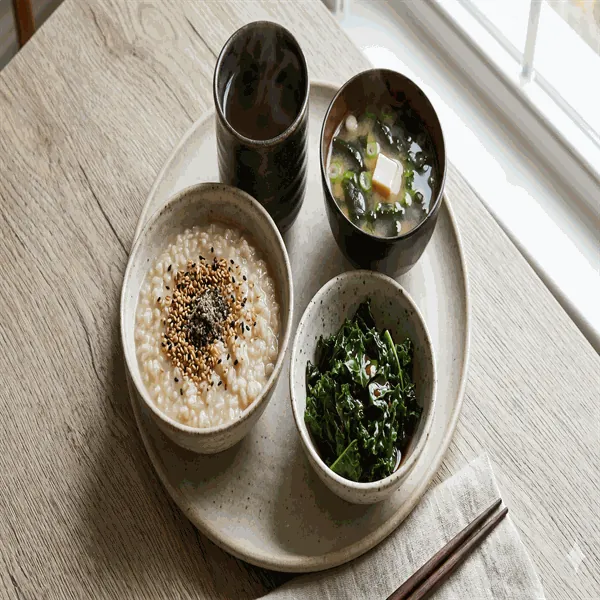
1 cup miso soup with wakame, scallion, and a small cube of tofu ยท brown rice porridge (rice cooked with extra water) topped with toasted sesame and a pinch of gomashio ยท steamed kale with tamari ยท cup of bancha tea. Chew well.
Miso soup with wakame and tofu ยท brown rice porridge with gomashio ยท steamed kale with tamari ยท bancha tea. A warm, gentle start, live miso cultures and seaweed minerals to ground the day.
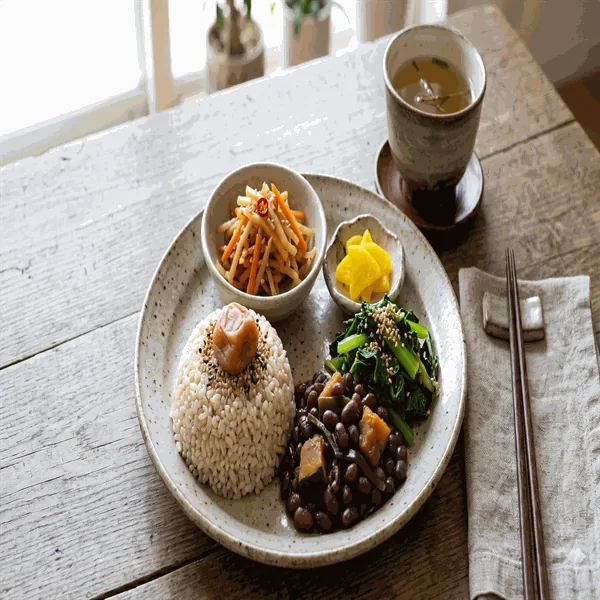
1 cup short-grain brown rice ยท adzuki beans simmered with kombu and a sweet vegetable (squash or carrot) ยท sautรฉed greens with sesame oil and tamari ยท daikon-carrot kinpira (julienned and slow-cooked) ยท 1 tbsp sauerkraut or takuan pickle ยท half a umeboshi plum ยท kukicha tea.
Brown rice ยท adzuki beans with kombu & sweet vegetable ยท sautรฉed greens ยท daikon-carrot kinpira ยท pickle ยท umeboshi. The classic grain + bean + sea vegetable + greens + ferment combination, the standard macrobiotic plate.
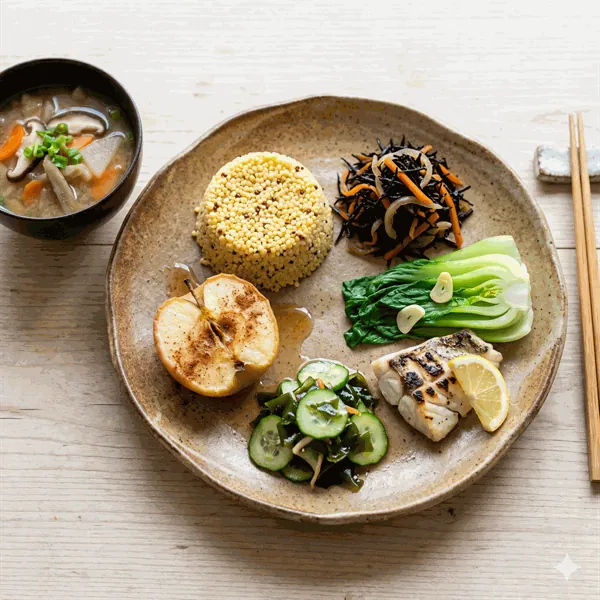
1 cup vegetable miso soup with shiitake and root vegetables ยท 1 cup millet or quinoa ยท simmered hijiki seaweed with carrot and onion ยท steamed broccoli or bok choy ยท small piece of grilled white fish (optional) ยท cucumber-wakame pressed salad ยท ยฝ baked apple with cinnamon (in-season fruit dessert).
Vegetable miso soup ยท millet or quinoa ยท simmered hijiki with carrot & onion ยท steamed broccoli ยท pressed cucumber-wakame salad ยท baked apple. Lighter than lunch, eaten early, supporting the long overnight fast that the macrobiotic tradition emphasizes.
Cup of bancha tea. Stop eating ~3 hours before sleep. Macrobiotic tradition emphasizes calm, gratitude, and reflection, not eating in front of screens.
Some practitioners have historically over-restricted, especially around "Diet #7." The modern Standard Macrobiotic Diet is flexible, vegetables, beans, occasional fish are healthy and broaden nutrient coverage.
Without small amounts of fish or supplementation, B12 deficiency is documented in long-term strict macrobiotic practice. Supplement methylcobalamin.
Children need more dietary fat than the standard macrobiotic plate provides. Add more sesame, tahini, nut butters, avocado, or fatty fish for growing kids.
Traditional macrobiotics is climate-aware: cold climates call for more warming foods and root vegetables; tropical climates call for lighter foods. Follow your local season, not a textbook.
"Just brown rice" is a recipe for boredom and deficiency. Rotate grains, varieties, vegetables, and beans.
Sea vegetables are mineral-dense; hijiki in particular can be high in arsenic. Vary the seaweed used and keep amounts modest (a tablespoon daily, not bowls).
| Supplement | Why | Typical Dose | Notes |
|---|---|---|---|
| Vitamin B12 | Even with small amounts of fish, intake can run low. | 500โ1,000 mcg methyl- or hydroxocobalamin, 2โ3x/week | Test serum B12, MMA, homocysteine annually. |
| Vitamin D3 | Almost universal deficiency. Fish provides some; sun provides more. | 2,000โ5,000 IU daily; titrate to blood | Pair with K2 MK-7 100โ200 mcg. |
| Algae EPA/DHA (or small fish) | If fish intake is low, omega-3 status drops. | 500โ1,000 mg EPA+DHA from algae OR sardines/anchovies 2โ3x/week | Whole-food coverage preferred when possible. |
| Iron (if ferritin low) | Non-heme plant iron absorbs less efficiently. | 25โ50 mg bisglycinate + vitamin C on empty stomach if needed | Test ferritin annually, especially in menstruating women. |
| Zinc | Grains and legumes are zinc-modest. | 15โ25 mg zinc bisglycinate | Pumpkin seeds (kabocha squash seeds) are a strong food source. |
| Iodine (often from sea vegetables) | Sea vegetables usually cover it, but check if you avoid them. | 150 mcg if dietary intake is low | Don't double-up with daily kelp + supplement. |
| Vitamin A (retinol) | Plant beta-carotene converts inefficiently in some people. | Small servings of cod liver oil (1 tsp) several times per week if fish-eating | Skip if strict plant-based. |
| Magnesium Glycinate | Whole-grain and sea-vegetable patterns are magnesium-rich, but phytates can lower absorption; the glycine form is gentle on the gut and supports sleep, muscle relaxation, and stress regulation | 300โ500 mg elemental, at bedtime (or split AM/PM) | Glycinate is best-tolerated. Chewing thoroughly and pressure-cooking grains both also help liberate dietary magnesium. |
| Zinc L-Carnosine | The grain- and bean-heavy macrobiotic plate is zinc-modest and bound by phytates; the carnosine form delivers zinc directly to the gut mucosa and supports barrier repair | 75โ150 mg/day (delivers ~16โ33 mg elemental zinc) | Take with food. After 8โ12 weeks, drop to once daily to avoid copper depletion. Pair with 2 mg copper if used long term. |
Simple, well-cooked, fiber-rich foods tend to calm an inflamed gut, especially after the SAD.
Removal of dairy, sugar, refined foods, and most nightshades calms many inflammatory presentations.
Whole grains + beans + vegetables produce reliable improvements in lipids, blood pressure, and HbA1c.
Macrobiotics has a long history (Anthony Sattilaro, Hugh Faulkner) as a supportive practice, never a replacement for oncologic care.
For people drawn to simplicity, ceremony, and intentional eating.
Strict macrobiotic plates can underprovide calories, fat, and B12 for growing kids. Adapt portions and add fish, eggs, or supplements with expert input.
Needs careful planning for protein, calories, omega-3, B12, iron, vitamin D, choline. Don't go strict during this period without guidance.
May need more dense fat and protein than the standard plate provides.
Macrobiotic rules can rationalize restrictive patterns. Work with a clinician.
Possible to adapt, drop wheat/barley/rye, lean on rice, millet, buckwheat, but it stops being traditional.
Brown-rice-only protocols are not the modern recommendation and have caused documented harm. Don't.
Macrobiotics done cleanly is among the oldest continuously practiced healing diets in the world. The clean version honors the OhsawaโKushi tradition while respecting today's nutritional science: chew well, eat seasonally, supplement what the diet cannot provide, and don't go to extremes.