The most clinically validated diet in modern nutrition science. Extra-virgin olive oil, vegetables, legumes, whole grains, fish, modest dairy, and wine in moderation, as eaten by coastal Greek, Italian, and Spanish populations for centuries before the industrial diet arrived.
Sources: IFIC Food & Health Survey, 2022; US News & World Report Best Diets, 2024. Self-reported adherence varies widely across surveys; figures are approximate.
The Mediterranean diet is the only major dietary pattern with multiple large randomized clinical trials behind it. The 2013 PREDIMED study (over 7,000 participants, 5-year follow-up) showed a 30% reduction in cardiovascular events vs. a low-fat control. Decades of cohort data also link it to lower rates of dementia, type 2 diabetes, and overall mortality.
The "clean" version means real whole-food Mediterranean eating, not what most American "Mediterranean" restaurants serve (white-flour pita, refined pasta, processed cheese, sugar-loaded baklava). The traditional diet is heavy on vegetables, legumes, fish, and olive oil, with bread and pasta as supporting, not central, items.
Extra-virgin olive oil daily, 2โ4 tbsp. Vegetables and legumes at every meal. Wild-caught fish 2โ3x/week. Whole-grain bread and pasta in moderation. Pastured eggs, raw or traditional cheese, plain yogurt. Fresh fruit for dessert. Red wine with food, optional.
Restaurant pita with refined flour, processed cheese, sugar-glazed baklava, vegetable-oil hummus, sweetened "yogurt parfaits", deep-fried falafel in seed oils. Looks Mediterranean but eats like fast food.
Real first-cold-pressed extra-virgin olive oil, not refined "light" or "pure" olive oil, is the dietary cornerstone. 2โ4 tablespoons per day, raw or low-heat. Provides oleic acid, polyphenols (oleocanthal, hydroxytyrosol), and vitamin E.
Wild-caught fatty fish (sardines, mackerel, anchovies, wild salmon) 2โ3x per week for omega-3 EPA/DHA. Red meat is occasional, not daily; lamb and grass-fed beef are traditional but limited to weekly use.
Stone-ground whole-wheat sourdough, traditional pasta in modest portions, brown or wild rice, oats, barley, bulgur, farro. Refined white flour is the deepest Mediterranean diet cheat.
Whole seasonal fruit (figs, grapes, pomegranates, citrus, stone fruit) as dessert. A daily handful of walnuts, almonds, or pistachios. Avoid juice, dried-fruit candy, and roasted-in-seed-oil packaged nuts.
Full-fat plain Greek yogurt (1 cup) topped with fresh berries or pomegranate seeds, a handful of crushed walnuts, a drizzle of raw honey, sprinkle of cinnamon. Coffee or herbal tea. Optional: 1 boiled pastured egg on the side.

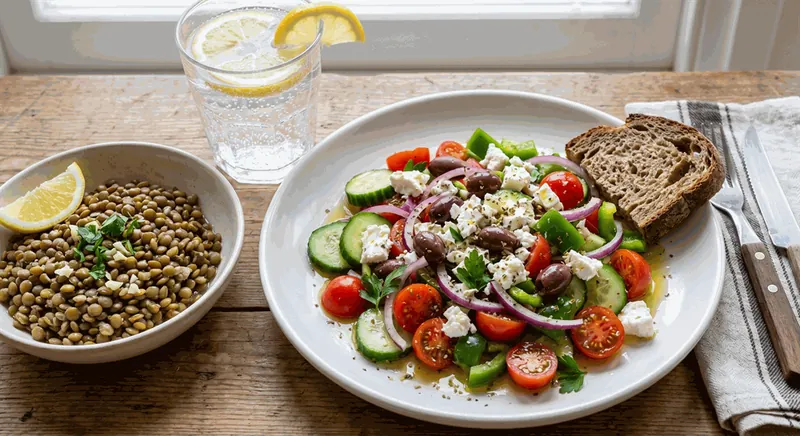
Tomatoes, cucumbers, red onion, bell pepper, kalamata olives, feta cheese, oregano, 2 tbsp extra-virgin olive oil and red-wine vinegar. Side of warm lentils with garlic and lemon. A small piece of whole-grain sourdough. Sparkling water with lemon.
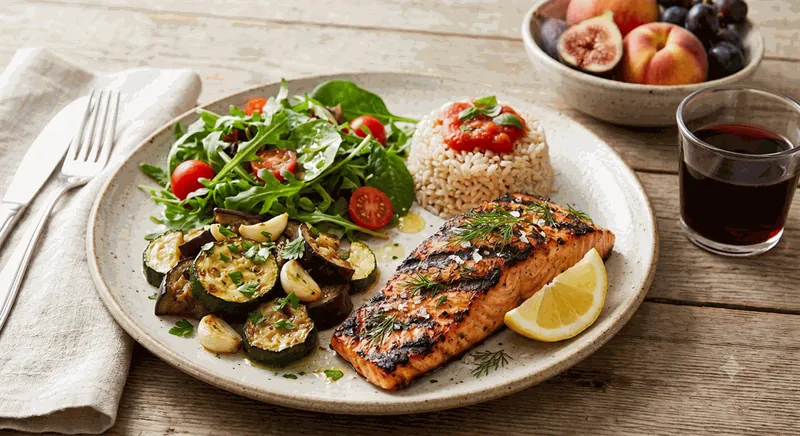
Grilled wild sardines or wild salmon (4โ6 oz), roasted zucchini and eggplant with garlic and olive oil, mixed greens dressed with olive oil and lemon, small portion (ยฝ cup) of brown rice or whole-grain pasta with tomato sauce. One small glass of red wine, optional. Fresh seasonal fruit for dessert.
Chamomile, mint, or fennel tea. No more food after dinner; a 12-hour overnight fast is typical.
A well-executed Mediterranean diet covers most nutrient needs through food. These supplements address gaps that are common in modern lifestyles even with a clean diet.
Always consult a qualified healthcare provider before starting supplements, especially if pregnant, nursing, on medication, or managing a medical condition.
The Mediterranean diet is the most universally tolerable whole-food pattern. It works well for nearly everyone who can digest gluten, legumes, and dairy in moderation. Strongest fit for:
Less ideal for: celiac disease (whole grains contain gluten, modify with gluten-free Mediterranean), severe insulin resistance (carb load may be too high, consider lower-carb Mediterranean variant), people with autoimmune flare needing strict elimination, or anyone with shellfish/fish allergies.
Mediterranean eating is not a "diet" you do for 90 days, it is a way of cooking and gathering that travels with you for life.