Since the last issue the library has grown by a batch of new guides, chosen mostly because they are among the most common conditions in the US and Europe. This issue is a tour of what is new, one guide we would ask you to read first and one thing we did to every page on the site.
The new guides
Heart and lungs: heart failure, COPD, sleep apnea and metabolic syndrome.
Bones and joints: osteoporosis, rheumatoid arthritis, gout and sarcopenia.
Mind and nerves: depression, anxiety, fibromyalgia and multiple sclerosis.
Gut, kidneys and urinary tract: GERD, eosinophilic esophagitis, kidney stones and benign prostatic hyperplasia.
Also new: chronic venous insufficiency, and B12 and folate deficiency.
Several of them disagree with each other, on purpose. The sarcopenia guide says eat more protein; the chronic kidney disease guide says restrict it. The eczema guide warns against cutting out foods; the eosinophilic esophagitis guide describes doing exactly that as first-line treatment. Both sides are right for the reader they are written for, and each page now points at the other, so nobody lands on one half of the argument without a signal that the other half exists.
Two new sections
Skin opens with psoriasis and eczema. Eye & Vision opens with macular degeneration. Both were created because the conditions fit nowhere else, and forcing a guide into the wrong category is how readers fail to find it.
Every guide now carries a reference section
Every condition guide on the site now ends with References & Evidence Notes: the papers it draws on, the date it was last reviewed and a plain paragraph on what nutrition can and cannot do for that condition. When the evidence conflicts, the guide says so instead of picking the flattering side. Where a claim did not hold up against the paper it was supposed to rest on, it came off the page.
In August we told you we had checked eighty citations and found four wrong. That work has since gone through the whole library.
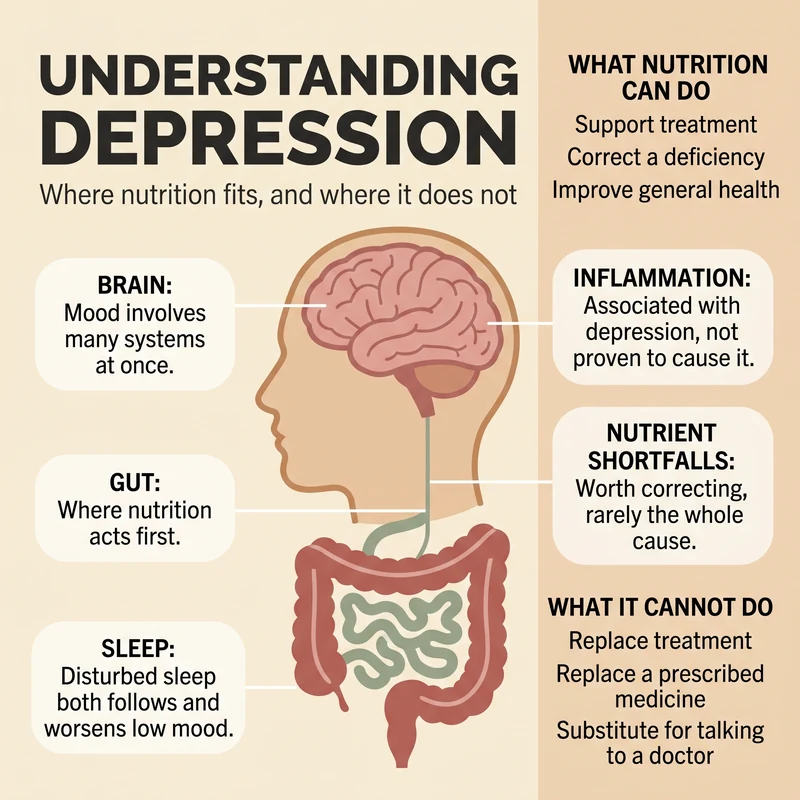
Read this one first: depression
It opens by saying that nutrition supports treatment for depression and does not replace it, because that is what the large trials show. Then it covers what the evidence does support alongside treatment, and what to do when the usual advice to eat better feels impossible, which the guide treats as part of the illness rather than a failing. If someone you love is living with depression, that page was written with them in mind.
Not sure where to start?
The free symptom checker now covers every guide in the library. Check what applies and it shows the guides worth reading, placing first the warning signs that need a doctor rather than a website.